Tennis Elbow Recovery Time: When Pain May Ease
Tennis elbow recovery time is commonly 6 to 12 weeks when the tendon is protected from aggravating activity and gradually rehabilitated. Some cases improve more slowly, particularly when symptoms have been present for months, but most people recover without surgery.
Overview: what to expect from tennis elbow recovery
Tennis elbow recovery time is often around 6 to 12 weeks with appropriate self-care and rehabilitation, although a full return to demanding sports or repetitive work can take longer. When symptoms have been present for several months, recovery may take 6 to 12 months because tendon tissue adapts gradually to load.
Despite its name, tennis elbow can affect anyone. Also called lateral epicondylitis or lateral elbow tendinopathy, it involves pain at the bony outer side of the elbow where forearm muscles attach. Repeated gripping, lifting, twisting or wrist extension can irritate this tendon attachment.
Recovery is rarely completely linear. Symptoms may fluctuate as a person returns to household tasks, computer work, exercise or sport. A gradual plan that reduces painful overload while rebuilding strength is usually more helpful than either pushing through significant pain or resting the arm for many weeks.
Why tennis elbow takes time to heal
Tennis elbow is now understood primarily as a tendon overload problem rather than a simple acute inflammation. The tendon may become painful when repeated force exceeds its current ability to tolerate load. Healing therefore involves more than waiting for pain to disappear: the forearm muscles and tendon need time to regain capacity.
Factors that can extend recovery include continuing the same high-load activity, demanding manual work, poor technique or equipment, weak shoulder and forearm muscles, smoking, and difficulty modifying activities. Pain from the neck, shoulder, nerves or elbow joint can also resemble tennis elbow, which is why an accurate assessment matters when recovery is slow.
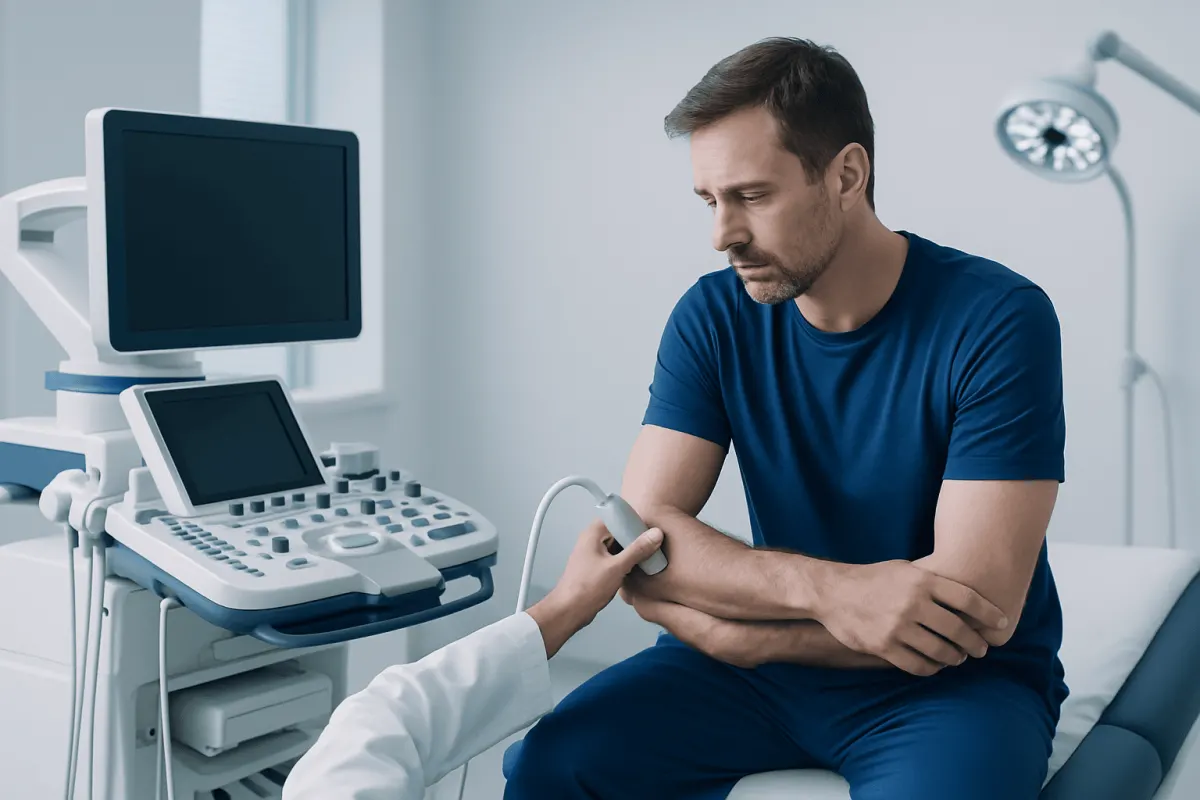
A clinician may diagnose tennis elbow from the history and examination. Imaging is not routinely needed, but ultrasound, X-ray or MRI may be considered when the diagnosis is uncertain, there was a significant injury, or symptoms persist despite appropriate treatment.
A practical week-by-week tennis elbow recovery timeline
Days 1 to 14: The goal is to calm symptoms without completely immobilizing the arm. Temporarily reduce or adapt activities that reliably provoke pain, such as repetitive gripping, heavy lifting, screwdriver use, racquet sports or forceful wrist movements. Gentle elbow, wrist and hand movement is usually encouraged within comfort.
Weeks 2 to 6: Daily activities often become easier, although gripping and lifting may still hurt. A physiotherapist may introduce gentle stretching and controlled forearm exercises, then gradually progress strengthening. The correct starting point depends on pain level, work demands and whether symptoms are recent or longstanding.
Weeks 6 to 12: Many people notice meaningful improvement in pain, grip comfort and confidence using the arm. Resistance training is usually advanced gradually, with attention to the wrist, forearm, shoulder and upper back. A return to racquet sports, gym training or manual work should be staged rather than based on one pain-free day.
Beyond 12 weeks: Continued symptoms do not necessarily mean permanent damage. The plan may need review for ongoing aggravating tasks, exercise technique, alternative diagnoses or additional treatment options. Persistent cases often still improve with a more individualized rehabilitation program.
How to tell if a tennis elbow is healing?
Healing is usually shown by a gradual trend rather than an immediate disappearance of pain. Useful signs include less tenderness on the outer elbow, fewer pain flare-ups after normal activities, improved grip strength, and greater ability to lift a cup, open a jar, type, use tools or exercise with less discomfort.
It is also reassuring when a mild symptom increase after exercise settles within a day and does not progressively worsen. During rehabilitation, some manageable discomfort can occur while the tendon adapts. Sharp pain, increasing pain that lasts, or a significant loss of function suggests that the activity level may need adjustment.
Keeping a simple weekly record of pain during a few meaningful tasks can show progress that is otherwise easy to miss. A physiotherapist or orthopedic clinician can help distinguish normal short-term exercise sensitivity from an overload flare.
How long should I rest if I have a tennis elbow?
Complete rest is usually needed only briefly, if at all. For the first several days to two weeks, it is reasonable to avoid the specific actions that cause clear pain, particularly forceful gripping, repetitive twisting and heavy lifting. However, keeping the entire arm inactive for a long period can lead to stiffness and loss of strength.
Relative rest is the preferred approach. This means changing the task, reducing the load, taking more frequent breaks, using the other hand when practical, or temporarily lowering the intensity and duration of sport. For example, a person may continue light work or exercise that stays within tolerable symptoms while avoiding the movement that repeatedly triggers pain.
As symptoms settle, controlled strengthening is important for recovery. Guidance from an orthopedic specialist or physiotherapist can be particularly valuable for athletes, musicians and people whose work requires repetitive hand or arm use.
How to speed up tennis elbow recovery?
There is no instant cure, but recovery can be supported by a consistent, progressive plan. Identify the movements that overload the tendon and modify them temporarily. Improvements in workstation setup, tool grip size, lifting technique, racquet technique or training volume may reduce repeated strain.
Exercise-based rehabilitation is a central part of care. A clinician may recommend gradual wrist and forearm strengthening, often alongside exercises for the shoulder and upper back. The aim is to increase the tendon’s capacity safely, not to exercise through substantial pain. Physical therapy and rehabilitation can provide an individualized program and support a measured return to usual activities.
Cold or heat may provide short-term comfort for some people. A brace or counterforce strap can occasionally help during aggravating tasks, but it should be used as an aid rather than a replacement for activity adjustment and strengthening. Pain-relieving medicines may be suitable for some individuals, but a doctor or pharmacist should advise based on medical history and other medicines.
- Build activity gradually, rather than doing a large amount on a good day.
- Take regular pauses during repetitive work and vary hand positions where possible.
- Prioritize sleep, general fitness and smoking cessation, which can support overall tissue health.
- Seek professional advice if exercise consistently causes a prolonged flare-up.
Treatment options, including procedures
Most people do not need a procedure. Initial treatment commonly includes education, modification of painful activities, structured exercise therapy and short-term symptom relief measures. A clinician may also assess whether a brace, ergonomic changes or treatment for contributing shoulder, neck or nerve symptoms is appropriate.
In selected persistent cases, an orthopedic specialist may discuss injection-based treatments or other interventions. The evidence and expected benefits differ among options, and some treatments may offer short-term relief without improving long-term outcomes. Decisions should be individualized after discussing the duration of symptoms, functional limitations, examination findings and rehabilitation already tried.
Surgery is uncommon and is generally reserved for substantial symptoms that continue after many months of well-conducted non-surgical care. During surgery, the surgeon removes or repairs unhealthy tendon tissue and may release the affected tendon attachment. Candidacy depends on a confirmed diagnosis, meaningful daily limitation and failure of appropriate conservative treatment.
Following surgery, the arm is protected initially, then movement and guided strengthening are introduced in stages. Return to forceful work or sport commonly takes several months. Potential benefits include reduced longstanding pain and improved function, while possible risks include infection, stiffness, nerve or blood vessel injury, persistent pain, weakness and the possibility that symptoms do not fully resolve.
When to seek medical care
Medical assessment is appropriate if elbow pain is severe, follows a fall or other injury, prevents normal use of the arm, or is accompanied by marked swelling, redness, warmth or fever. Urgent evaluation is important for sudden inability to move the elbow, a visible deformity, or new numbness or weakness in the hand or arm.
A routine appointment is advisable when symptoms last longer than a few weeks despite activity changes, repeatedly return, or interfere with work, sleep, sport or self-care. A clinician can confirm the cause of pain and help rule out conditions such as arthritis, nerve compression, neck-related pain or a tendon tear.
Acıbadem Health Point’s multidisciplinary specialists and JCI-accredited hospitals assess and treat elbow conditions for international patients, including coordinated orthopedic and rehabilitation care when needed.
Frequently asked questions
01Do you ever fully recover from tennis elbow?
Yes. Most people recover fully or have major improvement with activity modification and progressive rehabilitation. Recovery can take several weeks to months, and longstanding symptoms may require a longer, individualized program.
02Can I work with tennis elbow?
Many people can continue working if tasks are adjusted to reduce painful gripping, twisting and lifting. Temporary changes such as lighter loads, more breaks, different tools or altered workstation setup can help while the tendon recovers.
03Should I exercise through tennis elbow pain?
Exercise should not require pushing through sharp or escalating pain. Mild, brief discomfort may occur during a graded strengthening program, but symptoms should generally settle and not become progressively worse after activity.
04Why is my tennis elbow not getting better?
Ongoing overload, insufficiently progressive rehabilitation, repeated flare-ups or an incorrect diagnosis can delay improvement. A clinician can reassess the elbow, review contributing activities and consider other causes of outer elbow pain.
05Is heat or ice better for tennis elbow?
Either may offer temporary comfort, depending on individual preference. Ice is often used after an activity-related flare, while heat may feel helpful before gentle movement; neither replaces gradual activity modification and strengthening.
06When can I return to tennis or the gym after tennis elbow?
Return is safest when everyday activities and sport-specific movements are comfortable and strength has improved. Start with shorter, lower-intensity sessions and increase load gradually, ideally with guidance from a physiotherapist or clinician if symptoms have been persistent.
This article is for general information only and is not a substitute for professional medical advice. Please consult a qualified doctor about your individual situation.
Joint and spine care in Turkey — expert assessment & treatment
JCI-accredited · board-certified surgeons · reply within 24h
Add us as a Preferred Source to see more of our trusted health content across Google Search, AI Overviews and Discover.