Double Crown Hair: A Normal Scalp Growth Pattern

Double crown hair means there are two hair whorls, or spiral growth patterns, near the top-back of the scalp. It is usually a normal, inherited variation in hair direction; however, thinning around either crown should be assessed separately because it may reflect hair loss rather than the double-crown pattern itself.
Overview: What Is Double Crown Hair?
Double crown hair describes two distinct hair whorls at the crown, the upper back area of the scalp. A whorl is the circular or spiral pattern created as hair follicles point in different directions. Many people have one crown, while others have two that may sit close together, side by side, or at slightly different heights. This is usually a normal anatomical variation rather than a disease.
The pattern is commonly noticed in childhood, during a haircut, or later when a person sees the scalp from above in a mirror or photograph. Because hair radiates away from each whorl, a double crown can resist certain hairstyles and can create lines where the scalp is naturally more visible. Visibility can be particularly noticeable under bright overhead lighting, after washing, or with short, fine, straight, or low-density hair.
A double crown should not be confused with hair loss. The whorls describe the direction of hair growth, whereas hair loss refers to a reduction in hair density, hair shaft diameter, or both. A person can have a double crown and full hair density, or a double crown alongside a separate hair-loss condition. Looking at changes over time is often more useful than judging the appearance of a single photograph.
Why Do Some People Have Two Hair Crowns?
Hair-whorl patterns develop before birth, when scalp hair follicles form and become oriented in particular directions. The precise reason one person develops one whorl and another develops two is not fully understood. Genetics likely contributes, because hair characteristics and scalp growth patterns commonly run in families, but no single gene can explain every double-crown pattern.
The number or direction of hair whorls is not a reliable indicator of personality, intelligence, handedness, or future health. Popular claims linking crowns to behavior or medical conditions are not supported by sufficient clinical evidence. In the great majority of people, a double crown is simply part of normal physical variation.
Hair texture and grooming can affect how obvious the pattern appears. Curly or thick hair may cover the separation between whorls, while fine hair may lie flatter and reveal it more clearly. As hair length changes, the two growth centers may also become more or less visible without any actual change in the number of follicles.
Double Crown or Thinning: How to Tell the Difference

A natural crown often looks like a stable circular area where hairs part in several directions but remain evenly covered by hairs of similar thickness. The scalp may show through at the center of a whorl because the hairs spread outward there. This can look more pronounced after exercise, swimming, or shampooing, when damp hairs group together, and it often improves once the hair is dry and styled.
Thinning is more likely when the visible scalp area gradually expands, the hair around the crown looks finer or shorter than before, or there is a clear reduction in overall volume. In some people, gradual thinning on the crown is part of androgenetic alopecia, also called pattern hair loss. This common condition can affect people of different sexes and may involve changes at the temples, hairline, part line, or crown.
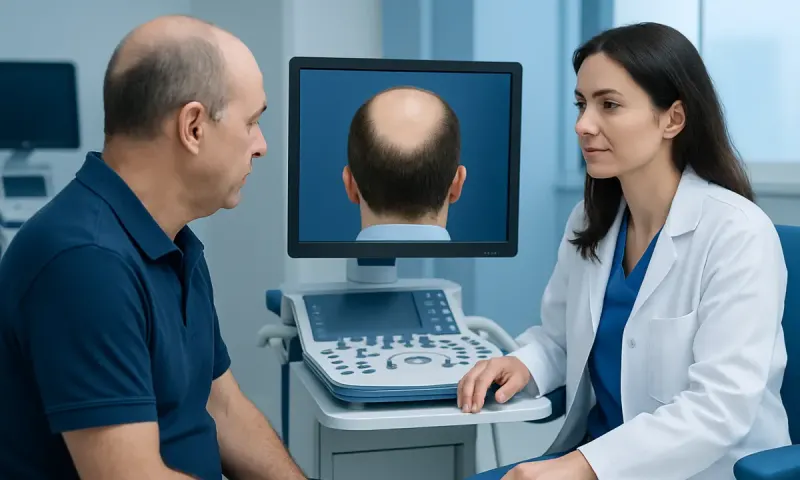
Taking occasional photographs in similar lighting, with dry hair and the same hairstyle, can help identify whether there is a true change over several months. Frequent close inspection can be misleading because lighting, camera angle, hair products, and hair length alter the appearance of the scalp. A dermatologist can distinguish a normal whorl from thinning by examining the scalp and hair shafts, sometimes using magnification.
Other Causes of Hair Changes Around the Crown
Not every change near a crown is pattern hair loss. Temporary increased shedding can occur after a significant illness, surgery, childbirth, rapid weight change, major emotional stress, or some medicines. This shedding often affects the scalp more diffusely, though it may become especially noticeable around a double crown because that area already naturally separates.
Scalp inflammation may also affect hair growth or make the area look different. Flaking, redness, itching, tenderness, scaling, pustules, or broken hairs can suggest a scalp condition that needs assessment. Hair loss in a sharply defined patch is different from a typical double crown and should be evaluated, especially if the patch enlarges.
Hair-care practices can contribute to breakage, particularly when hair is repeatedly pulled tightly, bleached, relaxed, or exposed to high heat. Breakage usually affects the hair shaft rather than changing the original whorl pattern. A clinician may ask about recent illnesses, diet, medicines, family history, styling habits, and scalp symptoms to understand what is contributing to a visible change.
Assessment and Treatment Options
Most people with a double crown do not need tests or treatment. A clinician can often identify a normal hair-whorl pattern through a history and scalp examination. If hair loss is suspected, a dermatologist may evaluate the distribution of thinning, compare hair shaft thicknesses, perform a gentle pull test, or examine the scalp with a dermatoscope. Blood tests are considered only when symptoms or history suggest a possible nutritional, hormonal, thyroid, or other medical contributor.
Treatment is directed at an identified cause of hair loss, not at the presence of two crowns. For pattern hair loss, clinicians may discuss evidence-based topical or oral treatments when appropriate for the individual, taking account of age, sex, medical history, pregnancy considerations, and possible adverse effects. Inflammatory scalp disorders, fungal infections, nutritional deficiencies, and medication-related shedding each require different management.
Cosmetic approaches may be sufficient when hair density is normal. A skilled barber or hairstylist can work with the natural direction of both whorls, often using a length and layering approach that reduces separation. Volumizing products, avoiding a sharply flattened style, and changing the direction of drying may help. It is reasonable to seek medical advice before using supplements or unproven hair-growth products, as they may be ineffective or unsuitable for some people.
Everyday Hair and Scalp Care
A double crown cannot be prevented or removed with shampoo, brushing, shaving, or a different haircut because it reflects the direction in which follicles are arranged. Gentle hair care supports scalp comfort and reduces unnecessary breakage: use products that suit the scalp, avoid vigorous scratching, limit very high heat, and loosen hairstyles that cause pulling or discomfort.
A balanced diet with enough protein, iron-containing foods, and other essential nutrients supports normal hair production, but supplements are not automatically needed for a visible crown. Taking high-dose vitamins or minerals without medical advice can sometimes cause side effects or interfere with other care. People who have restricted diets, heavy menstrual bleeding, digestive conditions, or symptoms of deficiency can discuss appropriate testing with a qualified clinician.
For people who feel self-conscious, it may help to remember that whorls are common and that the crown is particularly sensitive to lighting and viewing angle. If concern about hair appearance is causing ongoing distress, a dermatologist can offer a clear assessment and discuss practical options. Acıbadem Health Point’s multidisciplinary specialists and JCI-accredited hospitals can assess scalp and hair concerns for international patients when medical evaluation is needed.
When to Seek Medical Care
Medical review is advisable when the appearance of the crown changes noticeably over weeks or months rather than remaining stable. Examples include a widening area of visible scalp, increased shedding, a receding hairline, thinning elsewhere on the scalp, or hair that appears progressively finer. Early assessment can help identify whether the change is a temporary shedding pattern, a scalp condition, or a form of hair loss that may benefit from treatment.
Prompt medical advice is particularly important for sudden patchy loss, painful or tender scalp areas, redness, marked scaling, crusting, pus-filled bumps, or scarring. Children with new bald patches or scalp scaling should also be assessed, as causes and treatments differ from those in adults. These signs do not mean a serious problem is certain, but they should not be assumed to be a normal double crown.
A clinician can also help when uncertainty itself is persistent. Bringing older photographs, a list of medicines and supplements, and details about recent health changes can make the appointment more informative. In many cases, reassurance after a professional scalp examination is all that is required.
Frequently asked questions
01Is double crown hair normal?
Yes. A double crown is usually a normal variation in which two hair whorls form near the top-back of the scalp. It commonly develops before birth and does not require treatment when hair density and scalp health are otherwise normal.
02Does a double crown mean someone will go bald?
No. Having two hair whorls does not cause baldness or reliably predict future hair loss. However, the natural separation created by the whorls can make thinning at the crown more noticeable if pattern hair loss develops separately.
03Can a double crown be changed or removed?
The underlying whorl pattern cannot be changed by shampooing, cutting, shaving, or brushing because it reflects follicle direction. Hair length, drying technique, layering, and styling products can often make the pattern easier to manage cosmetically.
04Why does my double crown look bigger after a haircut?
Shorter hair has less weight to cover the points where hairs radiate from the whorls, so the scalp can appear more visible. Bright lighting, wet hair, and a cut that goes against the growth direction can also emphasize the crown without indicating hair loss.
05How can someone tell whether a double crown is thinning?
A stable whorl generally has normal-density hairs radiating in different directions. Thinning is more likely if the visible area enlarges over time, hairs become finer, or shedding and reduced volume occur elsewhere. A dermatologist can assess uncertain changes with a scalp examination.
06Should a child with a double crown see a doctor?
A child who has always had two stable crowns and a healthy scalp usually does not need medical care for that feature alone. A medical assessment is appropriate if there are new bald patches, scaling, itching, broken hairs, redness, pain, or a recent change in hair density.
This article is for general information only and is not a substitute for professional medical advice. Please consult a qualified doctor about your individual situation.
Hair transplant in Turkey — costs, graft counts & a free assessment
JCI-accredited · board-certified surgeons · reply within 24h
Add us as a Preferred Source to see more of our trusted health content across Google Search, AI Overviews and Discover.