Chin Implant Surgery: What Recovery Is Like

A chin implants procedure is a facial contouring operation that places a biocompatible implant over the chin bone to improve projection and balance facial proportions. It is usually an outpatient procedure, but safe, satisfying results depend on appropriate candidacy, an experienced surgeon and careful recovery.
Chin Implants Procedure: What It Involves
A chin implants procedure, also called chin augmentation or mentoplasty, is an operation that enhances chin projection with a solid, biocompatible implant. The implant is placed directly over the chin bone and beneath the soft tissues of the lower face. Its purpose is not to change every feature of the face, but to create more balanced proportions between the chin, jawline, lips and nose.
Chin implants come in different sizes and shapes. During consultation, the surgeon assesses the face from the front and side, reviews the person’s goals and selects an implant that is proportionate to the existing bone structure and soft tissue. For some people, alternatives such as injectable filler, fat grafting or jaw surgery may be more suitable depending on the degree of chin retrusion and the bite relationship.
Chin augmentation may be performed alone or alongside other facial procedures, such as rhinoplasty, when a surgeon believes combined planning may improve overall facial balance. A consultation for chin implant surgery should include a discussion of expected changes, scars, recovery needs and realistic limits of the procedure.
Who May Be a Candidate for Chin Augmentation?
A person may consider a chin implant when they feel their chin is small, recessed or lacks definition in relation to other facial features. Suitable candidates are generally in good overall health, have completed facial growth and have clear, realistic expectations about what a change in chin projection can achieve.
The assessment is more detailed than simply choosing a larger chin. A plastic surgeon evaluates chin position, jawline contours, skin thickness, dental alignment, bite, facial symmetry and the appearance of the nose and neck. If a significant jaw alignment problem is present, an oral and maxillofacial specialist may recommend orthodontic assessment or corrective jaw surgery rather than an implant alone.
Smoking and nicotine use can slow wound healing and increase the chance of complications. People with active skin or dental infections, uncontrolled medical conditions, a history of poor scarring, or conditions affecting healing should discuss these matters carefully with their surgeon. It is also important to share all medicines, supplements, allergies and previous facial procedures.
How the Chin Implants Procedure Is Performed
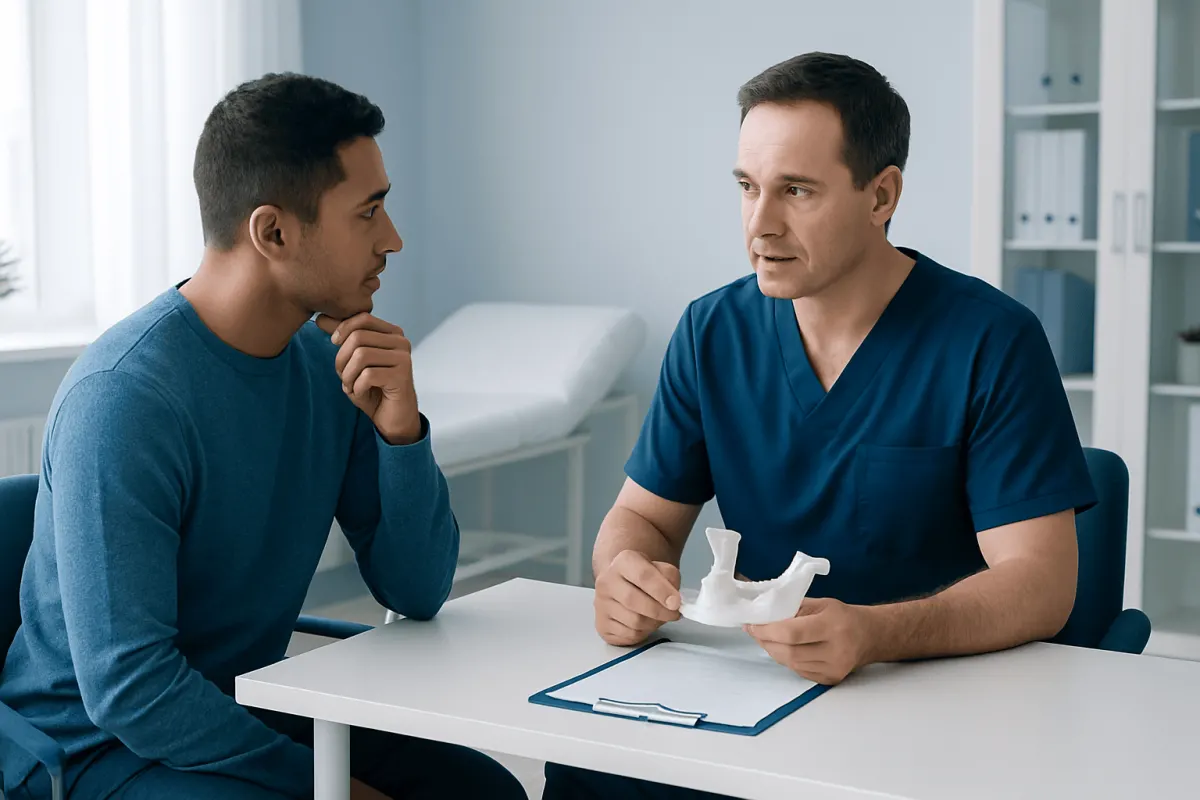
Before surgery, the surgeon confirms the treatment plan, takes photographs for planning and reviews consent. Chin implant surgery may be performed using local anesthesia with sedation or general anesthesia, depending on the individual, the surgeon’s approach and whether other procedures are being done at the same time.
The surgeon usually makes a small incision either in the natural crease beneath the chin or inside the lower lip. An external incision can provide direct access and leaves a small scar that generally fades over time; an incision inside the mouth avoids a visible skin scar but requires particular attention to oral hygiene during healing. Through the incision, the surgeon creates a precise pocket over the chin bone and positions the selected implant.
The implant may be secured with sutures or small fixation devices when appropriate, then the incision is closed. A dressing, supportive tape or chin strap may be applied to limit swelling and support the tissues. The operation itself often takes less than an hour when performed on its own, although total time at the facility includes anesthesia preparation and post-anesthesia monitoring.
The surgical plan is individualized. Implant dimensions, incision placement and fixation methods should be discussed directly with the operating surgeon rather than assumed from another person’s experience.
Benefits, Limitations and Possible Risks
The main potential benefit of a chin implant is a stronger chin profile and improved lower-face proportion. It may also make the jawline appear more defined and can improve the visual balance of the nose, lips and neck. Unlike temporary filler, a solid chin implant is intended to provide a long-lasting structural change.
However, no procedure can create perfect symmetry or guarantee a particular aesthetic outcome. Swelling can temporarily distort the appearance, and the final result depends on underlying anatomy, skin quality, implant selection and healing. A surgeon may use digital imaging to support discussion, but it is an educational planning tool rather than a promise of results.
As with any operation, chin augmentation has potential risks. These include bleeding, fluid collection, infection, delayed healing, unfavorable scarring, temporary or persistent numbness, asymmetry, implant shifting, bone changes beneath the implant, dissatisfaction with contour and the need for revision or removal. Rare anesthesia-related complications are also possible.
Following preoperative and aftercare instructions can reduce some risks, but it cannot eliminate them. New or worsening asymmetry, increasing redness, fever, drainage or severe pain should be assessed promptly by the surgical team.
Chin Implant Recovery Timeline and Aftercare
Recovery after a chin implants procedure varies, especially when it is combined with another facial surgery. During the first several days, swelling, bruising, tightness and numbness around the chin and lower lip are common. The face may look fuller or less defined than expected at first because the tissues are healing.
Surgeons commonly advise rest with the head elevated, use of cold compresses as instructed, and avoiding pressure or impact to the chin. A soft-food diet may be recommended briefly, particularly after an incision inside the mouth. Good oral hygiene is important when an intraoral incision is used. Patients should not smoke or use nicotine while healing unless their clinical team has specifically advised otherwise.
Many people can do desk-based work and light daily activities after roughly one to two weeks, depending on comfort and visible swelling. Strenuous exercise, contact sports and activities that could strike the chin are usually postponed until the surgeon confirms the tissues have healed adequately. Follow-up appointments allow the clinician to check incision healing and implant position.
Most bruising settles within a few weeks, while residual swelling and tissue firmness improve gradually. It is sensible to avoid judging the cosmetic result too early. The surgeon will provide personal guidance based on the technique used and the individual’s progress.
How Painful Is Chin Implant Recovery?
Chin implant recovery is usually described as uncomfortable rather than severely painful. In the first few days, people may experience pressure, tightness, tenderness and soreness around the chin, particularly when speaking, chewing or smiling. Swelling can add to the sensation of tightness.
Pain management is individualized and may include medicines prescribed by the surgeon or appropriate non-prescription options. Taking medication only as directed, resting and avoiding unnecessary movement of the lower face can help make early recovery more comfortable. Pain should generally improve rather than steadily worsen.
Severe pain, rapidly increasing swelling, a high temperature, spreading redness or pus-like drainage are not expected recovery symptoms and should be reported to the surgical team without delay.
Is a Chin Implant an Easy Surgery?
A chin implant is often a relatively short and commonly performed facial contouring operation, particularly when compared with major jaw surgery. It is frequently completed as an outpatient procedure, meaning the person can usually go home on the same day after recovery from anesthesia. Still, it is a real surgical procedure requiring careful planning, sterile technique and postoperative care.
The operation may be more complex when there is marked facial asymmetry, a previous implant, prior trauma, scar tissue, dental or bite concerns, or when it is combined with other procedures. The safest approach is to choose a properly qualified surgeon who can assess whether an implant is appropriate and explain alternatives.
A well-informed decision includes understanding the possibility of revision surgery, even though many people heal without major problems. The goal is a proportional, natural-looking change that suits the individual’s anatomy rather than an exaggerated outcome.
How Long Does It Take for a Chin Implant to Settle?
The implant is positioned during surgery and is intended to remain stable as the surrounding tissues heal. Early swelling may make the chin appear larger, higher, uneven or less defined than its eventual contour. This does not necessarily indicate a problem.
A noticeable improvement is often seen as swelling reduces over the first few weeks. However, subtle swelling, firmness and changes in sensation can persist longer, and the contour may continue to settle over several months. The exact pace depends on the incision approach, the extent of surgery, individual healing and whether other procedures were performed.
Patients should attend scheduled follow-up visits so the surgeon can assess healing and implant position. If the chin suddenly shifts after an injury, or if asymmetry becomes more apparent rather than improving, the surgeon should be contacted.
How Long Is the Downtime After Chin Implant Surgery?
Downtime after chin implant surgery is commonly about one to two weeks for return to routine, non-strenuous work or school activities. Some people feel ready sooner, while others prefer additional time for bruising and swelling to become less noticeable. Social downtime can therefore be different from physical Neck Surgery Recovery Time?" class="ahp-ilk">recovery time.
Heavy lifting, intense exercise and contact activities generally require a longer pause because they can increase swelling or risk trauma to the healing area. A surgeon gives individualized clearance based on the procedure and recovery examination. Makeup may be permitted once an external incision has healed sufficiently, but should not be applied directly to an unhealed wound.
Planning time away from important social events can be helpful, as a final result is not immediate. Allowing several weeks for visible recovery and several months for complete settling supports more realistic expectations.
When to Seek Medical Care
Anyone considering chin augmentation should arrange a consultation with a qualified plastic surgeon or facial plastic surgeon. A professional assessment is especially important when the concern may relate to jaw position, dental bite, breathing problems, prior facial injury or facial asymmetry, since these issues may need a different treatment approach.
After surgery, urgent medical advice is needed for difficulty breathing or swallowing, chest pain, fainting, uncontrolled bleeding, rapidly expanding swelling, or signs of a serious allergic reaction. The surgical team should also be contacted promptly for fever, worsening pain, increasing redness or warmth, foul-smelling drainage, wound separation or a noticeable change in implant position.
Acıbadem Health Point’s multidisciplinary specialists and JCI-accredited hospitals can assess and treat international patients considering chin augmentation, including evaluation of facial proportions and recovery needs. A personal consultation remains essential for determining whether the procedure is appropriate.
Frequently asked questions
01Is a chin implant permanent?
A solid chin implant is intended to be a long-lasting option because it remains in place unless it is removed or replaced. It may be revised if there is a complication, a change in preference or a concern about position or contour. Facial aging and weight changes can still alter the appearance of the surrounding soft tissues over time.
02Can a chin implant be removed?
Yes, a chin implant can generally be removed through a surgical procedure if medically appropriate. Removal or revision may be considered for infection, movement, discomfort or dissatisfaction with the result. The surgeon can explain how removal may affect the overlying tissues and chin appearance.
03Will a chin implant affect smiling or speaking?
Temporary tightness, numbness or discomfort can affect facial movement during early healing. Most people gradually return to normal speaking, smiling and eating as swelling decreases and the tissues recover. Persistent weakness, numbness or movement changes should be assessed by the surgeon.
04Can chin implants be combined with rhinoplasty?
Yes, chin augmentation and rhinoplasty are sometimes performed together because the chin and nose influence side-profile balance. Combining procedures can mean one anesthesia and one recovery period, but it also makes surgery and recovery more involved. The decision should be based on a personalized facial assessment.
05What is the difference between a chin implant and chin filler?
A chin implant is a surgical, long-lasting structural option placed over the chin bone. Chin filler is an injectable treatment that can provide temporary projection and may help someone explore a change before surgery. The best option depends on anatomy, desired amount of projection, risk tolerance and treatment goals.
06How soon can someone sleep normally after a chin implant?
Many surgeons advise sleeping with the head elevated for the first part of recovery to help limit swelling. Avoiding pressure on the chin is usually important while the implant pocket heals. The exact timing for returning to preferred sleep positions should come from the operating surgeon.
This article is for general information only and is not a substitute for professional medical advice. Please consult a qualified doctor about your individual situation.
Explore treatments in Turkey — costs, top hospitals & a free quote
JCI-accredited · board-certified surgeons · reply within 24h
Add us as a Preferred Source to see more of our trusted health content across Google Search, AI Overviews and Discover.