Can Skin Cancer Be Fatal? Diagnosis, Outlook and Care
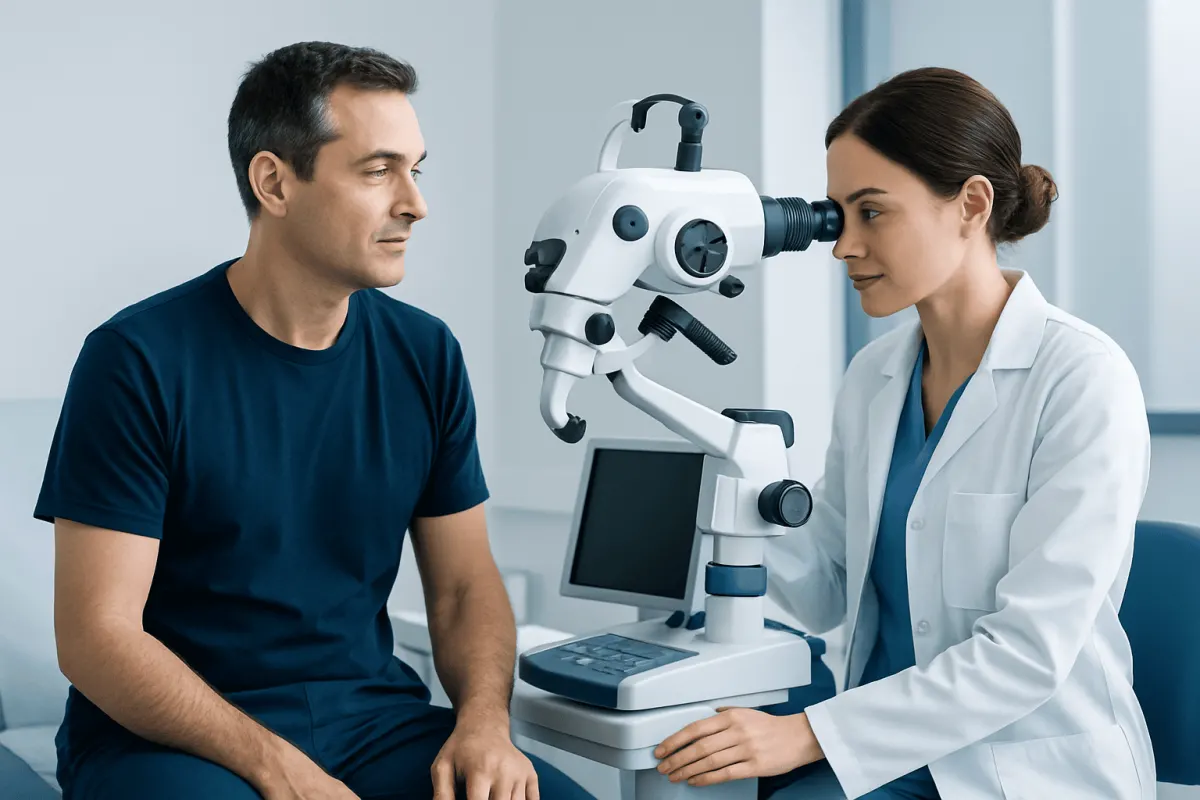
Skin cancer can be fatal when it grows deeply or spreads to lymph nodes or distant organs, but many cases are cured with early diagnosis and treatment. The outlook depends mainly on the type of cancer, how early it is found, and whether it has spread.
Does skin cancer kill you?
Skin cancer can be life-threatening, but this is not the usual outcome. Most skin cancers are found before they have spread and can be removed or treated effectively. The question “does skin cancer kill u” is therefore best answered by considering the type of skin cancer, its stage, and how quickly it receives appropriate care.
Basal cell carcinoma is the most common form and very rarely causes death, although untreated tumors can grow locally and damage nearby tissue. Squamous cell carcinoma has a greater chance of spreading in some situations, especially if it is large, recurrent, deeply invasive, or occurs in a person with a weakened immune system. Melanoma is less common but is more likely to spread to other parts of the body; it accounts for many skin-cancer-related deaths.
Early diagnosis makes a major difference. A new or changing spot does not always mean cancer, but it should be examined rather than watched indefinitely. Regular skin awareness, sun protection, and timely medical review all support earlier detection.
How the type and stage shape the outlook
Doctors describe skin cancer by its cell type and extent. Basal cell carcinoma and squamous cell carcinoma are often called non-melanoma skin cancers. They commonly begin on sun-exposed skin, but they can occur anywhere. Melanoma develops from pigment-producing cells and may arise in an existing mole or appear as a new dark, uneven, or changing mark.
Stage describes whether a cancer is limited to the skin, has entered nearby structures or lymph nodes, or has spread to distant organs. A thin melanoma confined to the skin has a much more favorable outlook than a melanoma that has reached lymph nodes or organs. For all skin cancers, tumor size, depth, location, cell features, immune health, and prior treatment can also influence risk.
It is important not to predict an individual outcome from appearance alone or from information online. A dermatologist, surgeon, or oncology team can explain the pathology report and staging results in context. Information about skin cancer can help patients understand the broad categories, but personal care decisions require an individual assessment.
Symptoms that deserve assessment
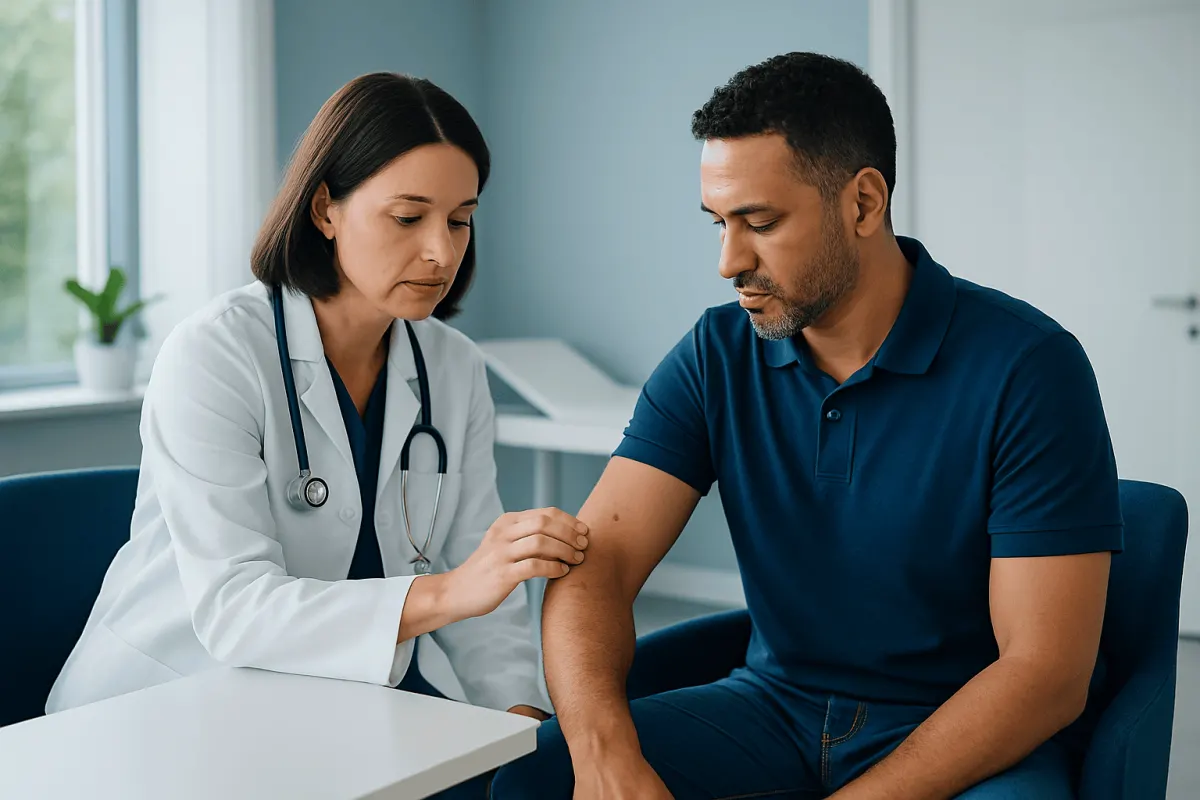
Skin cancer may be painless in its early stages. A lesion can look like a pearly or waxy bump, a scaly red patch, a sore that does not heal, a firm growing nodule, or a spot that crusts, bleeds, or repeatedly breaks down. Basal cell carcinoma may have a shiny border or visible small blood vessels. Squamous cell carcinoma may appear rough, tender, thickened, or wart-like.
For possible melanoma, the ABCDE approach can be useful: Asymmetry, irregular Border, uneven Color, Diameter that is enlarging, and Evolution or change over time. A lesion that looks noticeably different from a person’s other moles, sometimes called an “ugly duckling,” also warrants review. Melanomas are not always dark; some can be pink, red, skin-colored, or without obvious pigment.
Symptoms such as persistent enlarged lymph nodes, unexplained weight loss, ongoing fatigue, headaches, breathlessness, bone pain, or neurological changes are not specific to skin cancer. However, in someone with known melanoma or a high-risk skin cancer, they should be reported promptly because they may need evaluation for spread or another medical cause.
- Take note of new, changing, bleeding, itching, or non-healing lesions.
- Photographs taken over time may help document change, but they do not replace examination.
- Avoid attempting to remove or treat a suspicious lesion at home.
Diagnosis and modern treatment approaches
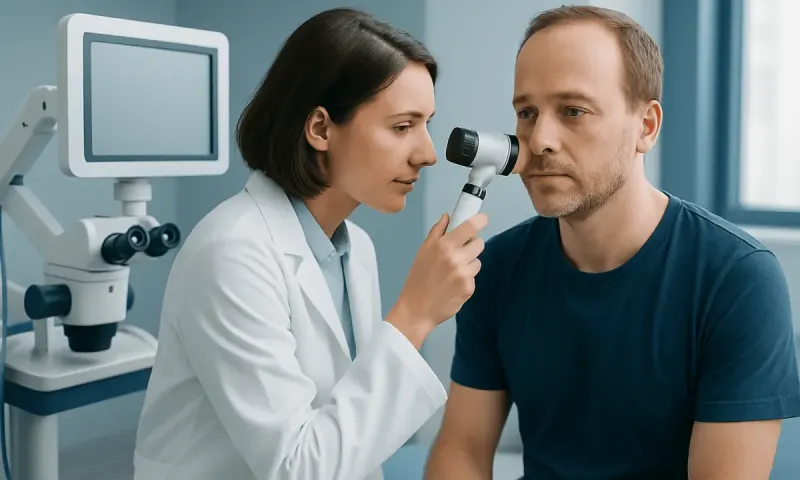
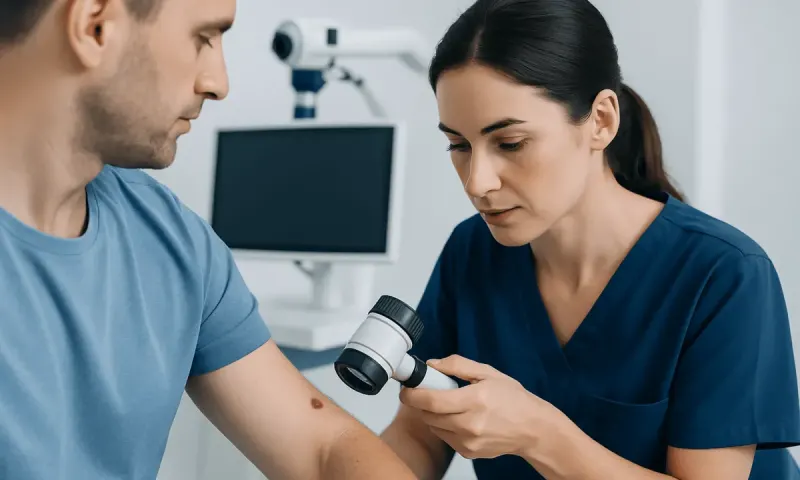
Diagnosis usually begins with a skin examination and discussion of the lesion’s history. Dermoscopy, a handheld magnifying tool with light, may help a clinician assess pigment patterns and structures. A biopsy is the only reliable way to confirm many suspected skin cancers. The sample is examined by a pathologist, who identifies the cancer type and reports features that guide treatment.
When a cancer appears higher risk or has already spread, the team may recommend lymph node evaluation, imaging, blood tests, or other staging assessments. Treatment for localized disease is often surgical removal. Depending on the type, size, and location, options can include excision, Mohs micrographic surgery, curettage and cautery, cryotherapy, topical treatments, photodynamic therapy, or radiation therapy.
For advanced melanoma and some advanced squamous cell carcinomas, systemic treatment may be considered. Options may include immunotherapy, targeted therapy for tumors with relevant genetic changes, chemotherapy in selected circumstances, and radiation therapy. The treatment plan should be individualized around the cancer, overall health, treatment goals, and possible side effects. Cancer treatment may involve a coordinated team of dermatology, surgery, pathology, radiation oncology, and medical oncology specialists.
What are the late stages of skin cancer?
Late-stage skin cancer generally means that the cancer has become locally advanced, involved regional lymph nodes, or spread to distant parts of the body. In melanoma, advanced disease may involve lymph nodes, skin or tissue away from the original lesion, lungs, liver, brain, bones, or other organs. Advanced basal cell or squamous cell carcinoma is less common, but it can occur, particularly when a tumor has been neglected, has returned after treatment, or affects a person with reduced immune function.
Late-stage disease does not mean that there are no treatment options. Modern systemic medicines can shrink or control some advanced skin cancers, sometimes for substantial periods. Surgery or radiation may also help manage specific sites of disease, relieve symptoms, or prevent complications. The likely benefit and possible burden of each option should be discussed openly with the oncology team.
Care at this stage also focuses on quality of life. Supportive and palliative care can be provided alongside cancer-directed treatment. It addresses pain, fatigue, appetite changes, sleep, emotional distress, practical concerns, and family support, and it is appropriate at any stage of a serious illness.
What are the symptoms of terminal skin cancer?
Terminal skin cancer refers to cancer that can no longer be controlled and is approaching the end of life. Symptoms vary greatly according to where the cancer has spread and other health conditions. They may include increasing weakness, reduced appetite and fluid intake, more time sleeping, weight loss, worsening pain, breathlessness, nausea, confusion, or changes in consciousness. Not every person experiences all of these changes.
Some symptoms are treatable or can be eased, even when the cancer itself cannot be cured. A palliative care team can help with comfort, medication planning, emotional support, and decisions about home, hospice, or hospital care. Families should contact the clinical team promptly if there is uncontrolled pain, severe breathlessness, new confusion, agitation, seizures, bleeding, or distressing symptoms.
These conversations can be difficult, but clear communication helps patients receive care consistent with their wishes. Advance care planning may include identifying a healthcare decision-maker and discussing preferences for symptom control and place of care.
Is death by skin cancer painful?
Death from skin cancer is not necessarily painful. Pain can occur when advanced cancer affects the skin, nerves, bones, or other organs, but it can often be reduced with carefully tailored treatment. The care team can use medicines, radiation, procedures, wound care, and other approaches to manage pain and related symptoms.
Comfort-focused care also addresses breathlessness, anxiety, nausea, restlessness, sleep disruption, and emotional distress. Palliative care specialists work with oncology teams to adjust support as needs change. Seeking this support is not a sign of giving up; it is a way to prioritize comfort and quality of life throughout serious illness.
People who are worried about pain at the end of life should raise the concern directly with their clinician. Individual plans can be made early, and caregivers can be taught whom to call if symptoms become difficult to manage.
What is death from melanoma like? When to seek medical care
Death from melanoma can look different from person to person because melanoma may affect different organs and progress at different rates. In the final phase, many people become progressively weaker, sleep more, eat and drink less, and become less alert. If melanoma has affected particular organs, symptoms may include breathlessness, pain, headaches, seizures, confusion, jaundice, or bowel changes, but skilled palliative care can help relieve many distressing symptoms.
Medical care should be sought promptly for a new or evolving mole, a non-healing sore, a lesion that bleeds without clear reason, or a rapidly growing skin lump. Anyone previously treated for melanoma or high-risk skin cancer should report new persistent symptoms or enlarged lymph nodes to their treating team. Urgent assessment is needed for sudden neurological symptoms, severe shortness of breath, uncontrolled bleeding, severe pain, or a seizure.
At Acıbadem Health Point, multidisciplinary specialists in JCI-accredited hospitals can assess and treat skin cancer for international patients, including coordinating dermatology, pathology, surgical, oncology, and supportive care when appropriate. The most important next step for any suspicious skin change is a timely consultation with a qualified healthcare professional.
Frequently asked questions
01Can skin cancer be cured?
Many skin cancers can be cured, especially when they are diagnosed before they spread. Surgery is often curative for localized basal cell carcinoma, squamous cell carcinoma, and melanoma. Advanced cancers may still respond well to treatment, but the goals of care depend on the individual situation.
02Which type of skin cancer is most dangerous?
Melanoma is generally considered the skin cancer with the greatest tendency to spread to distant organs. Squamous cell carcinoma can also become serious in selected higher-risk cases. Basal cell carcinoma rarely spreads but can cause significant local damage if it is not treated.
03Can a skin cancer be present without pain?
Yes. Many early skin cancers cause no pain, which is why visual changes and non-healing lesions matter. A painless spot that changes, grows, bleeds, crusts, or looks unlike other moles should be assessed.
04How quickly can melanoma become life-threatening?
Melanoma growth and spread vary widely among individuals and tumor types. Some melanomas progress more quickly than others, while many are detected early and treated successfully. It is safest to arrange assessment promptly rather than trying to judge urgency by appearance or timing alone.
05Does skin cancer spread through the body?
Some skin cancers can spread through lymphatic channels or the bloodstream. This is more likely with melanoma and with certain high-risk squamous cell carcinomas than with basal cell carcinoma. Staging tests are used when clinicians need to determine whether spread has occurred.
06How can someone lower the risk of skin cancer?
Risk can be reduced by limiting intense ultraviolet exposure, seeking shade, wearing protective clothing and sunglasses, and using broad-spectrum sunscreen as part of a wider sun-protection routine. Tanning beds should be avoided. Regularly checking the skin and obtaining medical review for concerning changes can support early detection.
This article is for general information only and is not a substitute for professional medical advice. Please consult a qualified doctor about your individual situation.
Oncology care in Turkey — second opinion and treatment plan
JCI-accredited · board-certified surgeons · reply within 24h
Add us as a Preferred Source to see more of our trusted health content across Google Search, AI Overviews and Discover.