Can Scratching the Scalp Cause Hair Loss?
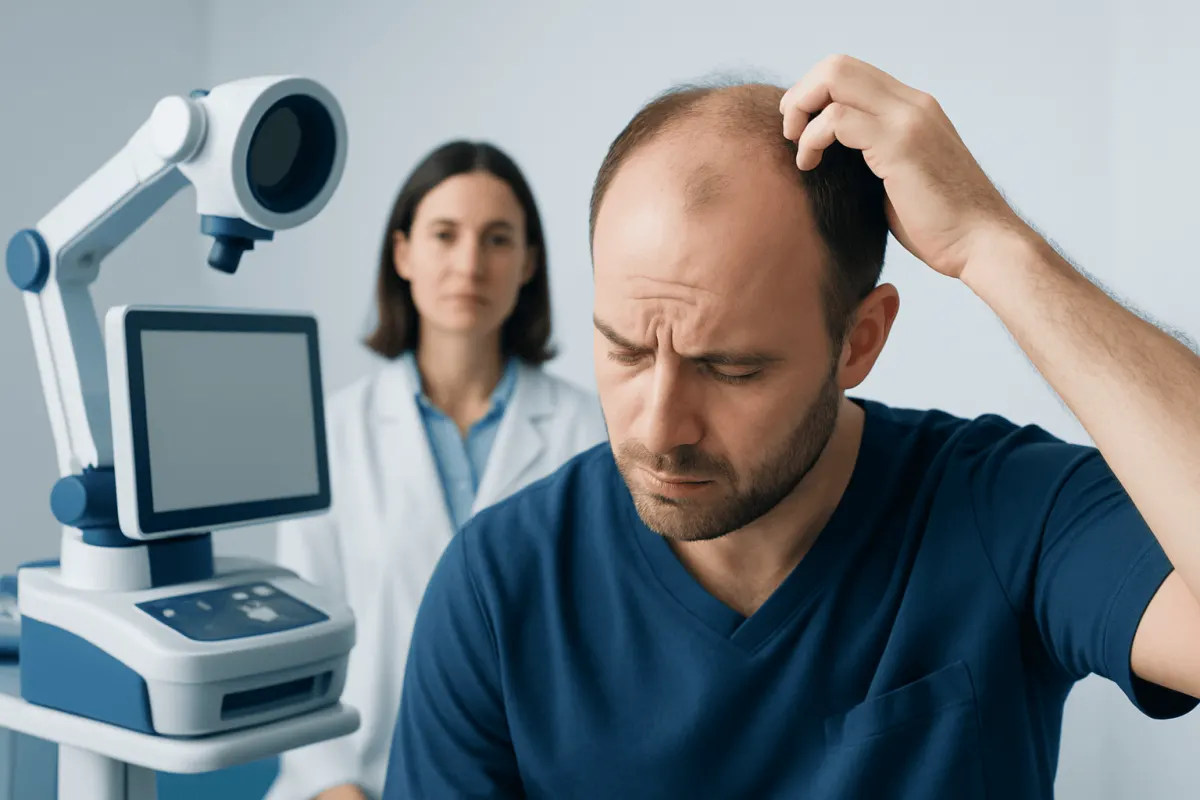
Scratching scalp and hair loss may occur together because repeated scratching can break hairs and inflame the skin, but it is often the underlying cause of itch—such as dandruff, dermatitis, psoriasis, infection, or another scalp disorder—that requires attention. Most causes are treatable, and early assessment is especially important when hair loss is patchy, painful, or associated with scalp changes.
Overview: Can Scratching Cause Hair Loss?
Scratching scalp and hair loss can be connected, but scratching is not always the main cause of hair thinning. Vigorous or repeated scratching can snap fragile hair shafts, loosen hairs that are already shedding, and create inflammation or small wounds in the scalp. This may make hair look thinner, particularly in one repeatedly scratched area.
More often, itch and hair loss are two signs of the same underlying problem. Common examples include seborrheic dermatitis (dandruff), eczema, psoriasis, allergic reactions to hair products, fungal infection, and inflammation around hair follicles. Some of these conditions affect only the scalp surface, while others can interfere with normal hair growth.
In many cases, hair can regrow once the trigger is identified and the scalp settles. Permanent hair loss is less common, but it can occur if a condition causes scarring of the hair follicles or if infection and inflammation are left untreated. A clinician can help distinguish hair breakage, normal shedding, non-scarring hair loss, and scarring hair loss.
How Itching, Scratching, and Hair Changes Are Linked
Hair grows from follicles located within the skin. Scratching mainly affects the scalp surface and the visible hair shaft rather than directly destroying follicles. However, fingernails can damage the skin barrier, causing redness, crusting, bleeding, or thickened skin. This can perpetuate an itch-scratch cycle: itch leads to scratching, scratching increases irritation, and irritation produces more itch.
Repeated friction can also cause hair shaft breakage. Broken hairs may look like short, uneven strands rather than full hairs that have shed from the root. This is particularly noticeable around the crown, hairline, or behind the ears if those areas are scratched often. Tight hairstyles, chemical processing, heat styling, and rough brushing can add to this physical stress.
Inflammation may temporarily shift more hairs into the shedding phase, called telogen effluvium, especially after a severe scalp flare or infection. In contrast, smooth bald patches, widening of the part, or gradual thinning may point to another form of hair loss that is not caused by scratching itself. The pattern and scalp appearance are important clues.
- Breakage: short snapped strands, uneven hair length, and rough-feeling hair.
- Shedding: full-length hairs coming out during washing or brushing.
- Follicle damage: shiny skin, loss of visible follicle openings, or scar-like changes that need specialist assessment.
Common Causes of an Itchy Scalp With Hair Loss

Seborrheic dermatitis is a frequent cause of scalp itch and flaking. It may produce white or yellowish scale, redness, and greasy patches. Although dandruff does not usually cause permanent hair loss, vigorous scratching and significant inflammation can contribute to temporary shedding or breakage.
Inflammatory skin conditions such as atopic dermatitis and psoriasis can also affect the scalp. Psoriasis often causes well-defined, thicker areas of scale, while eczema may be associated with sensitive, dry, or irritated skin elsewhere on the body. Allergic or irritant contact dermatitis can develop after exposure to hair dye, fragranced products, styling sprays, shampoos, oils, or other scalp products. Symptoms may begin soon after use or emerge after repeated exposure.
Fungal scalp infection, known as tinea capitis, is particularly important to recognize. It can cause itching, scaling, broken hairs, patchy hair loss, black dots where hairs have broken close to the scalp, and sometimes swollen or tender areas. It is more common in children but can affect adults. Because it typically needs prescription antifungal treatment, over-the-counter dandruff products alone may not be sufficient.
Other possible causes include head lice, bacterial folliculitis, autoimmune hair loss such as alopecia areata, and scarring inflammatory disorders including lichen planopilaris or discoid lupus. Less commonly, an itch may be related to nerve irritation, stress, or a compulsive scratching habit. A medical assessment is helpful when symptoms persist or the cause is unclear.
Symptoms That Help Identify the Cause
The details of the itch can guide the evaluation. Flaking without major hair loss may suggest dandruff or a mild dermatitis. Burning, tenderness, pus-filled bumps, crusting, or an unpleasant odor can indicate infection or follicle inflammation. Pain is not typical of simple dandruff and should not be ignored, particularly if it is worsening.
The pattern of hair loss also matters. Round or oval patches may occur with fungal infection or alopecia areata. Diffuse shedding across the entire scalp can be associated with illness, stress, nutritional issues, hormonal changes, certain medicines, or a scalp inflammatory flare. Hair loss focused in areas exposed to tight braids, extensions, buns, or frequent pulling may indicate traction-related damage.
Changes in the scalp itself deserve attention. Thick scale, redness, sores, bleeding from scratching, scabs, and pustules may point to a treatable skin disorder. Smooth, shiny areas with reduced or absent follicle openings can be a warning sign of scarring alopecia. This type of hair loss should be evaluated early because treatment aims to control inflammation and preserve remaining follicles.
Diagnosis: What a Clinician May Check
A clinician will usually ask when itching and hair changes began, whether they developed suddenly or gradually, and what hair products or treatments have recently been used. They may also ask about personal or family skin conditions, new medicines, recent illness, stress, dietary changes, and close contact with anyone who has a scalp infection or lice.
Examination includes looking closely at the scalp, hair shafts, and distribution of hair loss. A dermatologist may use dermoscopy, a handheld magnifying device that helps assess hair shafts, follicle openings, scale, and inflammation. This examination can help separate hair breakage from shedding and identify patterns linked to different scalp disorders.
If infection is suspected, the clinician may take hairs or scale for fungal testing, microscopy, or culture. Blood tests are not necessary for every person, but may be considered when diffuse shedding suggests an underlying medical contributor. In selected cases, a small scalp biopsy may be recommended to diagnose scarring alopecia or an unclear inflammatory condition.
People should avoid scratching or applying multiple new treatments immediately before an appointment if possible, as this can further irritate the scalp and obscure useful clues. Bringing photographs showing earlier stages of the rash or hair loss can also be helpful, especially when symptoms come and go.
Treatment Options and Gentle Scalp Care
Treatment depends on the diagnosis. Medicated shampoos may be recommended for dandruff or seborrheic dermatitis. Prescription anti-inflammatory treatments can help control eczema, psoriasis, and certain inflammatory scalp conditions. Fungal scalp infections generally require prescription antifungal medicines, while lice require targeted treatment and attention to close contacts and personal items as advised by a healthcare professional.
It is important not to assume that every itchy, flaky scalp is dandruff. For example, using steroid-containing products without guidance may mask some signs of infection, and heavy oils or fragranced products may worsen contact dermatitis in some people. A clinician or pharmacist can advise on safe product choices for an individual situation.
While treatment takes effect, gentle care can reduce additional irritation. Washing the scalp regularly with a mild product appropriate for the person’s hair type, rinsing thoroughly, avoiding very hot water, and keeping fingernails short may help. Cool compresses can provide short-term comfort for itch. It can also be useful to pause hair dye, chemical straightening, bleaching, tight hairstyles, and aggressive brushing until the scalp has recovered.
Acıbadem Health Point’s multidisciplinary specialists and JCI-accredited hospitals can assess scalp conditions and hair loss for international patients, with care tailored to the suspected cause. Persistent symptoms should be managed with guidance from a qualified doctor or dermatologist rather than by repeated self-treatment alone.
When to Seek Medical Care
Medical advice is appropriate when scalp itching lasts longer than a few weeks, returns repeatedly, or occurs alongside noticeable hair shedding or breakage. A clinician should also assess any new patch of hair loss, especially when the area is enlarging. Prompt diagnosis can reduce discomfort and help protect hair follicles where inflammation is involved.
More urgent assessment is recommended for painful swelling, spreading redness, warmth, pus, fever, tender neck lymph nodes, or a boggy swollen scalp area. These symptoms may suggest an infection requiring timely treatment. Children with patchy, scaly hair loss should also be evaluated promptly because fungal scalp infection can spread and may need prescription medicine.
People should seek dermatology assessment if they notice shiny or scar-like scalp areas, loss of follicle openings, persistent burning, or hair loss that continues despite reasonable scalp care. These signs do not always indicate a serious condition, but they can occur with disorders where earlier treatment is important to limit irreversible hair loss.
Frequently asked questions
01Can scratching the scalp cause permanent hair loss?
Scratching usually causes temporary hair breakage or irritation rather than permanent hair loss. Permanent loss is more likely when an underlying disorder damages or scars the hair follicles, or when severe inflammation or infection is not treated. New patches of hair loss or scalp scarring should be assessed by a dermatologist.
02Why does my scalp itch and my hair fall out when I wash it?
Washing may make existing shedding more noticeable because hairs that have already entered the shedding phase are released during cleansing. Itching can be due to dandruff, dermatitis, product irritation, psoriasis, infection, or other scalp conditions. If shedding is substantial, patchy, or associated with scale or pain, medical advice is recommended.
03Will hair grow back after an itchy scalp condition is treated?
Hair often regrows after the cause of inflammation, infection, or hair breakage is treated and the scalp recovers. Regrowth can take time because hair grows slowly. Outcomes depend on the cause, duration of inflammation, and whether the follicles have been scarred.
04Can dandruff cause hair loss?
Dandruff itself does not usually destroy hair follicles or cause permanent hair loss. However, intense itching, scratching, and scalp inflammation can lead to temporary shedding or broken hairs. Treating dandruff and avoiding aggressive scratching can help protect the scalp and hair.
05Should people with an itchy scalp avoid oiling their hair?
Oils may feel soothing for some people, but they can irritate sensitive skin or worsen scaling in others. Fragranced oils and new products may also trigger contact dermatitis. It is best to avoid applying multiple products to an inflamed scalp and seek advice if symptoms persist.
06What type of doctor treats scalp itching and hair loss?
A primary care doctor can assess many common causes and recommend initial care. A dermatologist is the specialist most often involved when symptoms are persistent, severe, recurrent, or associated with patchy hair loss, infection, or possible scarring. They can examine the scalp closely and arrange tests when needed.
This article is for general information only and is not a substitute for professional medical advice. Please consult a qualified doctor about your individual situation.
Hair transplant in Turkey — costs, graft counts & a free assessment
JCI-accredited · board-certified surgeons · reply within 24h
Add us as a Preferred Source to see more of our trusted health content across Google Search, AI Overviews and Discover.