Seborrheic Dermatitis vs Eczema: Key Differences
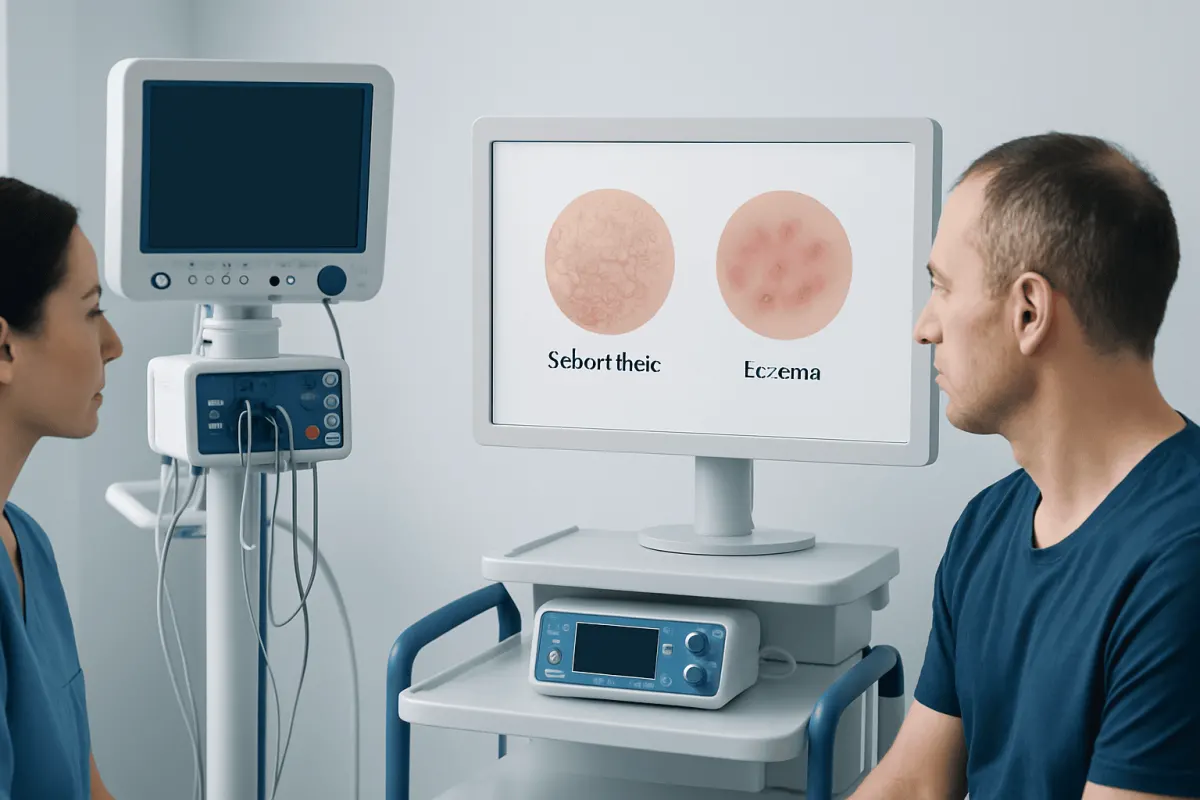
Seborrheic dermatitis and eczema can both cause itching, redness, and scaling, but they tend to affect different body areas and have different patterns. A clinician usually distinguishes them by examining the skin, discussing symptoms and triggers, and ruling out similar conditions when needed.
Seborrheic Dermatitis vs Eczema: A Side-by-Side Comparison
Seborrheic dermatitis vs eczema is a common question because both conditions can make skin red, flaky, and itchy. The main distinction is usually the pattern: seborrheic dermatitis most often develops in areas with many oil-producing glands, while eczema more often causes dry, sensitive, very itchy patches that may occur on many parts of the body.
Neither condition is a sign of poor hygiene, and both can vary over time. A skin examination is often enough to identify the likely cause, although overlap is possible and other rashes may occasionally need to be excluded.
- Typical locations: Seborrheic dermatitis often affects the scalp, hairline, eyebrows, eyelids, sides of the nose, ears, beard area, middle of the chest, and upper back. Eczema commonly affects the hands, neck, face, elbows, knees, wrists, ankles, and skin folds; the pattern can differ by age.
- Scale and texture: Seborrheic dermatitis commonly has white to yellowish, sometimes greasy-looking flakes. Eczema usually looks dry, rough, cracked, or scaly and may weep or form crusts during a severe flare.
- Main symptom: Both can itch. Eczema is often intensely itchy, while seborrheic dermatitis may itch, sting, or feel irritated, particularly on the scalp.
- Contributing factors: Seborrheic dermatitis is linked with skin oil, inflammation, and a normal skin yeast called Malassezia. Eczema involves a weakened skin barrier and an overactive inflammatory response, with triggers varying from person to person.
- Common care approach: Seborrheic dermatitis may improve with medicated antifungal scalp or skin products and short-term anti-inflammatory treatment. Eczema care centers on regular moisturization, trigger reduction, and anti-inflammatory treatment during flares.
What Seborrheic Dermatitis Usually Looks and Feels Like
Seborrheic dermatitis is a long-term inflammatory skin condition that tends to wax and wane. On the scalp, it can appear as persistent dandruff, thicker flakes, redness, or patches of adherent scale. In infants, a related scalp presentation is often called cradle cap and commonly improves with time.
In adults, the rash often appears in symmetrical areas where the skin is relatively oily. Flaking around the eyebrows, in the creases beside the nose, within or behind the ears, or in facial hair can be particularly suggestive. The scale may be fine and dry or thicker and oily, depending on the site and severity.
Stress, illness, cold or dry weather, fatigue, and certain skin-care products can make symptoms more noticeable for some people. Seborrheic dermatitis is not contagious. It is also distinct from psoriasis, although scalp psoriasis can sometimes cause thick scale and may resemble it.
What Eczema Usually Looks and Feels Like

Eczema is a broad term for inflammatory skin conditions. The most common form, atopic dermatitis, is associated with skin dryness, barrier dysfunction, and a tendency toward inflammation. It can begin in childhood but may persist into adulthood or first develop later in life.
Itch is often the dominant symptom. Repeated rubbing or scratching can make skin thickened, darker or lighter than surrounding skin, and more easily irritated. During an active flare, eczema may look red, purple, brown, gray, or deeper in color depending on a person’s skin tone, so color alone is not a reliable way to judge severity.
Eczema may be triggered or worsened by dry air, heat, sweating, fragranced products, harsh soaps, wool or rough fabrics, allergens, emotional stress, and skin infection. Some people have a personal or family history of asthma, hay fever, food allergy, or eczema, but these conditions do not occur in everyone with eczema.
How a Clinician Tells Them Apart
Doctors usually diagnose seborrheic dermatitis and eczema through a focused medical history and examination. They consider where the rash began, how it has changed, whether itching interrupts sleep, the appearance of scale, and whether symptoms recur in particular seasons or after exposure to products, sweat, or stress.
Location is especially helpful. Scalp and central-face flaking with yellowish or greasy scale is more consistent with seborrheic dermatitis. Very dry, itchy patches on the hands, limbs, neck, or body folds may point toward eczema. However, facial eczema can occur, and some people have both eczema and seborrheic dermatitis.
A clinician may also consider contact dermatitis, fungal infections, rosacea, psoriasis, or other inflammatory skin disorders. If a product allergy is suspected, patch testing may be recommended. A skin scraping, swab, or rarely a biopsy may be useful when the rash is unusual, severe, does not improve as expected, or there are signs of infection.
Photographs taken during flares can be useful when symptoms come and go before an appointment. Patients should also bring a list or photos of shampoos, cosmetics, hair products, soaps, and topical treatments they use, as these details can help identify possible irritants or allergens.
What to Do for Each Condition
For seborrheic dermatitis, care often includes a medicated shampoo or cleanser with an antifungal ingredient, used as directed by a clinician or product instructions. Depending on the affected area and severity, a doctor may recommend a short course of a topical anti-inflammatory medicine. Gentle cleansing and avoiding aggressive scratching or heavy fragranced products can reduce additional irritation.
For eczema, consistent use of a bland, fragrance-free moisturizer is a foundation of care. Applying moisturizer after bathing while skin is still slightly damp can help support the skin barrier. Short, lukewarm showers or baths, mild cleansers, and soft breathable clothing may also help limit dryness and irritation.
When eczema flares, clinicians may prescribe or recommend topical anti-inflammatory treatment appropriate for the body area, age, and severity. More extensive, persistent, or difficult-to-control eczema may require specialist assessment and additional options. Patients should avoid using strong steroid creams, antifungal products, or home remedies for prolonged periods without medical guidance, particularly on the face, eyelids, skin folds, or in young children.
Both conditions benefit from a simple routine that can be followed consistently. Treatments may need adjustment over time because weather, stress, skin sensitivity, and the location of the rash can change. A dermatologist can create an individualized plan when over-the-counter measures are not enough.
Everyday Skin Care and Flare Prevention
Although neither condition can always be prevented, many people can reduce flares by identifying personal triggers and using gentle skin care. Choose fragrance-free products when possible, avoid scrubbing flaky areas, and wash off sweat after exercise if it seems to worsen symptoms. Keeping fingernails short may reduce skin damage caused by unconscious scratching.
For eczema-prone skin, regular moisturization is useful even when the rash is quiet. Thick creams or ointments are often more protective than thin lotions, though the best choice is one the person can use comfortably and consistently. New products can be tested on a small area first if the skin is sensitive.
For scalp seborrheic dermatitis, ongoing intermittent use of a suitable medicated shampoo may help prevent recurrent flaking after symptoms have settled. It is important to follow professional advice about how often to use treatment products and whether they are appropriate for colored, chemically treated, or very sensitive hair and skin.
There is no evidence that restrictive diets are routinely necessary for seborrheic dermatitis or eczema. Anyone who notices a clear, repeatable relationship between a food and symptoms should discuss it with a doctor or registered dietitian before removing important foods from the diet.
When to Seek Medical Care
Medical assessment is advisable when a rash is new, widespread, very uncomfortable, affecting sleep or daily activities, or not improving with gentle skin care. It is also important to seek care if there is increasing pain, warmth, swelling, pus, honey-colored crusting, fever, or rapidly spreading redness, as these may indicate an infection or another condition requiring prompt treatment.
People should consult a clinician before treating persistent rashes around the eyes, on the genitals, or on the face with medicated products. Infants with extensive scalp scaling, skin redness, poor feeding, fever, or signs of discomfort should be evaluated by a pediatric healthcare professional.
For patients seeking coordinated evaluation, Acıbadem Health Point’s multidisciplinary specialists and JCI-accredited hospitals diagnose and treat skin conditions for international patients. A dermatologist can help clarify whether symptoms are seborrheic dermatitis, eczema, an allergy-related rash, or another skin condition and can recommend suitable care.
Living With a Recurring Skin Condition
It can be frustrating when symptoms improve and then return. Recurrence does not necessarily mean that treatment has failed; both seborrheic dermatitis and eczema are often chronic conditions that require maintenance care and occasional treatment for flares.
Keeping a brief symptom record can make follow-up visits more productive. Recording the location of flares, treatments used, response to treatment, recent illness, weather changes, stress, and new skin or hair products may reveal useful patterns. A clinician can then help simplify the routine and select treatments that match the person’s diagnosis, skin type, and lifestyle.
With an accurate diagnosis and a consistent plan, most people can reduce itching, visible scaling, and disruption to everyday life. If treatment is not helping, it is appropriate to return for reassessment rather than continuing to try multiple products without guidance.
Frequently asked questions
01Can seborrheic dermatitis and eczema happen at the same time?
Yes. A person may have seborrheic dermatitis in oil-rich areas such as the scalp or eyebrows and eczema on the hands, limbs, or body folds. A clinician can help identify which condition is affecting each area and tailor treatment accordingly.
02Is dandruff the same as seborrheic dermatitis?
Dandruff is often considered a mild scalp form of seborrheic dermatitis. It mainly causes visible flaking, while more active seborrheic dermatitis may also cause redness, itching, and thicker scale. Not all scalp flaking is dandruff, so persistent or severe symptoms should be checked.
03How can someone tell whether a facial rash is eczema or seborrheic dermatitis?
Seborrheic dermatitis commonly affects the eyebrows, sides of the nose, hairline, beard area, and ears, often with flaky or greasy scale. Facial eczema may be drier, more intensely itchy, and linked with sensitivity to products or irritation. Because both can affect the face, professional assessment is helpful when the diagnosis is uncertain.
04Can over-the-counter products treat seborrheic dermatitis or eczema?
Some mild cases improve with appropriate nonprescription products, such as medicated anti-dandruff shampoos for scalp seborrheic dermatitis and fragrance-free moisturizers for eczema. However, persistent, widespread, painful, or recurrent symptoms may need prescription treatment. It is best to ask a pharmacist or clinician which products are suitable for the affected area.
05Are seborrheic dermatitis and eczema contagious?
No. Neither seborrheic dermatitis nor eczema spreads from person to person through contact. They are inflammatory skin conditions, not contagious infections.
06Does stress cause seborrheic dermatitis or eczema?
Stress does not usually cause these conditions on its own, but it can worsen symptoms or trigger flares in some people. Sleep, illness, weather, sweating, and irritating products can also contribute. Stress-management strategies may be a helpful part of an overall care plan, alongside skin-directed treatment.
This article is for general information only and is not a substitute for professional medical advice. Please consult a qualified doctor about your individual situation.
Hair transplant in Turkey — costs, graft counts & a free assessment
JCI-accredited · board-certified surgeons · reply within 24h
Add us as a Preferred Source to see more of our trusted health content across Google Search, AI Overviews and Discover.