Can Early Lung Cancer Cause Finger and Nail Clubbing?

Finger clubbing can occur with lung cancer, including in some people whose cancer is not yet diagnosed, but it is not a reliable early screening sign and has many other possible causes. New or progressive changes in the shape of the fingertips and nails should be assessed by a qualified clinician, especially when accompanied by cough, breathlessness, chest pain, or unexplained weight loss.
Lung cancer early stage finger clubbing: the key facts
Lung cancer early stage finger clubbing is possible, but clubbing is not a dependable way to identify lung cancer early. It is a physical change in which the tips of the fingers become broader and more rounded, while the nails curve more strongly over them. The change usually develops gradually rather than overnight.
Some lung cancers can trigger chemical and inflammatory signals that affect blood flow and tissue growth at the fingertips. However, many people with lung cancer never develop clubbing, and many people with clubbing do not have cancer. A clinician should therefore look at the whole picture, including symptoms, medical history, examination findings, and appropriate tests.
When lung cancer is found at an earlier stage, it may cause few or no symptoms. Screening with low-dose CT may be appropriate for certain people at high risk because of age and smoking history; it is more useful for early detection than checking the nails alone. Anyone concerned about a new nail or fingertip change should arrange a medical review rather than trying to interpret it independently.
What are the different stages of nail clubbing?
Clinicians may describe nail clubbing as a progression of visible and measurable changes. The stages are not used to diagnose a particular disease or to measure cancer stage. Instead, they help document the physical finding and whether it appears to be changing over time.
- Early change: the nail bed may feel softer or spongier than usual when gently pressed.
- Loss of the normal nail angle: the angle between the nail and surrounding skin becomes flatter or more open.
- Increased nail curvature: nails become more convex from side to side and from base to tip.
- Bulbous fingertips: the end of the finger becomes noticeably enlarged, creating a rounded or drumstick-like appearance.
- Hypertrophic osteoarthropathy: a small number of people develop painful swelling around joints and long bones along with clubbing.
These changes may affect fingers and toes. They are often similar on both sides of the body, although the pattern can vary. A healthcare professional can distinguish true clubbing from other common nail changes, such as ridging, thickening, fungal infection, or changes related to injury.
What is the five finger test for lung cancer?

The five finger test, more commonly called the Schamroth window test, is a quick way to look for a feature of finger clubbing. A person places the nails of the same fingers from opposite hands together, with the fingertips touching. In most people without clubbing, a small diamond-shaped gap of light is visible between the nail beds.
With established clubbing, that small gap may be absent because the nails and soft tissue are more curved and enlarged. This observation can support a clinician’s examination, but it cannot confirm clubbing by itself and cannot diagnose lung cancer. Nail shape naturally varies between people, and the test may be difficult to interpret without training.
A positive or uncertain result should not cause panic. It is best treated as a reason to book a routine medical assessment, particularly if the change is new, worsening, or associated with respiratory symptoms. A doctor may compare both hands, examine the feet, review photographs from earlier years, and investigate possible underlying causes when needed.
What do lung cancer fingernails look like?
When finger clubbing is associated with lung cancer, the nails may look more rounded and curved than before, as though they are arching over enlarged fingertips. The nail base can appear less sharply defined, and the soft tissue beneath it may feel spongy. The fingertips may become broad and bulb-like rather than maintaining their usual tapered shape.
These features are not unique to lung cancer. Yellowing, splitting, white marks, grooves, bruising, thickened nails, or a single dark streak are different nail findings and may have other explanations. Nail changes should not be used to diagnose cancer from photographs or online comparisons.
Clubbing can be associated with other conditions affecting the lungs, including chronic lung infection and bronchiectasis, as well as certain heart disorders, inflammatory bowel disease, liver disease, and thyroid-related conditions. Some people have familial or longstanding clubbing with no harmful underlying cause. The priority is to establish whether the change is longstanding and benign or new and linked to a treatable health problem.
Is clubbing of fingers serious?
Clubbing itself is not usually painful or dangerous, but it can be a sign of an underlying condition that needs attention. Its significance depends on when it started, how quickly it is changing, whether it affects both hands or feet, and whether other symptoms are present. New clubbing in an adult should generally be medically assessed.
Possible causes include lung conditions, congenital or acquired heart disease, liver disease, inflammatory bowel disease, and less commonly some cancers. In people with a respiratory cause, symptoms such as a persistent cough, shortness of breath, recurrent chest infections, wheezing, coughing up blood, chest discomfort, fatigue, or unintentional weight loss can help guide evaluation.
The presence of clubbing does not reveal whether cancer is present, which type it might be, or how advanced it is. If lung cancer is diagnosed, its outlook depends on factors such as cancer type, stage, molecular features, overall health, and response to treatment. Modern care may include lung cancer treatment options such as surgery, radiotherapy, systemic medicines, and supportive care, selected through a personalised multidisciplinary assessment.
How doctors investigate finger clubbing and possible lung disease
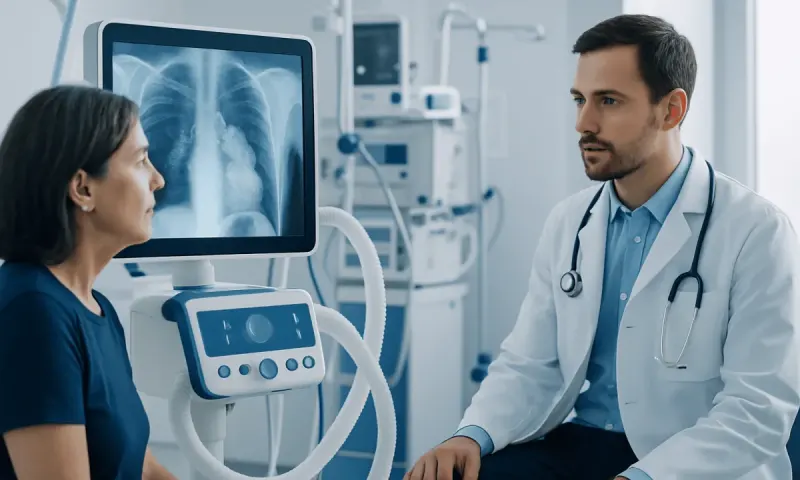
A clinician will begin by asking when the nail changes started and whether there is a family history of similar fingertips. They will also ask about smoking or vaping, occupational exposures, breathing symptoms, digestive symptoms, heart history, medications, and recent infections. Examination may include listening to the lungs and heart, checking oxygen levels, and looking for swelling, joint pain, or signs of other conditions.
Testing is based on the individual situation. It may include blood tests, a chest X-ray, lung function tests, an electrocardiogram, or other imaging. If there is a concern about a lung abnormality, a CT scan can provide more detailed information. Further tests, including bronchoscopy or a biopsy, are only considered when imaging or clinical findings make them appropriate.
Doctors use these steps to investigate the cause rather than assuming cancer. If a suspicious lung finding is identified, assessment can include imaging to establish extent, tissue testing to confirm the diagnosis, and molecular testing when relevant. Information on lung cancer can help patients understand the condition, but individual results should always be discussed with the treating team.
Modern treatment and outlook when lung cancer is confirmed
Not every person with lung cancer needs the same treatment. For some early-stage cancers, surgery to remove the tumour may be the main treatment, sometimes alongside chemotherapy, immunotherapy, or radiotherapy depending on the cancer type and risk of recurrence. For cancers that cannot be removed surgically, radiotherapy may be used with curative intent in selected cases.
For more advanced disease, treatment may include chemotherapy, immunotherapy, targeted medicines for cancers with certain genetic changes, Cancer Radiation Treatment: Options and Outlook" class="ahp-ilk">radiation treatment, or combinations of these approaches. Supportive care remains important at every stage and can address breathlessness, pain, fatigue, nutrition, emotional wellbeing, and practical concerns.
Clubbing may improve when the underlying cause is successfully treated, although this is not guaranteed and may take time. Prognosis cannot be estimated from the appearance of the nails. It is based on a full diagnostic evaluation and should be discussed carefully with an oncology team. Acıbadem Health Point’s multidisciplinary specialists at JCI-accredited hospitals diagnose and treat lung conditions and cancers for international patients.
When to seek medical care
A person should arrange a medical appointment if they notice new widening of the fingertips, increasing nail curvature, or loss of the usual small gap when opposing nails are placed together. Assessment is particularly important if the change has developed over weeks or months rather than being present since childhood.
More prompt medical advice is appropriate when clubbing occurs alongside a cough lasting more than a few weeks, worsening breathlessness, chest pain, repeated chest infections, unexplained fatigue, reduced appetite, weight loss, fever, night sweats, or coughing up blood. These symptoms can have many causes, but they deserve timely evaluation.
Emergency care is needed for severe breathing difficulty, sudden chest pain, fainting, blue or grey lips, confusion, or significant coughing up of blood. Avoid self-treating nail changes with supplements or cosmetic products in place of an assessment, as these do not address an underlying medical cause.
Frequently asked questions
01Can finger clubbing be the first sign of lung cancer?
It can occasionally be noticed before lung cancer is diagnosed, but it is not a common or specific early sign. Many lung cancers do not cause clubbing, and clubbing has several non-cancer causes. New finger clubbing should be assessed by a clinician rather than treated as proof of cancer.
02Does finger clubbing mean lung cancer is advanced?
No. Finger clubbing cannot determine whether lung cancer is early or advanced. Cancer stage is established through imaging, tissue testing, and assessment of whether cancer has spread. The appearance of the nails alone does not provide this information.
03Can finger clubbing go away?
It may improve if the underlying cause is effectively treated, although this can take time and does not occur in every case. Longstanding or familial clubbing may remain unchanged. The main aim is to identify and manage the cause.
04Can smoking cause clubbing of the fingers?
Smoking does not directly cause clubbing in every smoker, but it increases the risk of several lung diseases that can be associated with clubbing, including lung cancer. People who smoke and notice new fingertip changes should speak with a healthcare professional. Stopping smoking is beneficial at any age and at any stage of lung health.
05Is the Schamroth window test accurate for lung cancer?
No. The Schamroth window test can suggest clubbing, but it is not a test for lung cancer and cannot establish a diagnosis. A clinician may use it as one part of a physical examination and decide whether further tests are needed.
06Which other diseases can cause clubbed fingers?
Clubbing can occur with chronic lung infections, bronchiectasis, some interstitial lung diseases, heart conditions, inflammatory bowel disease, liver disease, and certain inherited conditions. The cause is identified through medical history, examination, and targeted tests. In some people, no serious cause is found.
This article is for general information only and is not a substitute for professional medical advice. Please consult a qualified doctor about your individual situation.
Medical weight-loss options in Turkey — costs & eligibility
JCI-accredited · board-certified surgeons · reply within 24h
Add us as a Preferred Source to see more of our trusted health content across Google Search, AI Overviews and Discover.