Stage III Lung Cancer: Diagnosis, Outlook and Treatment
Stage III lung cancer is cancer that has spread beyond the original lung tumor to nearby lymph nodes or structures in the chest, without distant spread to organs such as the liver, bones or brain. It is a complex but potentially treatable stage, and care is usually planned by a multidisciplinary cancer team.
Understanding stage III lung cancer
Stage III lung cancer means that cancer has spread from its original location in the lung to nearby lymph nodes or structures in the chest, but has not been found in distant parts of the body. It is often called locally advanced lung cancer. The condition can be serious, yet many treatment options are available and some treatment plans aim to control the cancer for a long time or, in selected situations, to cure it.
The term “stage 111 lung cancer” is commonly used when searching online, but the medical term is stage III lung cancer, using the Roman numeral III. Staging is most often discussed for non-small cell lung cancer (NSCLC), which includes adenocarcinoma and squamous cell carcinoma. Small cell lung cancer is generally classified as limited-stage or extensive-stage rather than by the same detailed stage groups.
Stage III is not a single, uniform diagnosis. The size and position of the lung tumor, which lymph nodes contain cancer cells, and whether nearby structures are involved can all differ. For this reason, two people with stage III disease may be offered different treatment plans.
How stage III is classified
Doctors use the TNM staging system to describe lung cancer. T refers to the size and local extent of the primary tumor, N describes nearby lymph-node involvement, and M indicates whether cancer has spread to distant organs. Stage III generally means M0: no distant metastasis has been identified.
Stage III NSCLC is divided into IIIA, IIIB and IIIC. In broad terms, IIIA may include disease that is still technically removable with surgery in carefully selected cases. IIIB and IIIC more often involve lymph nodes on the opposite side of the chest or above the collarbone, or more extensive local involvement, making surgery less likely to be the first option. These categories are guides rather than automatic treatment decisions.
A multidisciplinary review is important because staging can be technically complex. Lung cancer specialists consider scans, biopsy findings, breathing reserve, heart health, other medical conditions and the individual’s priorities. A case considered unresectable at one point may also be reassessed after initial treatment if the cancer responds well.
Symptoms and when to seek medical care
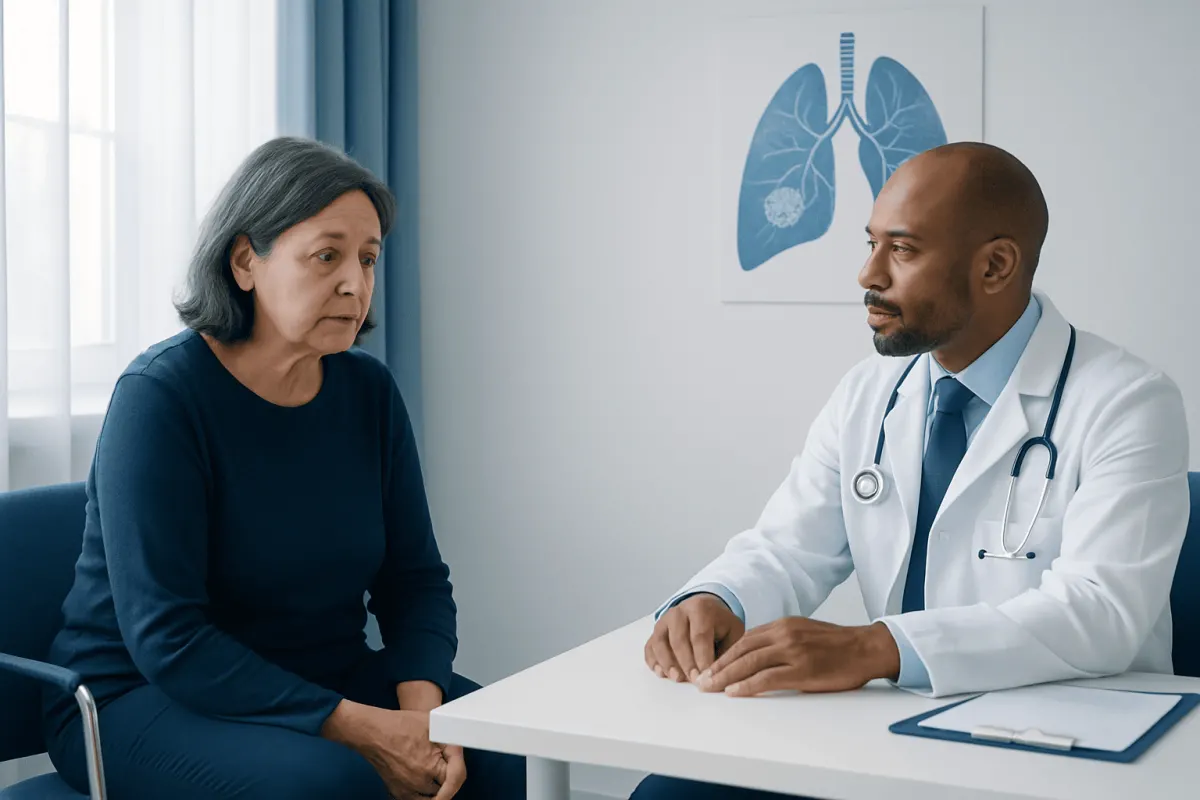
Early lung cancer may cause no symptoms. When symptoms occur, they can include a cough that does not settle, a change in a longstanding cough, coughing up blood, chest discomfort, wheezing, shortness of breath, hoarseness, recurring chest infections, tiredness, reduced appetite or unexplained weight loss. These symptoms can also result from many non-cancerous conditions.
Medical assessment is advisable for a cough lasting more than a few weeks, repeated chest infections, new breathlessness, unexplained weight loss or blood in the sputum. A person should seek urgent medical care for significant coughing of blood, severe difficulty breathing, sudden chest pain, confusion, new weakness, or a severe or rapidly worsening headache.
People who currently smoke, previously smoked, or have had long-term exposure to secondhand smoke, radon, asbestos, silica or certain workplace chemicals should discuss persistent symptoms with a clinician. Screening with low-dose CT may be appropriate for some people at high risk, even when they have no symptoms.
Tests used to confirm the diagnosis
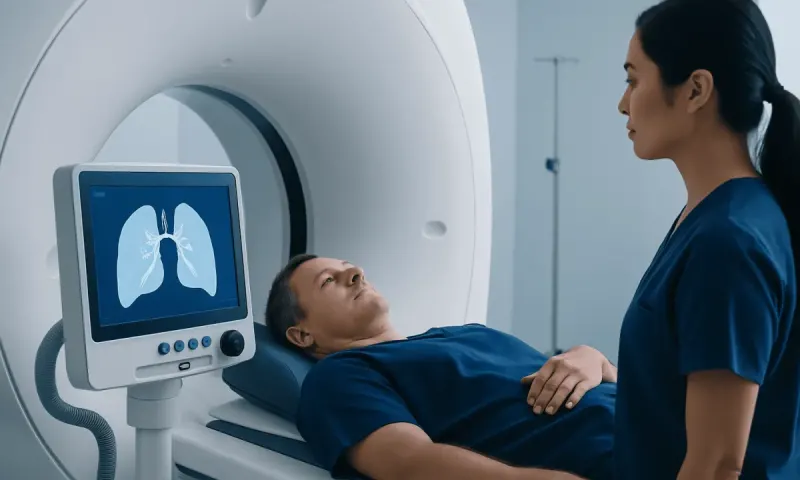
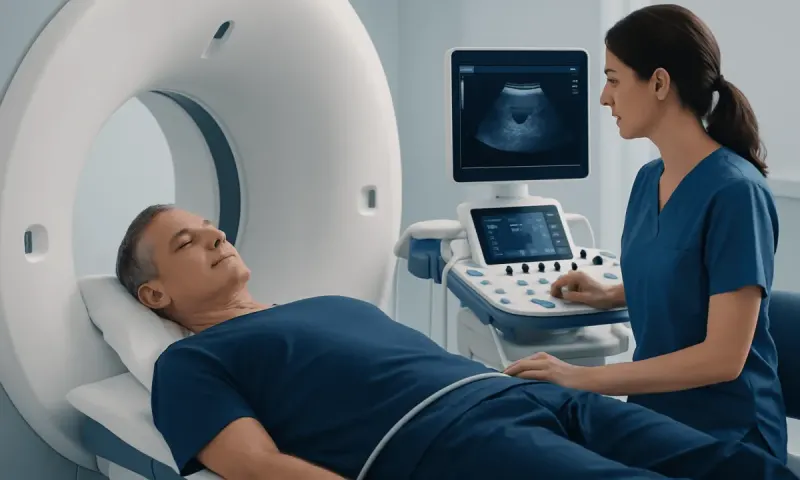
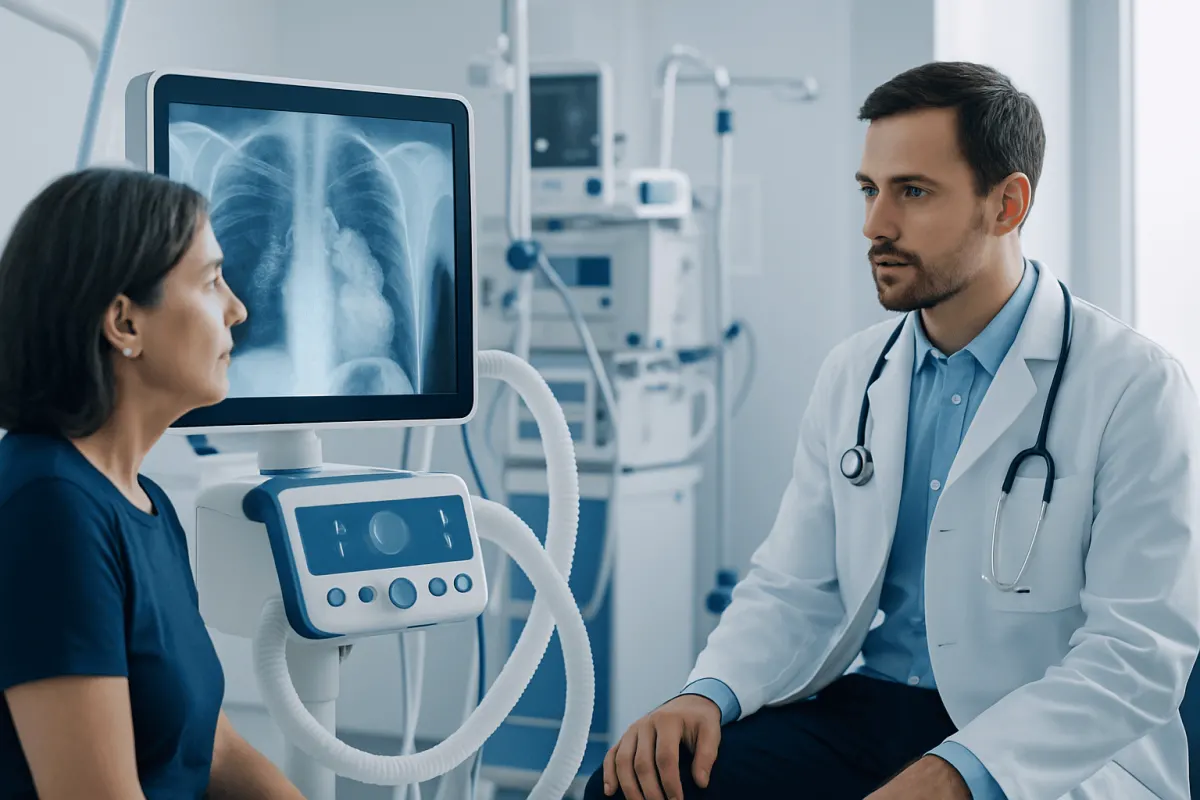
A diagnosis begins with a clinical assessment and imaging. A chest X-ray may identify an abnormality, while a contrast-enhanced CT scan of the chest and upper abdomen helps define the tumor and lymph nodes. PET-CT is often used to look for active cancer in lymph nodes and other parts of the body. Brain MRI may be recommended, particularly when stage III disease is suspected or symptoms raise concern.
A biopsy is needed to confirm that a lesion is cancer and determine its type. Depending on the tumor location, this may be obtained through bronchoscopy, endobronchial ultrasound (EBUS), a needle biopsy guided by CT imaging, or another procedure. Sampling lymph nodes is particularly important because it can change the stage and treatment approach.
For NSCLC, the tumor should also be assessed for biomarkers that may affect treatment. These may include changes in genes such as EGFR, ALK, ROS1, BRAF, KRAS, MET, RET, NTRK or HER2, as well as PD-L1 protein expression. Biomarker testing does not delay care unnecessarily; it helps the team select the most suitable systemic treatment and plan treatment after chemoradiotherapy or surgery.
Before treatment, lung-function tests, blood tests and sometimes heart assessment help establish whether a person can safely undergo surgery, chemotherapy or radiation. The care team also evaluates nutrition, fitness, medications and support needs.
Modern treatment approaches for stage III disease
Treatment is individualized and usually combines local treatment, which targets cancer in the chest, with systemic treatment, which circulates through the body. For unresectable stage III NSCLC, a common approach is concurrent chemoradiotherapy: chemotherapy and radiation are given during the same overall treatment period when a person is fit enough. This approach can improve cancer control compared with giving the treatments separately in appropriate patients.
If the cancer has not progressed after concurrent chemoradiotherapy, consolidation immunotherapy may be considered for eligible patients. Immunotherapy helps the immune system recognize and attack cancer cells, but it can cause immune-related side effects that require monitoring. In some molecularly defined cancers, targeted treatment after chemoradiotherapy may be considered according to current evidence, approvals and the person’s clinical situation.
For selected stage IIIA cancers that appear resectable, treatment may involve chemotherapy with or without immunotherapy before surgery, followed by an operation to remove the tumor and affected lymph nodes. Radiation therapy and additional systemic treatment may be recommended before or after surgery in certain circumstances. Surgery is not suitable for every stage III tumor, and this is not a reflection of the quality of care; it is based on safety and the likelihood of benefit.
When concurrent treatment is not appropriate because of other health conditions or limited functional reserve, chemotherapy and radiation may be given sequentially, or another individualized plan may be used. Lung cancer treatment also includes symptom-relieving and supportive care, which should be offered alongside cancer-directed treatment from diagnosis onward.
- Chemotherapy may shrink or control cancer cells throughout the body.
- Radiation therapy uses precisely planned radiation to treat the tumor and involved lymph nodes.
- Surgery may be an option when the cancer can be removed safely and completely enough to offer benefit.
- Immunotherapy or targeted therapy may be used in specific settings based on tumor testing and treatment response.
Outlook, follow-up and supportive care
The outlook for stage III lung cancer varies considerably. It cannot be predicted accurately from the stage alone. Important factors include the exact TNM stage, tumor type, molecular findings, whether surgery is possible, overall health, lung function, treatment completion and how the cancer responds. The oncology team can explain what the individual findings mean without relying on a single statistic.
After treatment, follow-up commonly includes scheduled clinical visits and CT scans to look for recurrence or treatment-related changes. The frequency and duration of monitoring vary according to the treatment received and local clinical guidance. New symptoms between appointments should be reported rather than waiting for the next scan.
Supportive care can help preserve quality of life during and after treatment. It may include help with breathlessness, cough, pain, fatigue, nutrition, sleep, emotional wellbeing and practical concerns. Pulmonary rehabilitation or gentle, tailored physical activity may support recovery for some people. Palliative care is also appropriate at any stage when symptoms or treatment burdens need additional specialist support; it can be provided together with active cancer treatment.
Stopping smoking is beneficial at every point, including after a lung cancer diagnosis. It may improve breathing, healing and tolerance of treatment. A clinician can offer evidence-based cessation support, including counseling and medicines where appropriate.
Questions to discuss with the cancer team
Because stage III lung cancer has several possible pathways, patients and families may find it helpful to bring written questions to appointments. Asking for an explanation in plain language, requesting copies of reports and involving a trusted support person can make complex decisions easier to manage.
Useful questions include whether the cancer is considered resectable, which lymph nodes are involved, whether staging tests are complete, what the biopsy shows, and whether biomarker and PD-L1 testing has been performed. It is also reasonable to ask about the goal of treatment, expected benefits, possible side effects, alternatives and the likely schedule of visits and scans.
Acıbadem Health Point’s multidisciplinary specialists and JCI-accredited hospitals diagnose and treat lung cancer for international patients, coordinating assessment across medical oncology, radiation oncology, thoracic surgery, radiology and pathology when needed.
Frequently asked questions
01Is stage III lung cancer curable?
Some people with stage III non-small cell lung cancer are treated with the aim of cure, especially when all visible cancer can be treated effectively with surgery and/or chemoradiotherapy. However, the likelihood of long-term control varies widely. The oncology team can explain the goal of treatment based on the precise stage and individual test results.
02What is the difference between stage IIIA and IIIB lung cancer?
These groups reflect differences in tumor extent and the pattern of lymph-node involvement. Stage IIIA may be potentially resectable in selected circumstances, whereas IIIB is more often treated without surgery. The distinction requires detailed imaging and lymph-node evaluation, and treatment decisions should be made by a multidisciplinary team.
03Does stage III lung cancer always require surgery?
No. Many stage III lung cancers are best treated with a combination of chemotherapy and radiation, often followed by immunotherapy when appropriate. Surgery is considered only when the tumor can be removed safely and the expected benefit justifies the procedure.
04Why is biomarker testing important in stage III lung cancer?
Biomarker testing looks for genetic changes and proteins within the cancer cells that can influence treatment choices. Results may identify people who could benefit from targeted treatment or help guide immunotherapy decisions. Testing is especially important in non-small cell lung cancer.
05What happens after chemoradiotherapy for stage III lung cancer?
The team usually performs follow-up imaging and assesses side effects and overall recovery. If there is no progression and the person is eligible, immunotherapy may be recommended in some cases. Ongoing monitoring is important because radiation effects and cancer changes can develop over time.
06Can a person with stage III lung cancer exercise?
Many people can remain physically active at a level that is safe and comfortable for them, but activity plans should be individualized. Gentle walking, breathing exercises or supervised rehabilitation may help with strength and fatigue. A clinician should assess new or worsening breathlessness, chest pain or dizziness before exercise is increased.
This article is for general information only and is not a substitute for professional medical advice. Please consult a qualified doctor about your individual situation.
Oncology care in Turkey — second opinion and treatment plan
JCI-accredited · board-certified surgeons · reply within 24h
Add us as a Preferred Source to see more of our trusted health content across Google Search, AI Overviews and Discover.