Breast Implant Before and After Photos: What Changes
Breast implants before after photos may help people understand possible changes in breast volume, projection and symmetry, but they cannot predict an individual result. A consultation with a qualified plastic surgeon remains the best way to discuss realistic outcomes, recovery and long-term considerations.
Overview: What Before-and-After Photos Can Show
Breast implants before after photos can show how breast augmentation may change volume, upper-pole fullness, projection and overall breast proportion. They are useful for discussing goals with a surgeon, especially when photographs include patients with a similar chest width, breast tissue amount, skin elasticity and starting breast shape. However, photographs show one moment in a highly individual healing process rather than a guaranteed outcome.
Breast implants may be used for cosmetic breast augmentation, restoration of volume after pregnancy or weight change, correction of some asymmetries, or breast reconstruction. Results depend on the selected implant, the surgical technique and the body’s healing response. Lighting, posture, bra support, image editing and the time since surgery can also make breast implants before and after pictures look different.
For a meaningful comparison, patients should ask whether images were taken before surgery, during early recovery and after swelling had settled. The most informative images are standardized: similar position, lighting, camera distance and no push-up bra or posed change in posture. A surgeon can help interpret what is realistic rather than encouraging comparison with an image alone.
How Breast Augmentation Works and Who May Be a Candidate
Breast augmentation involves placing an implant, most commonly filled with saline or silicone gel, to increase breast volume or modify shape. Implants can be round or anatomical, and may have different profiles that influence how far the breast projects from the chest. They are commonly placed either beneath the breast tissue and chest muscle or in a partially or fully submuscular position, depending on anatomy and the planned result.
Good candidates are adults in generally good health who have stable expectations and understand that implants require long-term follow-up. A surgeon considers breast development, medical history, smoking or nicotine use, current medications, prior breast surgery, pregnancy plans, body-weight changes and screening needs. Breast augmentation does not correct every concern; significant sagging may require a breast lift, with or without implants.
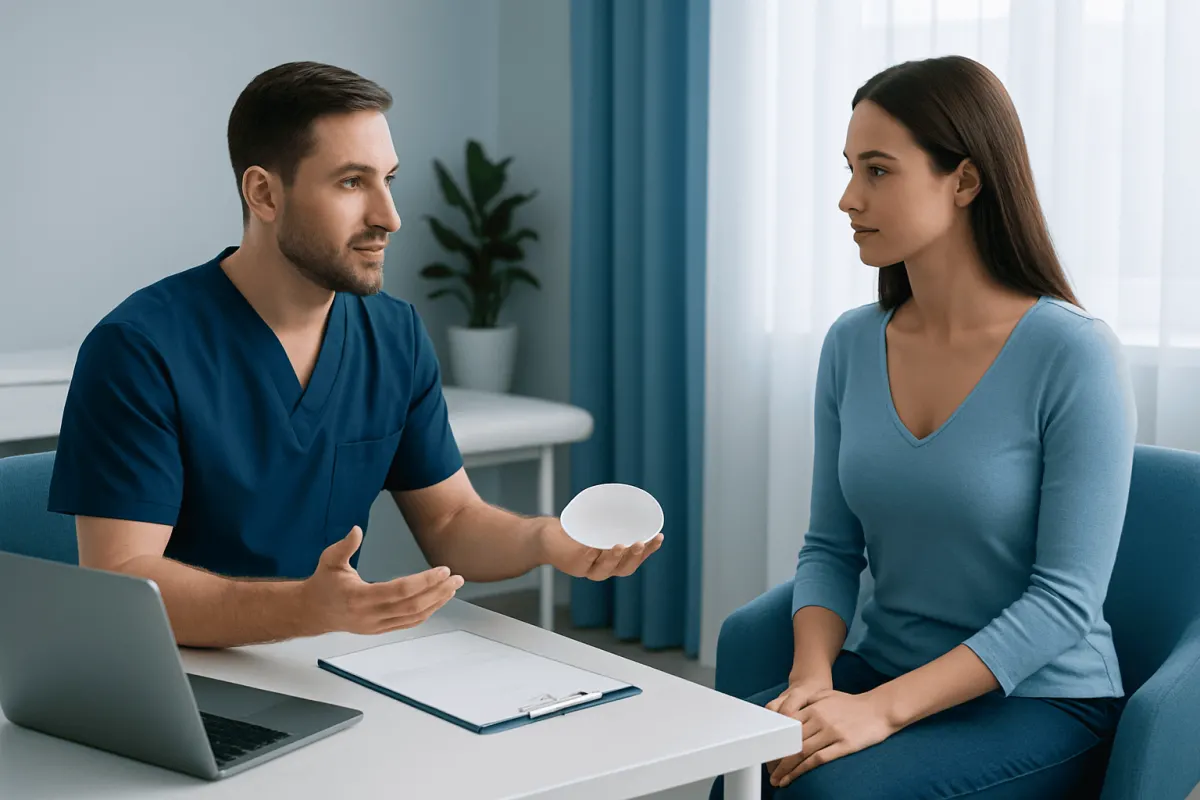
During an individualized consultation, the surgeon assesses chest-wall shape, skin quality, breast width, tissue coverage and asymmetry. Implant sizing is not simply a matter of choosing a cup size. The safest and most natural-looking option is usually one that fits the person’s breast dimensions and soft-tissue support. Learn more about breast augmentation and the choices that may be discussed during surgical planning.
Step by Step: What Happens During the Procedure
Before surgery, the care team reviews the planned implant type, size range, incision location and implant placement. Preoperative instructions may include stopping nicotine products, discussing medicines and arranging help at home after the procedure. The exact plan should be confirmed with the surgeon, as safety steps vary according to individual health needs.
Breast augmentation is usually performed under general anesthesia. The surgeon makes an incision, commonly in the crease beneath the breast, around the areola or, less often, in the underarm area. A pocket is created for the implant, the implant is inserted and its position is checked carefully before the incision is closed. The operation is often completed on the same day, although this depends on the procedure and recovery needs.
A surgical bra or supportive dressing is generally used after surgery. Initial follow-up appointments allow the team to review wound healing, breast symmetry and comfort. Patients should follow their own surgeon’s instructions about showering, bra use, lifting, exercise, driving and return to work, rather than relying on another person’s timeline or online photographs.
Do Breast Implants Look Bad at First?
Breast implants do not necessarily look bad at first, but they can look and feel noticeably different from the eventual result. In the early days and weeks, swelling, bruising, tightness and a temporarily high implant position are common. The breasts may appear rounder, firmer or less symmetrical than expected while the tissues adapt.
As swelling improves and the skin and chest tissues relax, implants commonly settle into a more natural position. This process varies between individuals and can take several weeks to months. Breast implants before and after images posted soon after surgery should not be compared with later, healed results.
Patients should contact their surgical team promptly if one breast suddenly becomes much more swollen, painful, red or warm, if there is drainage from the wound, fever or shortness of breath. These symptoms do not always indicate a serious complication, but they need timely clinical assessment.
Breast Implants Before and After Results: Recovery, Benefits and Risks
Recovery is gradual. During the first several days, soreness, pressure and fatigue are common, and prescribed or recommended pain management may be used. Many people can manage light daily activities within about one to two weeks, but strenuous exercise, chest-focused activity and heavy lifting usually need to wait until the surgeon confirms it is appropriate. Scars are initially more visible and typically fade over many months, though they do not disappear completely.
Potential benefits include increased breast volume, improved clothing fit, restoration of fullness and better balance between the breasts or with body proportions. Results may support body confidence for some people, but surgery cannot ensure satisfaction or resolve wider body-image concerns. A careful conversation about motivations and expectations is an important part of safe decision-making.
Possible risks include bleeding, infection, changes in nipple or breast sensation, visible rippling, implant movement, asymmetry, unfavorable scarring and anesthesia-related complications. Capsular contracture, in which scar tissue around an implant becomes tight or changes the breast shape, may occur. Implants can rupture or require replacement over time. Silicone implant rupture may not always cause obvious symptoms, so clinicians may recommend imaging follow-up based on the implant type, symptoms and current guidance.
Rarely, a type of lymphoma called breast implant-associated anaplastic large cell lymphoma has been linked mainly with textured implants. Persistent swelling, a new fluid collection, a lump or a change in breast shape years after implantation should be assessed. Breast implants are not lifetime devices, and future operations may be needed for complications, cosmetic changes or implant replacement.
What I Wish I Knew Before Getting Breast Implants?
A common reflection is that planning should include the long term, not only the first breast implants before and after result. Breasts continue to change with aging, pregnancy, breastfeeding, weight fluctuation and natural loss of skin elasticity. An implant may preserve or add volume, but it cannot prevent these changes, and a revision procedure or breast lift may be considered in the future.
It is also important to know that choosing a larger implant is not always better. The dimensions of the chest and the amount of available tissue affect how well an implant is supported and how visible its edges may be. Trying implant sizers and reviewing photos of comparable patients can be helpful, but neither provides an exact forecast.
Patients should understand practical issues before deciding: time away from strenuous activity, scar care, follow-up visits, breast screening plans and the possibility of future imaging or surgery. It is wise to ask the surgeon about their qualifications, the approved implant devices used, incision choices, complication management and what outcome is reasonable for the individual anatomy.
- Ask to see standardized results at several stages of healing.
- Discuss whether augmentation alone or augmentation with a lift better matches the goal.
- Report new breast symptoms rather than assuming they are a normal implant change.
- Keep a record of the implant manufacturer, model and surgery date for future care.
Can You Show Me Pictures of Round Breast Implants Before and After?
A health information page cannot provide a reliable prediction through generic pictures of round breast implants before and after. Round implants can create varying results because profile, size, implant placement, existing breast tissue and the patient’s posture all affect the visible shape. In many people, round implants can look natural when standing; the upper breast may appear fuller than with some other choices, particularly in certain sizes or profiles.
The most useful breast implants before and after photos are provided during a confidential surgical consultation and are selected from patients who gave permission for clinical education. A surgeon may show examples of people with similar breast width, tissue coverage and goals, while explaining how the surgical plan differs from person to person. Images should be viewed as discussion tools, not promises.
When reviewing photographs, patients can ask how long after surgery each image was taken, whether the same implant type and placement were used, and whether a lift was performed at the same time. They can also ask to view front, side and three-quarter views under consistent conditions. This approach makes breast implants before and after results easier to interpret responsibly.
What Do Breast Implants Look Like When You Are Old?
With aging, breasts with implants change along with the rest of the body. Skin becomes less elastic, breast tissue can decrease or shift, and pregnancy, menopause and weight changes may alter breast shape. An implant may remain in place, but the breast tissue and skin around it can sag or change contour over time, which may lead some people to consider revision surgery or a breast lift.
The appearance later in life varies greatly. Some people remain comfortable with their implants for many years, while others develop changes such as capsular contracture, rippling, displacement or rupture that require assessment. Regular awareness of breast changes and recommended routine breast health care remain important.
Breast implants can affect mammography technique, so patients should tell the imaging center that they have implants before screening. Specialized views can often be used to examine as much breast tissue as possible. New lumps, persistent swelling, a change in shape, pain or skin changes should be evaluated by a qualified clinician rather than attributed automatically to aging.
When to Seek Medical Care
Urgent medical care is appropriate for trouble breathing, chest pain, fainting, severe allergic symptoms or rapidly worsening illness after surgery. After breast augmentation, patients should also contact their surgeon promptly for worsening or one-sided swelling, increasing pain, fever, spreading redness, wound opening, pus-like drainage, or a breast that becomes unusually hard or changes shape suddenly.
For longer-term concerns, arrange a medical review for a new lump, persistent fluid swelling, unexplained pain, altered breast shape, enlarged lymph nodes or changes in the skin or nipple. These signs often have treatable explanations, but examination and, when needed, imaging are important. Anyone considering surgery should seek advice from a qualified plastic surgeon and maintain age- and risk-appropriate breast screening.
Acıbadem Health Point’s multidisciplinary specialists and JCI-accredited hospitals diagnose and treat breast implant concerns for international patients, with care plans based on individual clinical needs.
Frequently asked questions
01How long does it take to see final breast implant results?
Early changes are visible immediately, but swelling and a high or firm implant position can affect the appearance at first. Many people see progressive settling over weeks to months. The exact timeline depends on the implant placement, tissue characteristics and healing response.
02Are breast implants before and after photos accurate?
They can be informative when photographs are standardized and show patients with similar anatomy and procedures. Lighting, pose, clothing, photo editing and the stage of recovery can otherwise create misleading differences. A qualified surgeon can explain which features are likely or unlikely to apply to an individual.
03Do round implants always look unnatural?
No. A round implant can look natural or noticeably full depending on its size, profile, placement and the amount of natural breast tissue covering it. A surgeon can discuss how each option may affect upper-pole fullness and overall proportion.
04Will breast implants need to be replaced after a certain number of years?
Implants are not considered lifetime devices, but there is no single replacement date that applies to everyone. Replacement or removal may be needed because of rupture, capsular contracture, displacement, cosmetic changes or personal preference. Ongoing follow-up and assessment of symptoms guide decisions.
05Can a person breastfeed after getting implants?
Many people can breastfeed after breast augmentation, but milk production and breastfeeding success cannot be guaranteed. The incision, implant placement, prior breast surgery and individual breast anatomy may affect risk. Anyone planning future breastfeeding should discuss this before surgery.
06Can mammograms be done with breast implants?
Yes. People with implants can have mammograms, but the imaging team should be informed in advance. Additional implant-displacement views may be used to improve visualization of breast tissue, and further imaging may be recommended when clinically needed.
This article is for general information only and is not a substitute for professional medical advice. Please consult a qualified doctor about your individual situation.
Joint and spine care in Turkey — expert assessment & treatment
JCI-accredited · board-certified surgeons · reply within 24h
Add us as a Preferred Source to see more of our trusted health content across Google Search, AI Overviews and Discover.