Brain Tumor Treatment Without Surgery: Options and Recovery
Brain tumor treatment without surgery can be appropriate when a tumor is difficult to reach safely, is small or slow-growing, or is likely to respond to radiation or medicines. The most suitable plan depends on the exact tumor diagnosis, its location, symptoms, overall health, and treatment goals.
Overview: when brain tumors can be treated without surgery
Brain tumor treatment without surgery refers to treatments that do not involve removing a tumor through an open neurosurgical operation. Depending on the tumor, this may include active monitoring with regular scans, radiation therapy, stereotactic radiosurgery, chemotherapy, targeted medicines, immunotherapy in selected settings, and medicines to manage symptoms such as swelling or seizures.
Non-surgical care is not a lesser form of treatment. For some tumors, it is the safest or most effective first approach. Specialists may recommend it when surgery could risk important brain functions, when the tumor is small or in a deep location, when imaging suggests a slow-growing lesion, or when a person’s health makes an operation unsuitable.
However, surgery remains important for many patients because it can obtain tissue for diagnosis, relieve pressure, and reduce the amount of tumor present. A multidisciplinary team typically reviews brain imaging, pathology results where available, symptoms, and personal priorities before recommending a plan.
How non-surgical brain tumor treatment works
Non-surgical treatment is tailored to the tumor’s type and behavior. Active surveillance may be used for selected tumors that are small, stable, and not causing concerning symptoms. It involves planned MRI scans and clinical reviews, allowing the team to detect growth or new effects early without exposing the person to treatment side effects unnecessarily.
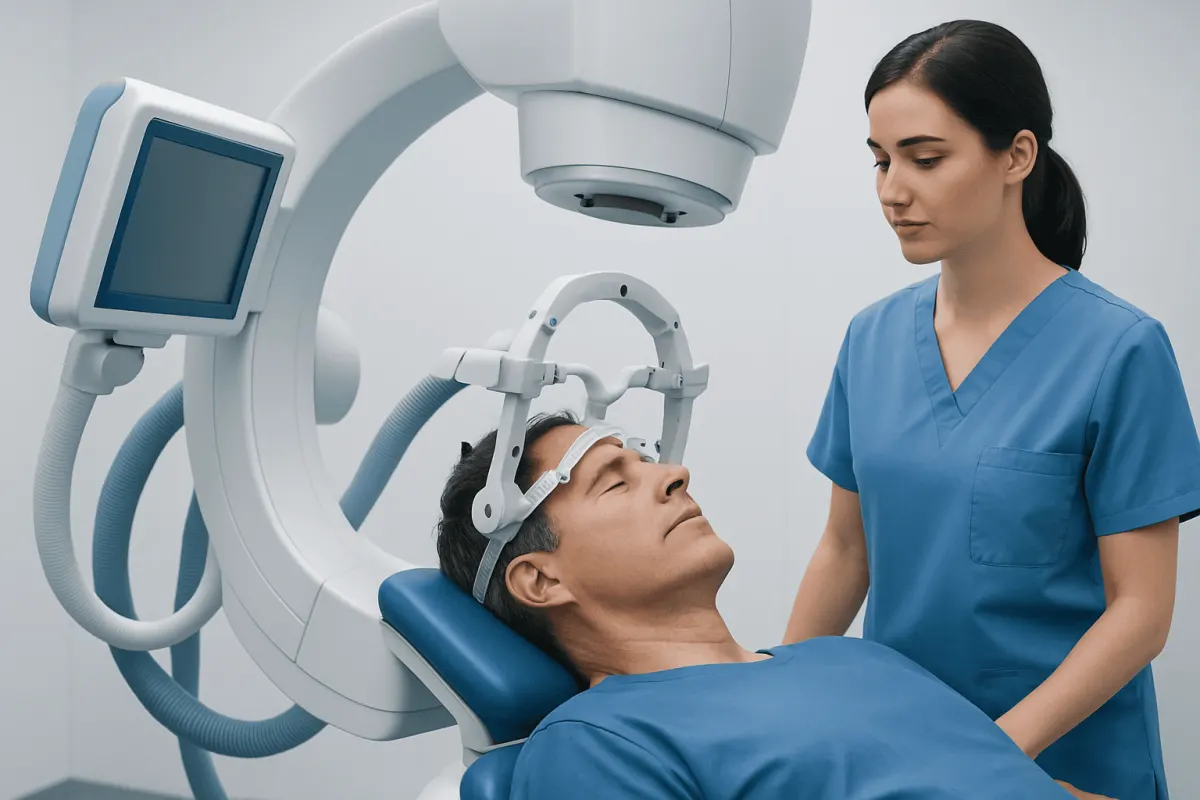
Radiation therapy uses carefully planned beams of radiation to damage tumor cells and slow or stop their growth. It may be delivered over several weeks in small daily sessions, or as highly focused stereotactic radiosurgery, which delivers a concentrated dose to a defined target in one or a few sessions. Despite its name, radiosurgery is not an operation and does not require an incision.
Drug treatment depends on the diagnosis. Chemotherapy may be used alone or with radiation for some malignant brain tumors. Certain tumors may also have molecular features that make targeted medicines or other systemic therapies appropriate. Corticosteroids can reduce inflammation and swelling around a tumor, while anti-seizure medicines may be prescribed for people who have had seizures.
The purpose of treatment may be to cure or provide long-term control in some conditions, reduce the chance of regrowth after prior treatment, shrink or stabilize a tumor, or relieve symptoms. The treatment team explains the intended goal clearly, as it varies considerably between benign tumors, primary brain cancers, and tumors that have spread to the brain from elsewhere.
Who may be a candidate for treatment without surgery?

Candidacy is determined individually. Imaging with contrast-enhanced MRI is usually central to the assessment, and further scans or laboratory tests may be needed. Doctors consider the tumor’s size, location, borders, growth pattern, whether it is causing pressure within the skull, and whether it is near areas controlling speech, movement, vision, memory, or breathing.
A non-surgical approach may be considered for small tumors with limited symptoms, tumors in areas where an operation would carry substantial risk, tumors that respond well to radiation or drug therapy, and people whose medical condition makes surgery less safe. It may also be used after surgery to treat remaining tumor cells or lower the risk of recurrence.
In some cases, a biopsy rather than full tumor removal may be advised. A biopsy is a procedure to take a small tissue sample so that pathologists can identify the tumor type and its molecular features. This information can be crucial because tumors that look similar on a scan can require very different treatment plans.
Urgent surgery may be more likely when a tumor causes severe pressure, bleeding, a blocked flow of cerebrospinal fluid, rapidly worsening neurological deficits, or significant uncertainty that requires tissue diagnosis. A recommendation for surgery does not mean other treatments are ineffective; it means surgery may offer an important immediate benefit in that situation.
Step-by-step: what happens during non-surgical treatment
The process usually starts with a consultation involving neurosurgery, neuro-oncology, radiation oncology, neuroradiology, and other relevant specialists. The team reviews scans, symptoms, prior treatments, and medical history. When available, pathology and molecular test results are integrated into a personalized recommendation.
For radiation treatment, planning is a detailed process. A specialized scan is performed to map the tumor and nearby healthy brain tissue. A custom mask may be made to help keep the head still, and the radiation team uses planning software to shape the treatment accurately. Patients are awake during external-beam radiation and do not feel the radiation being delivered.
During a typical radiation appointment, the person lies on a treatment table while the machine moves around the head. The session itself is generally short, though positioning and safety checks take additional time. Stereotactic radiosurgery follows similar planning principles and may be completed in one or several treatments depending on the tumor and technology used.
For drug treatment, medicines may be given by mouth, through a vein, or in another route chosen for the treatment plan. Regular appointments and blood tests help monitor side effects and response. MRI scans are repeated at intervals, because treatment effects and tumor changes may develop gradually.
Benefits, limitations, and possible risks
A key benefit of non-surgical treatment is that it avoids an open brain operation and its recovery period. Focused radiation can be particularly useful for well-defined tumors, including selected metastases and some benign tumors. Drug therapies may address microscopic tumor cells beyond the area visible on imaging and can be combined with radiation when appropriate.
These treatments also have limitations. Radiation does not remove a tumor immediately, and its full effect may take weeks or months. Some tumors are less responsive to radiation or medicines, while larger tumors or those causing pressure may need surgery first. Imaging after treatment can sometimes be difficult to interpret because inflammation or treatment-related changes may resemble tumor growth.
Side effects vary with treatment type, dose, tumor location, and individual health. Radiation may cause tiredness, scalp irritation, temporary hair loss in the treatment area, headache, nausea, or temporary swelling. Less commonly, it can affect memory, thinking, hormones, vision, hearing, or healthy brain tissue, particularly after larger treatment areas or repeated radiation.
Systemic treatments can cause side effects such as fatigue, nausea, changes in blood counts, infection risk, or organ-specific effects, depending on the medicine. The care team monitors for these issues and may adjust treatment or provide supportive care. Patients should report new or worsening symptoms rather than trying to manage significant changes alone.
Recovery timeline and living with a brain tumor
Recovery after non-surgical treatment is usually measured in days to months rather than by a single fixed timeline. After a stereotactic radiosurgery session, many people return to usual light activities within a day or two, although fatigue or headache can occur. A course of fractionated radiation commonly causes fatigue that gradually builds during treatment and may continue for several weeks afterward.
Drug Cancer Treatment Recovery: What Side Effects Are Normal and When to Call the Doctor" class="ahp-ilk">treatment recovery depends on the medicine and schedule. Some people continue everyday activities with adjustments, while others need more rest and help with transport, meals, work, or household tasks. Follow-up MRI scans are often scheduled over months to assess response, and the care plan may change based on the results.
Living with a brain tumor can involve physical, cognitive, and emotional changes. Symptoms may include headaches, seizures, weakness, balance difficulty, speech changes, altered vision, fatigue, and challenges with concentration or memory. Not every person experiences these symptoms, and support from rehabilitation professionals, psychologists, social workers, and family members can make daily life more manageable.
Practical measures may include keeping a symptom diary, taking medicines as prescribed, protecting sleep, arranging assistance for tasks that feel unsafe, and discussing work or driving restrictions with the clinical team. Acıbadem Health Point’s multidisciplinary specialists and JCI-accredited hospitals assess and treat brain tumors for international patients, with care plans based on the individual diagnosis and needs.
When to seek medical care
Anyone with a known brain tumor should contact their treating team promptly for new, persistent, or worsening symptoms. These include increasing headaches, repeated vomiting, new weakness or numbness, changes in speech or vision, worsening confusion, new balance problems, a seizure, or marked changes in alertness or behavior.
Emergency assessment is important for a first seizure, a seizure lasting more than a few minutes, repeated seizures without recovery between them, sudden severe headache, loss of consciousness, or sudden one-sided weakness. Family members should seek urgent help if a person is difficult to wake, has severe confusion, or develops breathing problems.
Regular follow-up matters even when symptoms are stable. Brain tumors and treatment effects can change over time, and early discussion of new concerns helps clinicians decide whether medication changes, imaging, rehabilitation, or another treatment approach is needed.
Frequently asked questions
01How long can you live with brain cancer without treatment?
There is no single answer because survival without treatment depends on the exact tumor type, grade, location, growth rate, age, and overall health. Some aggressive brain cancers can progress over weeks to months, while slower-growing tumors may remain stable for much longer. A neuro-oncology team can explain what the specific diagnosis and imaging findings may mean for an individual.
02How long can you take steroids for a brain tumour?
Steroids, commonly corticosteroids, are usually used for the shortest effective time to reduce swelling around a brain tumor. Some people need them for days or weeks, while others require a longer course with close medical supervision. They should not be stopped suddenly unless a clinician advises it, because the dose often needs to be reduced gradually.
03What is it like living with a brain tumor?
Living with a brain tumor is different for every person and depends on the tumor, treatment, and symptoms. Some people continue many usual activities, while others experience fatigue, seizures, headaches, cognitive changes, or difficulty with movement, speech, or mood. Rehabilitation, symptom management, practical support, and regular communication with the care team can help maintain independence and quality of life.
04Is it normal to sleep a lot if you have a brain tumor?
Increased sleepiness or fatigue can occur with a brain tumor, from the tumor itself, swelling, seizures, treatment, medicines, disrupted sleep, or emotional stress. It is important to tell the treating team, particularly if sleepiness is new, rapidly worsening, or accompanied by confusion, headache, vomiting, weakness, or difficulty waking. These symptoms may need urgent assessment.
05Can a brain tumor disappear with radiation alone?
Radiation can shrink, stabilize, or control some brain tumors, but the response depends on the tumor type and its biology. In some cases the tumor may become much smaller on follow-up imaging; in others, the aim is to prevent further growth rather than make it disappear. Ongoing MRI monitoring is needed because response can take time and may not be permanent.
06Can a brain tumor be monitored without treatment?
Yes, carefully monitored observation can be appropriate for selected tumors that are small, slow-growing, stable on imaging, or causing few or no symptoms. This approach includes scheduled MRI scans and clinical reviews, with treatment considered if the tumor grows or symptoms develop. Monitoring should always follow a plan set by a qualified specialist.
This article is for general information only and is not a substitute for professional medical advice. Please consult a qualified doctor about your individual situation.
Oncology care in Turkey — second opinion and treatment plan
JCI-accredited · board-certified surgeons · reply within 24h
Add us as a Preferred Source to see more of our trusted health content across Google Search, AI Overviews and Discover.