Best Hair Transplant: Choosing a Safe Clinic
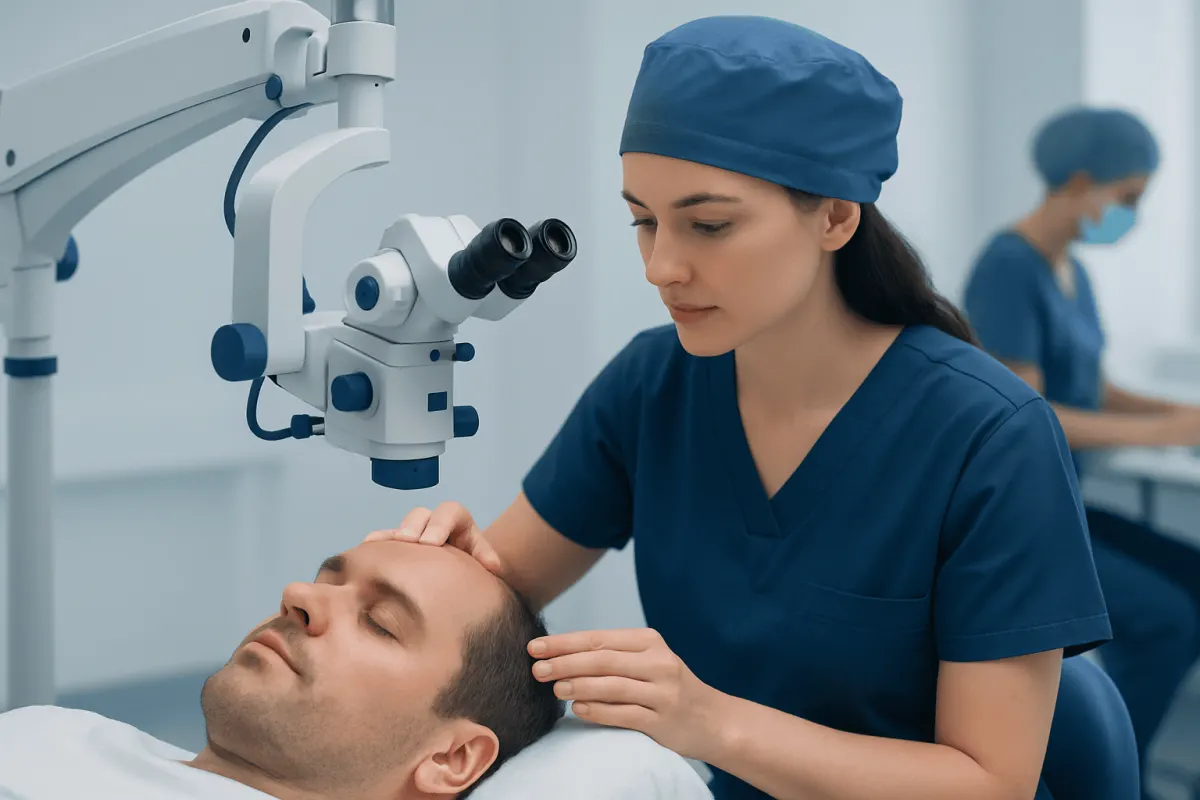
There is no single country, clinic, or technique that can objectively be called the best hair transplant in the world for every person. The safest choice is an individually planned procedure performed by a qualified hair-restoration surgeon in a properly regulated clinical setting.
Overview: What the Best Hair Transplant Should Mean
No country, clinic, or surgical method can objectively be named the best hair transplant in the world for every patient. The best option is one performed by an appropriately qualified surgeon after an accurate diagnosis, realistic planning, and discussion of alternatives. In practical terms, patient safety, clinical standards, natural-looking design, and continuity of care matter more than a destination’s reputation alone.
Hair transplantation is a procedure that redistributes a person’s own hair follicles from a donor area, usually the back and sides of the scalp, to areas of thinning or baldness. It is most commonly used for androgenetic alopecia, also called pattern hair loss. A transplant can improve visible density, but it does not cure the underlying tendency for hair loss or guarantee that surrounding native hair will not continue to thin.
Quality should be judged through verifiable clinical factors: the surgeon’s training and experience, a proper scalp and medical assessment, clear informed consent, realistic expectations, and accessible aftercare. A trustworthy clinic should be open about who will perform each part of the procedure, what outcomes are achievable, and what risks or limitations apply to the individual patient.
How Hair Transplant Surgery Works
Hair follicles are naturally grouped in small units, often called follicular units. During transplantation, these units are harvested from the donor area and placed into carefully prepared sites in the thinning area. Once established, transplanted follicles generally retain many of the growth characteristics of the donor area, which is why donor-hair quality and density are important when planning treatment.
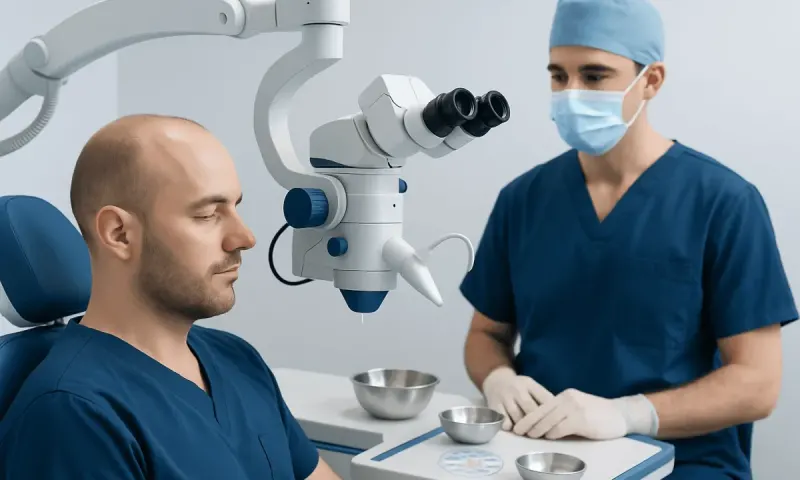
The two main harvesting approaches are follicular unit excision, or FUE, and follicular unit transplantation, or FUT. In FUE, individual follicular units are removed one by one, usually leaving many small dot-like scars. In FUT, a narrow strip of donor scalp is removed and divided into grafts under magnification; it typically leaves a linear scar. Both approaches can be appropriate when planned and performed well.
Terms such as direct hair implantation, sapphire blades, or implanter pens may describe elements of how grafts are prepared or placed, rather than a completely separate type of transplant. These labels alone do not establish better results or greater safety. The surgeon’s judgment, gentle graft handling, appropriate graft numbers, and careful placement are usually more important than a branded technique name.
Candidacy, Diagnosis, and Treatment Planning

A suitable candidate usually has a stable or reasonably predictable pattern of hair loss, enough healthy donor hair, and expectations that match the available donor supply. Age alone does not determine suitability. A clinician considers the patient’s current hair density, the likely future pattern of loss, hair texture and color contrast, scalp condition, medical history, and the desired degree of coverage.
A careful assessment is important because not all hair loss should be treated with surgery. Sudden shedding, patchy loss, scalp inflammation, hair breakage, nutritional concerns, thyroid disorders, medication effects, traction, and some autoimmune or scarring conditions may need medical evaluation first. In some circumstances, treating an underlying cause may improve shedding or help protect remaining hair.
Medical treatment may also be recommended to help maintain existing non-transplanted hair, particularly when pattern hair loss is continuing. A dermatologist or hair-restoration clinician can discuss whether medication is appropriate based on the patient’s health and preferences. A responsible plan protects the donor area and considers whether future treatment may be needed as natural hair loss changes over time.
What Happens During the Procedure and Recovery
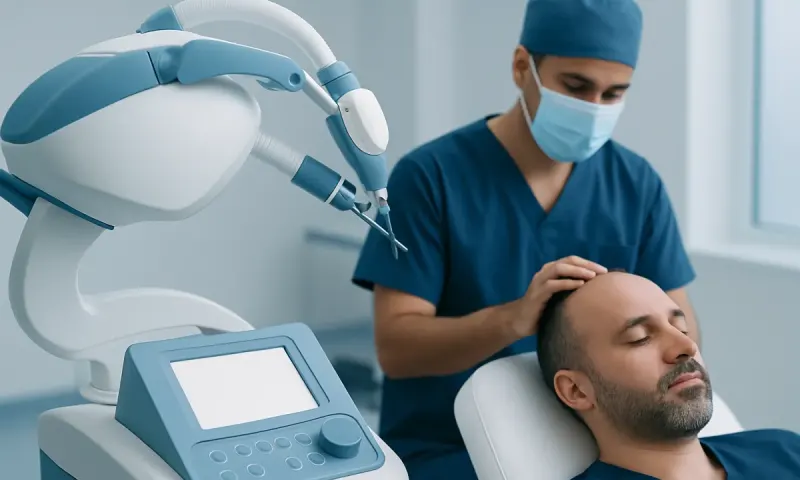
Hair transplant surgery is commonly performed as an outpatient procedure using local anesthesia. Before surgery, the clinician confirms the hairline design, donor-area plan, and estimated graft distribution. The design should account for facial proportions, current hair loss, likely future thinning, and the need to preserve enough donor hair for the long term.
- The donor area is prepared and follicles are harvested using FUE or FUT.
- The grafts are inspected, sorted, and kept protected while the recipient area is prepared.
- The surgeon creates recipient sites that guide the angle, direction, and distribution of growth.
- Grafts are placed with attention to natural density, hair direction, and the planned hairline.
- The patient receives written aftercare guidance and arrangements for follow-up.
In the first days, mild swelling, tenderness, redness, and small crusts can occur. The clinician gives instructions on washing, sleeping position, activity, headwear, and when to resume usual routines. Crusts commonly settle over the following one to two weeks, but patients should avoid rubbing, scratching, or removing them before the care team advises that it is safe.
Temporary shedding of transplanted hairs in the first weeks is a normal part of the growth cycle and does not necessarily indicate failure. New visible growth often begins gradually after several months. Hair density and texture continue to mature over time, with final results often assessed around 12 to 18 months, depending on the individual and the area treated.
Benefits, Limits, and Possible Risks
For an appropriate candidate, hair transplantation can create a natural-looking improvement in hairline shape and visible coverage. It uses the patient’s own follicles, avoids the need for donor tissue from another person, and can offer a durable result in transplanted areas. Thoughtful planning is especially important at the front hairline, where overly low, dense, or unnatural designs may be difficult to revise later.
As with any surgical procedure, risks are possible. Temporary swelling, discomfort, numbness, itching, and shock loss of nearby existing hair may occur. Less common concerns include bleeding, infection, poor wound healing, visible scarring, uneven growth, overharvesting of the donor area, an unnatural-looking hairline, or graft survival that is lower than hoped.
Risk reduction depends on selecting a regulated facility, sharing complete medical information, stopping or adjusting medicines only when advised by a clinician, and following aftercare instructions. It is also important for patients to understand that a transplant cannot create unlimited density. The available donor hair must be distributed carefully, and additional surgery may not always be advisable or possible.
How to Choose a Safe Clinic or Hospital
What’s the best place in the world to get a hair transplant?
The best place is not defined by a single city or country. It is a clinic or hospital where a named, appropriately trained surgeon personally evaluates the patient, develops the treatment plan, performs or directly supervises critical surgical steps, and remains available for follow-up. The setting should meet local licensing and infection-control requirements and should provide transparent information rather than promises of guaranteed density.
- Confirm the clinician’s qualifications, relevant experience, and professional registration.
- Ask who will perform harvesting, recipient-site creation, and graft placement.
- Request an individual plan explaining donor limitations, expected coverage, risks, and aftercare.
- Review consistent, well-documented results from patients with similar hair characteristics and patterns of loss.
- Ensure there is a clear process for managing concerns after the procedure, especially for international travelers.
Which hair transplant is the most safest?
Neither FUE nor FUT is universally the safest for every patient. Both are established procedures when they are appropriately selected and performed by an experienced surgical team. FUE may suit patients who prefer to avoid a linear donor scar, while FUT may be considered when a surgeon believes it can preserve or obtain donor grafts more effectively for a particular scalp; the safest choice is the one matched to the individual.
Where is the safest place to get a hair transplant?
The safest location is a properly regulated medical facility with qualified staff, sterile surgical standards, emergency procedures, and reliable postoperative care. For patients traveling abroad, safety also includes a detailed consultation before travel, records that can be shared with local doctors if needed, clear contact arrangements after returning home, and enough time to attend early follow-up if the treating team recommends it.
Celebrity Stories, Online Rankings, Costs, and Reviews
What did Elon Musk use to regrow hair?
There is no reliable public confirmation of the specific treatment or treatments Elon Musk may have used for hair changes seen in public photographs. Online discussions often speculate about transplantation, medicines, styling, lighting, or image timing, but speculation is not medical evidence. A celebrity’s appearance cannot establish which treatment is appropriate, safe, or effective for another person.
Older lists and rankings, including searches for the best hair transplant in the world 2022, should be treated cautiously. Clinical teams, regulations, ownership, surgical practices, and patient follow-up systems can change over time. Rather than relying on a historical ranking, patients can use it only as a starting point for verifying current credentials, standards, and consultation quality.
There is no universal best hair transplant in the world cost because a safe plan depends on the extent of hair loss, donor capacity, technique, facility standards, surgeon involvement, and aftercare needs. Searches such as best hair transplant in the world Reddit can offer personal experiences and useful questions, but forum posts and reviews are anecdotal. They may not show long-term results, complications, photo conditions, or whether the reviewer had a comparable diagnosis and donor supply.
When to Seek Medical Care
A patient should seek medical advice before considering transplantation if hair loss is sudden, patchy, painful, itchy, associated with redness or scaling, or accompanied by changes in general health. Medical assessment is also advisable when hair loss begins rapidly, follows a major illness or medication change, or causes significant emotional distress. Identifying the cause may reveal treatments that should be tried before surgery.
After a transplant, the treating clinic should be contacted promptly for worsening pain, increasing redness, pus-like drainage, fever, significant bleeding, or concerns about wound healing. For international patients, Acıbadem Health Point’s multidisciplinary specialists and JCI-accredited hospitals diagnose and treat hair loss and provide individualized hair-transplant assessments, while confirming suitability through a personal clinical evaluation.
Frequently asked questions
01Can anyone with thinning hair have a hair transplant?
Not everyone with thinning hair is a suitable candidate. A clinician should first identify the cause of hair loss, assess the donor area, and consider whether the pattern is stable enough for surgical planning. Some forms of shedding or inflammatory scalp disease should be treated before transplantation is considered.
02How long does transplanted hair last?
Transplanted follicles often continue growing for many years because they retain characteristics of the donor area. However, outcomes vary, and the person's existing non-transplanted hair may continue to thin. Ongoing medical treatment may be discussed to help preserve native hair when appropriate.
03Is FUE completely scar-free?
FUE does leave scars, although they are usually small, scattered, and less noticeable when the hair is kept at a suitable length. Visibility depends on the patient's skin, healing, hair style, number of grafts, and how carefully the donor area is managed. A clinician should explain the likely donor-area appearance before surgery.
04Does a hair transplant hurt?
Local anesthesia is generally used so that the surgical area is numb during the procedure. Patients may feel brief discomfort during anesthetic administration and some tenderness afterward. The care team can explain expected discomfort and suitable pain-management options based on the person's health history.
05Can women have hair transplant surgery?
Some women are suitable candidates, particularly when they have stable, localized thinning and sufficient donor hair. Diffuse thinning is more common in some women and may limit the available donor supply. A diagnosis is especially important because hormonal, nutritional, autoimmune, and other causes may need separate treatment.
06What questions should a patient ask before booking a procedure?
A patient should ask for the name and qualifications of the surgeon, who performs each step, which technique is recommended and why, and what follow-up care is included. It is also sensible to ask about donor-area limitations, possible complications, realistic timing of growth, and what happens if medical review is needed after returning home. Clear answers support informed decision-making.
This article is for general information only and is not a substitute for professional medical advice. Please consult a qualified doctor about your individual situation.
Hair transplant in Turkey — costs, graft counts & a free assessment
JCI-accredited · board-certified surgeons · reply within 24h
Add us as a Preferred Source to see more of our trusted health content across Google Search, AI Overviews and Discover.