Diffuse Thinning Hair: Finding the Cause and Treatment
Diffuse thinning hair describes a gradual reduction in hair density across a broad area of the scalp rather than a single bald patch. The outlook depends on the cause: some types are temporary and reversible, while pattern-related thinning may need ongoing medical management and, for suitable candidates, hair restoration procedures.
Overview: What Is Diffuse Thinning Hair?
Diffuse thinning hair is a decrease in hair density that occurs over a wide area of the scalp. Instead of clearly defined bald spots, the hair may look less full overall, the scalp may show more easily under bright light, or a usual parting may appear wider. It can affect people of any sex and at different ages.
The appropriate approach depends on why the thinning is happening. A temporary increase in shedding may settle after the triggering factor resolves, whereas hereditary pattern hair loss tends to progress without treatment. A dermatology or hair-loss assessment can distinguish between these possibilities and guide realistic next steps.
Diffuse thinning is not always purely cosmetic. Changes in hair density can occasionally be linked with iron deficiency, thyroid disorders, inflammatory scalp conditions, nutritional restriction, hormonal changes, or medication effects. Identifying the underlying pattern is therefore an important part of planning treatment or a procedure.
How Diffuse Thinning Appears and the Different Stages
Diffuse thinning may begin subtly. A person might notice more scalp visibility at the crown, a broader central part, less volume in a ponytail, or hair that no longer covers the scalp in the same way after washing. Increased shedding may be present, but some people primarily notice progressively finer, shorter hairs rather than obvious shedding.
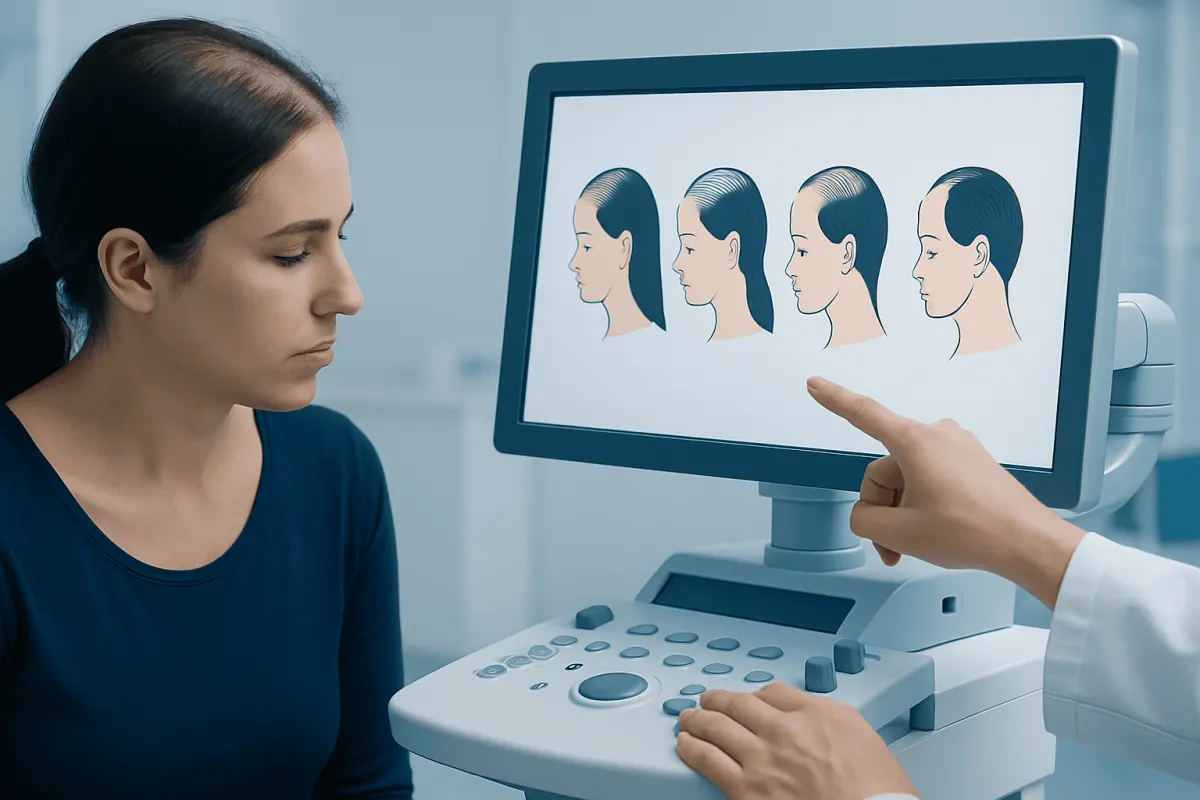
There is no single staging system that describes every form of diffuse thinning. In pattern-related hair loss, clinicians may use sex-specific scales to document the degree and distribution of thinning. In women, this commonly includes widening through the central scalp with relative preservation of the frontal hairline. In men, diffuse thinning can occur alongside recession at the temples or reduced density at the crown.
In practical terms, changes are often described as early, moderate, or advanced. Early thinning involves reduced volume with good scalp coverage; moderate thinning produces more visible scalp in affected areas; advanced thinning involves marked density loss and may limit the available donor hair for transplantation. A specialist also looks for miniaturization, where individual hairs become progressively finer, because this supports a diagnosis of pattern hair loss.
What are the different stages of diffuse thinning?
Diffuse thinning is generally assessed by severity and distribution rather than by one universal sequence of stages. It may progress from subtle loss of volume, to visible widening of the part or crown, to more extensive scalp visibility. The rate of progression varies, and a clinician can photograph and measure density over time to monitor change.
Causes and Risk Factors

Diffuse thinning can result from several processes. Telogen effluvium is a common cause of widespread shedding that can occur a few months after a physical or emotional stressor, such as a high fever, surgery, childbirth, major illness, rapid weight loss, restrictive dieting, or a significant life event. In many cases, this type of shedding is temporary.
Hereditary pattern hair loss is another frequent cause. It is associated with genetic sensitivity of hair follicles to hormones and can affect men and women. Unlike temporary shedding, pattern hair loss gradually shortens the hair-growth cycle and miniaturizes follicles, so hairs become finer and density decreases over time. Related information is available in hair loss.
Other potential contributors include low iron stores, thyroid disease, inadequate protein or certain nutrient intake, hormonal changes, some medicines, traction from tight hairstyles, and inflammatory or autoimmune scalp disorders. Scalp pain, redness, itching, scaling, broken hairs, or sharply outlined patches suggest that a condition other than uncomplicated diffuse shedding may be present and should be assessed promptly.
- A family history of gradual thinning increases the likelihood of pattern hair loss.
- Recent illness, surgery, childbirth, or major weight change can precede temporary shedding.
- Repeated chemical processing, heat exposure, or hairstyles that pull on the roots can worsen fragility and traction-related loss.
- Underlying medical conditions and medications should be reviewed with a qualified clinician rather than stopped independently.
Assessment and Diagnosis Before a Procedure
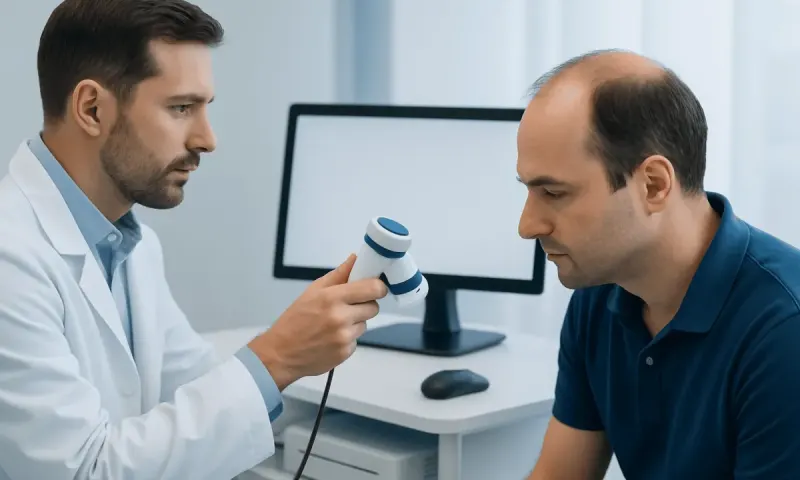
A hair-loss evaluation begins with the timing of the change, the pattern of shedding, personal and family history, recent health events, diet, stressors, medications, and hair-care practices. The clinician examines the scalp and may use magnification to assess follicle openings, hair-shaft diameter variation, inflammation, and the density of donor hair at the back and sides of the scalp.
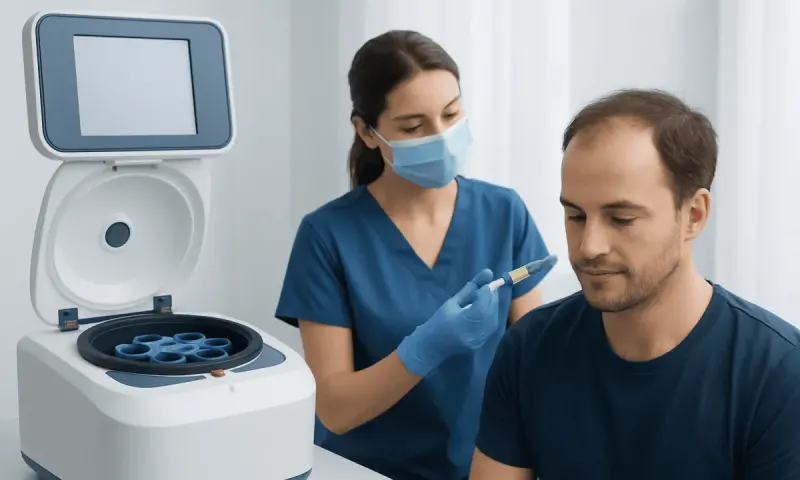
Blood tests may be considered when the history or examination suggests a correctable medical contributor, such as anemia or thyroid dysfunction. Testing is individualized; not every person with hair thinning needs the same laboratory work-up. In uncertain cases, a dermatologist may recommend additional testing or, less commonly, a scalp biopsy.
Careful diagnosis matters before hair transplantation. Active shedding, untreated nutritional deficiency, inflammatory scalp disease, or rapidly progressing hair loss may affect timing and suitability. A transplant does not create new follicles; it moves follicles from a stable donor area to regions with less density. The donor area must be sufficiently dense, and expectations should account for possible future loss of native hair.
Treatment Options and Hair Restoration Procedures
Treatment is tailored to the cause. For temporary shedding, the main priority is addressing the trigger where possible, such as correcting a documented deficiency, supporting adequate nutrition, or managing a medical condition with a clinician. Shedding may continue for a period before it settles because hairs move through growth-cycle phases slowly.
For hereditary pattern loss, clinicians may discuss evidence-based medicines that support hair retention or growth, depending on the person’s sex, health history, pregnancy plans, and potential side effects. These treatments require medical guidance and ongoing use is often necessary to maintain benefit. Gentle hair care and management of scalp conditions may also help reduce breakage and improve the appearance of coverage.
Hair transplantation may be considered for selected people with stable or medically managed diffuse pattern thinning and an adequate donor supply. During hair transplant treatment, follicles are harvested from the donor area and placed into areas of reduced density. Common techniques include follicular unit extraction and strip harvesting; the choice depends on scalp characteristics, hairstyle preferences, donor capacity, and clinical judgement.
A transplant can improve visual density, but it cannot restore a full youthful density in every case or stop continued thinning of existing hairs. For this reason, medical treatment may be recommended before or after a procedure when appropriate. Any surgical plan should prioritize a natural-looking distribution and protect donor hair for future needs.
What did Elon Musk use to regrow hair?
There is no confirmed public medical record describing Elon Musk’s hair-loss treatment, so it is not possible to state what he used. Observers have speculated that his appearance may be consistent with hair transplantation, but this remains unverified. A public figure’s appearance is not a reliable guide to treatment; the most suitable option depends on an individual assessment.
Recovery Timeline and Expected Results
Recovery means different things depending on the cause and treatment. After temporary diffuse shedding, new growth commonly takes months to become visible, and fuller density can take longer because hair grows gradually. If the underlying trigger persists, or if there is an additional pattern hair-loss component, recovery may be incomplete without targeted management.
After hair transplantation, small scabs and mild swelling or tenderness can occur during the early healing period. Most people can return to non-strenuous routine activities relatively soon, but the treating team provides individualized advice about washing, headwear, exercise, sun exposure, and protecting grafts. It is common for transplanted hairs to shed in the first weeks; this does not necessarily mean the follicles have failed.
New transplanted growth generally starts to become noticeable after several months, then thickens and matures over time. Final visual results are commonly assessed around 12 months, and sometimes later depending on hair characteristics and the procedure. Density, curl pattern, color contrast between hair and scalp, and ongoing native-hair loss all influence the visible result.
How long does it take to recover from diffuse thinning?
Recovery from diffuse thinning depends on its cause. Temporary shedding often improves over several months once the trigger is corrected, although it may take six to 12 months or longer for hair fullness to recover noticeably. Following a hair transplant, the scalp usually heals in the early weeks, while new growth and final cosmetic results develop over many months.
Can Diffuse Thinning Be Reversed?
Diffuse thinning can sometimes be reversed or substantially improved, particularly when it is due to a temporary trigger such as illness, childbirth, nutritional deficiency, a medication effect, or rapid weight change. The key is identifying and managing the cause safely. Hair regrowth is gradual, so improvement may not be immediate even after the trigger has resolved.
When diffuse thinning is caused by hereditary pattern hair loss, the condition is usually manageable rather than permanently reversible. Medical treatment may slow progression and improve the thickness of miniaturized hairs for some people. Hair transplantation can add hair to selected areas, but it does not change the genetic tendency of other follicles to thin.
Healthy, consistent habits can support hair and scalp health: eating a balanced diet with adequate protein, avoiding crash diets, treating scalp irritation, limiting hairstyles that pull tightly, and using heat and chemical treatments carefully. Supplements are not automatically helpful and may be unsuitable or unnecessary; they should be considered only when a clinician identifies a likely need.
When to Seek Medical Care
Medical assessment is advisable for sudden or heavy shedding, a rapidly widening part, scalp discomfort, redness, scaling, pustules, patchy hair loss, eyebrow or body-hair loss, or hair loss accompanied by fatigue, weight changes, menstrual changes, or other new symptoms. These features may indicate a medical or scalp condition that needs specific treatment.
A consultation is also helpful before booking a hair-restoration procedure. A clinician can determine whether hair loss is stable enough for surgery, evaluate the donor area, explain expected density, and discuss whether medical treatment should be used first. Early assessment may be especially valuable when there is a strong family history of progressive thinning.
Acıbadem Health Point’s multidisciplinary specialists and JCI-accredited hospitals diagnose and treat hair and scalp concerns for international patients, including assessment of suitability for hair restoration. Individual recommendations should always be based on an in-person clinical evaluation and the person’s health history.
Frequently asked questions
01Is diffuse thinning the same as hair loss?
Diffuse thinning is a type of hair loss or reduced hair density that affects a broad area of the scalp. It may occur because more hairs are shedding than usual, because hairs are becoming finer over time, or both. The cause determines whether it is likely to be temporary or ongoing.
02Can stress cause diffuse thinning hair?
Physical or emotional stress can contribute to a temporary shedding pattern called telogen effluvium. Shedding often becomes noticeable several months after the trigger rather than immediately. Because other causes can look similar, persistent or severe shedding should be evaluated by a clinician.
03Can a hair transplant treat diffuse thinning?
A hair transplant may help selected people with diffuse pattern thinning when the donor area is healthy and sufficiently dense. It redistributes follicles to improve coverage in carefully chosen areas, but it does not prevent future thinning in non-transplanted hair. A specialist should assess stability of hair loss and donor capacity before recommending surgery.
04Will transplanted hair fall out after surgery?
It is common for the visible shafts of transplanted hairs to shed during the first weeks after a transplant. This is usually a normal part of the growth cycle, while the implanted follicles remain beneath the skin. New growth typically begins gradually after several months.
05Should vitamins be taken for diffuse hair thinning?
Vitamins or minerals may be useful when testing or dietary assessment identifies a deficiency, but they are not a universal treatment for hair thinning. Taking high-dose supplements without guidance can be ineffective and occasionally harmful. A clinician can advise whether testing or dietary changes are appropriate.
06How can someone tell if diffuse thinning is temporary?
Temporary shedding often follows a recognizable event such as illness, surgery, childbirth, major stress, or rapid weight loss, and it commonly involves increased hair fall across the scalp. However, temporary shedding can coexist with hereditary pattern hair loss. A scalp examination and medical history are the best way to clarify the likely cause.
This article is for general information only and is not a substitute for professional medical advice. Please consult a qualified doctor about your individual situation.
Hair transplant in Turkey — costs, graft counts & a free assessment
JCI-accredited · board-certified surgeons · reply within 24h
Add us as a Preferred Source to see more of our trusted health content across Google Search, AI Overviews and Discover.