Are Turkey Teeth Safe? Risks, Standards and Choosing a Clinic

Key Takeaways
- Treatment in Turkey is not inherently unsafe or safe — outcomes depend on the diagnosis, the dentist's credentials, the standard of the facility and the aftercare plan.
- Crowns require permanent reshaping of natural teeth, so the decision is irreversible; a thorough assessment and written treatment plan should always come before any drilling.
- Ask for accreditation details, the treating dentist's qualifications and registration, and an itemised plan listing the number of units, materials and laboratory work.
- Costs should be discussed as planning bands rather than fixed quotes, and any figure given before an in-person examination is provisional.
- Allow enough time in Turkey for preparation, try-in and fitting appointments, and plan follow-up dental checks in the UK before travelling home.
- Anyone considering treatment abroad should first discuss whether crowns or veneers are clinically appropriate with a qualified dentist.
"Turkey teeth" is an informal British term for full-mouth crowns or veneers carried out during a short trip abroad. This guide explains how such treatment can be planned safely, what the genuine risks are, which standards to check before booking, and how aftercare works once a patient flies home to the UK.
Are Turkey Teeth Safe? A Direct Answer
Are Turkey teeth safe? The honest answer is that safety depends far less on the country and far more on the diagnosis, the qualifications of the treating dentist, the standards of the facility and the quality of the aftercare plan. Turkey has internationally accredited hospitals and highly trained dental specialists, and many patients from the United Kingdom travel there each year for restorative and cosmetic dentistry without difficulty. Equally, poor outcomes can occur anywhere in the world when healthy teeth are reduced for crowns without a proper assessment, or when a patient returns home with no follow-up arrangements.
The phrase “Turkey teeth” became popular in the UK media as shorthand for a uniform, very white set of crowns fitted over multiple teeth in a single short trip. It is not a clinical term, and it describes a marketing style rather than a specific procedure. Underneath the nickname sit several genuinely different treatments — composite bonding, laminate veneers, full-coverage crowns, and implant-supported restorations — each with different indications, different amounts of tooth reduction and different long-term implications.
This article is written from the patient-journey perspective: how treatment abroad is planned, coordinated and followed up. It does not replace a clinical examination. Whether crowns or veneers are appropriate for any individual is a decision for a qualified dentist who has examined the mouth, reviewed radiographs and discussed the alternatives.
What Dental Packages in Turkey Typically Include
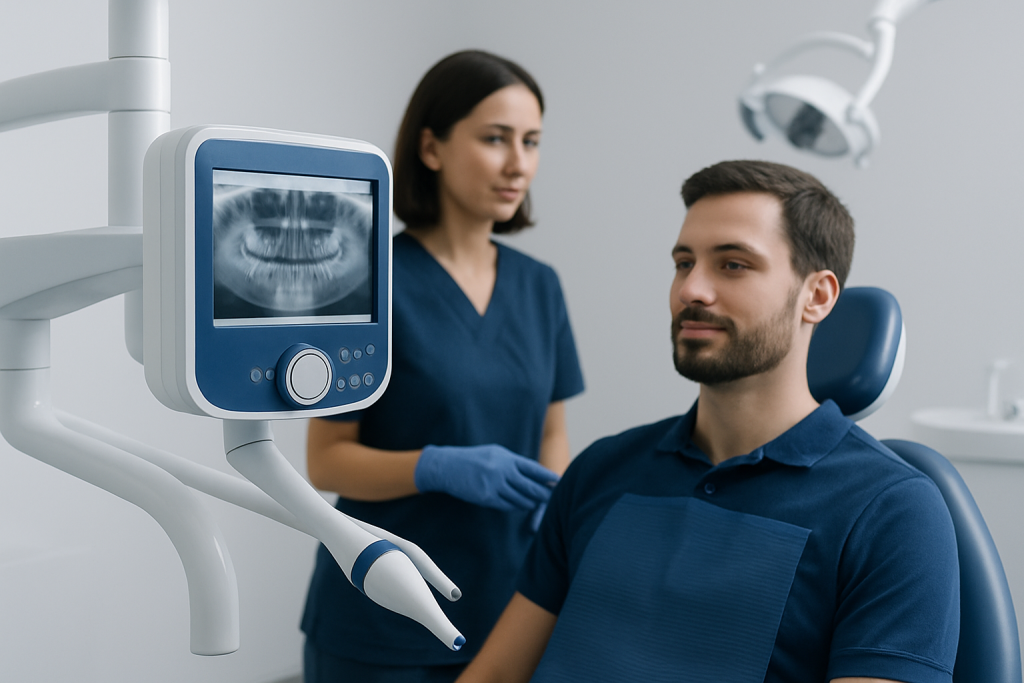
Most international dental programmes are organised as a coordinated package rather than a series of separate appointments. Before travel, a coordinator usually collects photographs, recent radiographs and a summary of medical history, then arranges a remote or video consultation so a dentist can give a preliminary opinion. This early stage is important: it establishes whether the patient’s expectations are realistic and whether a different, more conservative treatment might achieve a similar result.
A typical package, once agreed, may cover:
- An in-person examination on arrival, with imaging such as panoramic X-rays or a CBCT scan where indicated
- The clinical stages of treatment — preparation, digital or conventional impressions, temporary restorations, a try-in appointment and final fitting
- Laboratory fabrication of the crowns or veneers in the chosen material
- Airport transfers, hotel accommodation for the treatment period and interpreter support
- A written discharge summary, care instructions and details of any warranty on the laboratory work
What is not included matters just as much. Additional procedures such as root canal treatment, gum therapy, extractions, bone grafting or implants are usually quoted separately, because the need for them may only become clear after examination. Patients should ask, in writing, what happens to the plan and the cost if extra treatment is recommended once they are in the chair.
The Risks Patients Should Understand Before Booking

The most significant risk associated with “Turkey teeth” is not travel — it is the irreversibility of the treatment itself. Fitting a full-coverage crown requires the natural tooth to be reshaped, and that structure cannot be restored. If a large number of healthy teeth are prepared purely for appearance, the patient accepts a lifelong commitment to maintaining and eventually replacing those restorations. Aggressive preparation can also irritate the dental pulp, sometimes leading to sensitivity or the later need for root canal treatment.
Other recognised risks include gum inflammation or recession around poorly contoured margins, bite problems if the occlusion is not carefully checked, temporary or persistent sensitivity, and the debonding or fracture of a restoration over time. Infection is uncommon with routine restorative work but is always possible where surgery, extractions or implants are involved. None of these outcomes is unique to Turkey; they are the recognised complications of extensive restorative dentistry anywhere.
Risk rises when the process is compressed too aggressively — for example, when preparation and final fitting are squeezed into two or three days with no try-in stage, or when a treatment plan is confirmed by photograph alone. It also rises when a patient’s underlying problem is periodontal (gum) disease or untreated decay, because restorations placed over an unstable foundation are unlikely to last. A reputable programme will treat disease first and cosmetics second, even if that means a longer or staged plan.
Standards That Matter: Accreditation and Credentials
Accreditation is one of the clearest external signals of organisational standards. Joint Commission International (JCI) accreditation, held by a number of Turkish hospitals, assesses infection control, medication safety, surgical protocols, patient identification, record-keeping and emergency response against internationally recognised benchmarks. It does not evaluate an individual dentist’s artistry, but it does indicate that the institution operates within an audited safety framework — and that matters most if something unexpected happens during treatment.
Alongside the facility, patients should verify the clinician. Reasonable questions include: who exactly will carry out the preparation and fitting; what their dental qualification is; whether they hold specialist training in prosthodontics, periodontology or oral surgery where relevant; how many years they have practised; and whether they are registered with the Turkish health authorities. A clinic that answers these questions clearly and in writing is demonstrating the transparency patients should expect.
Consent is the third pillar. Before any tooth is touched, the patient should receive a written plan setting out the diagnosis, the number of units, the material to be used, the amount of tooth reduction involved, the alternatives (including doing nothing, orthodontics, whitening or minimal-preparation options), the expected maintenance requirements and the known risks. Anyone feeling rushed towards a decision, or offered a discount for booking immediately, is entitled to pause. Ethical clinics do not pressurise.
Planning the Cost: Thinking in Bands, Not Quotations
Dental treatment abroad is usually less expensive than equivalent private care in the UK, largely because of differences in laboratory, staffing and operating costs. However, no responsible provider can give a firm price before an examination. The most useful approach is to think in planning bands: a broad range that reflects the likely number of units, the material chosen, whether any preparatory treatment is needed and the length of stay.
Several factors move a plan up or down within that band. Zirconia, layered zirconia and pressed ceramic restorations differ in cost and in the technical work required. A patient needing gum treatment, root canal therapy, extractions or implants before restorative work will require a longer, staged and more expensive pathway than someone whose mouth is already healthy. Digital smile design, temporary restorations and additional try-in appointments may be itemised separately.
Patients should also budget for elements outside the dental fee: flights, extra hotel nights if the schedule extends, meals, comprehensive travel insurance that covers pre-planned medical treatment, and follow-up visits with a UK dentist afterwards. It is sensible to ask what the provider’s policy is if a restoration fails within the warranty period — specifically, whether return travel is the patient’s responsibility, and whether any UK dentist’s remedial work would be recognised.
Recovery, Travel Timing and Flying Home
Timing should be led by the clinical stages, not by the flight schedule. A conservative restorative plan generally involves an initial examination and preparation appointment, a period during which the laboratory fabricates the restorations while the patient wears temporaries, a try-in to check shade, shape and bite, and a final cementation visit. Building in a spare day before the return flight allows time for adjustments if the bite feels uneven or a margin needs refining.
Where surgery is involved — extractions, bone grafting or implant placement — healing time is longer and the pathway is usually split into two trips, with several months between the surgical and restorative stages. Patients should ask their treating dentist when it is appropriate to fly after any surgical procedure, and follow that individual advice rather than a general rule. Mild swelling, gum tenderness and temperature sensitivity are common in the days after extensive work and normally settle gradually.
Practical preparation makes the trip smoother: carrying the written treatment plan and any radiographs, keeping a copy of the discharge summary in both English and Turkish, packing soft foods for the first days, avoiding very hot or very cold drinks while teeth are sensitive, and arranging airport transfers rather than navigating public transport straight after a long appointment.
Aftercare Once Back in the UK
Aftercare is the stage most often overlooked, yet it is where long-term safety is decided. Before leaving Turkey, patients should obtain a full written record: the diagnosis, the teeth treated, the materials and shades used, laboratory documentation, post-operative radiographs and any warranty terms. This information allows a UK dentist to understand exactly what has been done and to maintain the work properly.
Registering with a dentist at home — or informing an existing dentist about the treatment — is strongly advised. Restorations need routine review, professional cleaning and periodontal monitoring, because the health of the gum around a crown margin determines how long that crown lasts. Patients should also confirm how to reach the treating team from the UK if a problem arises, ideally through a named coordinator with an email address and a defined response process, and should ask which situations warrant returning to Turkey rather than being managed locally.
Warning signs that merit prompt dental review include persistent pain or throbbing, swelling of the face or gum, a restoration that feels loose or that comes away, bleeding that does not settle, fever, or a bite that feels consistently high. Urgent symptoms such as significant facial swelling, difficulty swallowing or breathing difficulty require emergency medical care immediately, wherever the patient happens to be.
When to Speak to a Patient Coordinator
A patient coordinator is most useful early — before any deposit is paid. At that stage a coordinator can arrange a remote second opinion, explain what documentation the dentist will need, outline realistic timing, clarify visa and travel requirements, arrange interpreting support and set out an indicative cost band. Patients who contact a coordinator only after booking flights often find themselves fitting clinical stages around a fixed itinerary, which is the wrong way round.
Good questions to raise include: is this treatment clinically necessary, or is there a more conservative option; who will perform each stage; how many appointments are realistically required; what happens if additional treatment is identified on examination; and what the follow-up route is once the patient is home. A coordinator should be comfortable saying that a proposed plan is not appropriate, or that a patient would be better served by staged treatment.
Acibadem Health Point coordinates dental and multidisciplinary care for international patients across Acıbadem’s hospital network, which includes JCI-accredited facilities, arranging assessment, treatment planning, interpreting support and follow-up communication after patients return home. As with any provider, patients are encouraged to ask questions, request written information and take the time they need before deciding. Anyone considering extensive dental work abroad should first discuss the options with a qualified dentist who has examined them in person.
Frequently asked questions
01Is dental treatment in Turkey regulated?
Yes. Dentists in Turkey must hold a recognised dental qualification and be registered with the national health authorities, and clinics and hospitals are subject to Ministry of Health oversight. Some hospitals additionally hold voluntary international accreditation such as JCI, which audits safety and quality processes. Patients should still verify the individual clinician's registration and qualifications before booking.
02What is the difference between veneers and crowns?
Veneers are thin facings bonded to the front surface of a tooth and generally require limited enamel reduction, while crowns cover the whole tooth and require more substantial reshaping. Many treatments marketed as "Turkey teeth" are in fact crowns rather than veneers. Because crowns involve permanent removal of tooth structure, a dentist should explain clearly which is being proposed and why.
03How long should a patient stay in Turkey for dental work?
The length of stay depends entirely on the treatment plan, but restorative work usually involves preparation, laboratory time, a try-in and a final fitting, so more than a few days is typical. Plans involving extractions, gum treatment or implants are normally staged across two trips with healing time in between. The treating dentist should confirm the schedule after examining the patient rather than beforehand.
04Can a UK dentist repair work carried out in Turkey?
UK dentists can generally examine, maintain and, where necessary, carry out remedial treatment on restorations placed abroad, though this would be at the patient's own cost unless otherwise agreed. Bringing home a detailed written record of the materials and laboratory used makes this much easier. It is worth clarifying warranty terms with the original provider before travelling.
05Are very white, uniform crowns a sign of poor treatment?
Shade is a matter of patient choice rather than quality in itself, but an extremely bright, uniform appearance can look unnatural and is sometimes a sign that cosmetic preferences have been prioritised over conservative dentistry. A careful clinician will discuss shade, shape and proportion at a try-in stage before final fitting. Patients should feel able to ask for a more natural result.
06What should be asked before paying a deposit?
Ask for a written, itemised treatment plan, the name and qualifications of the treating dentist, the facility's accreditation status, what is and is not included in the package, and what happens if additional treatment is needed. Also ask how follow-up is handled once the patient is back in the UK. Clear written answers are a reasonable expectation, not a special request.
07Is it possible to get a second opinion before travelling?
Yes. Many international programmes offer remote or video consultations based on photographs and radiographs, and patients can also seek an independent opinion from a dentist in the UK. A second opinion is particularly valuable when a large number of healthy teeth are proposed for crowning. Taking time to compare recommendations is a sensible part of the decision.
This article is for general information only and is not a substitute for professional medical advice. Please consult a qualified doctor about your individual situation.
Explore treatments in Turkey — costs, top hospitals & a free quote
JCI-accredited · board-certified surgeons · reply within 24h
Add us as a Preferred Source to see more of our trusted health content across Google Search, AI Overviews and Discover.