Dentists in Turkey: Costs, Standards and How to Choose

Key Takeaways
- Dental care in Turkey is generally quoted in cost bands rather than fixed prices, because the final plan depends on X-rays, clinical examination and the number of teeth involved.
- Reputable providers confirm a treatment plan only after reviewing images and, where possible, an in-person examination — an online estimate is indicative, not a guarantee.
- Accreditation (such as JCI), dentist registration with the Turkish authorities, and clear information about who will perform each stage are practical selection criteria.
- Most complex work, including implants, is staged across two trips with a healing period in between; single-visit 'full mouth in a week' claims deserve careful questioning.
- Aftercare matters as much as the procedure: arrange a UK dentist for routine checks and ask in writing how complications or reviews will be handled.
- A patient coordinator can help with imaging transfer, video consultations, travel and accommodation planning, interpreters and follow-up — ideally contacted before booking flights.
Many UK patients travel abroad for dental care, and choosing a turkey dentist means weighing cost, clinical standards, travel timing and aftercare at home. This guide explains how treatment is planned and coordinated, what packages usually cover, and the questions worth asking before booking.
Why UK Patients Consider a Turkey Dentist
People in the UK usually begin looking for a turkey dentist for one of three reasons: NHS waiting lists for routine care in their area, the out-of-pocket cost of private implants, crowns or orthodontics at home, or a desire to combine treatment with travel. Turkey has become a well-known destination for dental care because a large number of clinics work with international patients and because treatment that would take several months of separate appointments in the UK can sometimes be condensed into a smaller number of longer visits.
It is important to be clear about what travelling abroad does and does not change. It changes cost, scheduling and geography. It does not change the biology of healing, the need for accurate diagnosis, or the fact that dental work requires long-term maintenance. A crown, veneer, bridge or implant placed anywhere in the world will need regular reviews, professional cleaning and, eventually, repair or replacement. Planning for that ongoing care is part of planning the trip.
This article is written from the patient-journey perspective — how care abroad is coordinated, what typically happens at each step, and what to ask before committing. It is not a clinical guide to dental procedures. Decisions about whether a tooth can be saved, whether bone grafting is needed, or whether implants are appropriate for a particular person are clinical judgements that belong with a qualified dentist who has examined the mouth and reviewed current radiographs.
What Treatment Packages Typically Include
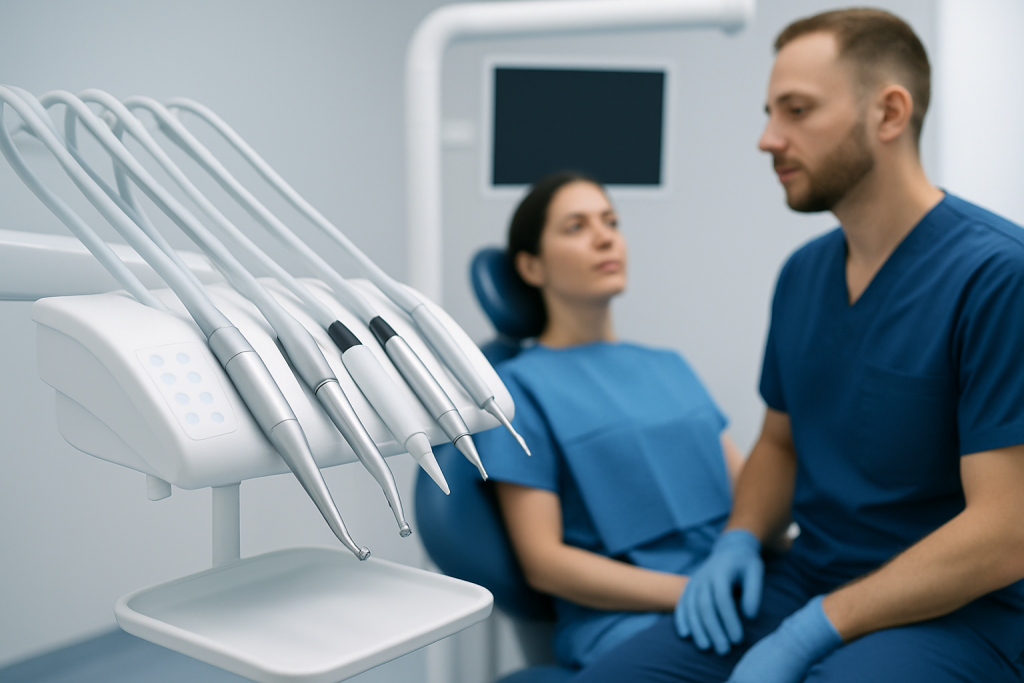
Most clinics serving international patients present care as a package rather than a list of separate charges. Packages vary considerably, so the practical task is to obtain a written breakdown rather than assume. What is included in one offer may be an extra in another.
- Clinical elements: initial examination, panoramic X-ray and often a 3D cone-beam scan, the agreed procedure itself, laboratory work for crowns or dentures, temporary restorations, and scheduled review appointments during the stay.
- Logistical elements: airport transfers, hotel nights linked to the treatment schedule, transport between hotel and clinic, and an interpreter or English-speaking coordinator.
- Frequently excluded: flights, additional nights if healing is slower than expected, treatment of problems discovered on arrival (such as infection, decay under an existing crown, or insufficient bone), sedation or general anaesthesia where requested, and any second trip for the definitive restoration.
The most common source of disappointment is not the quality of the package but the difference between the online estimate and the confirmed plan. An estimate given from photographs is provisional by nature. Once radiographs and an examination are complete, the number of units, the need for extractions or grafting, and the material chosen may all change the plan. Asking in advance how variations are handled — who authorises them, how they are priced, and whether the patient may decline — avoids difficult conversations mid-treatment.
Understanding Realistic Cost Bands

Responsible providers discuss dental treatment abroad in bands rather than fixed figures, and it is reasonable to be cautious about any quotation issued before imaging has been reviewed. Cost depends on the number of teeth treated, the material selected (for example, different ceramic systems for crowns), whether preparatory work such as extraction, sinus lifting or bone grafting is required, the implant system used, and the seniority and specialisation of the clinician.
Broadly, single restorations such as a crown or veneer sit in the lowest band; single implants with an abutment and crown in a middle band; and full-arch or full-mouth rehabilitation in the highest, since these involve multiple implants, surgical planning, provisional and definitive prostheses and usually more than one trip. Orthodontic aligners and routine hygiene work are typically priced separately. When comparing with UK private fees, the honest comparison includes flights, accommodation beyond the package, time away from work, and the cost of any follow-up or remedial care at home.
Budget planning also means allowing a contingency. Healing can be slower than expected, a second trip may be advised, and unforeseen findings may add stages. Building in a margin — and confirming what happens financially if the plan changes — makes the process considerably less stressful than assuming the first figure is final.
Standards, Accreditation and Clinician Credentials
Because dentistry is regulated differently in each country, UK patients cannot rely on familiar reference points such as General Dental Council registration when choosing abroad. Practical checks help. Ask whether the treating dentist is registered with the Turkish Ministry of Health, what their specialist training is (for example, in oral and maxillofacial surgery, periodontology or prosthodontics), how many years they have worked in the specific procedure being proposed, and whether the same clinician will perform every surgical stage. Continuity matters: knowing who is responsible from consultation to final fitting is more useful than a general reassurance about the team.
Facility accreditation is a second, separate signal. International accreditation such as Joint Commission International (JCI) applies to hospitals and healthcare organisations and assesses patient safety systems, infection control, medication management, record-keeping and governance. It does not grade the aesthetic outcome of dentistry, but it does indicate that the organisation is externally audited against recognised safety standards. Sterilisation protocols, traceability of implant components, and the availability of medical support in the event of a complication are all reasonable things to ask about.
Equally telling is how a clinic communicates. Providers working to good standards tend to be conservative in their claims, willing to say that a plan cannot be confirmed without imaging, transparent about risks, and comfortable providing written records. Be wary of pressure to book quickly, promises of a guaranteed result or a fixed number of days, and marketing that emphasises the number of teeth treated rather than whether treatment is clinically necessary. Removing healthy tooth structure for cosmetic crowns, for instance, is an irreversible decision that deserves an unhurried second opinion.
Planning the Trip: Timing, Stages and Recovery
Timing depends entirely on the treatment. Straightforward work such as a small number of crowns or veneers is often completed within a single stay, with the preparation and laboratory phase followed by fitting a few days later. Implant treatment is different: after placement, the implant must integrate with bone, and this healing phase is measured in months, not days. Many patients therefore travel twice — once for surgery and temporary restorations, and again later for the definitive prosthesis. Clinics that compress complex implant work into a very short single visit should be asked to explain, in writing, the clinical reasoning and the protocol being followed.
Practical planning points include arranging flights with flexible dates where possible, allowing rest days rather than scheduling sightseeing immediately after surgery, and checking airline guidance on flying after dental procedures, particularly where sinus surgery or sedation has been involved. Soft foods, mild swelling and discomfort are common in the first days after surgical work, and travel is more comfortable when the itinerary allows for it. Anyone taking regular medication, on blood thinners, or living with diabetes, heart conditions or immune suppression should disclose this early, as it may affect the plan and the timing.
Travel insurance is another frequently overlooked item. Standard policies often exclude planned treatment abroad and its complications, so a specific medical-travel policy may be needed. Passport validity, visa or entry requirements for Turkey, and a plan for a travel companion — advisable for anyone having surgery under sedation — should be settled well before departure.
Aftercare Once You Are Home in the UK
Aftercare is the part of dental tourism that most affects long-term satisfaction, and it needs to be arranged before travelling rather than afterwards. Ideally, patients should have a UK dentist willing to see them for routine examinations, hygiene appointments and any urgent problem. Some UK practices are reluctant to take over responsibility for work they did not carry out, so it is worth confirming this in advance rather than assuming.
Ask the treating clinic to provide a complete written record to bring home: the treatment plan carried out, radiographs, the implant system and component references, materials used for crowns or bridges, and any warranty or review terms. This documentation makes future care far simpler, whether that is a routine adjustment or a repair years later. Clarify how the clinic handles remote follow-up — by video review, photographs or email — and what the process is if a restoration loosens, a screw needs tightening or discomfort persists.
Warranty terms deserve careful reading. Guarantees on laboratory work are common but usually conditional on attending reviews, maintaining oral hygiene and, in some cases, returning to Turkey for assessment. Understand who pays for travel in that situation. Day-to-day maintenance — brushing, interdental cleaning, avoiding smoking, and regular professional cleaning — has a substantial influence on how long implants and restorations last, and no clinic can guarantee an outcome without it.
When to Speak to a Patient Coordinator
The right time to contact a patient coordinator is early — before flights are booked and before any deposit is paid. A coordinator’s role is not to give clinical advice but to organise the journey: collecting existing X-rays and dental records, passing them to the relevant specialist for review, arranging a video consultation where appropriate, explaining what the assessment will involve on arrival, and setting out an indicative cost range with the variables that could change it.
Coordinators also handle the practical scaffolding around treatment: appointment scheduling that reflects healing time, guidance on visa and entry requirements, hotel and transfer arrangements near the clinic, interpreter support during consultations, and arrangements for a travel companion. For patients who are undecided, a second-opinion review of an existing plan — including a plan issued by another provider — can be a valuable step in itself, particularly where extensive crown work or multiple extractions have been proposed.
Acibadem Health Point coordinates care for international patients within Acıbadem Healthcare Group, where multidisciplinary specialists work in JCI-accredited hospitals and clinics, and can support UK patients with record review, appointment planning, interpreters and follow-up arrangements after returning home. Whichever provider is chosen, the same principles apply: obtain a written plan, understand what is and is not included, keep a copy of all records, and continue regular dental care in the UK. Anyone with pain, swelling, fever or a problem with a restoration should contact a dentist promptly rather than waiting for a scheduled review.
Frequently asked questions
01Is dental treatment in Turkey safe?
Standards vary between providers, as they do in any country, so safety depends largely on the clinic and clinician chosen. Checking facility accreditation, the treating dentist's registration and specialist training, infection-control protocols and the traceability of implant components are practical safeguards. Patients should also confirm what medical support is available if a complication arises during the stay.
02How much does dental work in Turkey cost?
Costs are best discussed as bands rather than fixed figures, because the final plan depends on radiographs, the number of teeth involved, the materials chosen and whether preparatory procedures such as extraction or bone grafting are needed. Single crowns generally sit in the lowest band, single implants in the middle, and full-arch rehabilitation in the highest. Any estimate given before imaging has been reviewed should be treated as provisional.
03How long should I stay in Turkey for dental treatment?
It depends on the procedure. Crown or veneer work is often completed within one stay that includes preparation, laboratory time and fitting, while implant treatment normally requires a healing period and a second trip for the definitive restoration. A clinic should explain the staging in writing before travel, and it is sensible to build in flexibility rather than book tight return flights.
04Can I fly straight after dental surgery?
Many people fly within a few days of routine dental work, but comfort and safety depend on the procedure, the anaesthesia or sedation used and individual healing. Surgery involving the sinuses or extensive bone work may require a longer wait. The treating dentist should give specific guidance, and airline policies should be checked in advance.
05Will my UK dentist look after work done in Turkey?
Some UK practices will provide routine examinations, hygiene appointments and emergency care for work carried out abroad, while others prefer not to take on responsibility for restorations they did not place. It is best to confirm this before travelling. Bringing home full records, radiographs and implant component details makes ongoing care in the UK considerably easier.
06What should I ask before booking a clinic abroad?
Useful questions include who will perform each stage of treatment and what their qualifications are, what the package includes and excludes, how the plan may change after examination, what the warranty terms require, and how complications or reviews are handled after returning home. Requesting everything in writing is reasonable and should not cause difficulty for a well-organised provider.
07Do I need special travel insurance for dental treatment abroad?
Standard travel policies frequently exclude planned medical or dental treatment and any resulting complications, so a specific medical-travel policy may be required. Patients should read the exclusions carefully and disclose the intended treatment. It is also worth checking whether cover extends to extended stays if healing takes longer than expected.
This article is for general information only and is not a substitute for professional medical advice. Please consult a qualified doctor about your individual situation.
Explore treatments in Turkey — costs, top hospitals & a free quote
JCI-accredited · board-certified surgeons · reply within 24h
Add us as a Preferred Source to see more of our trusted health content across Google Search, AI Overviews and Discover.