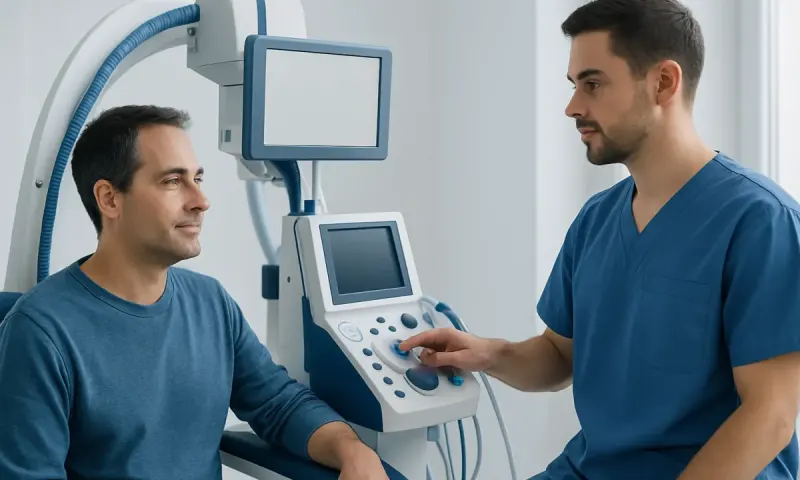
Am I a Candidate for Varicocele Treatment?

A person may be a candidate for varicocele treatment when a clinically detectable varicocele is linked with persistent discomfort, impaired fertility, abnormal semen results, reduced testicular growth, or testicular changes. A urologist reviews symptoms, examination findings, fertility goals, imaging when needed, and overall health before recommending observation, surgery, or embolization.
Overview: Who May Benefit From Varicocele Treatment?
Am I a candidate for varicocele treatment? A person may be a candidate if a varicocele is causing persistent pain, affecting fertility alongside abnormal semen results, or contributing to reduced testicular size or development. Treatment is not automatically necessary: many varicoceles are harmless, cause no symptoms, and can be safely observed with medical guidance.
A varicocele is an enlargement of veins in the scrotum, the skin sac that holds the testicles. It is often described as similar to varicose veins in the leg and most commonly occurs on the left side. The enlarged veins can sometimes affect local temperature, blood flow, or testicular function, although the effects vary greatly between individuals.
The most useful question is not simply whether a varicocele is present, but whether it is clinically important for that person. A urologist considers the examination, symptoms, fertility plans, semen analysis results where relevant, testicular health, and possible alternative explanations before recommending care. For a broader overview of available approaches, see varicocele treatment.
Eligibility Criteria a Urologist Will Consider
Varicocele treatment is commonly considered for adults with a palpable, or clinically detectable, varicocele and fertility difficulty when testing also shows abnormal semen parameters. In this situation, the aim may be to improve the chance of natural conception or to support fertility treatment. Both partners’ fertility should be assessed where appropriate, because a varicocele may be only one factor affecting conception.
Persistent scrotal discomfort is another possible reason to consider treatment. Varicocele-related pain is often a dull ache, heaviness, or pulling sensation that worsens after standing, exercise, or a long day and improves when lying down. A clinician will first check that the discomfort is likely to be from the varicocele and that supportive measures have not provided sufficient relief.
In adolescents, treatment may be discussed when there is a meaningful difference in testicular size, slowed growth of the affected testicle, persistent symptoms, or concerning follow-up findings. Regular monitoring is often appropriate when testicular development is normal and there are no symptoms.
- A palpable varicocele with infertility and abnormal semen testing may support treatment.
- Ongoing pain that has not improved with conservative care may support treatment.
- Reduced testicular size, growth differences, or changes in function may support treatment.
- An ultrasound-only finding without symptoms, fertility concerns, or testicular changes often does not require repair.
Pre-Treatment Assessment and Diagnosis

Assessment usually starts with a medical history and a physical examination while standing and lying down. The clinician may ask about pain patterns, fertility history, prior scrotal surgery or injury, medications, general health, and plans for future children. During the examination, the veins may become more noticeable with gentle straining, known as the Valsalva maneuver.
Scrotal ultrasound with Doppler imaging can show enlarged veins and backward blood flow. It may be used when the examination is unclear, to evaluate testicular size, or to investigate other causes of symptoms. However, an ultrasound finding by itself does not necessarily mean treatment is beneficial.
For people trying to conceive, one or more semen analyses are often requested because results can vary over time. Depending on the situation, clinicians may also consider hormone testing, assessment for infection or obstruction, and evaluation of the female partner. These steps help ensure that treatment decisions are based on the whole fertility picture rather than one test result.
A new varicocele that appears only on the right side, does not reduce when lying down, or develops later in life may need additional evaluation. This does not always indicate a serious problem, but it is important to exclude an underlying cause before planning repair.
How Varicocele Treatment Works
Varicocele treatment aims to stop abnormal blood flow through the enlarged veins while preserving normal blood supply and lymphatic drainage to the testicle. Redirecting blood through healthy veins may reduce venous pressure, improve discomfort, and in selected patients support testicular function or semen parameters.
Microsurgical varicocelectomy is a common surgical approach. Through a small incision, often in the groin or lower abdominal area, the surgeon identifies and closes the affected veins while protecting the testicular artery, lymphatic vessels, and other important structures. Magnification can help improve precision.
Varicocele embolization is a minimally invasive alternative performed by an interventional radiology specialist. A small catheter is passed through a blood vessel, usually from the groin or neck, to reach the affected veins. Coils, a medical solution, or other devices are then used to block the abnormal flow from inside the vein.
The most suitable option depends on the anatomy of the veins, prior procedures, local expertise, anesthesia considerations, recovery preferences, and the reason for treatment. A specialist can explain whether surgery or embolization is appropriate in the individual case.
What Happens During the Procedure and Recovery
Before treatment, the care team reviews medical history, allergies, medicines, bleeding risk, and anesthesia needs. Patients may be asked to pause certain medications only under medical advice and to follow fasting instructions if sedation or anesthesia is planned. The procedure is usually performed as day treatment, although arrangements differ by technique and individual health needs.
During microsurgical repair, anesthesia is used to keep the patient comfortable. The surgeon makes a small incision, identifies the abnormal veins, seals or ties them off, and closes the incision. During embolization, local anesthetic and often sedation are used; the interventional specialist guides the catheter with X-ray imaging and blocks the selected veins without a scrotal incision.
After either procedure, mild soreness, bruising, or swelling can occur for several days. Most people can walk gently soon afterwards and return to desk-based activities within a short period, but strenuous exercise, heavy lifting, and sexual activity may need to be avoided temporarily according to the clinician’s instructions.
Pain related to a varicocele may improve over weeks to months. When treatment is performed for fertility, semen testing is usually repeated after a period of recovery because sperm production takes time. Follow-up also checks wound healing, testicular comfort, and whether the varicocele has persisted or returned.
Benefits, Limitations, and Possible Risks
Potential benefits include less scrotal pain, improvement in semen parameters for some people, and support for normal testicular growth in selected adolescents. For individuals with infertility, treatment may improve the likelihood of conception in appropriate circumstances, but it does not address every cause of infertility and cannot guarantee pregnancy.
Conservative measures may be enough for mild symptoms. Supportive underwear, avoiding activities that clearly worsen discomfort, and clinician-approved pain relief can help some people. These measures do not remove the enlarged veins, but they may reduce symptoms and allow time for monitoring.
As with any procedure, risks are possible. They can include bruising, infection, fluid collection around the testicle called hydrocele, injury to nearby structures, persistent or recurrent varicocele, ongoing pain, and uncommon anesthesia or catheter-related complications. The exact risk profile varies by procedure and personal health factors.
A careful pre-treatment discussion should include expected benefits, realistic limitations, alternatives, and the consequences of choosing observation. A patient should feel comfortable asking how the proposed option fits their fertility goals, work and activity needs, and medical history.
When to Seek Medical Care
A routine urology appointment is appropriate for a new scrotal heaviness, visible enlarged veins, recurrent aching, a noticeable difference in testicular size, or fertility concerns after a period of trying to conceive. Early assessment can help clarify whether a varicocele is present and whether another condition may be responsible for the symptoms.
Urgent medical assessment is important for sudden or severe testicular pain, marked swelling, redness with fever, nausea or vomiting with scrotal pain, or a new hard lump. These symptoms are not typical of a simple varicocele and may require prompt evaluation to rule out conditions that need timely treatment.
People seeking an international specialist opinion can discuss assessment and treatment planning with the multidisciplinary teams at Acıbadem Health Point, where JCI-accredited hospitals provide urology and interventional care for international patients. A pre-assessment form can help the team review symptoms, previous test results, imaging, and fertility goals before arranging an individualized consultation.
Even when treatment is not currently indicated, planned follow-up may be valuable. Monitoring symptoms, testicular size, and fertility-related findings helps ensure that a change in health or reproductive plans can be addressed at the right time.
Frequently asked questions
01Does every varicocele require treatment?
No. Many varicoceles do not cause pain, testicular changes, or fertility problems and do not need a procedure. A urologist may recommend observation and follow-up when there is no clear clinical reason to repair the veins.
02Can a varicocele be treated if semen analysis is normal?
It may be considered if the varicocele is causing persistent pain or testicular size changes, but normal semen results make fertility-related treatment less clearly indicated. The decision depends on symptoms, examination findings, future fertility goals, and the clinician’s assessment.
03Is a non-palpable varicocele seen only on ultrasound treated?
Usually not, particularly when there are no symptoms or fertility concerns. Ultrasound can detect small changes in veins that may not be clinically significant, so treatment decisions are generally not based on imaging alone.
04Which is better: surgery or embolization for a varicocele?
Both can be effective options for appropriately selected patients. The best choice depends on the vein anatomy, previous treatment, availability of expertise, anesthesia considerations, recovery preferences, and the reason treatment is being considered.
05How long does it take to see fertility-related changes after treatment?
Semen parameters are commonly reassessed after several months because sperm production and maturation take time. Improvements can vary, and pregnancy also depends on age, partner-related factors, and other reproductive health considerations.
06Can a varicocele come back after treatment?
Yes, persistence or recurrence is possible because of complex vein anatomy or reopening of abnormal pathways. Follow-up is useful if symptoms continue, a scrotal swelling returns, or fertility concerns remain.
This article is for general information only and is not a substitute for professional medical advice. Please consult a qualified doctor about your individual situation.
IVF & fertility treatment in Turkey — success rates and costs
JCI-accredited · board-certified surgeons · reply within 24h
Add us as a Preferred Source to see more of our trusted health content across Google Search, AI Overviews and Discover.