Gait Apraxia: Causes, Assessment, and Fall Risk
Gait apraxia is a neurological walking disorder in which a person has difficulty initiating, planning, or coordinating steps even though the leg muscles may be strong enough to move. It is not a diagnosis on its own, but a clinical sign that may point to changes affecting the brain networks involved in movement and balance.
Overview: what is gait apraxia?
Gait apraxia describes difficulty carrying out the learned, automatic task of walking because the brain has trouble organizing the movement. A person may understand the instruction to walk and have reasonable leg strength when tested in bed or while seated, yet be unable to take a normal first step, maintain a smooth stride, or turn safely.
It is sometimes called a frontal gait disorder, gait ignition failure, or a higher-level gait disorder. These terms reflect the role of brain networks—particularly frontal and subcortical pathways—that help start, sequence, and adapt walking. Gait apraxia is different from weakness caused by a muscle or nerve disorder, although more than one walking problem can be present at the same time.
The pattern can be unsettling but should be approached calmly and systematically. Identifying the cause is important because some contributing problems can be treated, and rehabilitation and home-safety measures can meaningfully improve confidence and reduce the risk of falls.
How gait apraxia may look in daily life
The symptoms vary between people and may become more noticeable in busy, unfamiliar, narrow, or cluttered spaces. Many people can move their legs while sitting or lying down, but seem as though their feet are “stuck” when they try to begin walking. Once moving, they may take short, broad-based, shuffling steps and have difficulty changing direction.
Common features include hesitation before the first step, repeated stepping in place, freezing episodes, reduced foot clearance, trouble turning, and an unsteady or cautious posture. A person may find that crossing a threshold, approaching an obstacle, or walking while talking makes the problem more evident. Falls can occur, particularly during turns or when rising and starting to walk.
Gait apraxia can also occur alongside changes in thinking, attention, bladder control, balance, or other movement symptoms. These associated features do not confirm a specific cause on their own, but they help clinicians decide which assessments may be useful.
- Difficulty initiating walking despite being able to lift the legs
- Small, shuffling, or irregular steps
- Freezing or a feeling that the feet are glued to the floor
- Difficulty turning, stopping, or navigating around obstacles
- Falls, fear of falling, or increasing reliance on furniture for support
Why gait apraxia happens

Walking depends on communication between several parts of the nervous system. The frontal lobes help with planning and attention, deeper brain pathways help automate movement, and sensory systems provide information about position and balance. Gait apraxia may develop when disease or injury disrupts these connected networks.
Potential causes include stroke, especially when it affects frontal or deep brain areas; cerebral small-vessel disease; traumatic brain injury; brain tumors or other structural brain changes; and neurodegenerative conditions. It may also be seen in <a href="https://acibademhealthpoint.com/diseases/normal-pressure-hydrocephalus/”>normal pressure hydrocephalus, a condition involving an abnormal buildup of cerebrospinal fluid that can be associated with walking difficulty, cognitive changes, and urinary urgency or incontinence.
Some people have a mixed gait disorder. For example, arthritis, reduced vision, peripheral neuropathy, medication side effects, Parkinsonian symptoms, or reduced cardiovascular fitness can add to a brain-based walking difficulty. A careful assessment is therefore needed rather than assuming that one symptom has a single explanation.
Parkinson’s disease can also cause shuffling and freezing, but its overall movement pattern and examination findings differ from gait apraxia. Other neurological conditions, including stroke, can affect gait in distinct ways depending on which brain region is involved.
How doctors assess gait apraxia
A clinician usually begins by asking when the walking changes started, whether they were sudden or gradual, how they affect daily activities, and whether falls have occurred. Information from a family member or caregiver can be helpful, particularly if there have been subtle changes in memory, judgement, continence, mood, or day-to-day functioning.
The examination commonly includes observation of standing, starting to walk, stride length, arm movement, turning, balance, and the ability to perform another task while walking. The clinician will also test strength, muscle tone, reflexes, sensation, coordination, eye movements, and cognition. This helps distinguish gait apraxia from weakness, vestibular disorders, joint disease, cerebellar problems, or peripheral nerve conditions.
Brain imaging, most often magnetic resonance imaging (MRI) or computed tomography (CT), may be recommended to look for stroke, fluid buildup, bleeding, tumors, or changes related to small-vessel disease. Blood tests may be used to check for reversible contributors such as vitamin deficiencies, thyroid disorders, infection, or metabolic problems when clinically appropriate.
Assessment may involve neurology, geriatrics, rehabilitation medicine, physiotherapy, occupational therapy, and other specialists. If normal pressure hydrocephalus is suspected, further specialist tests may be considered to determine whether cerebrospinal fluid treatment could be beneficial.
Treatment and rehabilitation options
There is no single treatment for gait apraxia because care depends on its cause. When an underlying condition can be treated or stabilized, addressing it is central to the plan. This may include stroke care and secondary prevention, management of hydrocephalus, review of medicines that may affect alertness or balance, or treatment of other medical conditions contributing to impaired mobility.
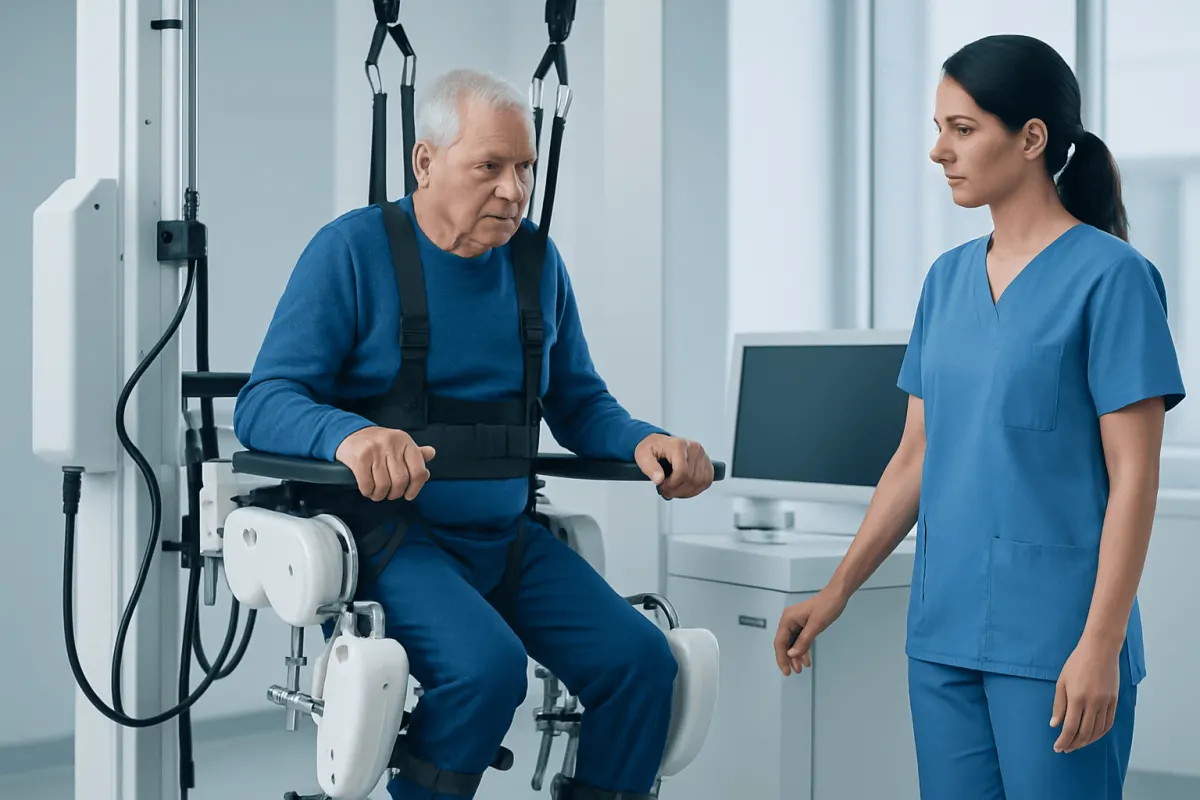
Physiotherapy is often a key part of care. A therapist can assess balance, transfers, walking endurance, turning, and fall risks, then provide practical gait training. Exercises may focus on weight shifting, stepping strategies, leg strength, balance, and safe turning. External cues, such as verbal counting, floor markings, rhythm, or a structured sequence for starting to walk, may help some people overcome hesitation or freezing.
Occupational therapy can support safer daily routines and recommend equipment or adaptations, such as appropriate footwear, grab rails, a shower chair, improved lighting, and removal of trip hazards. A walking aid may be useful for some people, but it should be selected and adjusted by a qualified professional because an unsuitable device can increase instability.
For people whose symptoms are related to stroke, stroke rehabilitation may combine mobility training with support for speech, cognition, and daily activities. If a structural or fluid-related brain problem is found, a neurologist or neurosurgeon can discuss whether targeted treatment is appropriate.
Living safely with a walking disorder
Falls are not inevitable, but prevention deserves early attention. The person and their family can keep commonly used routes clear, secure loose rugs and electrical cords, ensure good lighting, and use stable chairs with armrests. Shoes should fit well and have non-slip soles; walking in socks on smooth floors can be risky.
It can help to avoid rushing, particularly when standing up, starting to walk, or turning. Pausing before the first step, focusing on one task at a time, and using a practiced cue from a therapist may make movement more controlled. If dizziness, fatigue, or confusion is present, it is sensible to ask for help rather than attempting to walk alone.
Regular physical activity tailored to the person’s abilities can support strength, flexibility, mood, and confidence. However, exercise should be adapted to the individual’s fall risk and medical condition. A clinician or physiotherapist can advise on an appropriate plan and on whether supervision is needed.
Keeping a brief record of falls, freezing episodes, medication changes, and new symptoms can be valuable at follow-up appointments. This information may reveal triggers and help the care team adjust rehabilitation or medical management.
When to seek medical care
A new change in walking should be assessed by a healthcare professional, especially if it persists, is worsening, causes falls, or affects independence. Early evaluation can identify treatable causes and provide timely support for safe mobility.
Urgent medical care is needed if walking difficulty begins suddenly or is accompanied by facial drooping, one-sided weakness or numbness, speech difficulty, severe headache, new confusion, vision loss, fainting, or loss of coordination. These can be warning signs of a stroke or another acute neurological problem and should not be managed at home.
Prompt assessment is also important when gait changes occur with rapidly worsening confusion, a significant head injury, fever and neck stiffness, new bladder or bowel changes, or repeated falls. A doctor can determine the most appropriate next steps and referrals.
Acıbadem Health Point’s multidisciplinary specialists and JCI-accredited hospitals assess and treat neurological conditions affecting mobility for international patients, with rehabilitation support when needed.
Frequently asked questions
01Is gait apraxia the same as Parkinson’s disease?
No. Gait apraxia is a description of a walking-planning problem, while Parkinson’s disease is a specific neurological condition. Both may involve shuffling or freezing, so a neurological examination is important to identify the likely cause and guide treatment.
02Can gait apraxia improve?
Improvement depends on the underlying cause, how quickly it is identified, and the person’s overall health. Treating reversible contributors and participating in targeted rehabilitation may improve walking safety, function, and confidence.
03Does gait apraxia mean a person has dementia?
Not necessarily. Gait apraxia may occur with some forms of cognitive impairment or dementia, but it can also result from stroke, hydrocephalus, brain injury, or other neurological conditions. Cognitive symptoms should be assessed as part of the wider clinical picture.
04What is the difference between gait apraxia and leg weakness?
With leg weakness, the muscles may not generate enough force to stand, lift the feet, or climb stairs. In gait apraxia, strength can be relatively preserved, but the brain has difficulty initiating or organizing the walking pattern. Both problems can occur together.
05What tests are used to diagnose gait apraxia?
There is no single test that confirms gait apraxia. Diagnosis is based on the history and neurological examination, often supported by walking and balance assessment, medication review, blood tests when appropriate, and brain imaging such as MRI or CT.
06Should a person with gait apraxia use a walker?
A walker or other mobility aid may help some people, but it is not right for everyone. A physiotherapist or occupational therapist should assess the person’s gait, balance, home environment, and ability to use the device safely.
This article is for general information only and is not a substitute for professional medical advice. Please consult a qualified doctor about your individual situation.
Joint and spine care in Turkey — expert assessment & treatment
JCI-accredited · board-certified surgeons · reply within 24h
Add us as a Preferred Source to see more of our trusted health content across Google Search, AI Overviews and Discover.