

How Hospital Quality Is Monitored at Acibadem

Medically reviewed by the Acıbadem clinical team — June 12, 2026
If you are considering treatment abroad, it helps to know how a hospital keeps quality visible every day, not just on paper. This guide explains how Acibadem Health Point supports quality monitoring across care, safety, communication, and follow-up so you can make informed decisions with more confidence.
At a glance
- Best for: International patients who want to understand how hospital quality is checked and maintained
- Key focus: Safety systems, accreditation, audits, patient feedback, and team coordination
- Where Acibadem helps: JCI-accredited hospitals, multilingual support, and coordinated international patient services
- What you can expect: Clear communication, documented processes, and structured follow-up
- Good to know: Quality monitoring is ongoing and involves many teams, not just one department
What ‘quality monitoring’ really means in a hospital
When you hear that a hospital monitors quality, it should mean more than a certificate on the wall. In practice, it means the hospital is checking whether care is being delivered safely, consistently, and in line with agreed standards every day.
At Acibadem Health Point, this kind of monitoring is part of the patient journey from the first enquiry to discharge and aftercare. That includes how information is collected, how decisions are documented, how teams communicate, and how the hospital responds when something does not go exactly to plan.
For you as an international patient, quality monitoring matters because you may be travelling far from home, speaking through an interpreter, and relying on a team you have only just met. Reliable systems help reduce avoidable confusion and make it easier for you to know what is happening and why.
How Acibadem checks quality across the patient journey
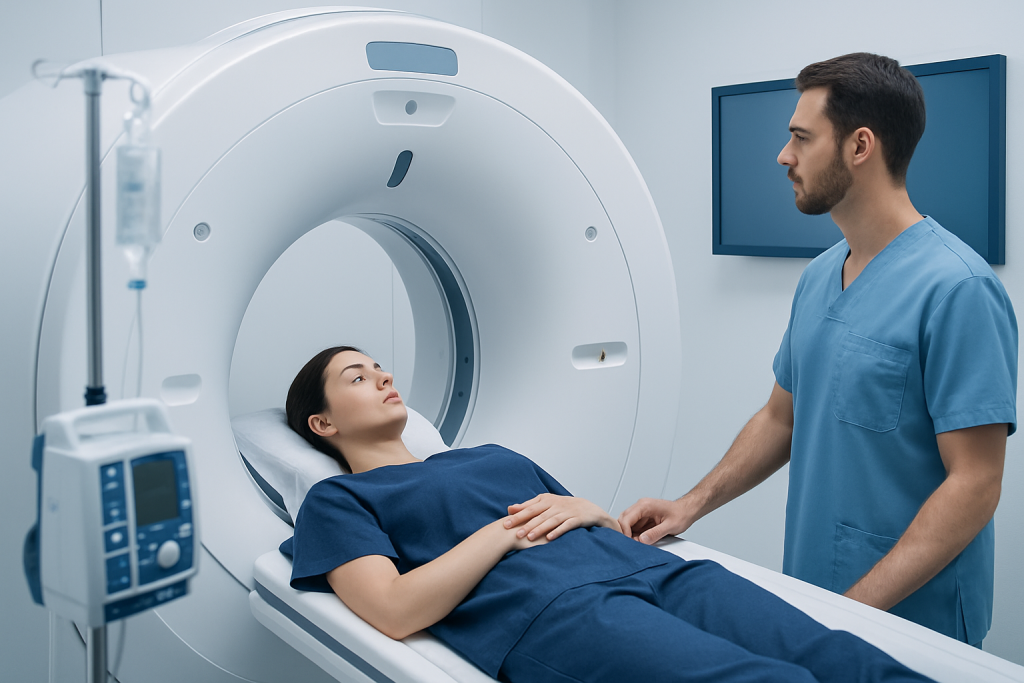
Quality control starts before you arrive. International patient coordinators help organize your records, make sure the right department reviews your case, and support the handover between planning, treatment, and follow-up. That early coordination matters because good care depends on the right information reaching the right people at the right time.
Once you are in the hospital, quality monitoring usually includes standardised checks for identity, documentation, medication handling, infection prevention, informed consent, and procedure-specific safety steps. These are not isolated tasks; they are built into daily routines so that care is more predictable and easier to track.
Acibadem’s multidisciplinary teams also contribute to monitoring quality by reviewing each case from different angles. Surgeons, physicians, nurses, anaesthesiology teams, radiology, laboratory, and support staff each carry responsibility for their part of the process, which helps reduce gaps between departments.
- Pre-arrival record review
- Patient identification and consent checks
- Medication and treatment verification
- Infection prevention routines
- Discharge planning and follow-up coordination
Why accreditation matters, and what JCI adds

Accreditation gives patients a way to compare hospitals using external standards rather than marketing language. JCI-accredited hospitals are assessed against internationally recognised criteria covering patient safety, governance, infection control, staff qualifications, documentation, and many other operational areas.
At Acibadem, JCI accreditation is one part of a broader quality culture. It helps show that systems are being reviewed by outside assessors, not only by internal teams. For you, that can provide a helpful layer of reassurance when you are deciding where to travel for care.
It is also worth remembering that accreditation is not static. Hospitals work to maintain standards over time through internal audits, staff training, and process updates. In other words, quality monitoring is something the organisation needs to keep proving, not simply something it achieved once.
The role of audits, reporting, and performance review
Hospitals monitor quality by looking at both individual cases and bigger patterns. Internal audits may review whether records are complete, safety steps were followed, or discharge instructions were given clearly. Wider performance reviews may look at infection trends, patient flow, waiting times, incident reporting, and service responsiveness.
This type of review is useful because it shows where systems are working well and where they need adjustment. If a process creates repeated delays or confusion, it can be redesigned. If a safety check is missed too often, the hospital can reinforce training or simplify the workflow.
For international patients, this matters because quality is not only about the medical outcome you hope for. It is also about whether your experience is organised, whether your questions are answered in understandable language, and whether the hospital can coordinate your care across time zones and borders.
How patient feedback becomes part of quality improvement
Your experience should not disappear once you leave the hospital. Patient feedback is one of the most practical ways a hospital learns where its systems are strong and where they are not meeting expectations. That may include comments about communication, room comfort, interpreter support, wait times, or discharge instructions.
At Acibadem Health Point, feedback from international patients can be especially valuable because cross-border care adds extra steps that local patients may not face. If you are unsure about something, or if a detail was not clear during your stay, raising it helps the team understand where support needs to be improved.
Good quality monitoring treats patient comments as data, not just impressions. Over time, patterns in feedback can influence service design, staff training, and the way information is delivered to patients coming from abroad.
What you can ask before you travel
Before you book travel, ask practical questions that tell you how the hospital manages quality in real life. You can ask who will review your medical records, how your case will be coordinated, what interpreter support is available, and how discharge and follow-up will be handled once you return home.
You may also want to ask whether the hospital has JCI accreditation, how emergency situations are handled, and whether your treating team works in a multidisciplinary way. These are not complicated questions, but the answers often reveal how organised the hospital is behind the scenes.
If you are speaking with Acibadem Health Point, the international patient services team can help you navigate those questions in a straightforward way. That can be especially useful if you are comparing options from another country and need clarity before making a decision.
How to read quality signals without getting lost in jargon
Hospitals often use technical language to describe their systems, but you do not need to become an expert to understand the basics. Look for evidence of external accreditation, structured communication, clear responsibility between departments, and a transparent pathway for questions and follow-up.
It also helps to notice how the hospital responds to you. Do they explain next steps clearly? Do they tell you what documents they need? Do they confirm who your point of contact is? Those everyday details often show more about quality than a polished brochure does.
Acibadem Health Point’s role is to make those details easier to access for international patients. When the process is coordinated well, you can focus more on your health and less on trying to piece together the logistics yourself.
Step by step
- Review the hospital’s accreditation status. Check whether the hospital is accredited by a recognised external body such as JCI. Accreditation does not replace your own judgement, but it gives you a structured reference point for safety and quality. Ask when the hospital was assessed and whether the accreditation covers the site where you will be treated.
- Ask who will coordinate your case. Find out whether a dedicated international patient coordinator will help manage communication before and after treatment. A clear coordinator can reduce confusion, especially if you are arranging care from abroad. It also helps you know exactly whom to contact if plans change.
- Request a plain-language explanation of the pathway. Ask for the expected steps, the likely timing, and what information the hospital needs from you. You should be able to understand the plan without needing to interpret medical jargon on your own. If you need an interpreter, confirm that early.
- Check how safety is handled day to day. Ask about identity checks, medication verification, infection prevention, and emergency protocols. These are practical signs that quality monitoring is embedded in routine care. Good hospitals can explain these processes without hesitation.
- Clarify discharge and follow-up arrangements. Before you travel, ask what happens when you leave the hospital and who will support you once you are home. International care should include instructions, contact details, and a plan for follow-up communication. That is especially important if you are returning to another country soon after treatment.
- Use feedback channels if something is unclear. If a step is confusing, say so early. Quality systems improve when patients feel able to speak up about communication gaps, delays, or unmet needs. Your feedback can help the team support you better during your stay and for future patients.
Your checklist
- Confirm the hospital’s external accreditation status
- Ask for a named international patient contact
- Make sure your records are reviewed before travel
- Check interpreter availability in your preferred language
- Ask how medication and identity checks are performed
- Request a clear outline of treatment, stay, and discharge
- Confirm what follow-up support is available after you return home
- Keep copies of key documents, test results, and contact details
Key takeaways
- Quality monitoring is an ongoing process, not a single certificate or inspection.
- JCI accreditation provides an external framework for patient safety and hospital systems.
- International patients benefit when coordination, interpretation, and follow-up are built into the care pathway.
- Patient feedback is part of quality improvement and can lead to better communication and service design.
- You can ask practical questions before travel to understand how the hospital manages quality.
Frequently asked questions
What does it mean when a hospital says it monitors quality?
It means the hospital is regularly checking whether care is safe, organised, and consistent. This may include audits, staff training, patient feedback, and review of clinical processes. The goal is to spot problems early and keep improving how care is delivered.
Why is JCI accreditation important for international patients?
JCI accreditation shows that the hospital has been reviewed against internationally recognised standards. For you, that can be a useful signal when comparing care options across countries. It does not answer every question, but it gives you a reliable starting point.
How does Acibadem Health Point support quality for patients from abroad?
Acibadem Health Point helps coordinate the international side of your journey, including communication, records, interpreters, and travel-related planning. That support makes it easier for quality checks to happen smoothly across departments. It also helps you know what to expect before, during, and after your stay.
Should I ask about safety checks before I book treatment?
Yes, absolutely. Asking about identity verification, medication checks, infection prevention, and discharge planning is a practical way to understand how the hospital works. A well-organised team should be able to explain these steps clearly.
Can patient feedback really affect hospital quality?
Yes. Feedback helps hospitals see where patients are experiencing delays, confusion, or communication gaps. When similar comments appear repeatedly, they often lead to process improvements, staff training, or clearer patient information.
What if I do not understand the hospital’s explanation?
Ask them to slow down and explain it in plain language. If needed, request an interpreter or written instructions you can review later. Understanding your plan is part of safe care, especially when you are travelling internationally.
What should I look for after I return home?
You should have a discharge summary, clear instructions, and a contact route for follow-up questions. If your hospital offers remote follow-up, make sure you know how and when it will happen. Good aftercare is part of overall quality, not an optional extra.
More Patient Guides

Understanding Your Treatment Plan at Acibadem
Learn how your treatment plan is built, reviewed, and coordinated at Acibadem Health Point before you travel, during your stay, and after…
8 min read
What to Bring for a Hospital Stay in Turkey
Pack confidently for your hospital stay in Turkey with this practical checklist, travel tips, and what Acibadem Health Point can help arrange.
8 min read
Hospital Room Amenities and In-Stay Essentials
Know what to expect from your hospital room, what to pack, and how Acibadem Health Point supports a comfortable stay in Turkey.
8 min read
