Why Some Hair Transplants Need Staging: When One Session Is Not Enough

Key Takeaways
- Staging means the hair restoration plan is completed in more than one session.
- The need for staging depends on the size of the thinning area, donor supply, scalp health, and the desired density.
- A staged plan can help protect graft survival and allow the surgeon to design a more natural hairline and coverage pattern.
- Recovery and timing between sessions matter, especially for patients traveling from another country.
- A qualified hair-restoration specialist can explain whether one procedure is enough or whether a second session is likely.
Medically reviewed by the Acıbadem clinical team — June 13, 2026
Some hair transplants are planned in stages rather than completed in one sitting. This approach can help surgeons place grafts safely, protect blood supply, and build a natural-looking result over time.
Overview
Hair transplantation is often pictured as a single day of treatment followed by a long wait for the final result. In reality, some people do well with one session, while others benefit from a staged plan spread across two or more procedures. Staging is not a sign that the treatment is failing; it is often a careful way to balance coverage, graft survival, and long-term appearance.
For patients exploring care abroad, this planning phase matters even more. A surgeon may look not only at current hair loss, but also at how much donor hair is available, how the pattern of loss may progress, and how much time the patient can safely remain in the destination country for follow-up. A staged approach can make the journey more predictable and the final design more durable.
Staging is especially relevant when the area to be covered is large, the available donor area is limited, or the patient wants a fuller look that may be unrealistic to achieve in one sitting. The goal is not simply to place as many grafts as possible, but to place them in a way that supports healing and keeps options open for the future.
What staging means in hair transplantation
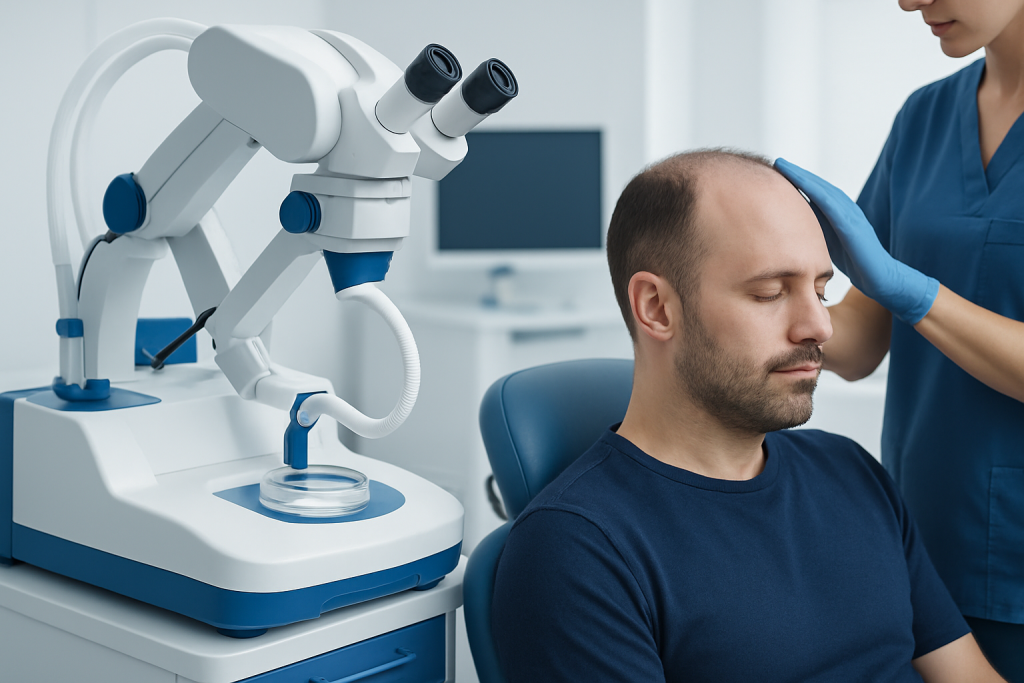
In hair restoration, staging means completing the transplant plan over more than one session. The first procedure may focus on the hairline, frontal scalp, or the most visible thinning areas. A later session may add density, extend coverage to the mid-scalp or crown, or refine areas that need more grafts once healing has been assessed.
This approach can be compared to building layers rather than trying to finish everything at once. The surgeon may intentionally avoid overloading the scalp in one session so that the tissue can receive the grafts safely and the transplanted hair can settle in a healthy environment.
Not every patient will need this. Smaller thinning areas, strong donor reserves, and straightforward patterns of hair loss may be suitable for one session. Larger restorations, more advanced hair loss, or cases that require highly refined cosmetic design are the situations in which staging becomes more likely.
Why one session is sometimes not enough

There are practical and biological reasons a single procedure may not be the best choice. The scalp has a limit to how much tissue can be worked on comfortably in one day, and grafts also need careful handling and blood supply to survive well. When the target area is extensive, forcing everything into one procedure can compromise the quality of the result.
Another reason is donor management. The donor area, usually at the back and sides of the scalp, contains a finite number of usable follicles. A surgeon may need to conserve grafts and distribute them wisely over time, especially in younger patients whose hair loss may continue in the future.
Staging can also be used for aesthetic reasons. The first session may establish a natural-looking frame for the face, while the second session increases density where it matters most. This sequence helps avoid an overpacked or unnatural look and gives the surgeon a chance to adjust the plan after seeing how the scalp heals.
- Large bald or thinning areas that need broad coverage
- Limited donor hair supply
- Need for conservative graft placement to protect blood flow
- Ongoing or unpredictable hair loss pattern
- Desire for a gradual, highly natural-looking build-up of density
Symptoms and signs that a staged approach may be considered
There are no physical symptoms that automatically mean a staged transplant is required. Instead, the need is usually identified during assessment. Patients with advanced androgenetic alopecia, extensive scarring, or patchy loss across several regions may be more likely to need more than one treatment.
People sometimes notice that their thinning is no longer limited to the hairline. If the mid-scalp is widening, the crown is becoming visible, or donor hair looks less abundant than expected, the surgeon may recommend dividing the restoration into phases. This can be particularly important when the patient wants both coverage and long-term flexibility.
Patients should also pay attention to practical signs discussed during consultation, such as a long estimated operating time, the need to prioritize one area over another, or a plan that includes follow-up photographs and reassessment. These are not warning signs; they are part of thoughtful planning.
Causes and risk factors behind multi-session planning
The main drivers of staging are the pattern and extent of hair loss, but several other factors shape the decision. Age, family history of progressive hair loss, scalp laxity, hair caliber, hair color contrast, and the number of grafts available in the donor area all influence how much can reasonably be done in one operation.
Scalp and hair characteristics matter as well. Fine hair may provide less visual coverage than thick hair, so more grafts may be needed for the same cosmetic effect. Curly or wavy hair may create better coverage with fewer grafts, while straight, light-colored hair may require a more careful plan to achieve the desired density.
Patients who have had previous transplants, scalp scarring, or other hair-loss procedures may also need staging because the tissue must be evaluated more cautiously. In some cases, the surgeon uses the first operation to observe how the scalp responds before deciding how best to complete the restoration.
How doctors decide whether to stage the transplant
The decision starts with a detailed consultation and scalp examination. The surgeon evaluates the donor area, maps the thinning zones, reviews medical history, and discusses the patient’s goals. Good planning includes not only what is missing today, but also what may continue to change in the years ahead.
In some clinics, the assessment may include standardized photographs, trichoscopy, or other scalp analysis tools. These help the team estimate follicle density, hair shaft characteristics, and the degree of miniaturization in areas affected by pattern hair loss. The result is a plan that can be realistic rather than optimistic.
International patients should expect a discussion about timing too. If a person is traveling for treatment, the surgeon may recommend leaving enough time for the immediate aftercare visit and scheduling any second session only after the scalp has fully settled. A clear staged plan reduces uncertainty and helps patients arrange work, travel, and recovery with less stress.
Treatment options and what staged restoration may look like
Staged hair restoration can be done with follicular unit transplantation or follicular unit extraction, depending on the patient’s needs and the surgeon’s approach. The technique itself does not determine whether staging is needed; the size of the area, donor supply, and desired density are usually more important.
A first session may focus on the frontal hairline and temples because these areas strongly influence facial framing. A later session may add thickness behind that line or address the crown, which often needs a large number of grafts to look fuller. Some patients may also combine surgery with medical hair-loss management to help preserve native hair between procedures.
For many people, the interval between sessions is used to let the scalp heal, shed transplanted hairs normally, and reveal how the grafts have taken. That waiting period helps the surgeon judge whether additional density is truly needed and where it will have the greatest visual effect.
- Session one: establish key zones and protect donor resources
- Healing period: allow scalp recovery and monitor growth
- Session two: refine density, extend coverage, or address a second region
- Ongoing care: support existing hair and plan future follow-up if needed
Prevention, self-care, and recovery between sessions
Patients cannot always prevent the need for staging, but they can support better outcomes by following the post-procedure instructions carefully. Gentle scalp care, avoiding friction, protecting the area from sun exposure, and attending follow-up appointments are all important. The exact routine should come from the treating team, since aftercare needs can vary by technique and healing speed.
Between sessions, it is often helpful to manage the underlying hair-loss condition if the doctor recommends it. Preserving native hair can reduce the amount of additional surgery needed later. Patients may also find it useful to take progress photos under the same lighting conditions so they and their doctor can assess change more clearly.
For those who travel for treatment, planning the recovery window matters. It is sensible to allow time for the initial check-up before returning home and to confirm how follow-up will be handled across borders. If a second procedure is expected, patients should understand the likely interval and what signs of healing the team wants to see before proceeding.
When to see a doctor
A hair-loss specialist should be consulted when thinning is progressing, when a person is considering surgery, or when previous treatments have not given enough improvement. The earlier the consultation, the more options are usually available, because donor hair can be conserved and the plan can be built more thoughtfully.
Medical review is especially important if hair loss occurs suddenly, is patchy, involves itching or scalp redness, or comes with other health changes. These patterns may need evaluation before any transplant is planned. Even in classic pattern hair loss, a doctor can help determine whether surgery, medication, or both are appropriate.
Patients seeking care internationally may benefit from a center that coordinates imaging, surgical planning, and aftercare in one pathway. At Acibadem Health Point, multidisciplinary specialists and JCI-accredited hospitals help diagnose and treat hair-restoration cases for international patients in a coordinated setting.
Frequently asked questions
Does needing two hair transplant sessions mean the first one failed?
No. Staging is often planned from the beginning to improve safety, coverage, and the final cosmetic result. Many patients need more than one session because the restoration area is large or because the surgeon wants to protect the donor supply.
How long is the wait between hair transplant sessions?
The timing varies based on healing, scalp condition, and the overall plan. The surgeon usually waits until the scalp has recovered and the results of the first session can be evaluated before deciding on the next step.
Can a staged approach look more natural than one large procedure?
It often can, especially when the goal is to recreate a hairline and add density gradually. A staged plan gives the surgeon more control over where grafts go first and how the final look develops.
Who is most likely to need a staged transplant?
People with extensive hair loss, limited donor hair, previous transplant scars, or ongoing thinning are more likely to need more than one session. Younger patients may also be staged so the surgeon can preserve options for future hair loss.
Can medical treatment be used between transplant sessions?
Yes, in some cases doctors recommend ongoing medical therapy to slow further hair loss and support the remaining native hair. This should always be discussed with a qualified specialist, since treatment choices depend on the person’s diagnosis and overall health.
Is traveling abroad for a staged transplant safe?
It can be safe when the clinic provides clear planning, proper aftercare, and follow-up arrangements. Patients should make sure they understand recovery time, the timing of any second session, and how to contact the care team after returning home.
References
- American Academy of Dermatology
- International Society of Hair Restoration Surgery
- Mayo Clinic
- British Association of Dermatologists
This article is for general information only and is not a substitute for professional medical advice. Please consult a qualified doctor about your individual situation.