When Is Mastectomy Recommended Instead of Breast-Conserving Surgery?

Key Takeaways
- Mastectomy may be recommended when removing only the tumor would leave too much cancer behind or would not give a clear margin.
- The decision depends on tumor size, location, cancer type, genetic risk, prior radiation, and personal treatment goals.
- Breast-conserving surgery is often possible, but it works best when radiation can follow and the cancer can be fully removed with a good cosmetic result.
- A good surgical plan comes from imaging, biopsy results, staging, and a discussion with a breast team that includes oncology and reconstruction expertise.
- Reconstruction is optional and can be immediate or delayed, depending on the treatment plan and the person’s preferences.
For many people with breast cancer, breast-conserving surgery is a safe and effective option. In some situations, however, mastectomy may offer the clearer path to complete treatment, lower local recurrence risk, or better fit the cancer’s pattern and the person’s overall care plan.
Overview
When a breast cancer diagnosis is first confirmed, one of the most important decisions is whether the breast can be treated with breast-conserving surgery or whether mastectomy is the more appropriate choice. The two approaches are not “better” or “worse” in a simple sense; they answer different surgical questions. Breast-conserving surgery removes the cancer while preserving the breast shape as much as possible, while mastectomy removes most or all of the breast tissue.
For many people, either approach can be medically reasonable. The final recommendation usually depends on how the cancer is distributed in the breast, whether clear margins can be achieved, whether radiation has already been used, and whether the person has inherited or family-related risk factors that change the long-term plan. In a well-coordinated team, the choice is shaped by both cancer control and the person’s recovery, travel plans, and future follow-up needs.
For international patients, this decision often includes practical questions as well: how many hospital visits are needed, whether reconstruction can be coordinated during the same stay, and what follow-up will look like once the patient returns home. Those details matter, because the best operation is not only the one that fits the pathology report, but also the one that fits the patient’s life.
Symptoms and Signs That Prompt Surgical Planning
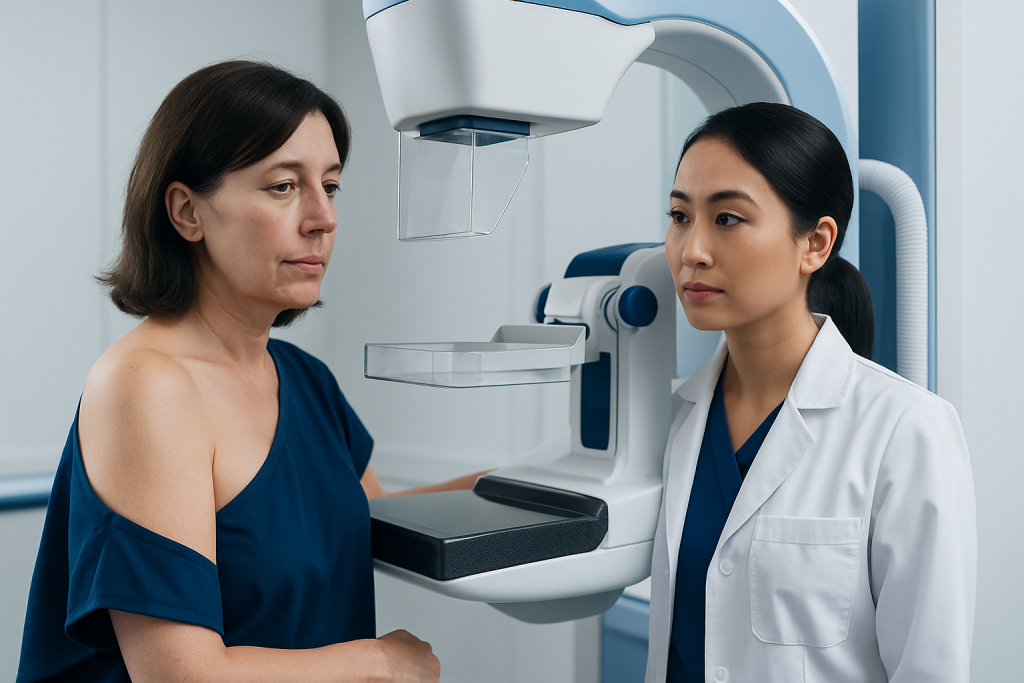
Breast cancer does not always cause pain, and surgery is usually planned after imaging or biopsy rather than because of a symptom alone. Still, certain findings often lead the care team to think more carefully about whether breast-conserving surgery is possible. These may include a palpable lump, nipple changes, bloody discharge, skin thickening, or an area of abnormal tissue seen on mammography, ultrasound, or MRI.
Sometimes the issue is not a symptom but the pattern of disease. If multiple areas are involved in different parts of the breast, or if the tumor extends widely through the breast tissue, removing only one spot may not be enough. In those cases, mastectomy may be recommended to achieve complete local treatment in a single operation rather than trying to piece together several excisions.
People may also be advised to consider mastectomy if they are already undergoing treatment for a cancer that has been present for some time, has recurred after earlier surgery, or has shown features that make complete breast preservation less likely. The surgical decision becomes more individualized as the medical team reviews the imaging and pathology together.
Causes and Risk Factors

Mastectomy is not recommended because of a single cause. It is considered when the overall situation suggests that breast-conserving surgery may not remove the cancer safely or completely. A common reason is tumor-to-breast size: if a relatively large cancer sits in a smaller breast, a lumpectomy may leave a poor cosmetic result or may not allow a clear margin around the tumor.
Another important factor is the cancer’s distribution. Some cancers appear as one discrete mass, while others are diffuse, involve several separate quadrants, or have a non-mass pattern that makes precise removal difficult. In these situations, the surgeon may conclude that preserving the breast would increase the chance of leaving behind disease.
Risk factors that can tilt the decision toward mastectomy include:
- Known inherited mutations, such as BRCA-related risk, especially when bilateral risk is a concern
- Prior radiation to the same breast or chest area
- Repeated cancer in the same breast after previous breast-conserving treatment
- Inflammatory breast cancer or other locally extensive disease
- Difficulty achieving negative margins without major shape distortion
- The patient’s informed preference after understanding the trade-offs
Personal health factors also matter. If a person has medical conditions that make a second operation, radiation scheduling, or long-distance follow-up difficult, the team may discuss whether a more definitive surgical approach is the most practical and safest option.
Diagnosis and How the Decision Is Made
The choice between mastectomy and breast-conserving surgery is usually made after a structured evaluation rather than during a rushed conversation. The process begins with imaging and biopsy, then continues with pathology review, receptor testing, and staging. These details show whether the cancer is confined to one area, whether there is more than one lesion, and how likely it is that the tumor can be removed with a clear edge of healthy tissue.
Breast MRI may be used when the extent of disease is not fully clear on standard imaging, especially in dense breasts or when the cancer may be multifocal. The surgeon also considers whether lymph nodes need assessment, whether radiation would be needed after breast-conserving surgery, and whether the overall plan would still be convenient and safe for someone traveling from abroad.
Patients are often surprised that the “best” operation can change once the full pathology report is available. A biopsy may suggest a small, removable tumor, but later imaging or surgical findings can reveal a wider area of involvement. In that situation, the team may revisit the plan and explain why mastectomy now offers a more reliable result than continuing toward a breast-preserving approach.
Treatment Options
When mastectomy is recommended instead of breast-conserving surgery, the operation can take different forms. A simple or total mastectomy removes most breast tissue. A skin-sparing or nipple-sparing mastectomy may be appropriate in selected cases, often when reconstruction is planned and the cancer’s location allows it safely. The choice depends on tumor behavior, skin or nipple involvement, and reconstructive goals.
Breast-conserving surgery is still discussed in many cases because it remains a valid option for numerous patients. It is usually paired with radiation therapy, which helps treat any microscopic disease left in the breast area. If breast-conserving surgery would require repeated resections, create a poor cosmetic result, or still fail to remove all disease, mastectomy may provide a simpler and more dependable path.
Reconstruction can be considered at the same time as mastectomy or later. Some people prefer immediate reconstruction so they wake up with a restored breast shape, while others choose delayed reconstruction to keep the cancer treatment sequence simple or because additional therapy is planned. Options should be explained clearly, including how long healing may take and how the choice may affect travel back home.
Other treatment elements may also be part of the plan:
- Sentinel lymph node biopsy or axillary surgery to check nearby nodes
- Radiation therapy, if indicated by tumor stage or margins
- Hormone therapy for hormone-receptor-positive cancer
- Targeted therapy or chemotherapy, depending on tumor biology
Prevention and Self-care
Self-care does not prevent the need for surgery, but it helps patients prepare for treatment and recover with more confidence. Before surgery, it is useful to bring copies of imaging and pathology reports, write down questions, and clarify whether reconstruction, drains, or follow-up visits will be needed. International patients should also ask how long they are expected to stay after surgery and what warning signs should prompt a local doctor visit after returning home.
After surgery, recovery is usually guided by wound care instructions, gentle movement, and follow-up appointments. It is important not to rush the healing process. Patients should understand how to care for surgical drains if they are used, when bathing is allowed, and when activity can gradually increase. Good pain control and early movement, as advised by the care team, can support a smoother recovery.
Emotional self-care matters too. The decision to remove a breast can bring grief, relief, uncertainty, or all three at once. Support from a counselor, support group, family member, or breast care nurse can make a real difference. Many patients also find it helpful to discuss clothing, prosthesis options, and body-image concerns before surgery so they feel more prepared afterward.
When to See a Doctor
Anyone with a new breast lump, nipple discharge, skin dimpling, persistent breast asymmetry, or a concerning imaging finding should be evaluated promptly by a qualified clinician. If breast cancer has already been diagnosed, the person should meet with a breast surgeon or oncology team to discuss whether breast-conserving surgery is appropriate or whether mastectomy would be more reliable.
It is also wise to seek a second opinion when the treatment plan feels unclear, when the tumor seems larger or more complex than first explained, or when reconstruction choices need more discussion. A second conversation does not mean the first recommendation was wrong; it simply helps ensure that the surgical plan matches the full picture.
After surgery, medical review is important if there is fever, increasing redness, drainage, swelling, shortness of breath, or sudden arm swelling. For patients who travel internationally for treatment, clear discharge instructions and a well-defined follow-up pathway are especially important. Acibadem Health Point’s multidisciplinary specialists and JCI-accredited hospitals diagnose and treat breast cancer for international patients, helping coordinate the surgical plan, recovery, and follow-up with attention to each person’s needs.
A Practical Way to Think About the Choice
A helpful way to frame the decision is to ask three questions: Can the cancer be removed completely with breast-conserving surgery? Will radiation still be part of the plan? And which option gives the patient the safest result with the least disruption to daily life and future care? When the answer to the first question is uncertain, mastectomy is often discussed more seriously.
Some patients feel most comfortable choosing the operation that reduces the chance of needing another surgery. Others place greater value on preserving the breast if it can be done safely. There is no single right emotional response. Good counseling leaves room for both cancer control and personal priorities, and it makes space for the realities of recovery, travel, and long-term follow-up.
In the end, the most appropriate surgery is the one that reflects the cancer’s biology, the breast’s anatomy, and the patient’s informed preference. A careful consultation should make the reasoning visible, not mysterious.
Frequently asked questions
Is mastectomy always more effective than breast-conserving surgery?
No. For many early-stage breast cancers, breast-conserving surgery followed by radiation can be as effective as mastectomy for cancer control. The better choice depends on how much disease is present, where it is located, and whether clear margins can be achieved.
Why would a doctor recommend mastectomy if the tumor is small?
Even a small tumor may be better treated with mastectomy if there are multiple cancer areas, prior breast radiation, a strong inherited risk, or a high chance that breast-conserving surgery would leave unhealthy tissue behind. The tumor’s size is only one part of the decision.
Can breast reconstruction happen at the same time as mastectomy?
Yes, in many cases it can. Immediate reconstruction may be offered if the cancer plan and overall health make it appropriate, but some patients choose delayed reconstruction so treatment can proceed in stages.
Will I still need radiation after mastectomy?
Sometimes yes. Radiation after mastectomy depends on factors such as tumor size, lymph node involvement, and surgical margins. The oncology team decides this after reviewing the full pathology report.
What if I am unsure whether to choose mastectomy or lumpectomy?
It is reasonable to ask for a detailed explanation of both options and, if needed, a second opinion. Patients often make the decision more confidently after reviewing imaging, pathology, reconstruction options, and the expected recovery timeline.
Does choosing mastectomy lower the chance of recurrence to zero?
No surgery can guarantee that cancer will never return. Mastectomy can reduce the risk of cancer remaining in the breast, but follow-up care is still important because treatment decisions also depend on the biology of the cancer and any additional therapies recommended.
References
- National Cancer Institute
- American Cancer Society
- American Society of Breast Surgeons
- World Health Organization
- NCCN Clinical Practice Guidelines in Oncology
This article is for general information only and is not a substitute for professional medical advice. Please consult a qualified doctor about your individual situation.
More from the Health Library



Related Specialists

Prof. Dr. Levent Eralp
Orthopedic Surgery & Traumatology
Dr. Keramettin Şar
Internal Medicine
Dr. İsmail Beşiroviç
Inpatient Clinic Physicians Clinical Service
Assoc. Prof. Dr. Özden Sıla Ulus Buturak
Breast Clinic Clinical Service