When Do Babies Start Smiling

Key Takeaways
- Newborn smiles can be reflexes; the social smile usually appears around 6 to 12 weeks.
- Babies often smile first in response to familiar voices, faces, and soothing interaction.
- A delay in smiling can sometimes reflect normal variation, but it can also be a sign worth discussing with a doctor.
- Development should be considered alongside other milestones such as eye contact, tracking, and responding to sound.
- Simple, responsive interaction helps encourage early social and emotional development.
Babies usually begin to show their first true social smiles in the first few months of life, although earlier facial expressions may be reflexive. Understanding what is typical can help parents enjoy these early moments while staying alert to developmental concerns.
Overview
One of the most anticipated moments in early parenthood is the first real smile. For many families, it is the first clear sign that a baby is beginning to connect with the world in a more social way. That moment can arrive quietly, often during a feeding, while being held, or in response to a familiar voice.
It helps to know that not every smile in the newborn period means the same thing. Very early smiles can be brief, spontaneous, and reflexive. The more meaningful social smile usually appears later, when a baby is responding to another person rather than simply making an automatic facial movement.
Families preparing for a baby’s first months often want practical guidance rather than vague reassurance. The key is to watch the whole picture: how the baby looks at faces, reacts to sound, calms with care, and gradually becomes more interactive over time.
What Counts as a Real Smile?
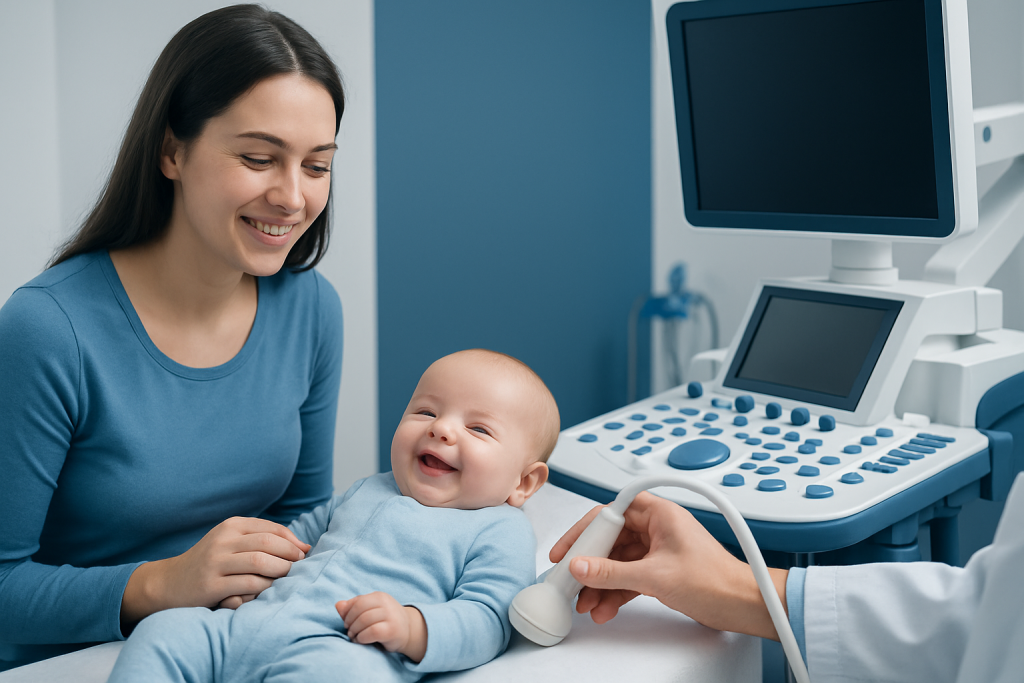
Newborns can make smile-like expressions from the first days of life, especially during sleep. These are often called reflex smiles. They are part of early nervous system development and do not yet show social awareness.
A social smile is different. It appears when a baby smiles in response to something outside themselves, such as a parent’s face, voice, or playful expression. This is one of the early signs that an infant is beginning to engage socially and emotionally.
Parents sometimes wonder whether they “missed” the first smile. In reality, early social smiles can be subtle and fleeting. A baby may show a half-smile, a brief lift at the corners of the mouth, or a look of delight that lasts only a second before fading.
Typical Timeline for Smiling
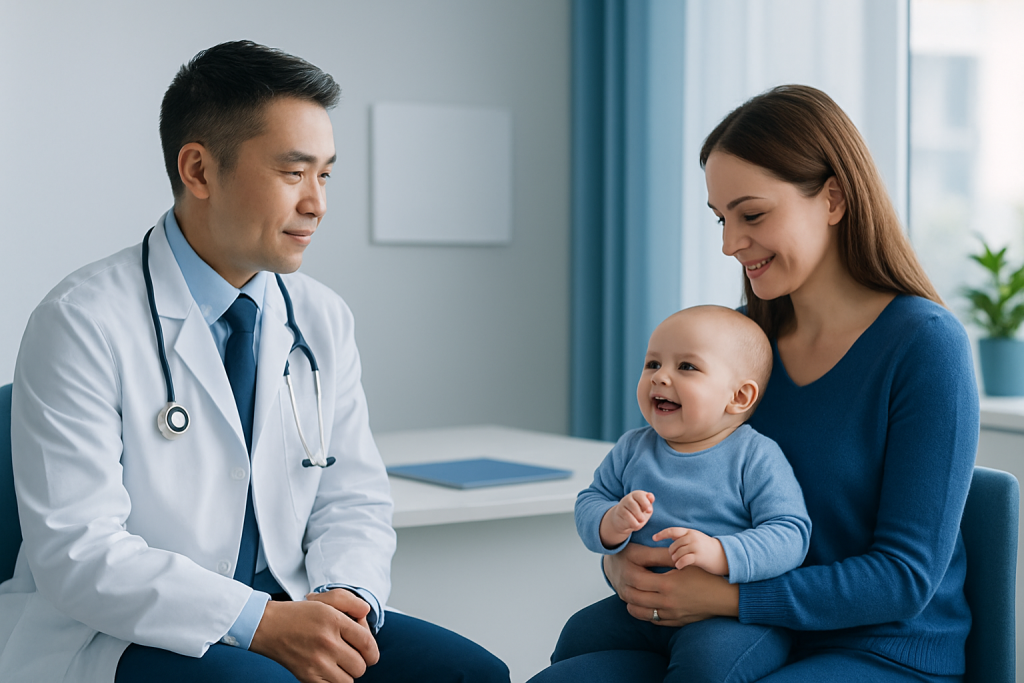
Many babies begin social smiling between 6 and 12 weeks of age, though the exact timing varies. Some smile a little earlier, and others take a few more weeks. A baby who is otherwise feeding, growing, and responding well may simply be moving at a different pace within the normal range.
In the first month, babies are often more focused on adjusting to life outside the womb than on interacting socially. During this stage, they may stare, flinch, calm to a parent’s voice, or briefly brighten their expression, but these responses are still emerging.
By around 2 to 3 months, many babies become more expressive. They may smile more often when spoken to, when they recognize a caregiver, or during gentle face-to-face play. These moments often increase gradually rather than appearing all at once.
Signs That a Baby Is Beginning to Engage
Smiling is only one part of early communication. Babies often show interest in people through several small behaviors that can appear before or alongside the first social smile.
- Looking at faces for longer periods
- Calming when held or spoken to
- Turning toward a familiar voice
- Making soft cooing sounds
- Tracking movement with the eyes
- Showing alertness during interaction
When these behaviors begin to cluster together, families often notice that the baby seems more “present” and responsive. This development is a gradual process, and no single sign should be judged in isolation.
For parents coordinating care across countries or time zones, it can be helpful to note these changes in a simple baby journal or phone log. That makes it easier to discuss concerns during a pediatric follow-up, whether at home or after travel.
Causes & Risk Factors for a Delay
Variation in smiling is common, and many babies who smile later are still developing normally. Still, a delay can sometimes point to a broader issue that deserves attention, especially if it appears together with other developmental concerns.
Possible factors include prematurity, differences in temperament, vision or hearing issues, or delays in social and motor development. Babies who spend extended time in neonatal care may also need a little more time to settle into routine interaction.
Risk is not determined by one behavior alone. Doctors usually look at the baby’s age, birth history, feeding pattern, growth, muscle tone, alertness, and whether the baby makes eye contact, reacts to sound, or shows interest in caregivers.
Diagnosis: How Doctors Check Development
There is no single test for a baby’s first smile. Instead, clinicians assess development by observing how the infant interacts and by asking parents about daily behavior. This may happen during routine well-baby visits or sooner if a concern is raised.
A pediatrician may ask when the baby first seemed to smile socially, whether the smile is becoming more frequent, and whether the baby reacts to faces and voices. The doctor may also check hearing, vision, head growth, muscle tone, and other developmental milestones.
If a baby is being evaluated after international travel or a family move, bringing prior records, birth notes, and growth charts can make the assessment more accurate. A clear timeline is often more helpful than trying to remember exact dates from memory.
Ways to Encourage Smiling and Social Interaction
Parents do not need special equipment to encourage early smiles. The most effective support is often simple, repeated, and responsive. Babies tend to engage when they feel safe, soothed, and noticed.
Face-to-face interaction is especially helpful. Talking in a warm voice, pausing to let the baby respond, smiling naturally, and making gentle eye contact all support social development. Short periods of calm play are usually more effective than overstimulating the baby.
Helpful habits include:
- Talking during diaper changes, feeding, and holding
- Giving the baby time to look back and react
- Using gentle facial expressions rather than exaggerated stimulation
- Reducing background noise during interaction
- Following the baby’s cues for tiredness or overstimulation
It is also important not to compare babies too closely. Some infants are naturally more expressive, while others show their delight in quieter ways before smiling becomes frequent.
When to See a Doctor
A later smile is not always a problem, but it is worth discussing with a doctor if a baby is not showing social smiles by around 3 months, especially if other interactions also seem limited. The goal is not to label a baby too early, but to make sure development is being watched carefully.
Medical advice is especially important if the baby does not seem to make eye contact, does not react to sounds, seems unusually floppy or stiff, or has feeding and growth difficulties. Parents should also seek guidance if a baby once smiled or responded socially and then stopped doing so.
Families seeking evaluation while abroad can often benefit from a pediatric team that coordinates assessments clearly and explains next steps in plain language. Acibadem Health Point’s multidisciplinary specialists and JCI-accredited hospitals diagnose and treat pediatric developmental concerns for international patients, with care plans tailored to the child and family.
Frequently asked questions
When do babies start smiling socially?
Many babies begin social smiling between 6 and 12 weeks of age. Some do it a little earlier and others a little later, so a small range is usually normal. The smile becomes more meaningful when it is clearly in response to a person rather than happening during sleep or at random.
Are newborn smiles real smiles?
Sometimes they are, but many newborn smiles are reflexive rather than social. These early expressions often happen during sleep or quiet states and do not necessarily mean the baby is responding intentionally. The social smile usually appears later.
What if my baby is 3 months old and not smiling yet?
It is reasonable to bring this up with a pediatrician. Some babies simply develop social smiling a bit later, but doctors will want to look at the whole pattern of development, including eye contact, sound response, and overall alertness. Early review can be reassuring and helpful.
How can parents encourage a baby to smile?
Simple face-to-face interaction works well. Talking softly, smiling, pausing for the baby to respond, and reducing noise can make it easier for the baby to engage. The best approach is gentle and responsive rather than intense or overstimulating.
Should prematurity change the expected timing?
Yes, premature babies are often assessed using their adjusted age rather than their birth date alone. That means a baby may appear to reach some milestones a little later on the calendar and still be developing appropriately. A pediatrician can explain how to interpret milestones in that context.
What other milestones matter along with smiling?
Eye contact, responding to voices, tracking faces, cooing, and showing interest in caregivers all provide useful information. Smiling is important, but it is most meaningful when considered together with these other early social behaviors. A pattern of progress is usually more informative than one isolated milestone.
References
- American Academy of Pediatrics
- Centers for Disease Control and Prevention
- National Health Service
- World Health Organization
This article is for general information only and is not a substitute for professional medical advice. Please consult a qualified doctor about your individual situation.