Fever Without a Clear Source in Children: When Doctors Investigate Further

Key Takeaways
- Not every unexplained fever is dangerous, but age, duration, and the child’s overall appearance matter.
- Doctors look beyond the thermometer reading and assess hydration, breathing, activity level, and exam findings.
- Younger infants and children with persistent or high fever may need urine tests, blood work, or imaging.
- Home care focuses on comfort, fluids, and close observation rather than trying to “break” the fever quickly.
- Seek medical advice sooner if a child has breathing trouble, dehydration, rash, neck stiffness, or is difficult to wake.
Medically reviewed by the Acıbadem clinical team — June 13, 2026
A fever with no obvious source can be unsettling, especially when a child otherwise seems only mildly unwell. In many cases the cause is a common viral illness, but some children need a more careful evaluation to look for infections or other conditions that are not visible at first.
Overview
When a child has a fever but no clear cough, ear pain, rash, or stomach complaint, families often feel left in the dark. Pediatricians use the phrase fever without a clear source when the temperature is elevated but the usual explanation is not obvious during the first checkup.
In many children, especially those who are otherwise alert and drinking reasonably well, the cause turns out to be a routine viral infection that announces itself later. Still, fever can sometimes be the first sign of a urinary tract infection, pneumonia, ear infection, or another condition that is easier to miss early on.
The question is not only “How high is the fever?” but also “How old is the child, how long has the fever lasted, and what else is changing?” Those details help doctors decide whether simple observation is enough or whether the child should be investigated further.
Symptoms
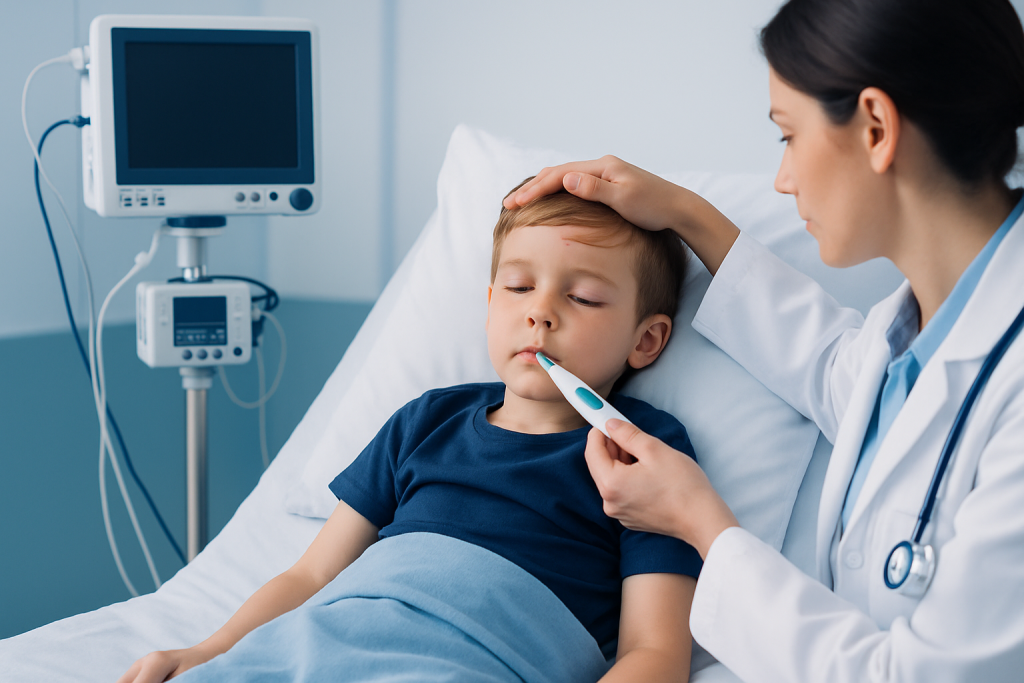
Fever itself is a symptom, not a diagnosis. A child may also seem tired, clingy, less interested in eating, or more irritable than usual. Some children develop chills, sweating, headache, body aches, or mild stomach discomfort even before a clearer pattern appears.
What parents notice at home matters because children do not always describe their symptoms clearly. A baby may feed less, a toddler may sleep more than usual, and an older child may complain of pain when passing urine, sore throat, or localized pain that has not yet become obvious on examination.
Doctors pay close attention to the child’s overall appearance. Concerning signs can include:
- difficulty breathing or unusually fast breathing
- poor drinking or fewer wet diapers
- persistent vomiting
- new rash, especially if it does not fade when pressed
- neck stiffness, confusion, or unusual sleepiness
- signs of pain in one area, such as the ear, abdomen, back, or joints
Causes & Risk Factors

The most common reason for a fever without an obvious source is still infection, often viral. In the earliest stage, the body may not yet show the typical clues, so the source becomes clearer only after a day or two of observation.
Some children are more likely than others to need a deeper workup. Infants, especially those under three months, can have serious infections without dramatic symptoms. Children with weakened immune systems, chronic medical problems, or incomplete vaccination histories may also need a lower threshold for testing.
Common possibilities doctors consider include:
- viral respiratory infections before cough or congestion develops
- urinary tract infection, which may not cause urinary symptoms in young children
- ear infection
- pneumonia, sometimes without a strong cough early on
- stomach or intestinal infections
- less commonly, inflammatory conditions or other noninfectious causes
Travel history can also matter. A recent trip, exposure to sick contacts, animal bites, tick exposure, or a stay in another country may point the doctor toward specific infections or environmental causes.
Diagnosis
Evaluation starts with a careful history and physical examination. Doctors ask when the fever began, how high it has been, what medicines have been given, whether the child is drinking and urinating normally, and whether there has been contact with anyone sick.
The child’s age shapes the approach. In young infants, doctors often investigate more thoroughly because serious bacterial infections can be present even when the baby looks only mildly unwell. In older children, the examination may guide testing toward a specific concern rather than broad screening.
Depending on the situation, the workup may include urine testing, blood tests, viral testing, chest X-rays, or other imaging. If a doctor suspects a bacterial infection, cultures may be taken to identify the organism and help choose treatment. The goal is not to test every child the same way, but to match the evaluation to the child’s risks, symptoms, and exam findings.
For families arriving from abroad, the first visit may also include a review of prior records, medications already tried, and any testing done before travel. That continuity can save time and help the team avoid repeating studies that have already been completed.
Treatment Options
Treatment depends entirely on the cause. If the fever is part of a viral illness, the main approach is supportive care while the body recovers. If testing suggests a bacterial infection, antibiotics or other targeted treatment may be needed. If the fever is linked to a noninfectious condition, care follows that specific diagnosis.
Comfort measures are often the most important first step. Children generally do better with fluids, rest, light clothing, and a calm environment. Fever-reducing medicines may be used to improve comfort, but they do not treat the underlying cause, and the exact choice should follow a doctor’s guidance for the child’s age and health situation.
Some children can be cared for at home with close follow-up, while others need observation in a clinic or hospital. That decision depends on hydration, age, test results, the likelihood of a serious infection, and whether the family can safely monitor symptoms after discharge. For international patients, a clear plan for follow-up before leaving the country is especially important.
Prevention & Self-care
Not every fever can be prevented, but good everyday habits reduce the chance of infection and make recovery smoother. Hand hygiene, up-to-date vaccinations, and avoiding close contact with ill people are practical steps that help children of all ages.
At home, families can focus on simple, reliable care. Offer frequent sips of fluids, watch urine output, and keep track of how the child is acting rather than relying on the thermometer alone. A child who is drinking, breathing comfortably, and playing between fever spikes is usually more reassuring than one who is quiet, dehydrated, or increasingly difficult to rouse.
- Use a thermometer consistently so temperature trends are easier to interpret.
- Keep a brief log of fever times, medicine use, and new symptoms.
- Do not bundle the child in heavy blankets if they are uncomfortable.
- Avoid giving any medicine unless it is age-appropriate and approved by a clinician.
- Seek a clinician’s advice before traveling if fever begins during a trip or soon before departure.
When to See a Doctor
A child with fever and no clear source should be assessed promptly if they are very young, especially an infant under three months of age. In older children, medical review is also important if the fever lasts more than a couple of days, keeps returning, or is paired with a worsening condition rather than gradual improvement.
Parents should seek urgent care if the child has breathing difficulty, dehydration, severe pain, a seizure, confusion, a non-blanching rash, a stiff neck, or unusual sleepiness. Medical attention is also wise if the child has a weakened immune system, a complex chronic illness, or a recent procedure or hospitalization.
If a family is already abroad when fever starts, it is reasonable to ask for evaluation sooner rather than later, especially if return travel is planned. Acibadem Health Point’s multidisciplinary specialists and JCI-accredited hospitals can diagnose and treat fever-related conditions for international patients, with coordinated pediatric assessment and follow-up planning.
Living With the Uncertainty
The hardest part of an unexplained fever is often the waiting. Parents may feel they need an immediate label, while the child’s symptoms are still evolving. In pediatric care, that pause is sometimes intentional: a doctor may choose watchful follow-up when the child appears stable, because the next 12 to 24 hours can reveal the source more clearly than a rushed answer.
That does not mean concerns should be ignored. It means the child’s age, exam, and overall behavior are used to decide whether the situation is safe to monitor at home or better handled with tests and observation. A thoughtful plan can reduce unnecessary treatment while still catching the children who need more attention.
For families navigating care across borders, written discharge instructions, a clear contact point, and a follow-up schedule are especially helpful. Knowing exactly what changes should trigger another visit can make the period after the appointment feel far less uncertain.
Frequently asked questions
Is a fever without a clear source always serious in children?
No. Many children have a common viral illness that becomes clearer after a day or two. The level of concern depends on the child’s age, how they look overall, and whether other warning signs are present.
Why do doctors sometimes order urine tests for a child with fever and no other symptoms?
Urinary tract infections can cause fever before any urinary complaints appear, especially in younger children. A urine test helps find infections that are not obvious from the outside.
When is a fever in a child more urgent?
It is more urgent when the child is very young, has trouble breathing, is dehydrated, is unusually sleepy, has a seizure, or develops a rash that does not fade with pressure. Persistent fever or a child who seems to be getting worse also deserves prompt assessment.
Should parents give fever medicine right away?
Fever medicine is usually used to improve comfort, not to prove what is causing the fever. A clinician can advise on the right option for the child’s age and health history.
Can a child with unexplained fever travel?
That depends on how the child is doing and whether they have been medically assessed. If travel is upcoming, it is safer to ask a doctor before departure, especially if the fever is ongoing or the child is not drinking well.
What if the fever goes away and then comes back?
A fever that returns can still happen with common infections, but it deserves attention if it lasts, keeps recurring, or comes with new symptoms. A follow-up visit may be needed to look for a source that was not visible at the first examination.
References
- American Academy of Pediatrics
- Centers for Disease Control and Prevention
- World Health Organization
- NICE Guideline
- UpToDate
This article is for general information only and is not a substitute for professional medical advice. Please consult a qualified doctor about your individual situation.