What Does Ringworm Look Like

Key Takeaways
- Ringworm is a fungal infection, not a worm infection, and it can appear on several parts of the body.
- Classic skin ringworm often forms a round or ring-shaped patch with a clearer center and a more active, scaly edge.
- Scalp, foot, groin, and nail infections may look different from body ringworm and can be easier to miss.
- Diagnosis is usually based on a skin exam and sometimes a simple lab test to confirm fungus.
- Treatment depends on the body area involved and may include antifungal creams, shampoos, or oral medicine.
- Good hygiene, not sharing personal items, and keeping skin dry can help reduce spread and recurrence.
Ringworm is a common fungal infection that can affect the skin, scalp, feet, or nails, and it often has a distinctive ring-shaped rash. Looking closely at the pattern, location, and symptoms can help a person recognize it early and seek the right treatment.
Overview
Ringworm is one of those conditions whose name can be misleading. It has nothing to do with worms. It is a fungal skin infection, often caused by organisms known as dermatophytes, and it can affect the body, scalp, feet, groin, or nails.
For many people, the first question is simple: what does ringworm look like? On the skin, it often shows up as a round or oval patch with a more active edge and a calmer-looking center. That pattern may help explain why the infection got its name, even though the cause is a fungus rather than a parasite.
Because ringworm can appear differently depending on where it develops, one person may notice a classic ring-shaped rash while another may see flaky scalp patches, itchy foot skin, or thickened nails. A careful look at the texture, color, and location matters more than any single sign.
For international patients who are comparing care options across countries, understanding the appearance of ringworm can make the next step easier: recognizing whether a home treatment is reasonable or whether a dermatologist should confirm the diagnosis and guide treatment.
Symptoms and What It Can Look Like
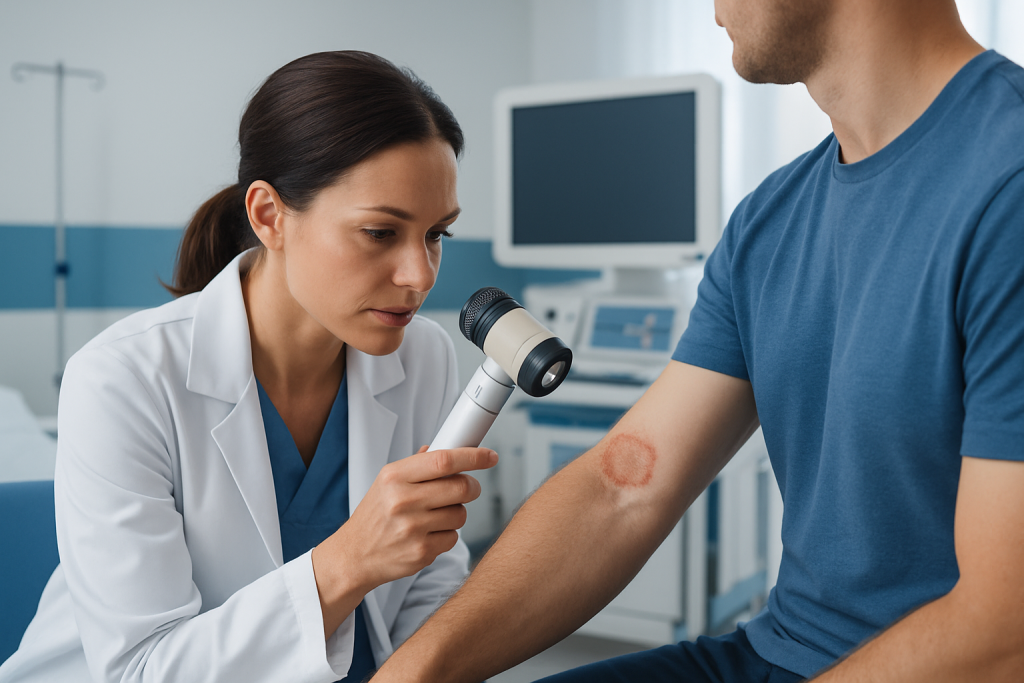
On the body, ringworm often starts as a small, red or pink patch that slowly grows outward. The border may become raised, scaly, or more inflamed than the center, while the middle can look clearer or less irritated. Many people describe it as a ring, but some patches are not perfectly circular.
Other common features include itching, mild burning, dryness, and peeling skin. In lighter skin tones, the rash may look red or pink; in darker skin tones, it may appear more brown, gray, purple, or lighter than the surrounding skin. That variation is normal and can make the rash less obvious at first.
Ringworm can look different in other locations:
- Scalp: flaky patches, broken hairs, scaling, or areas of hair loss
- Feet: peeling skin between the toes, cracking, itching, or a moccasin-like dry scale pattern
- Groin: an itchy, well-defined rash on the inner thighs or groin folds
- Nails: thickening, discoloration, brittleness, or crumbly edges
Some infections are subtle and may be mistaken for eczema, psoriasis, dry skin, or irritation from sweating. When the rash is changing, spreading, or not improving as expected, it is worth getting it checked.
Causes and Risk Factors

Ringworm develops when fungi that live on skin, surfaces, or in contaminated objects find the right conditions to grow. Warmth, moisture, and close contact with an infected person, animal, or item can make spread more likely. Shared towels, gym equipment, hats, hairbrushes, and bedding can all play a role.
People are more likely to develop ringworm if they sweat a lot, wear tight or non-breathable clothing, have minor skin injuries, or spend time in places where skin contact is common, such as locker rooms or wrestling rooms. Children may pick it up from classmates or pets, and adults may notice it after travel, sports, or communal living.
Certain health factors can also increase risk. A weakened immune system, diabetes, or long-term use of some medicines may make fungal infections more persistent. For patients traveling abroad for evaluation, it is helpful to bring a list of recent exposures, sports activities, pet contact, and any prior creams tried, since these details can help a specialist narrow the cause quickly.
Diagnosis
Most of the time, a clinician can suspect ringworm by looking at the rash and asking a few practical questions about symptoms, spread, and exposure. The shape alone is not enough in every case, because several skin conditions can resemble it.
If the diagnosis is uncertain, a simple skin scraping may be taken and examined under a microscope or sent for culture. In some clinics, a special light or additional testing may be used for scalp or nail involvement. These tests are not painful for most people and can help avoid unnecessary treatment.
Diagnosis becomes especially important when the rash is on the scalp, face, nails, or groin, or when it has not improved with over-the-counter products. For people planning care in another country, a clear diagnosis helps create a more efficient treatment plan and reduces the chance of using the wrong cream for too long.
Treatment Options
Treatment depends on where the infection is and how extensive it has become. Many mild skin infections respond to topical antifungal creams or ointments prescribed or recommended by a clinician. These medicines work best when used consistently and for the full course, even if the rash begins to look better quickly.
More stubborn or widespread infections may need oral antifungal medicine, especially when the scalp or nails are involved. Scalp ringworm often requires systemic treatment because topical products do not reach infected hair shafts well. Nail infections can also take longer to clear because nails grow slowly.
It is important not to assume that every itchy rash is ringworm, and not every cream is helpful. Steroid creams alone can temporarily change the look of the rash while allowing the fungus to continue spreading. A doctor can help choose the safest option based on the site, age, other conditions, and any medicines already being used.
For patients receiving care during international travel, treatment planning may also include follow-up timing, review of medication interactions, and guidance on whether a return visit or local follow-up is more appropriate once they are home.
Prevention and Self-care
Daily habits can make a real difference, both for preventing infection and for keeping a current rash from spreading. Keeping the skin clean and dry is a good starting point, especially after exercise, swimming, or heavy sweating. Changing out of damp clothes promptly can help too.
Simple prevention steps include:
- Not sharing towels, combs, hats, razors, or clothing
- Washing bedding, socks, and workout clothes regularly
- Wearing breathable shoes and allowing feet to dry well
- Using sandals in public showers or locker rooms
- Checking pets for scaly patches or hair loss if repeated infections occur
If ringworm is already present, avoiding scratching helps protect the skin barrier and lowers the risk of spreading fungi to other areas of the body. Handwashing after touching the rash, covering it when advised, and using any prescribed medicine as directed are practical ways to support recovery.
People who live with others may need to be a little more careful during treatment, especially with shared fabrics and surfaces. That does not mean isolation is needed; it simply means paying attention to hygiene until the infection is under control.
When to See a Doctor
Medical advice is a good idea when a rash is not clearly improving, when it is spreading, or when it involves the scalp, nails, face, or groin. Ringworm in these areas often needs more than a basic over-the-counter approach and may need confirmation from a clinician.
A doctor should also be consulted if the rash is painful, unusually swollen, oozing, or associated with fever, or if the person has diabetes, immune suppression, or repeated fungal infections. In children, scalp ringworm should be assessed early because it can affect hair and may spread at school or home.
If someone is traveling for care, a specialist review can be useful when the diagnosis is unclear or the infection has not improved after treatment elsewhere. Acibadem Health Point’s multidisciplinary specialists and JCI-accredited hospitals diagnose and treat skin conditions such as ringworm for international patients, with attention to both the rash itself and the practical details of recovery.
Above all, ringworm is usually treatable, and the main challenge is often recognizing it correctly. A timely evaluation can bring clarity, prevent spread, and shorten the path back to comfortable, healthy skin.
Living With Ringworm and Recovery Expectations
Once treatment begins, the rash may start to feel less itchy before it fully disappears. The skin can still look discolored or slightly scaly for a while, even after the fungus is no longer active. That lingering change does not always mean treatment has failed.
Recovery is usually smoother when the skin is kept dry, medicine is used consistently, and possible sources of reinfection are addressed. If pets, household members, or shared items are involved, they may need attention as well, especially if symptoms keep returning.
For patients managing care across borders, it helps to plan ahead for medication access and follow-up. A clear treatment summary from the treating clinician can make it easier to continue care at home and know when reassessment is necessary.
When ringworm is recognized early, treated appropriately, and given a little time, most people do well. The key is not to judge the infection by the name, but by where it is, how it looks, and whether it is responding as expected.
Frequently asked questions
What does ringworm usually look like on the skin?
It often appears as a round or oval patch with a scaly, raised edge and a clearer center. The rash may itch, peel, or slowly spread outward.
Can ringworm look different on darker skin?
Yes. It may look brown, gray, purple, or lighter than the surrounding skin instead of bright red. The shape, scale, and itch are often more useful clues than color alone.
Does ringworm always make a perfect ring?
No. Some patches are not perfectly circular and may look irregular or more solid in the center. Ringworm can still be present even when the classic ring is not obvious.
How can scalp ringworm be recognized?
Scalp ringworm may cause flaking, broken hairs, itching, or small areas of hair loss. Because it can resemble dandruff or eczema, it is best confirmed by a clinician.
Is ringworm contagious?
Yes, it can spread through direct skin contact, infected animals, or shared objects such as towels and combs. Good hygiene and treatment help reduce spread.
When should a person stop using an over-the-counter cream and seek medical help?
If the rash is getting worse, spreading, or not improving after a reasonable trial, it should be checked. Medical review is also important for scalp, nail, face, or groin involvement.
References
- Centers for Disease Control and Prevention
- American Academy of Dermatology
- Mayo Clinic
- World Health Organization
This article is for general information only and is not a substitute for professional medical advice. Please consult a qualified doctor about your individual situation.