What Does A Tick Bite Look Like

Key Takeaways
- A tick bite may look like a tiny red bump, a slightly swollen spot, or a dark speck attached to the skin.
- Not every tick bite causes a rash, and not every rash is a sign of infection.
- A growing ring-shaped rash, fever, body aches, or headache after a tick bite should be checked by a clinician.
- Prompt tick removal lowers the chance of complications and makes it easier to notice changes in the skin.
- People traveling after a bite should keep the area clean, watch for new symptoms, and seek local medical advice if concerns develop.
A tick bite can look surprisingly subtle at first, often resembling a small red bump or an irritated spot on the skin. Because the appearance can change over time, it helps to know the early signs, what is normal, and which symptoms deserve medical attention.
Overview
A tick bite is often easy to miss because the skin change can be very small at first. In many cases, the spot looks like a faint red bump, a pinpoint scab, or a tiny dark body attached to the skin before the tick is removed.
The reason this matters is that the bite itself is not always the main concern. What follows in the next hours and days — especially a spreading rash, fever, or flu-like symptoms — can provide more useful clues about whether medical evaluation is needed.
For someone who is away from home, perhaps on a trip or returning from outdoor travel, it is helpful to know what can be watched safely while arranging care if symptoms change. A clear understanding of the skin appearance can reduce worry and make next steps more practical.
What a Tick Bite Often Looks Like
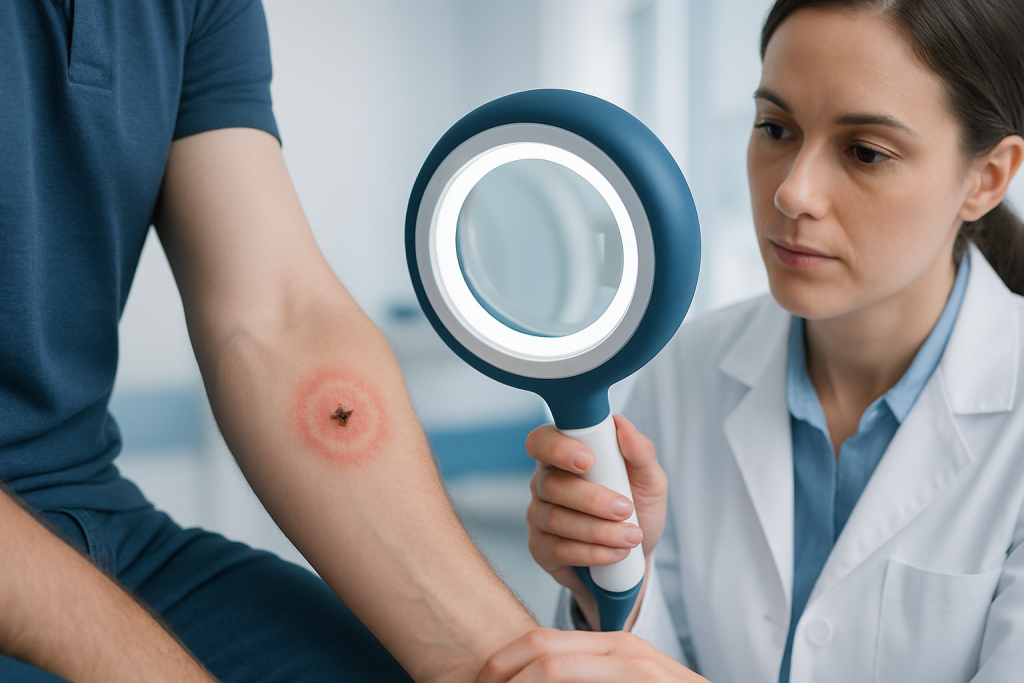
Right after a tick attaches or is removed, the skin may show only a small red or pink spot. Some people notice mild swelling, itching, or tenderness, while others have almost no local reaction at all.
If the tick is still attached, it may look like a tiny raised oval or rounded body anchored into the skin. Depending on the species and how long it has been feeding, the tick can appear brown, black, gray, or reddish. The surrounding skin may stay calm or become slightly irritated.
After removal, the bite site can look like a small puncture mark, a scab, or a patch of redness. A limited amount of redness that gradually settles is often seen after many insect bites, but a rash that expands or becomes more patterned deserves closer attention.
- Small red bump or dot
- Mild local swelling
- Itchy or tender spot
- Tiny attached tick body or dark speck
- Scab or puncture mark after removal
Symptoms That Can Appear After the Bite

Many tick bites cause only a local skin reaction. However, some tick-borne infections begin with general symptoms that are not specific to the bite itself. These may feel similar to a common viral illness at first.
Typical symptoms that may appear later include fever, chills, headache, fatigue, muscle aches, joint pain, or swollen lymph nodes. Some people also notice nausea or a general sense that they are not recovering as expected.
Skin changes can be especially important. A rash that enlarges over several days, a target-like ring, or redness that spreads beyond the original bite site should be assessed by a doctor. In some conditions, the rash may not itch or hurt much, which is one reason observation matters.
Causes & Risk Factors
Ticks are small parasites that attach to humans and animals to feed on blood. They are commonly found in grassy, wooded, or brush-filled outdoor areas, and they can attach when a person walks, sits, or pets animals in these environments.
The chance of a tick bite depends on exposure, not personal hygiene. People who hike, camp, garden, work outdoors, or travel to regions where ticks are common may have higher exposure. Pets can also carry ticks indoors, so home and animal contact matters too.
Longer attachment increases the chance that a tick can transmit disease, which is why early detection and removal are useful. Still, not every bite leads to infection, and many people who find a tick never develop serious illness.
Diagnosis
Diagnosis begins with an examination of the skin and a careful history of when the tick was found, where the person had been outdoors, and whether any symptoms have developed. When possible, a photo of the bite over time can help show whether redness is expanding.
If infection is suspected, a clinician may use blood tests or other evaluations depending on the symptoms and the local disease patterns. Early in some illnesses, tests may not immediately confirm the diagnosis, so the clinical story is often as important as the lab result.
For travelers, medical assessment may happen in a different country from where the tick exposure occurred. In that situation, bringing notes about the bite, the date it was noticed, and any changes in the rash can make the evaluation more efficient and reduce uncertainty.
Treatment Options
Treatment depends on whether the tick is still attached, whether the skin reaction is limited, and whether signs of infection are present. If a tick is attached, it should be removed promptly and carefully with fine-tipped tweezers or by a healthcare professional if removal is difficult.
If symptoms suggest a tick-borne illness, a doctor may prescribe treatment based on the suspected infection and the person’s overall condition. The exact medication choice is individualized, so it is important not to self-treat with leftover antibiotics or delay evaluation while waiting to see if symptoms disappear on their own.
Simple local care can also help. Keeping the area clean, avoiding scratching, and monitoring for changes are generally reasonable measures. If the site becomes increasingly red, painful, warm, or swollen, medical review is appropriate.
- Careful tick removal
- Skin cleansing after removal
- Observation for rash or fever
- Doctor-directed treatment if infection is suspected
Prevention & Self-care
Prevention starts before a bite happens. In tick-prone areas, wearing long sleeves, using appropriate insect repellent, and checking skin after outdoor activities can lower the chance of unnoticed attachment. Paying attention to hidden areas such as the scalp, behind the ears, waistband, and behind the knees is especially useful.
After a bite, self-care focuses on calm monitoring rather than alarm. Wash the area, note the date, and watch for expansion of redness or any new symptoms over the next days to weeks. If traveling, keep a simple record or photo on the phone so the progression can be reviewed later if needed.
Pets, clothing, and luggage can also carry ticks, so travelers may want to inspect items after outdoor excursions and seek veterinary advice for animals when appropriate. Small habits like these can make a meaningful difference without turning every walk outside into a medical event.
When to See a Doctor
Medical attention is sensible if the tick cannot be removed completely, if the bite becomes increasingly painful or infected-looking, or if a rash expands rather than fading. Fever, headache, body aches, fatigue, facial weakness, or new joint symptoms after a tick bite also deserve prompt assessment.
It is wise to seek care sooner rather than later if the person is pregnant, immunocompromised, very young, or has a history that makes infections more concerning. The same advice applies when the exposure happened while traveling and local follow-up may be harder to arrange.
Acibadem Health Point can support international patients through multidisciplinary specialists and JCI-accredited hospitals when diagnosis and treatment are needed. A clinician can help determine whether the skin change is a simple bite reaction or something that needs more specific care.
FAQs
How can a person tell if a tick bite is infected?
An infected bite often becomes increasingly red, warm, swollen, or painful, and sometimes there is pus or a worsening rash. Fever or feeling unwell suggests the problem may be more than local skin irritation and should be evaluated.
Does every tick bite leave a bull’s-eye rash?
No, many tick bites do not cause a bull’s-eye pattern. A spreading ring-like rash can be important, but its absence does not completely rule out a tick-borne illness.
How long should the skin be watched after a tick bite?
The area should be watched for several weeks, especially during the first days after removal. Some tick-borne illnesses develop later, so new symptoms should not be ignored simply because the bite looked minor at first.
Is it safe to put petroleum jelly, heat, or alcohol on an attached tick?
Those methods are not preferred because they may delay removal or irritate the skin. Prompt mechanical removal with tweezers is generally the safer approach, and medical help is sensible if the tick is deeply embedded or removal is difficult.
Can a tick bite look like a pimple or mosquito bite?
Yes, early tick bites can resemble a small pimple, red bump, or other minor insect bite. The key difference is what happens next — especially whether the redness spreads or new symptoms appear.
What should a traveler do after finding a tick bite abroad?
Clean the area, note when the bite was found, and monitor for rash or illness. If symptoms develop, seeking local medical evaluation and keeping the bite history clear can help a doctor decide on the right next step.
Frequently asked questions
How can a person tell if a tick bite is infected?
An infected bite often becomes increasingly red, warm, swollen, or painful, and sometimes there is pus or a worsening rash. Fever or feeling unwell suggests the problem may be more than local skin irritation and should be evaluated.
Does every tick bite leave a bull’s-eye rash?
No, many tick bites do not cause a bull’s-eye pattern. A spreading ring-like rash can be important, but its absence does not completely rule out a tick-borne illness.
How long should the skin be watched after a tick bite?
The area should be watched for several weeks, especially during the first days after removal. Some tick-borne illnesses develop later, so new symptoms should not be ignored simply because the bite looked minor at first.
Is it safe to put petroleum jelly, heat, or alcohol on an attached tick?
Those methods are not preferred because they may delay removal or irritate the skin. Prompt mechanical removal with tweezers is generally the safer approach, and medical help is sensible if the tick is deeply embedded or removal is difficult.
Can a tick bite look like a pimple or mosquito bite?
Yes, early tick bites can resemble a small pimple, red bump, or other minor insect bite. The key difference is what happens next — especially whether the redness spreads or new symptoms appear.
What should a traveler do after finding a tick bite abroad?
Clean the area, note when the bite was found, and monitor for rash or illness. If symptoms develop, seeking local medical evaluation and keeping the bite history clear can help a doctor decide on the right next step.
References
- Centers for Disease Control and Prevention
- World Health Organization
- Mayo Clinic
- National Health Service
This article is for general information only and is not a substitute for professional medical advice. Please consult a qualified doctor about your individual situation.
Explore treatments in Turkey — costs, top hospitals & a free quote
JCI-accredited · board-certified surgeons · reply within 24h
Add us as a Preferred Source to see more of our trusted health content across Google Search, AI Overviews and Discover.