

Tummy Tuck or Body Lift After Weight Loss: How Surgeons Choose the Right Scope

Key Takeaways
- A tummy tuck focuses mainly on the abdomen, while a body lift addresses larger areas such as the abdomen, flanks, back, buttocks, or thighs.
- The right operation depends on skin laxity, body contour goals, overall health, and whether the concern is local or circumferential.
- Weight should be stable before surgery, because ongoing weight changes can affect results.
- Recovery is usually more demanding after a body lift than after a tummy tuck because more tissue is treated.
- A consultation should include a physical exam, discussion of scars and downtime, and a plan for safe travel and follow-up if care is received abroad.
Medically reviewed by the Acıbadem clinical team — July 13, 2026
Weight Loss: What Your Surgeon Checks Before Recommending a Body Contouring Plan" class="ahp-ilk">After major weight loss, loose skin and weakened tissue can remain even when body weight is stable. Surgeons choose between a tummy tuck and a body lift by looking at where excess skin sits, how much tissue is involved, and what the person hopes to improve.
Overview
For many people who have lost a substantial amount of weight, the mirror shows a result that the scale does not explain. The body may be smaller and healthier overall, yet loose skin, soft tissue folds, and stretched contours can remain around the abdomen, lower back, hips, or thighs. In that setting, the choice is often not simply whether to have cosmetic surgery, but which operation matches the real pattern of excess tissue.
A tummy tuck, also called abdominoplasty, is usually the more focused option. It is designed to flatten and tighten the front of the abdomen, and it may also repair separated abdominal muscles in selected patients. A body lift is broader. It is used when loose skin wraps around the torso or extends beyond the front of the belly, so the surgical plan must reach the sides, lower back, or buttock area as well.
Surgeons do not decide based on the scale alone. They study skin quality, where the looseness is most visible, whether the abdomen is the main concern or part of a larger contour problem, and how much time the person can realistically devote to recovery. That approach is especially important for international patients, who may need to balance treatment planning with travel, postoperative support, and follow-up in another country.
In practical terms, the question is less “Which surgery sounds bigger?” and more “Which surgery will treat the problem that remains after weight loss, without doing too much or too little?”
Symptoms and Signs That Help Shape the Decision
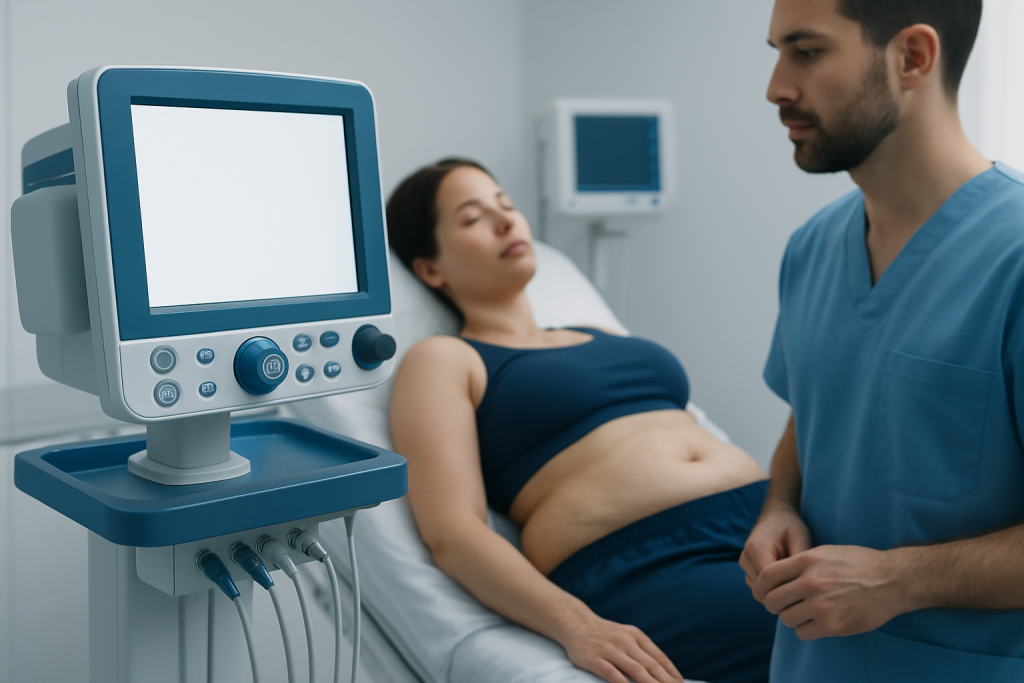
People considering post-weight-loss contouring often describe the same physical concerns, even when their goals are different. Loose skin may drape over the waistband, fold when sitting, or feel difficult to fit into clothing. The skin may chafe, trap moisture, or make exercise uncomfortable. Some patients notice a softer, empty appearance rather than a firm abdominal outline.
Where the looseness appears matters. When the concern is concentrated in the lower abdomen with some laxity above the navel, a tummy tuck may be enough. When excess tissue extends around the waistline or creates a heavy apron-like effect, a body lift may be more appropriate. If the buttocks have lost volume and appear flattened as the lower trunk skin descends, the surgeon may consider a lower body lift rather than an isolated abdominal procedure.
Other signs can point toward a more limited or more extensive operation:
- Skin mainly below the navel: often better suited to a tummy tuck
- Loose skin around the waistline or lower back: may suggest a body lift
- Significant folds after massive weight loss: may require staged procedures
- Abdominal muscle separation: may support abdominal wall repair during tummy tuck
It is also common for patients to have a combination of concerns. For example, a person may want a flatter stomach, a tighter waist, and less hanging skin on the back. In those cases, the surgeon may recommend a broader plan or, sometimes, more than one operation spaced over time.
Causes and Risk Factors After Major Weight Loss

Loose skin after weight loss is not a sign that the person has done anything wrong. When the body carries extra volume for a long time, the skin and supporting tissues stretch. If the change in size is large, or if the skin has reduced elasticity, it may not retract fully once the weight comes off. Age, genetics, sun exposure, smoking history, and previous pregnancies can all influence how well the skin rebounds.
Rapid or very large weight loss can make the effect more noticeable. This is often seen after bariatric surgery, though it can also follow medication-assisted weight loss or major lifestyle change. The more regions involved, the more likely a surgeon will think beyond the abdomen alone. Someone with a narrow band of loose skin in the front may do well with a tummy tuck, while someone with a full ring of excess skin may need a body lift to achieve balanced contours.
Risk factors that may affect surgical planning include:
- Stable but significant excess skin after massive weight loss
- Prior abdominal surgery or scars
- Smoking or nicotine use, which can affect wound healing
- Uncontrolled medical conditions such as diabetes or anemia
- Recent weight changes or plans for future pregnancy
Surgeons also consider how the tissues behave when standing, bending, and sitting. A patient may think only the front abdomen needs help, but an in-person exam may show that the sides and back are contributing more to the overall contour issue. That is why the decision is individualized rather than based on a generic post-weight-loss pathway.
How Surgeons Evaluate the Right Scope
The consultation is usually a mapping exercise. The surgeon looks at where the skin hangs, where the fat is distributed, how much abdominal wall laxity is present, and whether the lower body also needs reshaping. Photos, measurements, and a physical exam help determine whether the improvement should be limited to the abdomen or extend around the torso.
A tummy tuck is often chosen when the main target is the front of the abdomen and the skin excess is moderate. It may include tightening of the abdominal wall and repositioning of the belly button. A body lift is considered when the skin excess forms a circumferential problem, especially after major weight loss. This operation may involve lifting and tightening the abdomen, hips, lower back, and upper buttock area in one broader design.
Several questions guide the final recommendation:
- Is the loose skin isolated to the abdomen or spread around the trunk?
- Is abdominal muscle repair needed?
- Would a front-only correction leave the sides or back looking unbalanced?
- How much surgery is reasonable in one session given the patient’s health?
- What scar pattern is acceptable for the expected benefit?
For international patients, surgeons also evaluate the logistics of safe care. That includes how long the patient should remain nearby after surgery, whether follow-up visits can be arranged before travel home, and whether compression garments, mobility support, and emergency contact plans are in place. These practical details often influence whether a patient is a better fit for a single operation or a staged approach.
Diagnosis and Preoperative Assessment
There is no lab test that decides between a tummy tuck and a body lift. The decision comes from a careful surgical assessment. The surgeon reviews weight history, previous procedures, medications, blood clot risk, and any conditions that might affect anesthesia or healing. They also ask whether the patient plans future pregnancies or expects more weight change, because those factors can alter the long-term result.
Preoperative evaluation may include blood tests, medical clearance, and sometimes additional studies if the patient has other health concerns. If a body lift is being considered, the surgeon usually spends more time discussing the extent of scars, the possibility of combining or staging procedures, and the expected recovery demands. The goal is not simply to approve surgery, but to choose the most appropriate scope for the body’s current shape and the patient’s health status.
Good preparation also includes a realistic look at recovery support. Patients should know who will help them stand, walk, and manage daily tasks during the early days after surgery. For those traveling from abroad, it is wise to plan for extended rest near the surgical team rather than relying on immediate long-distance travel. A smooth result depends as much on the plan after surgery as on the operation itself.
Because final recommendations can change once the surgeon examines the skin directly, online photos or virtual screening are usually only the starting point. They can help open the conversation, but they do not replace an in-person assessment for body contour surgery.
Treatment Options and Surgical Differences
The two operations overlap in some ways, but they are not the same. A tummy tuck focuses on the abdomen. It removes excess skin and tightens the abdominal wall when needed. The incision is typically placed low on the belly so it can be hidden under clothing or swimwear when healing is complete. The result is usually a flatter, firmer front contour.
A body lift is more extensive. It is often chosen after very large weight loss when skin excess extends around the trunk. Depending on the plan, it may improve the abdomen, waist, lower back, hips, outer thighs, and buttock region in one coordinated contouring procedure. Because more surface area is treated, the operation tends to involve longer surgery, a broader scar pattern, and a recovery that can feel more demanding.
Sometimes the right answer is not either-or. A surgeon may recommend staging the work, such as treating the abdomen first and the back or thighs later. This can be helpful if the patient wants a safer, shorter operation or if medical considerations make a Thigh Lift Surgery: What Patients Should Know" class="ahp-ilk">Lift Surgery" class="ahp-ilk">full body lift less suitable. Staging can also make recovery easier to manage, especially for people traveling internationally who need to plan postoperative stays carefully.
Helpful differences to remember include:
- Tummy tuck: front-of-abdomen focus, narrower scope, often less extensive recovery
- Body lift: circumferential or multi-area focus, broader correction, more extensive scar pattern
- Staged surgery: multiple operations over time when one large procedure is not ideal
Whatever the scope, the best plan is one that matches the anatomy rather than the wish for the smallest possible incision or the biggest possible change. A well-chosen, moderate operation can produce a better and more sustainable result than an overly ambitious one.
Recovery, Scars, and Self-Care
Recovery after either procedure requires patience, but the intensity varies with the scope of surgery. After a tummy tuck, patients usually need several days of protected movement and gradual walking. After a body lift, the early recovery may be more involved because more tissue has been rearranged and more incision lines must heal. In both cases, swelling and tightness are common early on and improve gradually over time.
Scars are an expected part of contour surgery. Surgeons place incisions where they can be concealed as much as possible, but the trade-off for removing loose skin is that some scarring remains. The quality of scar healing depends on wound care, genetics, smoking status, and how closely the patient follows postoperative instructions. Silicone products, sun protection, and regular follow-up may be recommended once the surgeon says the incisions are ready.
Practical self-care matters as much as the surgical technique. Patients are usually advised to move gently, avoid strain, wear compression if recommended, and keep nutrition focused on protein, hydration, and overall recovery support. International patients should plan ahead for transportation, help with luggage, comfortable lodging, and enough time near the surgical center for checkups before flying home.
When the operation is performed in a coordinated setting, such as at Acibadem Health Point, multidisciplinary specialists and JCI-accredited hospitals can support diagnosis and treatment for international patients. That matters because postoperative recovery is not only about the wound itself; it is also about safe monitoring, accessible follow-up, and guidance that fits the patient’s travel schedule.
When to See a Doctor
A consultation is appropriate when loose skin is causing discomfort, hygiene issues, difficulty with clothing, or dissatisfaction that does not improve with time, exercise, or stable weight. It is especially useful after major weight loss, when the body has changed in more than one area and the person is unsure whether a tummy tuck is enough or whether a body lift would be more balanced.
It is also wise to seek a surgical opinion before making travel plans for treatment abroad. The surgeon can explain candidacy, likely scar placement, realistic recovery time, and whether the person should stay locally for follow-up. If the person has medical conditions, prior abdominal surgery, or ongoing nicotine use, early evaluation gives time to address modifiable risks before surgery.
Prompt medical attention is needed if there are signs of infection, unusual swelling, worsening pain, shortness of breath, or any sudden change after surgery. Those symptoms do not necessarily mean something serious has happened, but they should be checked without delay. For most patients, though, the bigger decision is not emergency care — it is choosing the right operation with enough time to prepare well.
Frequently asked questions
How do surgeons decide between a tummy tuck and a body lift after weight loss?
They look at where the loose skin is, how much tissue is affected, and whether the concern is only the abdomen or the whole lower torso. A tummy tuck is usually better for a front abdominal problem, while a body lift is chosen when excess skin wraps around the body or involves several areas.
Can a tummy tuck fix loose skin after massive weight loss?
It can help if the main problem is centered in the abdomen. If there is also loose skin on the sides, lower back, or buttocks, a tummy tuck alone may not address the full contour issue.
Is a body lift more complicated than a tummy tuck?
Usually, yes. A body lift covers a wider area, which often means a longer operation, more recovery time, and a larger scar pattern than a tummy tuck.
How long should weight be stable before surgery?
Surgeons generally want weight to be stable before post-weight-loss body contouring. Stability helps the surgeon plan more accurately and lowers the chance that later weight changes will affect the result.
Will the scars be very noticeable?
Scars are part of both procedures, and their placement depends on the surgical plan. Surgeons try to position them low or in areas that clothing can cover, but the final appearance varies from person to person.
Can these surgeries be combined with other procedures?
Sometimes, but the decision depends on safety, total surgical time, and how much the body can handle in one session. In some cases, a staged plan is safer and easier to recover from.
References
- American Society of Plastic Surgeons
- American Board of Plastic Surgery
- Mayo Clinic
- National Institute of Diabetes and Digestive and Kidney Diseases
- American Society for Metabolic and Bariatric Surgery
This article is for general information only and is not a substitute for professional medical advice. Please consult a qualified doctor about your individual situation.
More from the Health Library

Tummy Tuck vs. Body Lift After Weight Loss: How to Choose the First Operation When You Cannot Do Everything at Once

Should You Choose a Tummy Tuck, Liposuction, or Both?

Tummy Tuck or Liposuction: How Surgeons Separate Loose Skin From Fat
Related Specialists

Dr. Serkan Tokgönül
Aesthetic Plastic & Reconstructive Surgery
Dr. Ömercan Yağız Öksüz
Aesthetic Plastic & Reconstructive Surgery
Prof. Dr. Mehmet Veli Karaaltın
Aesthetic Plastic & Reconstructive Surgery
Dr. Nezail Demirciler
Plastic, Reconstructive and Aesthetic Surgery