Tattoo Aftercare: How to Care for a New Tattoo

Key Takeaways
- A new tattoo is an open skin wound at first, so gentle care matters.
- Keeping the area clean and lightly moisturized supports healing.
- Picking, scratching, soaking, and sun exposure can delay recovery.
- Mild redness and tenderness are common early on, but worsening symptoms need medical review.
- People with diabetes, immune problems, or skin conditions may need extra guidance from a clinician.
Medically reviewed by the Acıbadem clinical team — August 19, 2026
Tattoo aftercare is the set of simple daily steps that helps freshly tattooed skin heal comfortably and with the best possible appearance. Clear cleaning, gentle moisture, and avoiding irritation are the main priorities during recovery.
Overview
A tattoo changes the skin in a way that looks permanent, but the surface still needs time to settle. In the first days after getting inked, the area is healing from many tiny punctures, which means it can feel warm, tender, itchy, or tight. Good tattoo aftercare is less about complicated products and more about giving the skin a clean, calm environment so it can repair itself.
For many people, the process starts before they leave the studio and continues for a couple of weeks at home. That can be straightforward when the tattoo is small and healing normally, but it can feel less certain when someone is traveling, returning to work quickly, or managing care from another country. In those situations, it helps to know which changes are expected, which habits are helpful, and which signs should prompt a call to a doctor.
Aftercare recommendations can vary slightly depending on the artist, the tattoo location, the skin type, and whether the person has any medical conditions that slow healing. Even so, the overall approach is consistent: clean gently, avoid unnecessary friction, protect the skin from sun and water exposure, and watch for signs that the area is not recovering in the usual way.
What Normal Healing Can Feel Like

A healing tattoo often goes through a few recognizable stages. During the first day or two, the skin may ooze a small amount of clear fluid, plasma, and excess ink. The area may look brighter than expected and feel sensitive when touched. This is part of the skin’s normal response to the procedure.
Over the next several days, the tattoo usually becomes drier. Light scabbing or flaking can occur, and itching is common as the skin renews itself. Some people also notice a temporary cloudy or dull look before the color settles. These changes can be reassuring when they are mild and gradually improve.
What matters most is the direction of healing. A tattoo that becomes less painful, less swollen, and less red over time is usually moving in the right direction. A tattoo that becomes increasingly sore, hot, swollen, or increasingly red may need medical assessment, especially if the person feels unwell.
Cleaning and Daily Care
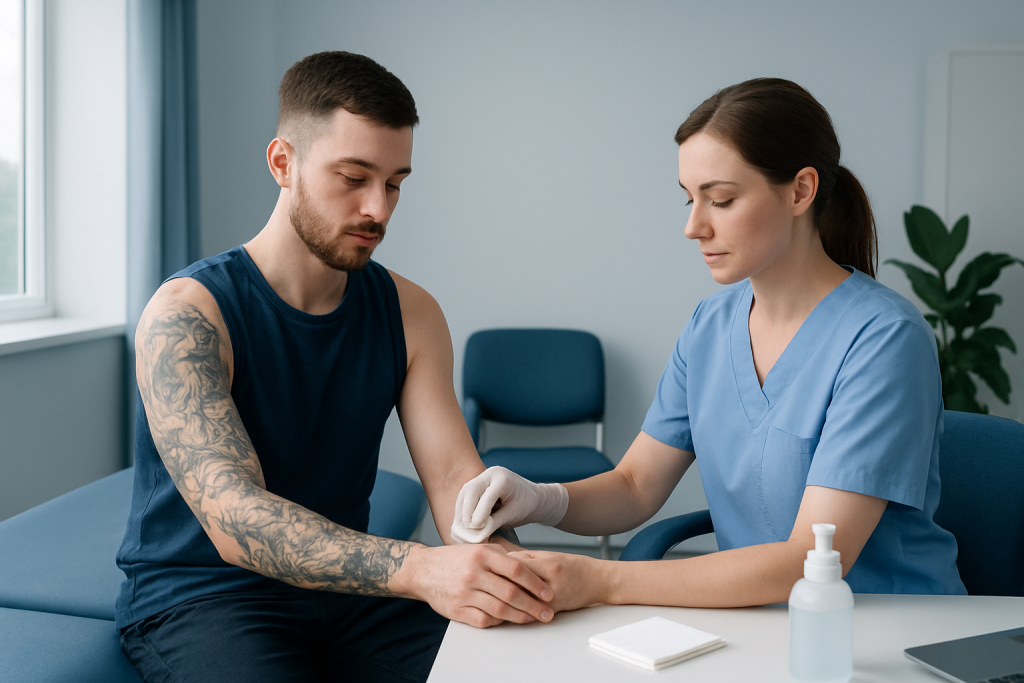
Fresh tattoo care begins with clean hands. Before touching the area, the person should wash their hands thoroughly with soap and water. The tattoo itself is usually cleaned gently with lukewarm water and a mild, fragrance-free cleanser, then patted dry with a clean towel or allowed to air dry. Rubbing the skin can disturb the healing surface.
Moisture is helpful, but too much can soften the skin excessively and interfere with healing. A thin layer of a gentle, fragrance-free moisturizer or aftercare product is usually enough. Heavy ointments, scented lotions, and harsh antiseptic products are often more irritating than helpful unless a clinician or tattoo professional has given different instructions.
It is also important to keep the tattoo away from dirt, tight clothing, and repeated contact with unwashed surfaces. If a dressing or wrap was placed over the tattoo, the person should follow the exact timing and removal instructions given by the studio or clinician. When in doubt, simpler is safer: clean, dry, and protect the area from friction.
- Wash hands before every touch.
- Clean the tattoo gently once or twice daily, or as advised.
- Pat dry; do not scrub.
- Apply only a thin layer of moisturizer.
- Wear loose, breathable clothing over the area when possible.
Causes of Poor Healing and Risk Factors
Most tattoos heal without major problems, but certain habits and health factors can make recovery harder. Picking at scabs, scratching itchy skin, over-washing, soaking in water, or exposing the tattoo to strong sun can all irritate the area and slow the skin’s return to normal.
Some people have a higher chance of complications because their skin heals more slowly or their immune system is less able to respond to minor injury. This includes people with diabetes, circulation problems, immune-suppressing conditions, eczema, psoriasis, or a history of keloids or abnormal scarring. Healing can also be more challenging if the tattoo is large, in a high-friction area, or placed where clothing rubs constantly.
Travel can add another layer of difficulty. Long flights, changing climates, limited access to the original tattoo artist, or uncertainty about local care products can make aftercare feel less predictable. In that setting, it is especially useful to keep the routine simple and to avoid experimenting with new creams, home remedies, or topical antibiotics unless a qualified clinician recommends them.
Signs the Tattoo May Need Medical Attention
Some discomfort is expected, but certain symptoms deserve a medical review. Increasing redness that spreads beyond the tattoo, marked swelling, worsening pain, thick yellow or green discharge, bad odor, or fever can suggest infection or another complication. A rash, blistering, or intense itching may point to irritation or an allergic reaction to ink, adhesives, or aftercare products.
It can be easy to confuse normal peeling with a skin problem. Gentle flaking and light scabbing are common, but deep cracks, heavy crusting, or persistent wetness are less typical. If the tattoo is not improving day by day, or if the person feels generally unwell, it is wiser to seek advice than to wait and hope it settles on its own.
People who have diabetes, take immunosuppressive medication, or have a history of poor wound healing should have a lower threshold for getting checked. They may not show classic warning signs in the same way, so even mild concerns deserve prompt attention from a clinician.
Treatment Options if Problems Occur
Most healing tattoos only need supportive care, but if infection or severe irritation is suspected, treatment should be guided by a doctor. The first step is usually an examination of the skin, and sometimes a sample is taken if there is drainage. The clinician may recommend a prescription treatment depending on the cause, such as an antibiotic for bacterial infection or another approach if the problem is allergic or inflammatory.
At home, the safest plan is to stop using any product that seems to trigger burning, rash, or worsening redness. The tattoo should be kept clean, but not aggressively cleaned. Covering it with a non-stick dressing may be helpful in some cases, yet that decision should be individualized by a clinician, especially if there is open skin or drainage.
If the tattooed person is recovering abroad or after an international trip, telehealth or a local medical visit can be a practical first step. A doctor can help determine whether the issue is routine healing, an infection, or a reaction that needs closer follow-up. Early evaluation is usually simpler than waiting until discomfort is harder to manage.
Prevention and Self-care During Healing
The best tattoo aftercare starts with restraint. The skin generally heals better when it is left alone, washed gently, and protected from irritation. It is usually wise to avoid swimming pools, hot tubs, lakes, and long baths until the skin has closed and any peeling or scabbing has ended. Showers are usually acceptable if the tattoo is not directly scrubbed.
Sun protection also matters. Freshly tattooed skin should not be exposed to direct sunlight, and sunscreen is usually avoided until the surface is fully healed. Once the skin has recovered, a broad-spectrum sunscreen can help protect the tattoo’s appearance over time. During healing, loose clothing, good hydration, and steady sleep can also support the body’s repair process.
People planning to travel soon after getting a tattoo may want to schedule the procedure when they can rest, carry gentle cleanser and fragrance-free moisturizer, and avoid activities such as beach days, spa treatments, or intense exercise for a short period. If a person is unsure how a tattoo should be cared for in the context of a medical condition, it is sensible to ask a qualified doctor before the procedure or during the healing phase.
- Avoid soaking the tattoo until the skin is fully healed.
- Do not pick, scratch, or shave over the area.
- Protect the tattoo from direct sun.
- Use only products that are gentle and fragrance-free.
- Seek advice early if healing seems delayed.
When to See a Doctor
A doctor should be consulted if the tattoo becomes more painful instead of less painful, redness is spreading, or there is pus, fever, or a rash. Medical advice is also sensible if the person has significant swelling, the skin feels hot to the touch, or the wound is not improving after several days of proper care.
It is equally reasonable to seek guidance if the person has a medical condition that affects healing, such as diabetes, immune suppression, or a chronic skin disorder. The same applies if the tattoo was done large, deep, or in a sensitive area and the recovery feels out of proportion to what was expected.
For international patients who need an in-person assessment while away from home, Acibadem Health Point’s multidisciplinary specialists and JCI-accredited hospitals can diagnose and treat this condition for international patients. A timely evaluation can help separate normal healing from a problem that needs targeted care, while keeping the process calm and organized.
Living With a Healing Tattoo: Practical Follow-up
Most tattoos improve steadily with simple care, and the main challenge is often patience rather than treatment. The skin may look finished before it is fully settled, so it is helpful to continue the gentle routine even after the area stops feeling sore. Final color and texture can continue to change for several weeks.
If a person is unsure whether a change is normal, taking a clear photo each day can help show the trend. A lesion that is gradually calming is usually less concerning than one that is expanding or becoming more painful. That simple record can also be useful if a clinician needs to review the skin remotely before an appointment.
For many people, tattoo aftercare becomes a quiet lesson in wound care: small habits matter, and the skin often does best when protected from impatience. With sensible cleaning, light moisture, and attention to warning signs, most tattoos heal well and remain part of the person’s life for years to come.
Frequently asked questions
How long does tattoo aftercare usually last?
Most people need to care for a new tattoo for at least one to two weeks, but some skin changes can continue longer. The outer surface may look healed before the deeper layers of skin are fully settled, so gentle care should continue until the area no longer peels or feels sensitive.
Should a new tattoo be covered while it heals?
That depends on the studio’s instructions and the type of dressing used. Some wraps are meant to stay on for a short period, while others should be removed sooner; after that, the tattoo is usually left open to air with gentle protection from friction.
Is itching a sign that something is wrong?
Itching is often a normal part of healing as the skin dries and renews itself. It becomes more concerning if it is severe, comes with a spreading rash, or is paired with swelling, warmth, or discharge.
Can a person exercise after getting a tattoo?
Light activity may be fine for some people, but heavy sweating, friction, and stretching can irritate fresh ink. It is usually sensible to avoid intense exercise for a short period, especially if the tattoo is in an area that moves a lot.
When should sunscreen be used on a tattoo?
Sunscreen should generally wait until the skin has fully healed and there are no open areas, scabs, or peeling. During the healing phase, the better protection is keeping the tattoo covered and out of direct sun.
What if a tattooed person has diabetes or a weak immune system?
They should ask a doctor or tattoo professional for individualized advice before and after the procedure. These conditions can change how the skin heals, so early medical review is a good idea if anything seems unusual.
References
- American Academy of Dermatology
- Centers for Disease Control and Prevention
- Mayo Clinic
- National Health Service
- World Health Organization
This article is for general information only and is not a substitute for professional medical advice. Please consult a qualified doctor about your individual situation.
Explore treatments in Turkey — costs, top hospitals & a free quote
JCI-accredited · board-certified surgeons · reply within 24h
Add us as a Preferred Source to see more of our trusted health content across Google Search, AI Overviews and Discover.