Subcutaneous

Key Takeaways
- Subcutaneous tissue sits below the skin and helps cushion the body, store energy, and regulate temperature.
- Lumps or swelling in the subcutaneous layer are common and often benign, but they should be assessed if they grow, hurt, or change.
- Diagnosis usually starts with a physical examination and may include ultrasound, blood tests, or biopsy if needed.
- Treatment depends on the cause and can range from observation to medication or a minor procedure.
- New redness, fever, drainage, or a rapidly changing lump deserves prompt medical review.
Subcutaneous tissue is the layer of fat and connective tissue just beneath the skin, and it plays an important role in protection, insulation, and energy storage. When this layer changes through lumps, swelling, infection, or pain, a clinician can usually identify the cause with a careful exam and simple tests.
Overview
Subcutaneous tissue is the layer directly beneath the skin. It contains fat cells, connective tissue, small blood vessels, and nerves, and it gives the skin a softer, more mobile feel over the structures underneath. In everyday language, people may refer to this layer as “subcutaneous fat,” but the tissue also includes more than fat alone.
Its job is practical rather than dramatic: it cushions pressure, helps the body retain heat, stores energy, and provides a pathway for blood vessels and nerves that travel toward the skin. When people are preparing for medical care, especially from another country, questions about a subcutaneous lump or swelling often begin with one simple concern: is it harmless, or does it need attention? The answer usually depends on how it looks, how quickly it changes, and whether other symptoms are present.
Understanding this layer can make a consultation feel less confusing. A lump that feels soft and moveable under the skin may have a different meaning from a firm area that is painful, warm, or fixed in place. A clinician will use the person’s history and examination to sort out those differences.
Symptoms

Problems involving the subcutaneous layer can appear in many forms. Some people notice a small lump under the skin during a shower or while dressing. Others see an area of swelling that makes the skin look raised or uneven. A few may feel tenderness, tightness, or warmth over the area, while some have no discomfort at all.
Common features can include:
- a soft or firm lump beneath the skin
- localized swelling or puffiness
- redness or warmth if inflammation is present
- pain when pressed or when moving nearby tissue
- changes in size, shape, or texture over time
Symptoms are often more informative than appearance alone. A painless, stable lump may point to a benign growth such as a lipoma, while a painful red swelling may suggest infection or inflammation. If a person is traveling for care, it is helpful to note when the change began, whether it has grown, and whether fever, drainage, or recent injury occurred.
Causes & Risk Factors
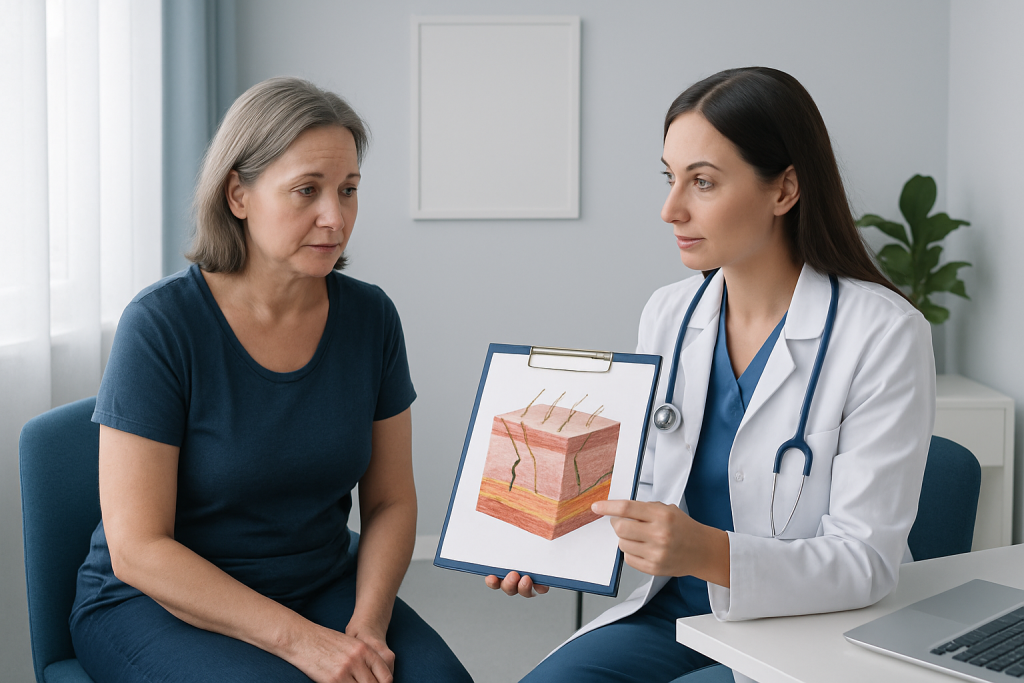
Subcutaneous changes can happen for many reasons, and most are not dangerous. Fatty growths, cysts, bruises after minor trauma, localized infections, insect bites, and inflammatory conditions can all affect the tissue under the skin. Some people also develop nodules related to autoimmune or metabolic conditions, or deposits that form after repeated irritation.
Risk factors depend on the cause. Skin injuries, shaving or friction, diabetes, immune system problems, poor wound healing, recent injections, or a history of similar lumps can all make subcutaneous issues more likely. In some cases, the person may not have an obvious risk factor at all, which is why an exam is more useful than guessing from symptoms alone.
For international patients, it is worth bringing any prior imaging, pathology reports, medication lists, and a short timeline of the problem. That context can help the treating team decide whether the concern is likely to be benign, inflammatory, or something that needs more investigation.
Diagnosis
Diagnosis usually begins with a clinician asking when the lump or swelling first appeared, whether it has changed, and whether it causes pain, fever, or skin changes. A physical examination can often narrow the possibilities by assessing size, mobility, texture, temperature, and whether nearby tissue is involved.
If the finding is not clearly identified from the exam, imaging may be used. Ultrasound is commonly helpful because it can show whether a lump is solid or fluid-filled and whether it sits in the subcutaneous layer or deeper tissue. In selected situations, blood tests may be ordered to look for infection or inflammation. If there is uncertainty about the type of growth, a biopsy or removal of a sample may be recommended so the tissue can be examined under a microscope.
Doctors usually aim for a practical answer rather than a long list of possibilities. The goal is to determine whether observation is enough or whether the tissue needs treatment, drainage, or further workup.
Treatment Options
Treatment depends entirely on the cause. A harmless, stable lump may only need monitoring, especially if it is not painful and does not change. An inflamed or infected area may require antibiotics, drainage, or another minor procedure. A cyst or lipoma may be removed if it is bothersome, enlarging, or uncertain in appearance.
When subcutaneous swelling is linked to another condition, care may focus on the underlying problem. For example, swelling related to an inflammatory disease, blood sugar problems, or repeated pressure may improve only when the root cause is addressed. Pain relief, rest, compression in selected cases, and wound care may also be part of the plan.
In a travel-based care journey, it is important to ask how follow-up will work after the initial visit. Some treatments need a short review, a dressing change, or pathology results that return after the patient has gone home. Clear instructions about warning signs and contact methods make the recovery process smoother and safer.
Prevention & Self-care
Not every subcutaneous problem can be prevented, but a few habits can reduce irritation and help catch changes early. Checking the skin during routine bathing or dressing can make new lumps easier to notice. Protecting areas that are repeatedly rubbed or pressed, keeping wounds clean, and managing chronic conditions such as diabetes can also support healthier skin and soft tissue.
If a person already has a diagnosed benign lump, self-care usually means watching for change rather than trying to treat it at home. It is wise not to squeeze, massage, or puncture a lump, since that can increase inflammation or create infection. A simple written note or phone photo can help track size or appearance over time, especially if care is being coordinated across countries.
General skin health measures matter as well: good hygiene, appropriate footwear, balanced nutrition, adequate hydration, and timely treatment of minor cuts or insect bites all support the subcutaneous layer indirectly.
When to See a Doctor
Medical review is recommended if a lump or swollen area grows, becomes painful, turns red or warm, drains fluid, or is accompanied by fever. It is also sensible to seek care if the lump feels hard, fixed, or unusual compared with surrounding tissue, or if it appears after an injury but does not improve as expected.
People should not wait if the area interferes with movement, causes numbness, or seems to affect nearby function. A doctor should also evaluate any subcutaneous change that lasts more than a few weeks without a clear explanation, especially if the person has a history of cancer, immune suppression, or recurring infections.
For those considering treatment while traveling, early contact with a medical team helps avoid delays and unnecessary worry. Acibadem Health Point’s multidisciplinary specialists and JCI-accredited hospitals can diagnose and treat this condition for international patients, with care plans that support both the visit itself and the return home.
Frequently asked questions
What does subcutaneous mean?
Subcutaneous means “under the skin.” It usually refers to the layer of tissue below the skin surface, which contains fat, connective tissue, blood vessels, and nerves. In medical notes, it can also describe something located or given in that layer, such as a subcutaneous injection.
Are subcutaneous lumps always serious?
No, many subcutaneous lumps are benign and stay unchanged for years. Even so, a new lump should be checked if it is growing, painful, red, or firm, because the cause cannot be confirmed by touch alone.
Can an ultrasound show what a subcutaneous lump is?
Ultrasound is often a helpful first test because it can show whether a lump is solid or fluid-filled and how deep it is. It may not give every answer, but it often guides the next step in care.
What is the difference between subcutaneous fat and fat in other parts of the body?
Subcutaneous fat is the fat layer located just beneath the skin. It is different from deeper fat around organs, and it has a role in cushioning, insulation, and energy storage.
When should a subcutaneous lump be removed?
Removal is usually considered if the lump is painful, growing, repeatedly irritated, cosmetically bothersome, or not clearly diagnosed. A doctor may also recommend removal if a sample is needed to confirm what the tissue is.
Can a subcutaneous infection get worse quickly?
Some infections in the tissue under the skin can progress over hours to days, especially if there is spreading redness, increasing pain, or fever. Prompt medical evaluation helps decide whether antibiotics, drainage, or other treatment is needed.
References
- Mayo Clinic
- Cleveland Clinic
- National Library of Medicine
- American Academy of Dermatology
- World Health Organization
This article is for general information only and is not a substitute for professional medical advice. Please consult a qualified doctor about your individual situation.