Spiders And Spider Bites

Key Takeaways
- Most spider bites cause mild, local skin symptoms such as redness, swelling, and itching.
- A growing wound, severe pain, cramping, fever, or spreading redness should be medically assessed.
- Cleaning the area, using a cool compress, and avoiding scratching are usually the first steps at home.
- It is not always possible to identify the spider, so doctors often treat based on symptoms and examination.
- People traveling abroad may want prompt advice if a bite becomes painful, unusual, or hard to monitor safely.
Most spider bites are minor and improve with simple home care, but a few can cause more serious symptoms that need medical attention. Knowing how to recognize the bite, monitor changes, and seek help when needed can make the experience much less stressful.
Overview
Spiders live in many environments, from gardens and garages to storage rooms and travel accommodations. Most species are harmless to humans, and most bites happen only when a spider is trapped against the skin or feels threatened. For many people, the bite is little more than a temporary skin irritation.
What makes spider bites confusing is that they can look similar to other insect bites, skin infections, allergic reactions, or even small injuries. Because the spider is rarely seen long enough for a clear identification, doctors usually focus on the pattern of symptoms rather than the insect itself. That practical approach helps people get the right care without unnecessary alarm.
For international travelers, a bite can become more frustrating when it happens far from home, during a beach holiday, hotel stay, or outdoor trip. In those settings, it is useful to know which changes are expected and which deserve a same-day medical review.
Symptoms

Many spider bites begin with a small red bump that may itch, sting, or feel tender. Some people notice a central puncture mark, while others only see a patch of redness or mild swelling. In uncomplicated cases, the area stays localized and gradually settles over a few days.
More concerning symptoms can appear if the reaction is stronger or if the spider species is medically important. These may include increasing pain, spreading redness, blistering, a dark center, muscle cramps, nausea, headache, fever, or a generally unwell feeling. A bite on the face, around the eyes, or near a joint may also feel more troublesome because swelling in those areas is more noticeable.
It is also important to remember that not every painful skin spot is a spider bite. Some boils, infected insect bites, and allergic skin reactions can look similar, especially if the person never saw the spider. When symptoms do not match a simple healing bite, a clinician can help sort out the cause.
Causes & Risk Factors
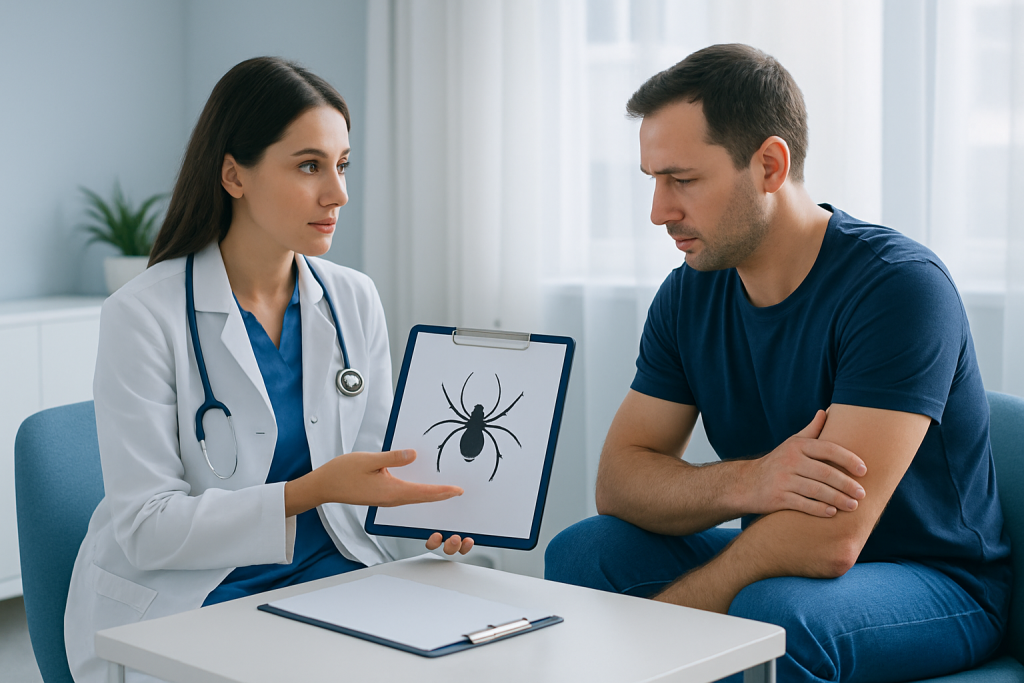
Spider bites usually happen by accident. A spider may be pressed against the skin while someone dresses, reaches into a box, puts on shoes left outdoors, or cleans a rarely used space. Bites can also occur when sleeping in areas where spiders have entered through windows, cracks, or luggage.
Certain settings increase the chance of coming into contact with spiders: cluttered storage areas, woodpiles, basements, sheds, and warm or dry regions where some medically important species are found. Outdoor workers, campers, gardeners, and travelers staying in less familiar accommodations may be more likely to encounter spiders simply because they spend more time in places where spiders live.
The risk of serious illness depends less on fear and more on the species involved and the person’s reaction. Children, older adults, and people with weaker immune systems or other medical conditions may need closer observation if symptoms are not settling as expected.
Diagnosis
There is no single test that confirms a spider bite in every case. Doctors usually begin with a careful history: when the bite happened, what the area looked like at first, how quickly it changed, and whether the person saw the spider. A physical examination helps determine whether the lesion is consistent with a bite, an infection, or another skin problem.
If the symptoms are unusual or severe, a doctor may ask about travel history, outdoor exposures, and any possible contact with insects, plants, or chemicals. In some cases, blood tests or wound evaluation may be recommended if there are signs of infection or body-wide symptoms. If the bite is getting worse after a day or two rather than gradually improving, that is often a clue that a closer look is needed.
Because many people seek care while traveling, it can help to take a clear photo of the area and note the timing of changes. That record may be useful if a person needs to see a different clinician later, whether at home or abroad.
Treatment Options
For a typical mild spider bite, treatment is usually supportive. The area is gently washed with soap and water, then a cool compress is applied to reduce discomfort and swelling. Elevating the area can also help if the bite is on an arm or leg.
Doctors may recommend symptom relief measures such as antihistamine medicine for itching or simple pain relief for tenderness, depending on the person’s medical history. Scratching should be avoided because it can irritate the skin and raise the risk of infection. If the skin breaks or a blister forms, keeping the area clean and covered is often helpful.
When the bite looks infected or when there are more serious symptoms, treatment may need to be more specific. This can include antibiotics for a confirmed bacterial infection, tetanus review if appropriate, or hospital care for significant pain, muscle spasms, allergic reactions, or systemic illness. In suspected bites from medically significant spiders, treatment decisions are based on symptoms and the clinical picture rather than waiting for the spider to be identified.
People who are traveling and cannot easily return for follow-up should seek early medical advice if the bite is changing quickly. That is especially true if they may need wound care, a prescription, or observation over the next several hours.
Prevention & Self-care
Prevention starts with reducing opportunities for spiders to hide close to skin and clothing. Shaking out shoes, gloves, and clothes that have been stored for a while is a simple habit. Keeping beds away from walls, sealing cracks, and reducing clutter in storage spaces can also make a difference.
When spending time outdoors, long sleeves, closed shoes, and gloves can lower exposure in gardens, sheds, or wooded areas. Travelers can use the same practical habits in hotels, cabins, and rental homes by checking bedding, luggage, and corners where spiders may rest. Most of these steps are about awareness rather than fear.
- Wash the bite with soap and water.
- Use a cool compress for short periods.
- Avoid squeezing, cutting, or applying harsh home remedies.
- Watch for increasing redness, pain, or swelling.
- Seek advice if the person feels unwell or the bite is worsening.
Good self-care also means knowing one’s own limits. A person who is away from home, language support, or familiar medical care should not wait too long if symptoms are changing. Early advice can prevent a small problem from becoming a more difficult one.
When to See a Doctor
Medical review is sensible if the bite becomes more painful instead of less painful, if redness keeps spreading, or if there is pus, fever, or a red streak moving away from the area. Medical attention is also important if the person develops cramping, nausea, dizziness, trouble breathing, or a widespread rash. These symptoms suggest that the reaction is more than a simple local bite.
Children, pregnant individuals, older adults, and people with chronic health conditions may benefit from a lower threshold for assessment, especially if the bite is on the face, hand, genitals, or near a joint. Likewise, if the skin begins to blister, darken, or form an open sore, the wound should be examined promptly. If there is any concern about an allergic reaction, emergency care is appropriate.
For international patients, the safest plan is often to seek assessment earlier rather than later when the bite is changing quickly or the spider could have been medically significant. Acibadem Health Point’s multidisciplinary specialists and JCI-accredited hospitals can diagnose and treat spider bites for international patients, with care coordinated around the person’s symptoms and travel needs.
Recovery and Follow-up
Most uncomplicated bites improve gradually with home care and time. The skin may stay mildly itchy or discolored for several days, but the overall trend should be toward healing. If the area was scratched or irritated, recovery may take a little longer.
Follow-up is useful if a doctor recommended wound checks, antibiotics, or closer observation. People recovering away from home should keep notes or photos of the bite, especially if they need to show another clinician later. That record can make handover easier if care continues in a different country.
Healing is usually straightforward, but it is still worth respecting the body’s signals. A bite that suddenly changes course, becomes increasingly uncomfortable, or starts affecting general wellbeing deserves reassessment rather than guesswork.
Frequently asked questions
How can someone tell if it is really a spider bite?
That is often difficult, because several skin problems can look similar. A true spider bite is more likely if a spider was seen at the time and the spot matches the expected local reaction. If the area is worsening or looks unusual, a clinician can help identify the cause.
Do most spider bites need antibiotics?
No, most do not. Antibiotics are only used when there is a confirmed bacterial infection or a strong suspicion of one. Simple bites usually improve with cleaning, cooling, and observation.
What should be done right after a spider bite?
The area should be washed gently with soap and water, then a cool compress can be applied. It is best to avoid scratching or trying to cut the skin. Watching the area over the next day is often more useful than trying home remedies that irritate it.
When is a spider bite an emergency?
Emergency care is needed if there is trouble breathing, faintness, widespread rash, severe pain, muscle cramping, or rapidly spreading skin changes. A fast allergic reaction can also be urgent. If in doubt, it is safer to seek medical help promptly.
Can a spider bite become infected?
Yes, especially if the skin is scratched or broken. Signs of infection include increasing redness, warmth, swelling, pus, or fever. A doctor can decide whether the area needs medical treatment.
Should travelers seek care sooner for a spider bite?
Yes, if the bite is changing quickly, is hard to monitor, or happens in a place where follow-up may be difficult. Early assessment can prevent delays in treatment and help avoid complications while away from home.
References
- World Health Organization
- Centers for Disease Control and Prevention
- Merck Manual Consumer Version
- Mayo Clinic
- National Health Service
This article is for general information only and is not a substitute for professional medical advice. Please consult a qualified doctor about your individual situation.
More from the Health Library



Related Specialists
Dr. Ali İlbey Demirel
General Surgery
Dr. Hakan Kutlu
Infectious Diseases & Clinical Microbiology
Prof. Dr. Serdar Beken
Neonatal Intensive Care Unit
Asst. Prof. Dr. Alper Özdilek
Otorhinolaryngology