Spider Bite Pictures

Key Takeaways
- Spider bite pictures may help people compare skin changes, but a photo alone cannot identify the spider or confirm a bite.
- Most suspected spider bites are mild and improve with basic wound care and symptom monitoring.
- Severe pain, spreading redness, fever, muscle cramps, or a worsening wound deserve medical assessment.
- A true venomous spider bite is uncommon in many regions, but early evaluation helps if symptoms escalate.
- Clean the area, avoid squeezing or cutting the bite, and watch for changes over the next 24 to 48 hours.
Spider bite pictures can be a useful reference, but many skin changes look similar and cannot confirm the cause on their own. This article explains common symptoms, possible risks, diagnosis, treatment, and when medical evaluation is important.
Overview
Searches for spider bite pictures usually begin with uncertainty: a person notices a red bump, a blister, or a painful patch of skin and wants to know whether a spider was involved. That instinct is understandable, because many skin problems can look similar at first glance. Yet pictures can only offer a rough comparison. They cannot reliably show which spider caused a bite, or even whether a spider bite is the most likely explanation.
In everyday practice, doctors often see rashes, insect bites, allergic reactions, skin infections, and irritated hair follicles mistaken for spider bites. The appearance may change over time, which makes the first image less useful than the full story of how the skin lesion behaves. Pain level, timing, spread, and general symptoms often tell more than shape alone.
For international patients, this can be especially confusing when a skin reaction starts during travel, after outdoor activities, or after arrival in a new climate. If the concern is growing rather than settling, it is safer to seek a medical opinion than to rely only on online pictures.
Symptoms

The skin changes associated with a suspected spider bite can vary widely. Some people notice only a small red mark, mild swelling, or itching. Others describe burning, tenderness, or a firm lump that develops over several hours. A bite may also leave two tiny puncture marks, although they are not always visible.
In some cases, symptoms remain local to the skin. In others, the body responds more strongly and the person may feel unwell. Warning features can include increasing pain, a growing red or purple area, blistering, fever, nausea, muscle cramps, headache, or fatigue. These symptoms do not automatically mean a dangerous bite, but they do deserve attention.
Pictures can help track change over time, especially if a person photographs the area daily under similar lighting. Still, the most useful sign is progression. A spot that steadily improves is more reassuring than one that expands, deepens in color, or becomes more painful.
- Localized redness or swelling
- Itching, stinging, or burning
- Blistering or a darkening center
- Increasing warmth or pain
- Systemic symptoms such as fever or muscle cramps
Causes & Risk Factors
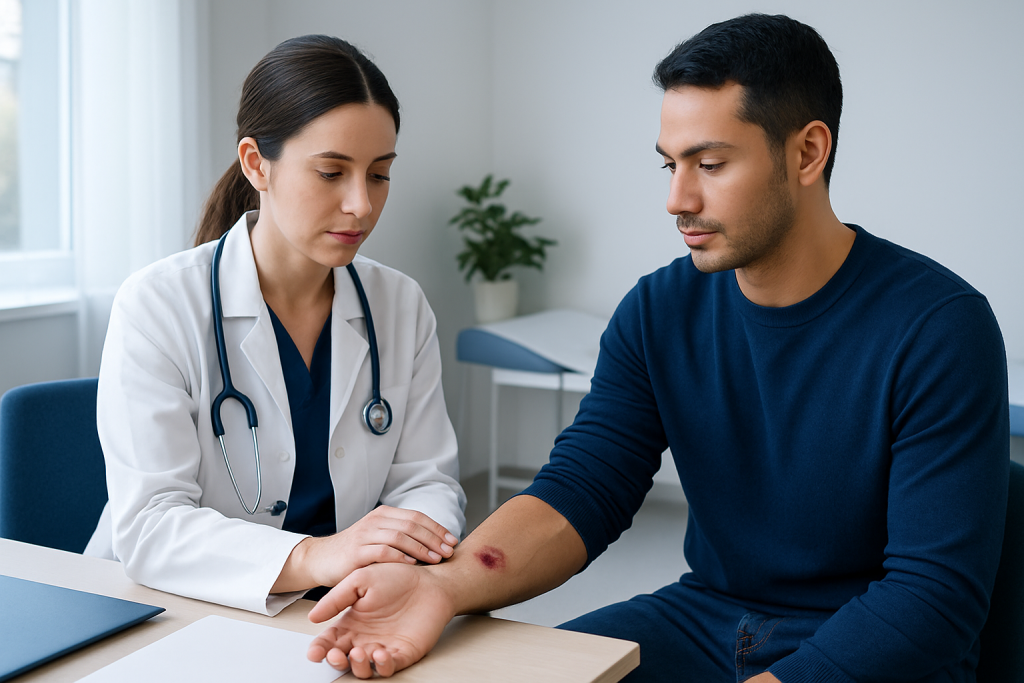
Most suspected spider bites happen when a spider is pressed against the skin, trapped in clothing, bedding, shoes, or stored items, or disturbed while a person is cleaning, gardening, or handling wood and outdoor materials. Bites often occur by accident, not because the spider is aggressive. Many spiders bite only when they feel threatened.
Risk is influenced more by environment and behavior than by personal health alone. People who work around piles of wood, boxes, old clothing, garages, basements, sheds, or outdoor debris may be more likely to encounter spiders. Travel to areas where medically significant spiders are more common can also change the level of concern.
It is important to remember that many skin lesions are not spider bites at all. A bite-like mark may actually come from a mosquito, flea, tick, bed bug, plant irritation, contact dermatitis, or a bacterial skin infection. That is one reason clinicians focus on the pattern over time rather than the first image.
Some spiders are of greater medical concern than others, but serious reactions remain uncommon. The response depends on the type of spider, the amount of venom, the person’s age and overall health, and the location of the bite.
Diagnosis
Doctors usually diagnose a suspected spider bite by reviewing the history and examining the skin. Because the spider is rarely seen clearly, the diagnosis is often based on the circumstances, the appearance of the lesion, and how symptoms are changing. A clear description of where the person was, what they were doing, and when the reaction started can be very helpful.
When a wound looks severe or the symptoms suggest something beyond a simple local reaction, testing may be needed to rule out other causes. This may include evaluation for skin infection, allergic reaction, or another injury. In some cases, clinicians may also assess vital signs, blood tests, or the need for tetanus protection depending on the wound and the person’s medical history.
Photos taken at home can assist the evaluation, particularly if they show progression across different times of day. However, a picture cannot replace an examination. If the lesion is spreading quickly, becoming more painful, or developing blistering or color change, the safest approach is prompt medical review.
Treatment Options
Most mild suspected spider bites can be managed with simple supportive care. The first steps are to wash the area gently with soap and water, apply a cool compress, and keep the skin clean and protected. If the bite is on an arm or leg, elevating the area can reduce swelling. Scratching should be avoided, because it can irritate the skin and increase the chance of infection.
Medical treatment depends on symptoms and the type of spider suspected. A doctor may recommend pain relief, wound care, or treatment for secondary infection if the skin becomes infected. For certain venomous spider bites, additional monitoring or hospital care may be necessary, especially if the person develops severe pain, cramping, or signs of systemic involvement.
It is generally unhelpful to cut, suck, freeze, or tightly bandage the area. Those approaches can damage skin and delay healing. If a spider was captured safely, it may help with identification, but only if doing so does not create another risk. The main goal is to calm the skin, observe the course, and treat complications early if they appear.
For international patients who may be away from home when symptoms appear, timely assessment can be especially practical. A clinic or hospital can document the wound, monitor progression, and coordinate follow-up so recovery continues smoothly after travel.
Prevention & Self-care
Prevention starts with reducing hidden contact. When cleaning storage areas, gardening, moving firewood, or reaching into shoes and boxes that have been unused, it is sensible to look carefully before putting a hand inside. Gloves, long sleeves, and closed shoes can be helpful in places where spiders are more likely to hide.
At home, regular cleaning, reducing clutter, shaking out clothing before use, and storing bedding and shoes in tidy, closed spaces may lower the chance of accidental bites. Outdoors, taking care around woodpiles, rocks, and debris can also help. These measures are practical rather than dramatic; they simply reduce the odds of an unexpected encounter.
After a suspected bite, self-care focuses on gentle observation. A person can photograph the area, note the size and color, and watch for worsening over the next day or two. If a new blister, expanding redness, drainage, fever, or notable pain appears, medical advice is appropriate. The aim is not to panic, but to notice meaningful change early.
When to See a Doctor
Medical assessment is recommended if the bite area keeps enlarging, becomes very painful, or shows blistering, ulceration, or dark discoloration. It is also important to seek care if the person develops fever, chills, nausea, muscle cramps, weakness, dizziness, or trouble breathing. These symptoms suggest that the reaction may be more than a simple local skin issue.
Children, older adults, pregnant individuals, and people with weakened immune systems may deserve a lower threshold for evaluation, because skin changes and systemic symptoms can progress differently. The same applies when the wound is on the face, near the eyes, or in another sensitive location.
Anyone who is unsure whether the lesion is truly a spider bite should feel comfortable asking for an examination. A doctor can help separate a benign reaction from an infection or another condition that needs treatment. For people traveling internationally, finding care early can also prevent a small problem from becoming a difficult one to manage away from home. Acibadem Health Point’s multidisciplinary specialists and JCI-accredited hospitals can diagnose and treat this condition for international patients.
Living With the Uncertainty of a Suspected Bite
The most useful response to a suspicious skin lesion is usually calm, structured observation. A person can clean the skin, photograph it, and compare changes over time rather than focusing only on the first image that appears online. This approach is more reliable and less stressful than trying to self-diagnose from pictures alone.
If the lesion improves, that is reassuring. If it worsens, becomes more painful, or triggers general illness, a clinician should evaluate it. In either case, the story of the wound matters more than any single photo, because healing and progression reveal what the picture cannot.
When in doubt, it is reasonable to ask a qualified doctor to look at the area, especially if travel, work, or family responsibilities make follow-up complicated. A careful exam can provide clarity and a safer plan for recovery.
Frequently asked questions
Can spider bite pictures confirm that a bite came from a spider?
Not reliably. Many rashes, infections, and insect bites can look similar, especially early on. A doctor usually needs the history, symptoms, and skin exam to make the best judgment.
What do spider bite symptoms usually feel like?
Common symptoms include redness, swelling, itching, stinging, or pain at the site. More concerning symptoms can include blistering, spreading discoloration, fever, nausea, or muscle cramps.
Should a person try to treat a spider bite at home?
Mild cases are often managed with washing the area, a cool compress, and avoiding scratching. Home care should not replace medical evaluation if symptoms worsen or the bite looks severe.
How can someone tell if a spider bite is infected?
Increasing redness, warmth, swelling, pus, and worsening pain can suggest infection. Fever or red streaking are also reasons to seek medical advice promptly.
When is a spider bite an emergency?
Emergency care is appropriate if the person has trouble breathing, severe swelling, chest symptoms, severe muscle cramps, fainting, or rapidly worsening illness. These signs need immediate medical attention.
Are most spider bites dangerous?
Most suspected spider bites are mild and improve with basic care. Still, it is wise to watch the area closely because some reactions and skin infections can develop over time.
References
- Centers for Disease Control and Prevention
- Merck Manual Professional Edition
- Mayo Clinic
- American Academy of Dermatology
- World Health Organization
This article is for general information only and is not a substitute for professional medical advice. Please consult a qualified doctor about your individual situation.
More from the Health Library



Related Specialists

Dr. Salahattin Okur
Pediatrics
Prof. Dr. S. Tolga Aydoğ
Physical Medicine & Rehabilitation
Prof. Dr. U. Emrah Altiparmak
Ophthalmology
Prof. Dr. Cafer Eroğlu
Clinical Laboratory