Sleep Apnea in Men: How to Decide Between CPAP, Oral Devices, and Surgery

Key Takeaways
- Sleep apnea is a common breathing disorder during sleep that can be linked with snoring, choking awakenings, and daytime tiredness.
- CPAP is often the first treatment considered for moderate to severe obstructive sleep apnea because it keeps the airway open during sleep.
- Oral devices may suit some men with mild to moderate obstructive sleep apnea, especially when CPAP is hard to tolerate.
- Surgery is usually considered when anatomy contributes to airway blockage or when other treatments are not effective or not accepted.
- A sleep specialist can help match the treatment to the person, their symptoms, and the realities of long-term use.
Sleep apnea in men can affect energy, mood, blood pressure, and daily safety, but several treatment paths may help. The right choice often depends on the type of apnea, its severity, airway anatomy, and how comfortable a person is with ongoing care.
Overview
Sleep apnea is more than loud snoring or a restless night. It is a condition in which breathing repeatedly slows or stops during sleep, fragmenting rest and sometimes lowering oxygen levels. In men, it is often recognized after a partner notices pauses in breathing, gasping, or heavy snoring, or after the person starts feeling unrefreshed despite spending enough time in bed.
The most common form is obstructive sleep apnea, which happens when the upper airway narrows or collapses during sleep. A smaller number of men have central sleep apnea, where the brain does not send steady signals to breathe. Because the treatment choice depends on the type and severity of the problem, comparing CPAP, oral devices, and surgery starts with understanding what is actually closing the airway and how often it happens.
For many men, the practical question is not whether sleep apnea matters, but which treatment can realistically be used night after night. A good plan takes into account work travel, shared sleeping spaces, jaw or nasal structure, comfort with equipment, and how motivated the person feels about a long-term solution.
Symptoms
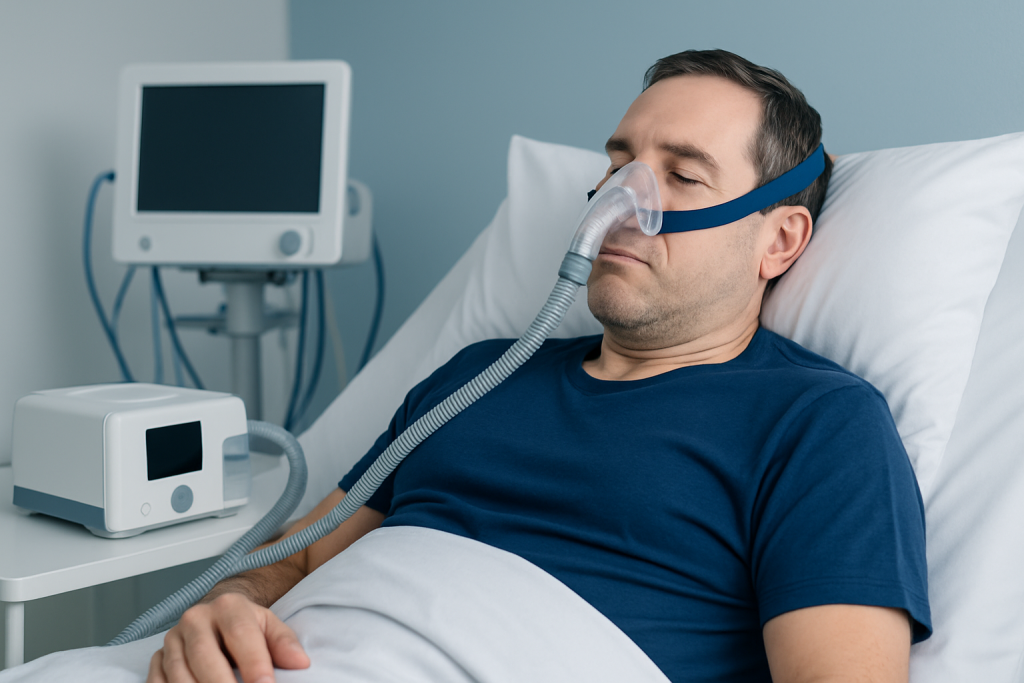
Sleep apnea can look different from one man to another, but the pattern often includes nighttime breathing disruption and daytime consequences. Snoring may be loud and frequent, but not every person who snores has sleep apnea, and not every person with sleep apnea remembers waking up during the night.
Common clues include:
- Pauses in breathing during sleep, often noticed by another person
- Gasping, choking, or snorting sounds at night
- Morning dry mouth or headache
- Daytime sleepiness or an urge to doze off in quiet settings
- Poor concentration, forgetfulness, or slower reaction time
- Irritability or low mood
Some men also report waking to urinate, feeling that sleep is unrefreshing, or struggling with performance at work, while driving, or during exercise. These symptoms can be mistaken for stress, aging, or overwork, which is one reason sleep apnea may remain untreated for years.
Causes & Risk Factors
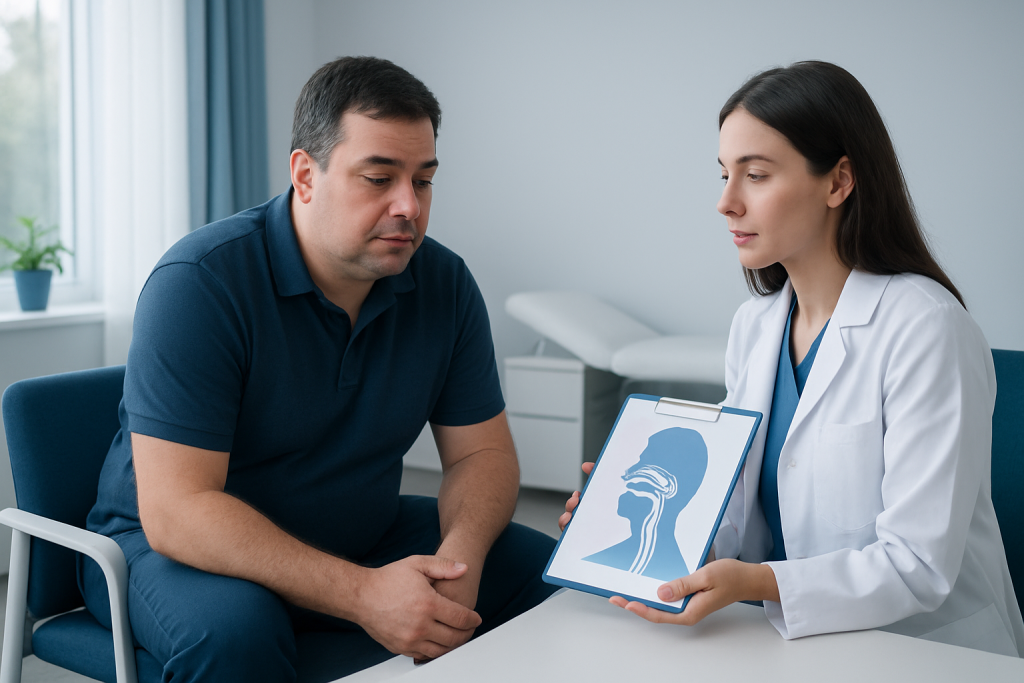
Obstructive sleep apnea usually develops when the airway narrows more easily during sleep. In men, this can be influenced by the size and shape of the jaw, tongue, soft palate, neck circumference, and the degree of tissue relaxation that occurs during sleep. Central sleep apnea has different causes and often requires a separate evaluation.
Risk tends to rise with factors such as excess weight, alcohol use near bedtime, smoking, nasal blockage, and certain sleeping positions. Age, family history, and male sex also play a role. Hormonal and anatomical differences may explain why men are diagnosed more often, especially in middle age, though sleep apnea can affect adults of any body type.
It is also important to consider health conditions that can travel alongside sleep apnea, including high blood pressure, type 2 diabetes, heart rhythm problems, reflux, and mood concerns. These do not automatically mean someone has sleep apnea, but they can make a sleep evaluation more worthwhile.
Diagnosis
Diagnosis usually begins with a conversation about symptoms, sleep habits, and medical history, followed by an exam that looks for airway features that could contribute to obstruction. A clinician may ask about snoring, witnessed breathing pauses, morning headaches, daytime sleepiness, alcohol use, and any history of high blood pressure or heart disease.
The key test is a sleep study. This may be done in a sleep laboratory or, in selected cases, at home with portable equipment. The goal is to measure how often breathing is interrupted, how oxygen levels change, and whether events are obstructive, central, or mixed. That information guides whether CPAP, an oral device, surgery, or another approach makes sense.
For men deciding between treatment options, the diagnosis should be specific enough to answer three practical questions: how severe is the apnea, what kind is it, and what is likely to be tolerated consistently. A treatment that is theoretically ideal but never used is usually less helpful than a slightly less aggressive option that fits daily life.
Treatment Options
CPAP, or continuous positive airway pressure, is often the starting point for moderate to severe obstructive sleep apnea. It uses a machine that delivers gentle air pressure through a mask, helping keep the airway open through the night. When it is well fitted and used regularly, CPAP can be highly effective, but comfort, mask fit, dryness, or travel logistics can influence adherence.
Oral appliances are another option for some men, especially those with mild to moderate obstructive sleep apnea or those who cannot adapt to CPAP. These devices are usually custom-made by a dental professional with sleep-apnea experience and work by repositioning the lower jaw or tongue to reduce airway collapse. They are smaller and easier to travel with, but they may be less effective than CPAP in more severe disease.
Surgery is generally considered when a physical airway problem is significant, when CPAP cannot be used consistently, or when other treatments have not provided enough benefit. Procedures can range from nasal surgery that improves airflow to operations that reshape the palate, tongue base, or jaw. The right procedure depends on where the blockage occurs, and in some cases additional evaluation is needed before choosing a surgical path.
In everyday decision-making, the best option is not always the most advanced one. A man who travels frequently may value portability and choose an oral device. Another person with severe apnea and dangerously disrupted sleep may need CPAP first. Someone with a clear structural narrowing may be better served by surgery, sometimes alongside another treatment rather than instead of it.
A reasonable comparison point is not simply effectiveness in theory, but effectiveness that can be maintained over years. Sleep specialists often help men think through comfort, lifestyle, anatomy, and the likelihood of long-term follow-through before recommending a treatment route.
Prevention & Self-care
Self-care cannot cure sleep apnea, but it can make treatment work better and may reduce symptom burden. Weight management, if appropriate, can improve airway stability for some men, while regular exercise may support sleep quality and overall health. Avoiding alcohol close to bedtime can also reduce airway relaxation during sleep.
Other practical measures include side sleeping when recommended, managing nasal congestion, keeping a consistent sleep schedule, and building routines that support enough sleep time. Men using CPAP often do better when they address dryness, mask fit, and pressure comfort early rather than waiting until frustration builds. Those with an oral device should keep regular follow-up visits so the fit and bite changes can be monitored.
- Do not ignore persistent snoring with daytime sleepiness.
- Use prescribed therapy consistently, even after symptoms improve.
- Keep follow-up appointments to adjust treatment when needed.
- Tell the doctor about travel plans, shift work, or mask discomfort so the plan can be adapted.
For men seeking care across borders, it can help to bring prior sleep study reports, medication lists, and any device settings or dental records. That makes it easier for the treating team to refine the plan quickly and to plan follow-up after returning home.
When to See a Doctor
A medical evaluation is worthwhile when snoring is paired with pauses in breathing, gasping, or daytime sleepiness. It is also a good idea to seek advice if a person wakes unrefreshed most mornings, struggles to stay alert while driving, or has high blood pressure that is difficult to control.
Prompt care is especially important when symptoms interfere with safety, work performance, or heart and metabolic health. A doctor can determine whether the problem is likely to be obstructive sleep apnea, another sleep disorder, or a different medical issue altogether.
If a diagnosis has already been made but the current treatment feels unworkable, that does not mean options are exhausted. A mask change, pressure adjustment, oral appliance evaluation, or surgical consultation may reopen the discussion. Acıbadem Health Point’s multidisciplinary specialists and JCI-accredited hospitals diagnose and treat sleep apnea for international patients, with coordinated support before and after travel.
Living With the Decision
Choosing between CPAP, an oral device, and surgery is often a process rather than a single appointment. Men may need time to weigh convenience, effectiveness, and the possibility of changing treatments later. A careful discussion can also account for whether the person is managing sleep apnea while living abroad, commuting often, or balancing treatment with family responsibilities.
It can help to ask simple questions: How severe is the apnea? What is the main reason for airway collapse? Which treatment is most likely to be used every night? What follow-up will be needed after the person returns home? These questions keep the decision grounded in real-life use, not just on paper.
With the right diagnosis and a plan that fits the individual, sleep apnea is usually manageable. Many men find that once treatment matches their anatomy and routine, sleep becomes more restorative and daytime functioning improves in a way that feels noticeable and practical.
FAQ
Can sleep apnea go away on its own?
Mild symptoms may fluctuate, but sleep apnea usually does not disappear without addressing the underlying cause. Weight changes, alcohol habits, and sleep position can influence symptoms, yet persistent breathing interruptions should be assessed by a doctor.
Is CPAP always better than an oral device?
CPAP is often more effective at preventing airway collapse, especially in moderate to severe obstructive sleep apnea. However, an oral device may be the better real-world choice if it is easier to wear consistently and the apnea is suitable for that approach.
How does a person know if surgery is the right option?
Surgery is usually considered after a specialist evaluates the airway, symptoms, and previous treatment attempts. It may be more appropriate when anatomy plays a major role or when other treatments are not tolerated or do not work well enough.
Can an oral appliance replace CPAP completely?
Sometimes it can, particularly in selected cases of mild to moderate obstructive sleep apnea. In more severe disease, it may be used when CPAP is not tolerated, or it may be combined with other measures under medical guidance.
What if a man travels often for work?
Travel can influence treatment choice, especially if packing, electricity access, or mask maintenance is a concern. Oral devices are compact, while many CPAP users manage travel successfully with planning and the right equipment.
Should a partner be involved in the decision?
In many households, a partner notices symptoms first and also shares the nightly environment. Their observations can help the doctor, and their support often makes it easier to maintain long-term treatment.
When is follow-up important after treatment starts?
Follow-up matters whenever symptoms continue, comfort is poor, or life circumstances change. Regular review helps ensure the treatment remains effective and practical over time.
References
- American Academy of Sleep Medicine
- National Heart, Lung, and Blood Institute
- Mayo Clinic
- World Health Organization
- National Sleep Foundation
This article is for general information only and is not a substitute for professional medical advice. Please consult a qualified doctor about your individual situation.