Male Breast Enlargement: What Surgeries Remove Fat, Gland, or Loose Skin

Key Takeaways
- Male breast enlargement is not always the same as simple weight gain; it may involve fat, gland tissue, skin laxity, or all three.
- Liposuction is usually used to remove excess fat, while gland tissue often needs direct surgical removal.
- If the skin has stretched significantly, skin-tightening or skin-removal techniques may be needed for a smoother chest contour.
- A medical evaluation is important before surgery to check for hormonal, medication-related, or other treatable causes.
- Recovery and follow-up matter as much as the procedure itself, especially for patients traveling from another country.
Male breast enlargement can come from extra fat, firm gland tissue, loose skin, or a combination of these. The right surgery depends on which tissue is present, how long the enlargement has been there, and whether any underlying medical cause needs attention first.
Overview
Male breast enlargement can be a source of physical discomfort and emotional strain, but it is also a very practical surgical problem: the tissue on the chest has to be identified correctly before any operation is planned. Some men have mainly soft fat, some have firm gland tissue behind the nipple, and some have loose skin left behind after weight loss or long-standing enlargement. The most suitable procedure depends on which of these is present.
In everyday speech, people may use the same word for several different situations. From a surgical point of view, however, the approach changes a lot. A chest that is mostly fatty can often be improved with liposuction. A chest with dense gland tissue usually needs excision. If the skin has stretched and does not retract well, the operation may also include skin tightening or removal.
This is why patients are typically advised not to focus only on the appearance in the mirror. A proper assessment looks at body composition, the feel of the tissue, skin quality, symmetry, and whether the enlargement is stable or still changing. In an international-patient setting, this also helps the team plan the safest path before travel, surgery, and recovery.
Symptoms
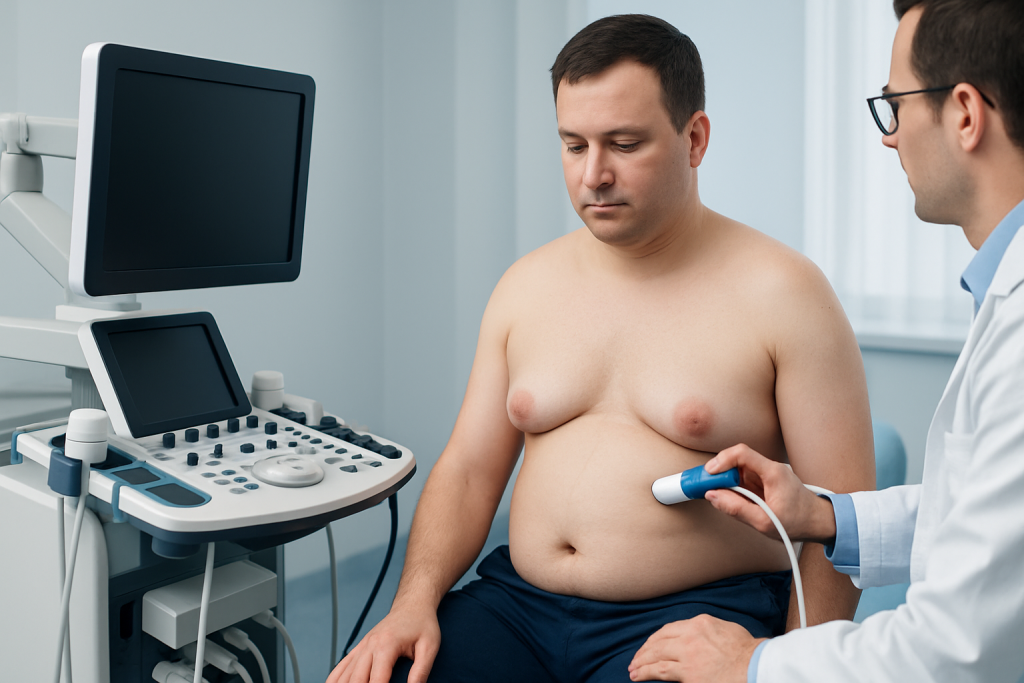
The most common sign is an enlarged chest that may look fuller than expected for a man’s body frame. Some people notice tenderness or sensitivity around the nipples, while others mainly feel self-conscious in fitted clothing or during activities such as swimming or exercise. The enlargement can be equal on both sides or more noticeable on one side.
Different tissue types often feel different. Fatty enlargement tends to be soft and diffuse, while gland tissue may feel firmer or rubbery beneath the nipple area. Loose skin can make the chest look deflated, sagging, or uneven, especially after weight loss or after the swelling of a previous enlargement has settled.
It is also important to pay attention to symptoms that suggest a medical cause rather than a purely cosmetic concern. These include new or rapid enlargement, a hard lump, nipple discharge, skin changes, or enlargement associated with pain, testicular symptoms, or hormonal changes. Those findings need prompt medical review.
Causes & Risk Factors
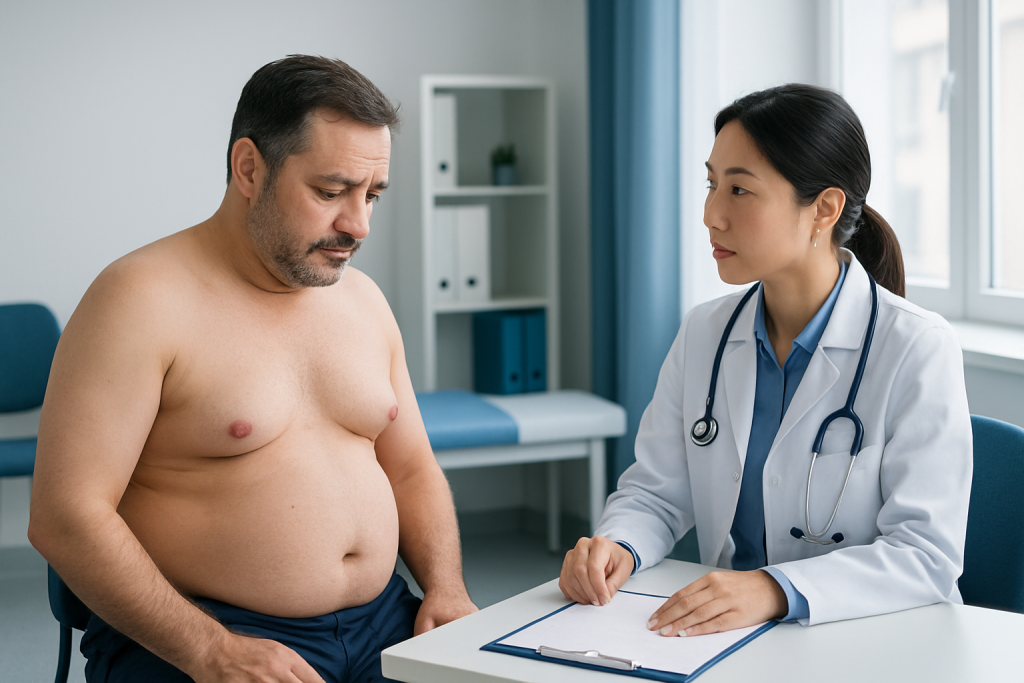
Male breast enlargement can happen for several reasons. One common pattern is gynecomastia, which refers to enlargement of the gland tissue of the male breast. Another is pseudogynecomastia, where the fullness is mostly caused by fat. Some patients have a mixed picture, which is often the case when weight changes and hormonal influences overlap.
Possible contributors include puberty-related hormonal shifts, aging, obesity, some medications, alcohol use, anabolic steroid exposure, thyroid disorders, liver disease, kidney disease, and certain tumors that affect hormone balance. Not every patient will have an identifiable cause, but a careful workup is still important before surgery is considered.
Risk also rises when the condition has been present for a long time. Long-standing enlargement can make gland tissue more fibrous and skin more stretched, which may limit how much the chest can retract on its own after fat is removed. This is one reason surgery is tailored instead of using a single method for everyone.
Diagnosis
Diagnosis usually begins with a detailed history and physical examination. A clinician will ask when the enlargement started, whether it is changing, what medications or supplements are being used, and whether there are any symptoms pointing to a hormonal or systemic problem. The exam helps distinguish soft fat from firmer gland tissue and assesses the amount of excess skin.
In some cases, blood tests are ordered to look at hormone levels or organ function, especially when the enlargement is new, painful, one-sided, or unexplained. Imaging such as ultrasound or mammography may be used when the diagnosis is uncertain or when a lump needs closer evaluation. The goal is not only to confirm the type of tissue present but also to make sure a more serious condition is not being missed.
For patients considering surgery, this step matters because the operation is planned around the diagnosis. A person with mostly fat may not need the same technique as someone with dense gland tissue and loose skin. Good planning helps reduce the chance of undercorrection, contour irregularity, or the need for an additional procedure later.
Treatment Options
The best surgery depends on what is actually causing the chest enlargement. If the main issue is excess fat, liposuction is often used to contour the area and reduce fullness. This may be done through small hidden incisions, and it is especially useful when the skin still has enough elasticity to adjust after the fat is removed.
When gland tissue is present, liposuction alone may not be enough. In those cases, the surgeon usually removes the gland directly through a small incision, often placed near the edge of the areola. This excision is designed to flatten the chest while keeping the nipple-areola complex looking natural and avoiding overcorrection.
If loose skin is a major part of the problem, a skin-removal or skin-tightening approach may be added. This is more likely after major weight loss or long-standing enlargement where the skin has not bounced back. In some situations, a combination of liposuction, gland excision, and skin tightening provides the most balanced result.
Typical surgical approaches may include:
-
Liposuction for mostly fatty enlargement
-
Direct gland excision for firm gland tissue
-
Combined surgery for mixed fat and gland tissue
-
Skin reduction or tightening when loose skin remains
These operations are usually individualized rather than chosen by one fixed rule. For international patients, this often means the initial consultation is used to determine whether one operation is enough or whether a staged plan would be safer and more predictable.
Prevention & Self-care
Not every case can be prevented, especially when hormones, puberty, or medications are involved. Still, certain habits can reduce the chance of worsening enlargement or help the chest look and feel better while someone is deciding on treatment. Maintaining a stable, healthy weight can be particularly helpful when fat makes up a large part of the volume.
It is also sensible to review medications, supplements, and performance-enhancing products with a qualified doctor. Some substances can contribute to breast enlargement or make an existing problem harder to settle. People should not stop a prescribed medicine on their own, but they can ask whether an alternative is appropriate.
After surgery, self-care is an important part of the result. Wearing compression garments as instructed, avoiding strenuous activity too early, attending follow-up visits, and watching the incision sites for unexpected changes all support healing. For patients returning home after treatment abroad, the follow-up plan should be arranged in advance so there is a clear path for questions and recovery checks.
Recovery and Expected Results
Recovery time depends on the operation performed and the amount of tissue removed. Liposuction-only procedures may involve less downtime than surgery that includes gland excision or skin removal, but all chest surgery needs a period of healing before the final shape becomes clear. Swelling, bruising, and temporary firmness are common early on.
The chest usually settles gradually rather than immediately. Small contour changes, mild unevenness, and numbness around the nipple area can be part of normal healing, especially in the first weeks. The surgical team will often advise when to resume work, exercise, and travel based on the extent of the procedure and the patient’s general health.
Patients traveling internationally may need extra planning for the post-operative period. That includes where the first dressing change will happen, who will review the incisions if a concern develops, and when a remote follow-up or in-person check is expected. A well-organized recovery plan is often the difference between a stressful experience and a smooth one.
When to See a Doctor
Medical advice should be sought if male breast enlargement is new, rapidly increasing, painful, one-sided, or associated with a hard lump, nipple discharge, skin dimpling, or other unusual changes. These features do not automatically mean something serious, but they do deserve evaluation rather than assumption.
A doctor should also be consulted if the enlargement is affecting self-image, exercise, clothing fit, or daily comfort. Even when the problem is not medically dangerous, it can still be worth treating if it is persistent and bothersome. A specialist can help determine whether the tissue is mostly fat, gland, loose skin, or a combination.
For patients thinking about surgery, a consultation is the right time to ask what the operation will remove, what scars to expect, how long recovery may take, and whether underlying causes should be treated first. Acibadem Health Point’s multidisciplinary specialists and JCI-accredited hospitals can diagnose and treat this condition for international patients, with care planned around both the operation and the recovery journey.
Frequently asked questions
What surgery removes fat in male breast enlargement?
Liposuction is commonly used when the enlargement is mainly caused by excess fat. It removes soft tissue and helps reshape the chest, especially when the skin still has good elasticity.
What if the breast enlargement is mostly gland tissue?
Firm gland tissue usually needs direct surgical excision rather than liposuction alone. The surgeon removes the gland through a small incision, often near the areola, to create a flatter contour.
When is loose skin removed in gynecomastia surgery?
Loose skin is addressed when the chest has stretched enough that it will not tighten well on its own. This is more common after major weight loss or long-standing enlargement, and it may require a skin-tightening or skin-reduction technique.
Is every case of male breast enlargement caused by gynecomastia?
No. Some cases are true gynecomastia, which involves gland tissue, while others are mainly pseudogynecomastia, which is excess fat. Many patients have a mixed pattern, so the evaluation matters before choosing surgery.
Can the condition come back after surgery?
It can recur if the underlying cause is not addressed, such as certain medications, hormone problems, or major weight changes. That is why doctors usually look for the reason behind the enlargement before or alongside surgery.
How long does recovery usually take?
Recovery varies with the type of surgery and how much tissue is removed. Swelling and bruising are common at first, and a surgeon will guide the patient on activity limits, compression use, and follow-up visits.
References
- Mayo Clinic
- Cleveland Clinic
- American Society of Plastic Surgeons
- NHS
- Merck Manual Professional Edition
This article is for general information only and is not a substitute for professional medical advice. Please consult a qualified doctor about your individual situation.