Rowing Machine
Key Takeaways
- A rowing machine works both the upper and lower body while keeping the movement low impact.
- Good technique matters more than speed for comfort, efficiency, and injury prevention.
- People with joint concerns or limited time often like rowing because it combines cardio and resistance work.
- Gradual progression, warm-up, and recovery help make rowing safer and more sustainable.
- Anyone with pain, heart concerns, or a recent injury should ask a clinician before starting a new routine.
A rowing machine offers a full-body, low-impact workout that can support cardiovascular fitness, strength, and endurance. With correct technique and a sensible training plan, it can fit many fitness levels and rehabilitation goals.
Overview
A rowing machine is a stationary exercise device that simulates the motion of rowing a boat. It is often chosen by people who want one workout to do several jobs at once: raise the heart rate, build muscular endurance, and keep the joints moving without the repeated impact of running.
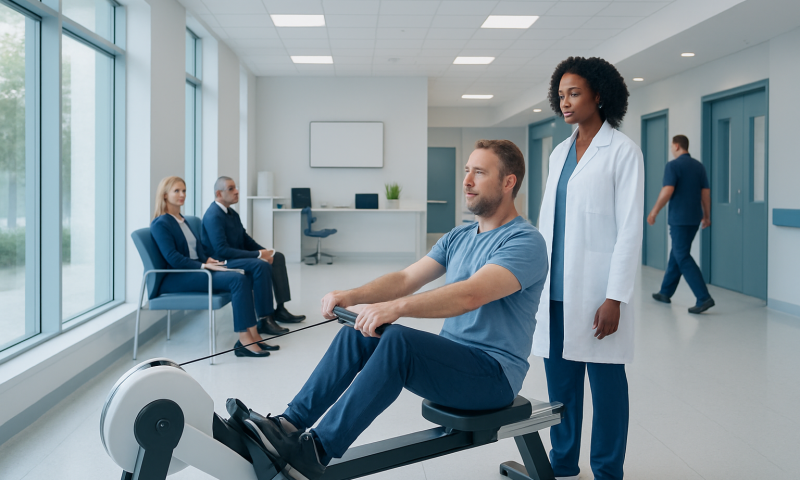
For many adults, that combination makes indoor rowing feel practical rather than complicated. It can be done at home, in a gym, or as part of supervised rehabilitation, and the intensity can be adjusted from gentle conditioning to demanding interval sessions. The key is to treat it as a skill as well as a workout, because smoother technique usually brings better results and less strain.
International patients who travel for medical care sometimes ask about rowing when they are rebuilding fitness after treatment or surgery. In those cases, the question is not only whether rowing is effective, but also when it is appropriate to restart, what movement restrictions apply, and how to progress safely once a clinician has cleared exercise.
How a rowing machine works
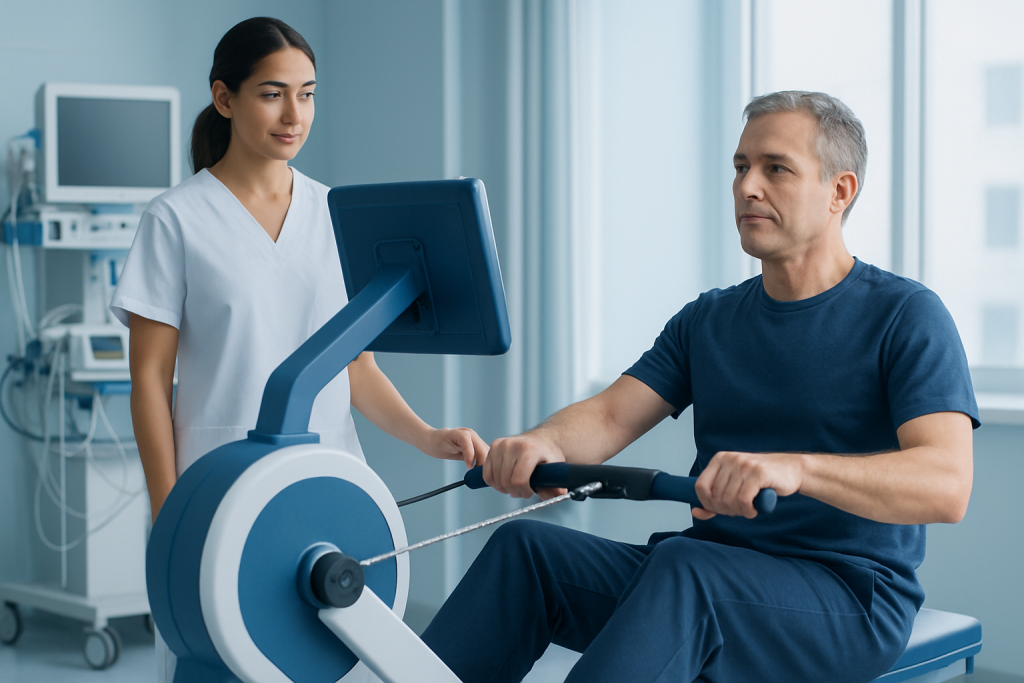
Although the machine moves on rails or a sliding seat, the effort comes from coordinated work across the legs, core, back, shoulders, and arms. The legs supply most of the drive, the trunk transfers force, and the arms finish the stroke. This sequence helps explain why rowing can feel efficient even though it uses many muscle groups.
A typical stroke has four broad phases: the catch, where the body is prepared to push; the drive, where the legs extend and the machine is pulled; the finish, where the handle comes to the body; and the recovery, where the body returns to the start position. The recovery should usually be calm and controlled, not rushed.
Different machines create resistance in different ways, including air, water, magnetic, or hydraulic systems. The basic exercise pattern is similar across all of them, but the feel can vary. Some people prefer a smoother stroke and quieter setting, while others like a more athletic, boat-like resistance.
Symptoms and signs of good or poor technique
Rowing itself does not produce “symptoms” in the same way an illness does, but the body gives useful signals about whether the movement is being done well. A good rowing session usually feels rhythmic, with steady breathing, working leg muscles, and little discomfort beyond ordinary exercise fatigue.
Poor technique can show up as low back strain, neck tension, shoulder pinching, sore wrists, or excessive pulling with the arms before the legs have finished driving. Another common sign is losing posture at the end of each stroke, such as rounding the lower back or leaning too far back at the finish.
Warning signs that the workout should stop include sharp pain, dizziness, chest discomfort, unusual shortness of breath, or joint pain that changes walking or daily movement afterward. Mild muscle tiredness is normal; pain that feels distinct, persistent, or worsening deserves attention from a qualified clinician.
Causes and risk factors for discomfort or injury
Most rowing-related discomfort comes from technique, training load, or pre-existing musculoskeletal issues rather than the machine itself. A sudden jump in duration or intensity can overload the lower back, hips, knees, or shoulders, especially if the body is not used to repetitive movement.
People are more likely to experience trouble when they row with poor posture, set the resistance too high, or skip a warm-up. Limited flexibility in the hips or ankles can also make the stroke feel awkward, while weak core muscles may shift extra stress to the spine.
Certain health conditions can require extra caution. These include recent abdominal or joint surgery, unmanaged blood pressure concerns, active back pain, significant balance problems, or inflammatory joint disease during a flare. A rehabilitation specialist or physician can help decide whether rowing is appropriate and, if so, how to adapt it.
Diagnosis and assessment before starting
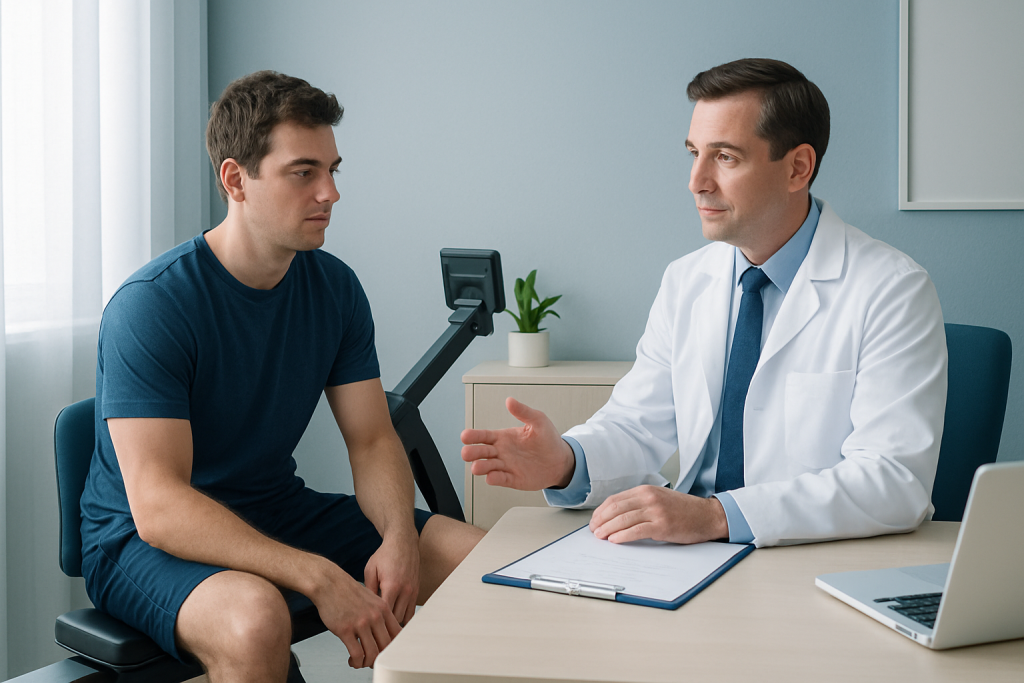
There is no medical diagnosis required to use a rowing machine, but an assessment can be helpful if someone is using rowing to return to activity after illness, injury, or a prolonged break. A clinician may review symptoms, past injuries, medications, and current exercise tolerance before giving clearance.
In a rehabilitation setting, the evaluation may also include posture, spinal mobility, hip and knee movement, shoulder function, and basic cardiovascular status. If the person has pain during exercise, the clinician may want to know exactly where the pain appears, when it starts, and what movements make it better or worse.
For international patients, this step is especially useful when care has been received across different countries or providers. Clear documentation and a simple exercise plan make it easier to continue rowing safely after returning home, where follow-up may happen with a local physician, physiotherapist, or trainer.
Treatment options and training approach
When rowing causes pain, the most effective “treatment” is often a combination of rest from aggravating activity, technique correction, and a graded return to exercise rather than stopping all movement indefinitely. Shorter sessions at lower resistance may allow the body to adapt while symptoms settle.
A balanced plan usually includes a warm-up, the rowing session itself, and a short cool-down. Beginners often benefit from learning the movement without worrying about speed. Once the sequence is comfortable, time, stroke rate, or intensity can be increased gradually.
- Use a resistance level that allows smooth, controlled strokes.
- Keep the chest lifted and the spine neutral rather than collapsed.
- Drive through the legs first, then the hips and arms.
- Return to the start slowly during recovery.
- Stop if pain is sharp, unusual, or persistent.
If a medical condition is involved, treatment may also include physiotherapy, pain management, or exercise modification. In some cases, rowing is part of a broader rehabilitation plan rather than the main treatment itself, and the safest plan depends on the individual diagnosis.
Prevention and self-care
Prevention starts with learning the stroke well before chasing performance numbers. A few guided sessions, whether with a trainer, physiotherapist, or a careful video-based introduction, can prevent habits that are hard to unlearn later. The goal is efficient movement, not maximum effort from the first day.
Self-care also includes basic training hygiene: adequate hydration, regular rest days, and footwear that keeps the feet stable on the footplates. People who row frequently may benefit from cross-training with walking, cycling, or mobility work so that the same muscles are not stressed in the same way every day.
It can help to pay attention to the body after each session. Mild fatigue that resolves by the next day is usually acceptable, while recurring soreness in one joint or one area of the back suggests the program should be adjusted. Those traveling for treatment should also plan around recovery time, airport transfers, and local follow-up so exercise does not clash with medical appointments.
When to see a doctor
Medical advice is sensible before starting rowing if a person has chest symptoms, unexplained shortness of breath, a recent injury, pregnancy-related concerns, significant joint disease, or surgery that may limit twisting or pulling. The same applies if exercise has been avoided for a long time and there is uncertainty about safe intensity.
A doctor or physiotherapist should also review symptoms that do not settle with rest, such as persistent back pain, shoulder pain, numbness, swelling, or reduced strength. When rowing is part of recovery, the treating team can clarify which movements are allowed, how much resistance is appropriate, and how quickly training can progress.
For patients seeking coordinated care abroad, centers such as Acibadem Health Point can help multidisciplinary specialists and JCI-accredited hospitals diagnose and treat a wide range of musculoskeletal and rehabilitation needs for international patients. A personalized plan is usually the safest way to return to rowing with confidence.
Frequently asked questions
Is a rowing machine good for beginners?
Yes, it can be a good option for beginners because the intensity is adjustable and the movement is low impact. The main priority is learning the stroke slowly so the legs, core, and arms work in the right order. Starting with short sessions often helps build comfort and confidence.
Does rowing machine exercise build muscle?
It can support muscular endurance and modest strength development, especially in the legs, back, shoulders, and arms. It is not the same as heavy resistance training, but it can be a useful part of a broader fitness routine. Progress depends on technique, resistance, and training consistency.
Is rowing hard on the knees or back?
Rowing is generally gentler on the joints than high-impact exercise, but poor technique or overly intense sessions can strain the knees or lower back. People with existing joint or spine problems should get advice before starting. Proper form and gradual progression usually reduce the risk of discomfort.
How often should someone use a rowing machine?
That depends on fitness level, goals, and medical history. Many people start with a few short sessions per week and increase only if the body is recovering well. A clinician or qualified trainer can help set a safe schedule when there are health concerns.
What is the most common rowing mistake?
One of the most common mistakes is pulling with the arms too early instead of driving first through the legs. Another is rounding the back or rushing the recovery phase. Small corrections in posture and sequence often make the workout feel easier and more effective.
Can rowing be part of rehabilitation?
Yes, in some cases rowing can fit into a rehabilitation plan because it is controlled and low impact. It is not suitable for everyone or for every stage of recovery, so medical clearance is important. A physiotherapist can advise on timing, technique, and safe limits.
References
- American College of Sports Medicine
- National Health Service
- Mayo Clinic
- American Heart Association
- National Institute of Arthritis and Musculoskeletal and Skin Diseases
This article is for general information only and is not a substitute for professional medical advice. Please consult a qualified doctor about your individual situation.
More from the Health Library



Related Specialists

Assoc. Prof. Dr. Tarık Yağcı
Ear-Nose and Throat
Assoc. Prof. Dr. Şafak Yıldırım Dişli
Medical Oncology
Prof. Dr. Can Küçük
General Surgery
Esra Atasu
Physical Medicine & Rehabilitation