Plantar Wart

Key Takeaways
- Plantar warts are caused by HPV entering the skin through tiny breaks on the foot.
- They often develop on pressure points and can feel like a painful spot or a small callus.
- Diagnosis is usually clinical, but a clinician may trim or examine the area to confirm it is a wart.
- Treatment ranges from watchful waiting and topical care to procedures such as freezing or removal.
- Keeping feet clean, dry, and protected can help reduce spread and recurrence.
Medically reviewed by the Acıbadem clinical team — August 19, 2026
A plantar wart is a common skin growth on the sole of the foot caused by certain strains of human papillomavirus (HPV). It may be tender when walking, but it is usually manageable with appropriate care and, when needed, medical treatment.
Overview
A plantar wart is a wart that forms on the bottom of the foot, most often on the heel or the ball of the foot. Because body weight presses on it with every step, it can grow inward and feel more like a sore, thickened patch of skin than a typical raised wart.
Plantar warts are caused by certain types of human papillomavirus, or HPV. The virus enters through tiny cuts or softened skin, then encourages the outer layer of skin to thicken. Many cases are harmless, but they can become uncomfortable, spread to nearby skin, or persist for months if not treated.
For international patients who are considering care while traveling, the practical issue is usually not just removing the wart, but choosing a plan that fits follow-up needs. Some treatments are simple and can be continued at home, while others are better handled in a clinic when the lesion is painful, uncertain, or long-standing.
Symptoms
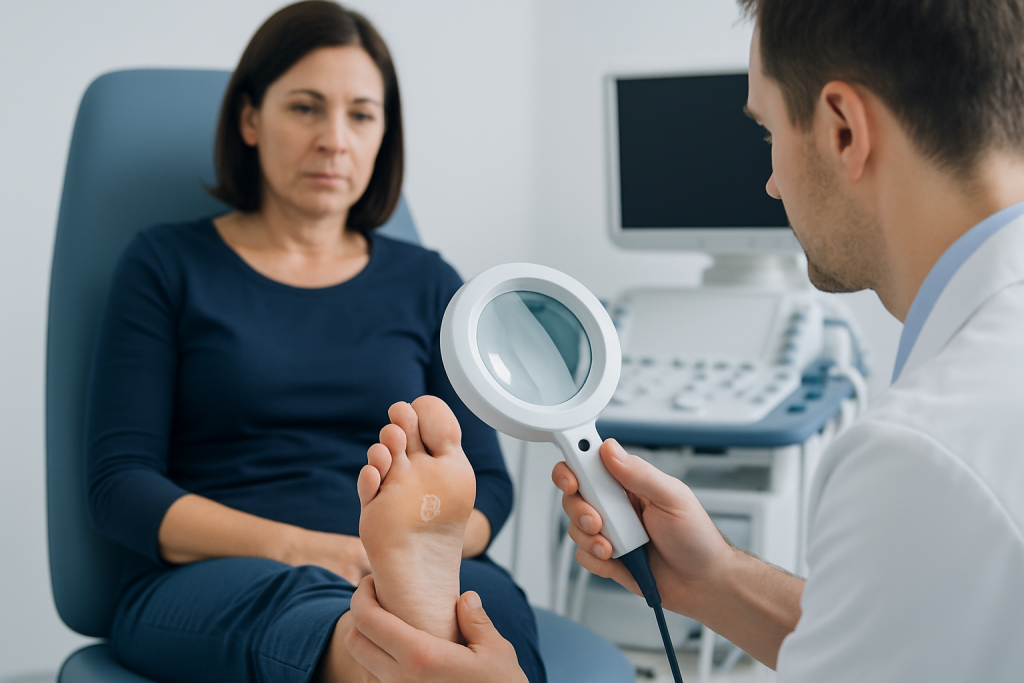
Plantar warts do not always look dramatic at first. They may start as a small, rough spot and later become a thicker, grainy patch of skin. A common clue is that the wart interrupts the normal skin lines on the sole.
Typical features can include:
- Pain or tenderness when standing or walking
- A small, rough, thickened area of skin
- Black dots within the lesion, which are tiny clotted blood vessels
- A lesion that feels as if something is embedded in the skin
- Several warts clustered together, sometimes called a mosaic wart
Plantar warts can be mistaken for corns or calluses. Corns and calluses usually preserve skin lines and are more directly related to pressure or friction, while warts are caused by a virus and may be more painful when pinched from the sides.
Causes & Risk Factors
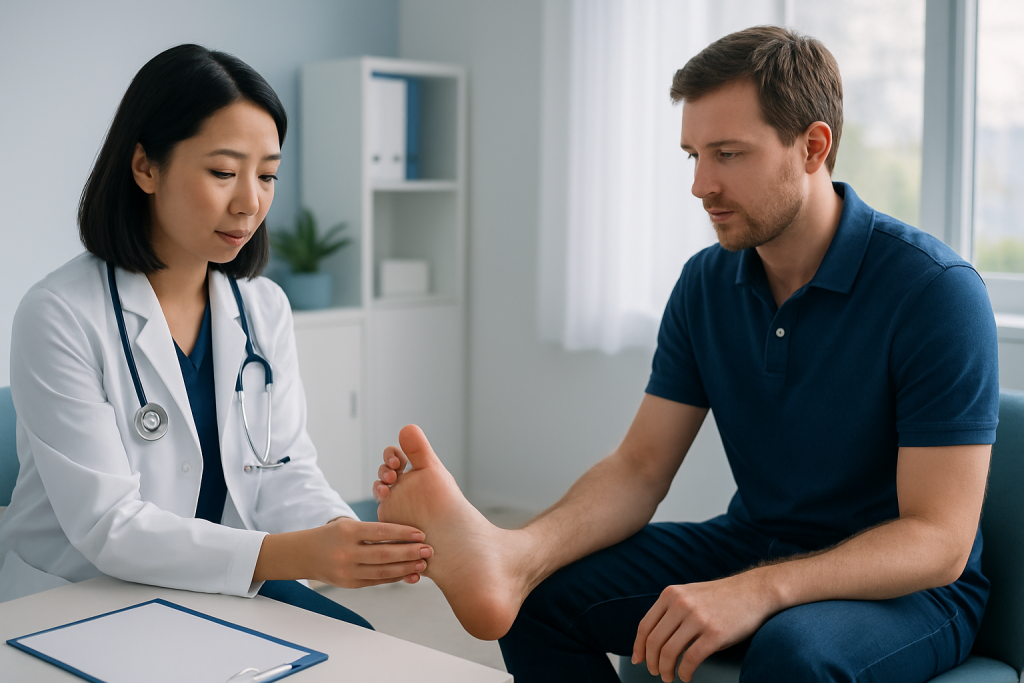
Plantar warts develop when HPV infects the outer layer of the skin. The virus thrives in warm, moist environments and can spread through direct contact or through surfaces where the virus is present, such as communal showers, locker rooms, or pool areas.
Not everyone exposed to HPV develops a wart. The chance increases when the skin barrier is damaged or the feet stay damp for long periods. Small injuries, cracked skin, and repeated pressure on the soles can make infection easier.
Factors that may increase risk include:
- Walking barefoot in communal wet areas
- Having sweaty feet or wearing shoes that do not allow the skin to dry
- Minor cuts, cracks, or scrapes on the soles
- A weakened immune system
- Close contact with someone who has warts
In children and teenagers, warts are especially common because exposure is frequent and the immune system may not yet have built strong resistance to the virus. In adults, persistent warts can be linked to repeated exposure, friction, or slower immune clearance.
Diagnosis
Most plantar warts are diagnosed during a physical examination. A clinician usually looks at the shape, surface, and location of the lesion and asks about pain, duration, and any treatments already tried at home.
Sometimes the surface is gently pared down in the clinic to reveal small dark dots or pinpoint bleeding, findings that support a wart diagnosis. This helps distinguish a wart from a callus, corn, foreign body, or other skin lesion. In unusual cases, when the appearance is not typical, further evaluation may be recommended.
People traveling for care often appreciate that the visit can be efficient and focused: confirm the diagnosis, discuss the most suitable option, and choose a plan that matches the amount of time available before return travel. A clear diagnosis matters because treating the wrong lesion can delay relief and prolong discomfort.
Treatment Options
There is no single best treatment for every plantar wart. The right choice depends on the size of the wart, how long it has been present, whether it hurts, and whether previous treatment has worked.
Some warts go away on their own, especially in children, but the process can be slow. If the wart is painful, spreading, or interfering with walking, active treatment is often more practical. Common options include:
- Topical treatment: A clinician may suggest a skin-applied medicine that gradually softens and removes wart tissue.
- Cryotherapy: Freezing the wart with liquid nitrogen can help destroy infected tissue and may require more than one session.
- Debridement: Carefully trimming thick wart tissue can reduce discomfort and improve the effect of other treatments.
- Minor procedures: In selected cases, a clinician may recommend other office-based methods to remove persistent lesions.
It is important to avoid aggressive home cutting or picking, which can cause pain, bleeding, and spread of the virus to nearby skin. If several treatments are being considered, a clinician will usually explain which ones are realistic for the person’s schedule, skin type, and travel plans.
After treatment, the skin may be temporarily tender or red. Follow-up is often useful because plantar warts can return, especially if the skin remains exposed to repeated pressure or moisture. Patients who are receiving care internationally should ask how to protect the area during flights, walking tours, or long days on their feet, and when they should return for review after traveling home.
Prevention & Self-care
Good foot hygiene does not guarantee that a wart will never appear, but it can lower the chance of catching or spreading HPV. Since the virus is more likely to enter through damaged skin, protecting the soles matters as much as keeping them clean.
Practical steps may include:
- Wearing sandals or water shoes in communal showers, locker rooms, and pool areas
- Keeping feet clean and dry, especially between the toes
- Changing socks regularly if feet sweat a lot
- Not sharing towels, shoes, or socks
- Covering an existing wart when swimming or using shared facilities
If a wart is being managed at home, patience is important. Home care can take time, and skin should be protected from irritation. People with diabetes, poor circulation, numbness in the feet, or immune suppression should be especially cautious and seek medical advice before trying any home treatment on a foot lesion.
For those planning medical travel, self-care also includes building in recovery time. A foot that has been treated may need supportive shoes, reduced walking, and a simple wound-care routine so the person can move comfortably through the rest of the trip and after returning home.
When to See a Doctor
Medical assessment is a sensible next step when the lesion is painful, uncertain, enlarging, or not improving with basic measures. It is also wise to seek care if the spot bleeds easily, changes in appearance, or is interfering with daily activities.
Earlier review is particularly important for people with diabetes, circulation problems, reduced sensation, or a weakened immune system. In these situations, even a small foot lesion can become harder to manage, and self-treatment is not always the safest approach.
Professional guidance can also help when someone is deciding whether to treat before traveling, while abroad, or after returning home. In some cases, a short clinic visit can prevent weeks of discomfort. At Acibadem Health Point, multidisciplinary specialists and JCI-accredited hospitals can diagnose and treat plantar warts for international patients in a coordinated way that supports both treatment and follow-up.
Living With a Plantar Wart
Living with a plantar wart is often more an issue of inconvenience than danger, but the constant pressure of walking can make it surprisingly disruptive. Comfort tends to improve when the wart is protected from friction and treatment is consistent.
Shoes with enough room in the toe box, cushioned insoles, and avoiding direct pressure on the affected area can make day-to-day movement easier. For people who must walk long distances, temporary adjustments to activity may help the foot recover without repeated irritation.
Because plantar warts can be persistent, a calm, structured approach is usually best. The goal is not only to remove the visible lesion, but also to reduce the chance of recurrence and help the person return to normal walking with confidence.
Frequently asked questions
Is a plantar wart the same as a callus?
No. A plantar wart is caused by HPV, while a callus is a thickened area of skin from pressure or friction. Warts may be more painful when squeezed from the sides and may show tiny black dots. A clinician can usually tell the difference during an exam.
Can plantar warts go away without treatment?
Yes, some do resolve on their own, especially in children. However, this can take a long time, and the wart may still cause pain or spread in the meantime. Treatment is often chosen when walking becomes uncomfortable or the wart persists.
Are plantar warts contagious?
They can spread through direct contact or shared moist surfaces, although not everyone exposed will develop one. The virus is more likely to enter broken or softened skin. Good foot hygiene and wearing footwear in communal areas can help reduce spread.
Should a person cut or pick at a plantar wart at home?
It is not recommended. Cutting or picking can cause bleeding, pain, and possible spread to nearby skin. A safer plan is to ask a clinician about appropriate treatment and how to care for the area at home.
When is professional treatment especially important?
Professional care is especially important if the lesion is painful, changing, recurrent, or in someone with diabetes, poor circulation, numbness, or immune suppression. These situations can make foot problems harder to manage safely. A doctor can confirm the diagnosis and suggest the most suitable option.
How long does treatment usually take?
That depends on the method used and how long the wart has been present. Some treatments work over several weeks, while others may need more than one visit. A clinician can explain what to expect and how follow-up should be arranged, especially for patients traveling from abroad.
References
- American Academy of Dermatology
- Centers for Disease Control and Prevention
- Mayo Clinic
- National Health Service
This article is for general information only and is not a substitute for professional medical advice. Please consult a qualified doctor about your individual situation.
Explore treatments in Turkey — costs, top hospitals & a free quote
JCI-accredited · board-certified surgeons · reply within 24h
Add us as a Preferred Source to see more of our trusted health content across Google Search, AI Overviews and Discover.