Penile Lymphocele

Key Takeaways
- Penile lymphocele is a lymph-fluid collection that can cause localized swelling, often after surgery or injury.
- It is not the same as an infection, although redness, pain, or fever can sometimes signal a separate problem.
- Diagnosis usually relies on a physical exam and, when needed, imaging or fluid testing to rule out other causes of penile swelling.
- Many cases improve with observation or minor procedures, while persistent or recurrent collections may need specialist treatment.
- Anyone with sudden penile swelling, pain, fever, trouble urinating, or discharge should seek medical assessment promptly.
Medically reviewed by the Acıbadem clinical team — July 13, 2026
Penile lymphocele is an uncommon fluid collection that can appear as swelling along the penis, often after surgery, trauma, or inflammation affecting lymphatic drainage. It is usually benign, but it should be evaluated so the cause can be confirmed and the right treatment chosen.
Overview
Penile lymphocele refers to a localized collection of lymphatic fluid that forms when the body’s drainage channels are interrupted or temporarily overwhelmed. It may appear as a soft or firm swelling along the penile shaft or near the base, and it can be noticed after surgery, injury, or significant inflammation in the genital region.
Because the penis has a rich network of blood vessels, lymphatic vessels, skin, and deeper tissue planes, different conditions can look similar at first glance. A lymphocele is usually benign, but it still deserves medical attention because swelling in this area can also be caused by infection, hematoma, hernia, allergic reactions, or other urologic problems.
For people who live far from their treating hospital, the practical question is often not only “What is it?” but also “Can it be watched safely, or does it need treatment before travel?” That decision is best made after a clinician has examined the area and, if necessary, arranged a short follow-up plan to make sure the swelling is stable.
Symptoms
The most common sign is a new lump or area of swelling on the penis. It may feel smooth, rounded, or slightly tense under the skin. Some people notice that it becomes more visible after activity or that it changes very little from day to day.
Many penile lymphoceles cause little discomfort, but others can create pressure, tenderness, or a sense of tightness. If the swelling follows a procedure, the person may also have nearby bruising or mild postoperative soreness, which can make it harder to tell what is expected healing and what needs review.
Symptoms that suggest the problem may be something other than a simple lymphocele include:
- Increasing redness or warmth
- Significant pain
- Fever or chills
- Discharge from the skin or an incision
- Difficulty passing urine
- Rapid enlargement of the swelling
These signs do not automatically mean a serious complication, but they do justify a prompt medical check because the treatment approach may change if infection or another condition is present.
Causes & Risk Factors

A lymphocele develops when lymphatic vessels are disrupted and lymph fluid collects in a pocket rather than draining normally. In the genital area, this is most often related to surgery or trauma, especially when tissues have been manipulated, sutured, or inflamed during healing.
Possible triggers include procedures involving the penis, scrotum, groin, or nearby lymphatic pathways, as well as blunt trauma, repeated friction, or local infection that affects drainage. In some cases, the body forms a lymphocele after surgery even when the operation itself was uncomplicated, because individual healing patterns vary.
Factors that may make a lymphocele more likely or more noticeable include:
- Recent urologic or genital surgery
- Trauma to the penis or groin
- Previous scarring or repeated procedures
- Inflammation or infection in the region
- Delayed wound healing
It is also important to remember that not every post-procedure swelling is a lymphocele. Blood collection, postoperative edema, abscess, cysts, and benign skin lesions can overlap in appearance, so a clinician’s assessment is usually the safest way to sort out the cause.
Diagnosis
Diagnosis begins with a detailed history and physical examination. A doctor will usually ask when the swelling started, whether there was recent surgery or trauma, whether there is pain or fever, and whether the lump has changed over time.
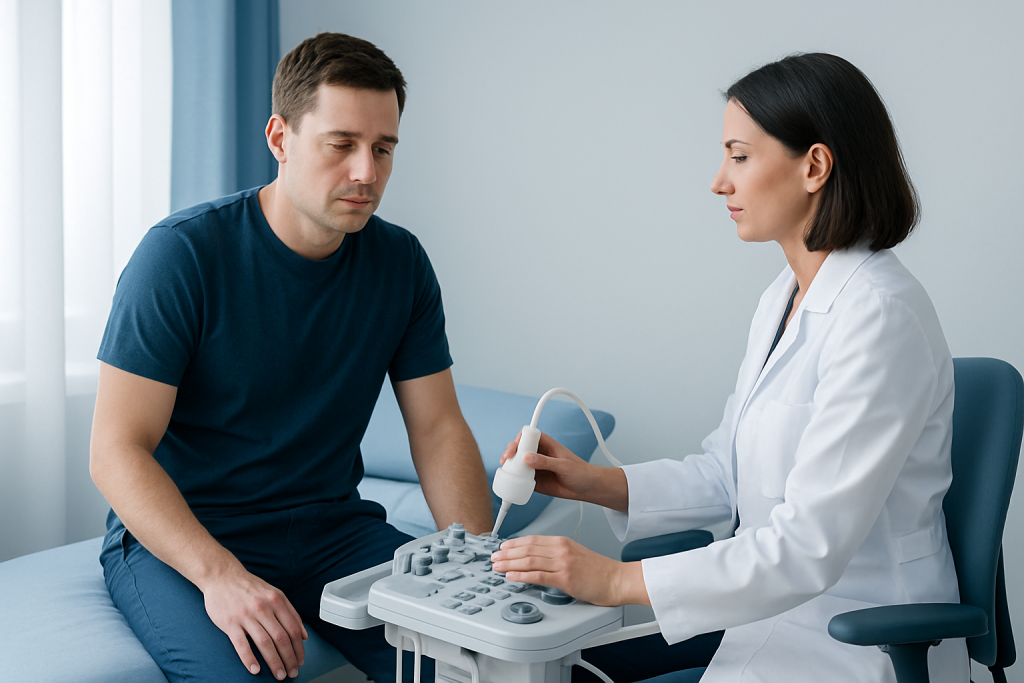
When the cause is not obvious, imaging may be used to clarify what the swelling contains and how deep it extends. Ultrasound is often a practical first step because it can help distinguish a fluid collection from solid tissue and can be done without radiation.
In selected cases, additional tests may be needed to rule out infection or another diagnosis. If a procedure is performed to remove fluid, the sample may be examined so the team can confirm that it is lymphatic fluid and not blood, pus, or another type of fluid collection. The goal is not only to name the condition, but also to understand whether it is isolated, recurrent, or part of a broader healing issue.
Treatment Options
Treatment depends on the size of the lymphocele, the symptoms it causes, and whether it is stable or growing. Small, symptom-free collections may be watched for a period of time, especially if they appeared after a recent operation and seem to be gradually settling.
If the swelling is bothersome, persistent, or unclear, a clinician may recommend drainage or another minor procedure. In some situations, aspiration alone is enough, while in others the fluid returns and a more durable approach is needed. Recurrent lymphoceles may require placement of a drain, compression support when appropriate, or a procedure that helps the fluid pocket close more completely.
When there are signs of infection, treatment may include additional evaluation and medicines directed by the treating doctor. Surgery is reserved for cases that do not respond to simpler measures or when the anatomy and symptoms make a procedural solution the better choice. The treatment plan is usually individualized rather than one-size-fits-all, especially when the person is recovering after travel or needs follow-up arranged in another country.
Prevention & Self-care
Not every lymphocele can be prevented, but careful postoperative care and early communication with the surgical team can reduce the chance of delays or complications. Following wound-care instructions, avoiding unnecessary pressure on the area, and attending scheduled follow-up visits are often the most useful steps.
For people recovering away from home, it helps to keep a simple record of the swelling: when it appeared, whether it is changing, whether there is pain, and whether there are any signs of infection. Photos taken at similar angles and in similar lighting can also help a doctor judge whether the swelling is resolving or persisting.
General self-care measures may include:
- Resting the area as advised by the clinician
- Wearing supportive, non-restrictive clothing if comfortable
- Avoiding sexual activity or strenuous friction until cleared
- Keeping incision sites clean and dry if surgery was involved
- Seeking medical advice before using home remedies, compression, or warm compresses
It is better to check early than to guess, particularly if travel plans are approaching. A short review by a urologist can help determine whether it is safe to wait, safe to fly, or better to treat the problem first.
When to See a Doctor
Medical evaluation is recommended for any new or unexplained penile swelling, especially if it appears after a procedure or injury. Even when the swelling seems minor, an examination can help confirm whether it is a lymphocele or another condition that needs different care.
Prompt assessment is especially important if there is fever, worsening pain, redness, drainage, difficulty urinating, a rapidly enlarging lump, or a general sense that the area is becoming more inflamed. These features may indicate infection, bleeding, or obstruction rather than a simple fluid collection.
People traveling for care or recovering abroad may benefit from a specialist review before leaving the treatment center. Acibadem Health Point’s multidisciplinary specialists and JCI-accredited hospitals diagnose and treat this condition for international patients, helping coordinate imaging, procedure planning, and follow-up when continuity matters across borders.
Living With the Recovery Process
Most people want to know how long a penile lymphocele will affect daily life. The answer depends on what caused it, how large it is, and whether treatment was needed, but many cases improve with time and appropriate monitoring. Recovery is usually less about dramatic interventions and more about steady reassessment until the swelling settles.
During this period, clear communication matters. Patients should know which changes are expected, which symptoms should trigger a call, and how to arrange follow-up if they are returning home soon after treatment. That planning is especially helpful for international patients, where time zones, flight timing, and access to local specialists can affect the next step.
With a careful diagnosis and a treatment plan matched to the cause, the outlook is often reassuring. The main goal is not only to remove the fluid collection if needed, but also to make sure the underlying lymphatic issue is addressed and monitored appropriately.
Frequently asked questions
Is a penile lymphocele cancerous?
A penile lymphocele is usually a benign fluid collection and is not cancer. However, a doctor should evaluate any new penile lump because other conditions can look similar at first. The examination helps confirm the cause and rule out more serious problems.
Can a penile lymphocele go away on its own?
Some small lymphoceles improve with time, especially after recent surgery when healing is still underway. Others persist or refill after drainage, which is why follow-up is important. A doctor can help decide whether observation is enough or whether treatment is needed.
How is it different from a hematoma or abscess?
A lymphocele contains lymphatic fluid, while a hematoma is made of blood and an abscess contains pus from infection. They can feel similar as lumps or swelling, but treatment differs. Imaging and, if needed, fluid analysis help tell them apart.
Will I need surgery for a penile lymphocele?
Not always. Some cases only need observation or a simple drainage procedure, while recurring or complex collections may require a more definitive approach. The choice depends on symptoms, size, and whether the swelling keeps returning.
Is it safe to have sex if I have this swelling?
It is usually wise to avoid sexual activity until a clinician confirms that the area has healed enough and the swelling is stable. Friction can irritate the tissue and may worsen discomfort or delay recovery. If there is pain, redness, or drainage, sexual activity should be paused and assessed by a doctor.
When should I seek urgent care?
Urgent care is appropriate if the swelling is rapidly getting bigger, if there is fever, severe pain, trouble urinating, or foul-smelling discharge. These symptoms can point to infection or another issue that should be checked promptly. If travel is planned, it is safest to review the condition before departure.
References
- American Urological Association
- European Association of Urology
- Mayo Clinic
- National Institute of Diabetes and Digestive and Kidney Diseases
This article is for general information only and is not a substitute for professional medical advice. Please consult a qualified doctor about your individual situation.