Overhead Triceps Extension

Key Takeaways
- The overhead triceps extension mainly trains the triceps, especially the long head of the muscle.
- Good shoulder and elbow positioning matters more than using heavy resistance.
- People with shoulder, elbow, or neck pain may need a modified version or professional guidance.
- The exercise can be done with one dumbbell, a cable, a resistance band, or a bodyweight variation.
- Progress should be gradual, with attention to control, breathing, and range of motion.
The overhead triceps extension is a simple strength exercise that targets the back of the upper arm and can fit into many training plans. When performed with good technique and appropriate resistance, it can support arm strength for daily activities, sports, and rehabilitation goals.
Overview
The overhead triceps extension is an upper-arm strengthening exercise that emphasizes the triceps, the muscle at the back of the upper arm. In the movement, the arm is raised overhead and the elbow bends and straightens, which helps train the muscle through a long range of motion.
For many people, the exercise is appealing because it can be done with simple equipment and adapted to different settings, from a gym to a home routine or a supervised rehabilitation program. It is also easy to scale: the resistance, body position, and speed can be adjusted to match a person’s current strength and comfort.
From an educational point of view, the exercise is useful not only for arm appearance or athletic training, but also for functional strength. Reaching overhead, pushing objects away from the body, and controlling the arm during lifting all rely on coordinated shoulder and elbow work.
Symptoms and What It Works
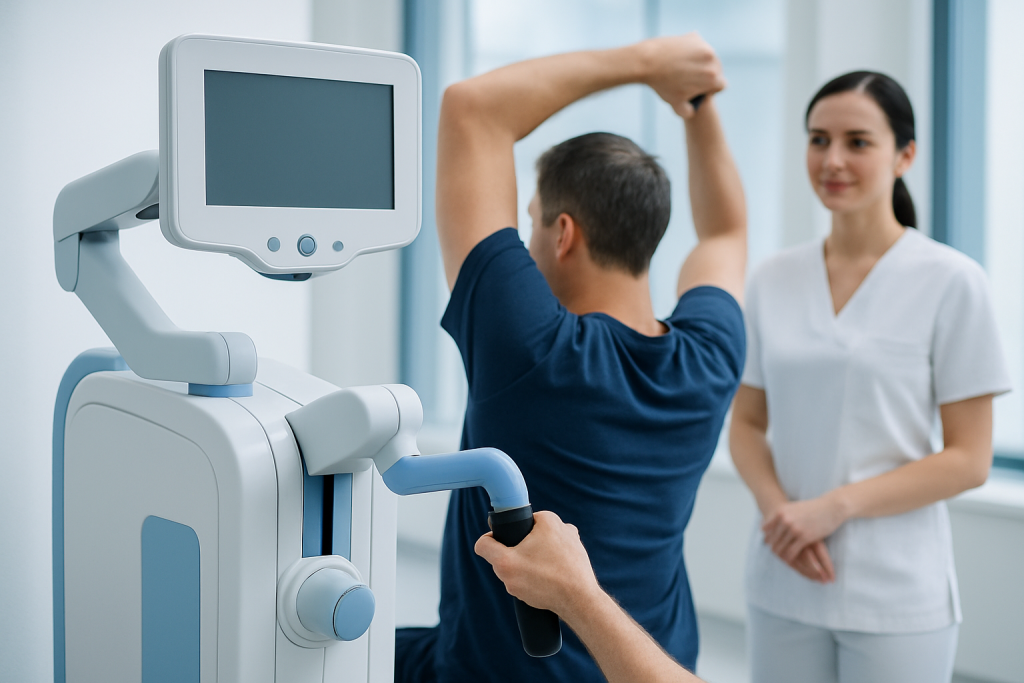
The overhead triceps extension is not a symptom-based exercise, but people often choose it for a specific goal: to strengthen the back of the arms. The triceps help extend the elbow, so they are active in movements such as pushing a door open, straightening the arm after lifting, and supporting pressing exercises.
When done correctly, the exercise should create a focused effort in the triceps and a controlled stretch through the back of the upper arm. It should not cause sharp pain in the elbow, shoulder, neck, or wrist. Mild muscle fatigue or temporary soreness after training can happen, especially when a new routine is started.
Some people notice that the exercise feels different depending on the tool used. A dumbbell may require more stabilization, while a cable or resistance band may offer smoother tension. The body should stay steady so the work remains centered in the triceps rather than shifting into the lower back or shoulders.
Causes & Risk Factors for Poor Tolerance

Most difficulty with the overhead triceps extension comes from technique, load, or pre-existing joint sensitivity rather than the exercise itself. Raising the arm overhead places demand on the shoulder, and bending the elbow under resistance can irritate nearby structures if mobility or strength is limited.
People may be more likely to struggle with the movement if they have a history of rotator cuff problems, shoulder impingement, elbow tendinopathy, neck stiffness, or reduced ability to stabilize the spine. A too-heavy weight, rushed repetitions, and excessive arching of the back can also make the exercise less comfortable and less effective.
In rehabilitation settings, clinicians often look at the full movement pattern before recommending overhead loading. That includes shoulder mobility, core control, pain history, and whether the person can keep the elbow aligned without compensation. A tailored version is often more helpful than forcing a standard form.
Diagnosis and Assessment Before Starting
There is no medical diagnosis required to perform the overhead triceps extension, but a thoughtful assessment can be valuable before using it in a workout or recovery plan. A fitness or rehabilitation professional may observe posture, shoulder motion, elbow alignment, and trunk control to see whether the exercise is appropriate.
If pain is present, a doctor or physiotherapist may ask when it began, what movements worsen it, and whether symptoms are related to an injury, overuse, or another condition. They may also assess range of motion and compare the painful side with the other arm to decide whether the exercise should be modified or postponed.
For international patients planning care abroad, a clear pre-arrival review of symptoms, prior imaging, and current medications can help specialists recommend the safest exercise path after evaluation. That is especially useful when rehabilitation is being coordinated across time zones or between home and destination care.
Treatment Options and Exercise Variations
If the goal is general strengthening, the overhead triceps extension can be performed in several ways. A single dumbbell held with both hands is a common option. Cable machines and resistance bands provide a more controlled resistance curve, which some people find easier on the joints. A trainer or therapist may also use a seated or half-kneeling position to improve stability.
When the exercise is part of rehabilitation, the range of motion may be shortened at first, or the arm may be kept lower than full overhead position. This can reduce stress while still allowing the triceps to engage. In some cases, a different triceps exercise, such as a pushdown or close-grip pressing variation, may be better tolerated until overhead motion improves.
Progress usually works best when it is gradual and measurable. Rather than increasing resistance quickly, many people do better by first mastering control, then adding small increases in load or repetitions. If pain appears, the safest next step is often to reduce the challenge and reassess technique rather than push through it.
- Use a light load first and test the movement with control.
- Keep the elbows from drifting too far forward or outward.
- Avoid leaning back and overextending the lower back.
- Stop if the movement creates sharp or radiating pain.
Prevention & Self-care
Good results from this exercise depend on preparation as much as on effort. A brief warm-up for the shoulders, elbows, and upper back can make the motion smoother. People often benefit from a few minutes of gentle arm circles, scapular activation, or light pressing before moving into the overhead pattern.
Self-care also includes respecting recovery time. The triceps, like other muscles, need rest to adapt. Balanced training that includes the chest, back, shoulder stabilizers, and core can help the arms work more efficiently and reduce the chance of overuse from repeating one movement too often.
Traveling patients who train while abroad should remember that unfamiliar equipment, fatigue from long flights, and changes in routine can affect performance. Starting with lower resistance and seeking local professional guidance when needed can make training safer and more productive.
When to See a Doctor
Medical advice is a good idea if the overhead triceps extension causes persistent pain, swelling, numbness, weakness, or a feeling that the shoulder is unstable. It is also wise to seek evaluation if the arm cannot move overhead comfortably, or if symptoms continue despite reducing the load and correcting form.
People recovering from a shoulder, elbow, or neck injury should ask a clinician before adding overhead resistance. A doctor, sports medicine specialist, or physiotherapist can help decide whether the exercise is suitable, which version is safest, and how quickly progression should happen.
For patients arranging evaluation from another country, multidisciplinary specialists and JCI-accredited hospitals such as Acibadem Health Point can diagnose and treat exercise-related shoulder or arm concerns for international patients in a coordinated way. The key is to match the exercise to the person, rather than forcing the person to match the exercise.
Practical Form Cues
Simple cues can make the overhead triceps extension more effective. The head should stay neutral, the ribs should not flare dramatically, and the movement should come mainly from the elbow rather than the lower back. A steady pace usually works better than using momentum.
Breathing matters as well. Many people find it easier to exhale while straightening the arms and inhale while lowering the weight with control. This rhythm can help maintain focus and reduce unnecessary tension.
If form becomes difficult near the end of a set, that is often a sign that the load is too high or the set is too long. Finishing with clean technique is usually more beneficial than forcing extra repetitions with poor control.
Frequently asked questions
What muscles does the overhead triceps extension work?
It mainly targets the triceps muscle on the back of the upper arm. Because the arm is positioned overhead, the long head of the triceps is often emphasized. The shoulders and core also help stabilize the movement.
Is the overhead triceps extension safe for everyone?
Not always. People with shoulder pain, elbow irritation, or limited overhead mobility may need a modified version or a different exercise. A clinician or qualified trainer can help decide what is appropriate.
Should the exercise be done seated or standing?
Either position can be appropriate. Seated versions may reduce the chance of using the lower back to compensate, while standing versions may feel more functional for some people. The best choice depends on control, comfort, and training goals.
What if the movement hurts my elbows or shoulders?
Sharp, persistent, or worsening pain should not be ignored. The load may need to be reduced, the range of motion shortened, or the exercise replaced with a gentler option. If pain continues, a medical assessment is important.
How often can someone do overhead triceps extensions?
That depends on the person’s training plan, recovery, and any existing joint issues. Many people include the exercise a few times per week with rest between sessions. A professional can help set a schedule that fits the person’s goals safely.
Can this exercise help after an arm or shoulder injury?
It may, but only when it is introduced at the right stage of recovery. In rehabilitation, overhead loading is often progressed carefully and may not be the first exercise used. A physiotherapist or doctor should guide the timing.
References
- American College of Sports Medicine
- National Institute of Arthritis and Musculoskeletal and Skin Diseases
- Mayo Clinic
- Physiopedia
- Cleveland Clinic
This article is for general information only and is not a substitute for professional medical advice. Please consult a qualified doctor about your individual situation.