Oral Thrush: Symptoms, Causes and Treatment

Key Takeaways
- Oral thrush is usually caused by an overgrowth of Candida yeast in the mouth.
- White patches, redness, soreness, and a cotton-like feeling are common signs.
- It is more likely to appear after antibiotic use, with inhaled steroids, or when immunity is reduced.
- Diagnosis is often based on an oral examination, with further testing if the picture is unclear.
- Treatment commonly involves antifungal medicine and attention to mouth hygiene and underlying causes.
Medically reviewed by the Acıbadem clinical team — August 19, 2026
Oral thrush is a common yeast infection in the mouth that can cause white patches, soreness, and an altered taste. It is usually treatable, and understanding the triggers can help people recover more comfortably and reduce recurrence.
Overview
Oral thrush, also called oral candidiasis, is a yeast infection that develops when Candida organisms multiply more than usual in the mouth. Candida is normally present in many people without causing trouble, so the condition is less about “catching” something new and more about an imbalance in the mouth’s natural environment.
For many people, thrush appears as creamy white patches on the tongue, inner cheeks, roof of the mouth, or throat. Some describe a burning sensation, a dry mouth, or food tasting different. The condition is usually manageable, but it can be a clue that something else is affecting the body, such as recent antibiotic use, poorly fitting dentures, diabetes, or a weakened immune system.
Because oral thrush may be linked to broader health issues, a careful evaluation matters. For international patients, that often means choosing care that can look beyond the visible mouth changes and consider medication history, dental factors, and any underlying condition that may be part of the picture.
Symptoms
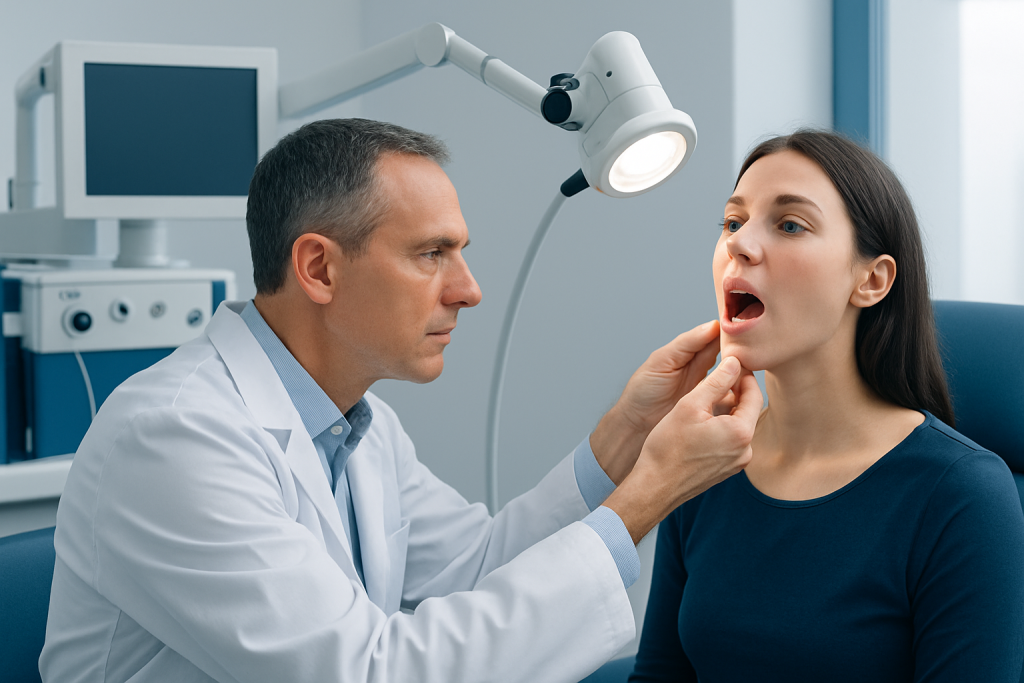
The appearance of oral thrush can be quite distinctive, but not every case looks the same. White or cream-colored patches are the classic sign, and they may be slightly raised or resemble cottage cheese. When these patches are gently scraped, the underlying skin may look red and sore.
Other symptoms can include a burning feeling in the mouth, tenderness when eating spicy or acidic foods, cracking at the corners of the lips, a cotton-like sensation, or a change in taste. In people who wear dentures, the gums may feel irritated or the mouth may seem inflamed beneath the denture surface.
In some cases, especially in infants or adults with milder infection, symptoms can be subtle. A person may simply notice a persistent soreness or a coated tongue. If the infection spreads toward the throat, swallowing may become uncomfortable, and a clinician should assess the situation.
Causes & Risk Factors

Oral thrush develops when Candida grows too freely. The mouth usually keeps yeast levels in check through the balance of saliva, healthy bacteria, and the body’s immune defenses. When that balance changes, thrush can take hold more easily.
Common risk factors include recent antibiotic treatment, which can reduce the normal bacteria that help keep yeast under control, and inhaled corticosteroid use, especially when the mouth is not rinsed afterward. Dentures, dry mouth, smoking, high blood sugar, and poor oral hygiene can also contribute. Babies are more prone to thrush because their immune systems are still developing.
People with weakened immunity may have a higher risk, including those undergoing cancer treatment, those with certain chronic illnesses, or those taking medicines that suppress the immune system. In these situations, oral thrush may be more persistent or more likely to return, so the cause deserves attention rather than just the visible infection.
Diagnosis
In many cases, oral thrush is diagnosed through a simple examination of the mouth. A clinician looks at the pattern of patches, redness, and soreness, and may ask about recent medications, denture use, oral hygiene habits, and any symptoms elsewhere in the body.
If the appearance is not typical, or if the infection does not improve as expected, the clinician may take a small sample from the mouth for laboratory testing. This helps confirm the presence of Candida and can be useful when other conditions could look similar, such as leukoplakia, oral lichen planus, or other inflammatory mouth problems.
When thrush appears repeatedly or seems unusually stubborn, the diagnosis may expand beyond the mouth itself. A doctor may consider checking for diabetes, nutritional issues, medication effects, or immune-related concerns. For patients traveling from abroad, this broader assessment can be especially helpful because it creates a clearer plan for treatment and follow-up after returning home.
Treatment Options
Treatment for oral thrush usually focuses on antifungal medicine and on reducing the conditions that allowed the yeast to grow in the first place. Many cases respond well to topical antifungal treatments used in the mouth, while more extensive or recurring infections may need systemic therapy prescribed by a doctor.
Equally important is addressing the trigger. If inhaled steroids are involved, a clinician may review inhaler technique and suggest rinsing after use. Denture wearers may need to clean their dentures carefully and, in some cases, temporarily remove them at night. If blood sugar is elevated or another health issue is contributing, that condition should be managed alongside the infection.
People should avoid trying random over-the-counter remedies that can irritate the mouth or delay effective care. Oral thrush is treatable, but the most durable results come from matching the medication to the cause and making sure any underlying factor is recognized.
Prevention & Self-care
Everyday habits can make a meaningful difference, especially for people who have had thrush before. Good oral hygiene, including brushing teeth and tongue gently, flossing when appropriate, and keeping the mouth clean after meals, helps reduce the environment yeast prefers. Regular dental care is also useful, particularly for denture wearers.
Several practical steps may help lower the chance of recurrence:
- Rinse the mouth after using inhaled corticosteroids, unless a doctor advises otherwise.
- Clean dentures thoroughly and remove them at night if instructed.
- Manage dry mouth by staying hydrated and discussing causes with a clinician.
- Limit smoking, which can irritate the oral lining.
- Follow medical advice for diabetes or other chronic conditions.
For international patients, prevention also includes planning follow-up before travel ends. If oral thrush developed during treatment abroad, it is sensible to leave with clear instructions about medication, oral care, and when to seek local reassessment at home. That continuity can reduce confusion and help recovery stay on track.
When to See a Doctor
Medical assessment is a good idea when white patches or mouth soreness do not improve within a few days, when symptoms keep returning, or when pain makes eating and drinking difficult. A doctor should also evaluate the problem if a person has diabetes, uses immunosuppressive medicines, wears dentures, or has recently started antibiotics or inhaled steroids.
Prompt attention is especially important if the infection seems to extend into the throat, causes trouble swallowing, or comes with fever or general unwellness. In infants, persistent mouth patches, poor feeding, or unusual irritability should be checked by a pediatric clinician. The goal is not to alarm, but to make sure the infection is treated appropriately and nothing else is being overlooked.
Acibadem Health Point’s multidisciplinary specialists and JCI-accredited hospitals can diagnose and treat oral thrush for international patients, with care plans that can also account for related dental, medical, and follow-up needs before travel home.
Living With Oral Thrush
Most people recover well once the infection is recognized and treated. Still, oral thrush can feel frustrating, especially when it keeps returning or appears during a period of already having other health concerns. In those moments, the most helpful mindset is to treat it as a signal worth investigating rather than a minor nuisance to ignore.
Keeping a simple record of when symptoms started, recent medicines, denture changes, and any dry mouth or blood sugar issues can make appointments more productive. That information may help a clinician spot the pattern more quickly and choose the right next step.
For patients receiving care away from home, it can also help to ask for a written summary of the diagnosis, treatment plan, and warning signs to watch for after discharge. Clear instructions make it easier to continue care confidently, whether the next appointment is local or with a clinician back home.
Frequently asked questions
Is oral thrush contagious?
Oral thrush is usually not considered highly contagious in healthy people. It often develops because Candida that already lives in the mouth grows too much under certain conditions. In some situations, such as in newborns or people with weakened immunity, it can be passed more easily through close contact, so hygiene still matters.
What does oral thrush look like?
It often appears as white or cream-colored patches on the tongue, inner cheeks, gums, or roof of the mouth. The patches may be wiped away partially, leaving a red or sore surface underneath. Some people notice redness and discomfort even before the patches are obvious.
Can oral thrush go away on its own?
Mild cases may improve if the triggering factor changes, but many cases need antifungal treatment to clear properly. It is best not to wait too long if symptoms persist, because untreated thrush can become more uncomfortable. A clinician can also check whether another condition is contributing.
Why does oral thrush keep coming back?
Repeated episodes often mean that a trigger is still present, such as dentures, dry mouth, inhaled steroids, antibiotic use, or high blood sugar. In some people, recurrence can be a clue to a broader health issue that needs evaluation. Treating the underlying cause is often the key to preventing it from returning.
Can babies get oral thrush?
Yes. Oral thrush is relatively common in infants because their immune systems are still maturing. It may show up as white patches in the mouth or feeding discomfort, and a pediatrician can advise on the right treatment and hygiene measures.
Should someone stop using an inhaler if thrush develops?
Not without speaking to a doctor. Inhaled steroids can be important for controlling asthma or other conditions, and the medication itself should not be stopped suddenly without medical advice. A clinician can suggest ways to reduce thrush risk, such as rinsing the mouth after use or reviewing inhaler technique.
References
- National Institute of Dental and Craniofacial Research
- Centers for Disease Control and Prevention
- Mayo Clinic
- Merck Manual Professional Edition
- World Health Organization
This article is for general information only and is not a substitute for professional medical advice. Please consult a qualified doctor about your individual situation.
Explore treatments in Turkey — costs, top hospitals & a free quote
JCI-accredited · board-certified surgeons · reply within 24h
Add us as a Preferred Source to see more of our trusted health content across Google Search, AI Overviews and Discover.