Oblique Muscle

Key Takeaways
- The oblique muscles support trunk rotation, side bending, and core stability.
- Oblique muscle strain often causes pain with twisting, coughing, laughing, or getting up from a chair.
- Diagnosis is usually based on history and physical examination, with imaging used when needed to rule out other causes.
- Most mild strains improve with rest, modified activity, and guided rehabilitation.
- Sudden severe pain, a bulge, fever, or trouble breathing should be evaluated promptly.
The oblique muscles are an important part of the side walls of the abdomen, helping with twisting, bending, breathing support, and core stability. When they are strained or irritated, the discomfort can affect everyday movement, exercise, and even deep breathing.
Overview
The oblique muscles sit along the sides of the abdomen and work quietly through much of daily life. They help the trunk rotate, stabilize the spine, and support movements such as reaching, turning, carrying groceries, and getting in and out of a car. They also assist the body during breathing and forceful actions like coughing or sneezing.
Because the obliques are involved in so many routine motions, they can be irritated by overuse, sudden twisting, sports activity, heavy lifting, or an awkward movement. People often notice the problem first as a sharp twinge on one side of the abdomen or a deep ache that becomes more obvious during movement. For travelers, this can be especially inconvenient because long flights, unfamiliar beds, and luggage handling may all place extra demand on the torso.
An oblique muscle problem is often not dangerous, but it deserves attention when the pain is intense, persistent, or accompanied by other symptoms. A careful evaluation helps distinguish a muscle strain from abdominal, rib, or internal-organ conditions that can feel similar.
Symptoms
Oblique muscle discomfort often feels tied to movement. A person may notice pain when twisting to one side, bending over, sitting up, coughing, laughing, or reaching across the body. The area may feel tender to touch, tight, or mildly swollen, and some people describe a pulling sensation along the side of the abdomen or lower ribs.
Symptoms can range from mild soreness to a more sudden, stabbing pain. In a strain, pain may appear during activity and improve with rest, although it can return as soon as the same movement is repeated. If the muscle fibers are more significantly injured, bruising, weakness, or a sense that the trunk “gives way” may also occur.
It is helpful to remember that abdominal and flank pain can come from many sources. Pain that spreads, is associated with fever, nausea, vomiting, urinary symptoms, a visible bulge, or shortness of breath should not be assumed to be a simple muscle issue.
Causes & Risk Factors

Oblique muscles are commonly strained when the trunk is asked to rotate forcefully or suddenly. Common triggers include sports such as tennis, golf, baseball, rowing, and contact sports, but everyday activities can do it too. Lifting a suitcase awkwardly, reaching into the back seat of a car, or making a sudden turn while carrying weight can overload the side abdominal wall.
Risk is higher when the body is already fatigued, deconditioned, or recovering from another injury. Weak core muscles, poor lifting mechanics, inadequate warm-up, and repetitive movements may also contribute. Coughing fits, vomiting, and respiratory infections can sometimes strain the abdominal wall as well.
In international patients, the context matters. Long journeys, prolonged sitting, heavy bags, changes in routine, and the urge to “push through” pain while traveling for work or care can turn a minor strain into a longer recovery. While age alone does not cause oblique injury, reduced flexibility and slower healing can make symptoms last longer in some people.
- Sudden trunk rotation or twisting
- Heavy or uneven lifting
- Sports with repeated side-to-side motion
- Coughing or vomiting
- Muscle fatigue or poor core conditioning
Diagnosis
Diagnosis usually begins with a detailed conversation about how the pain started, what movements make it worse, and whether there was a specific event such as a twist, fall, or lift. A clinician then examines the abdomen, ribs, back, and hips, looking for tenderness, muscle tightness, weakness, bruising, or any signs that point beyond the muscle itself.
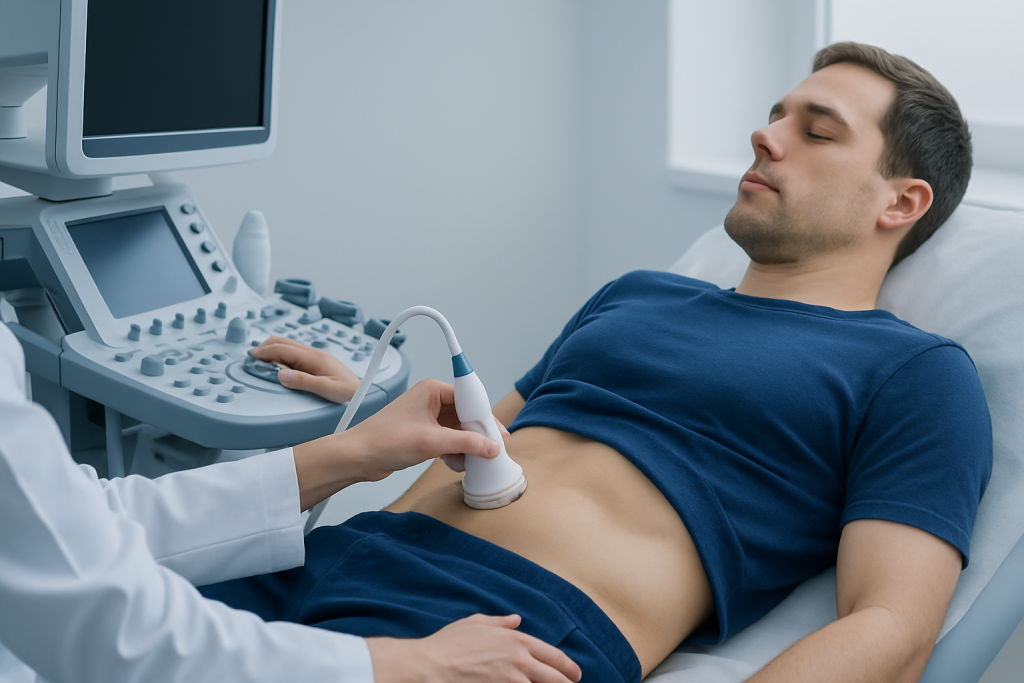
Many oblique strains can be identified clinically. Imaging is not always needed, but it may be considered if the pain is severe, the history is unclear, symptoms do not improve as expected, or the clinician wants to rule out other problems such as a hernia, rib injury, or internal-abdominal condition. Depending on the situation, ultrasound, X-ray, or MRI may be used.
For a patient traveling from another country, a good diagnostic plan should also consider timing and follow-up. Clear documentation, an explanation of activity limits, and a shared plan for reassessment help make recovery more predictable after the patient returns home or continues their trip.
Treatment Options
Treatment depends on the severity of the injury, but most oblique muscle strains are managed without surgery. The first step is usually to reduce activities that trigger pain, especially twisting, heavy lifting, and abdominal exercises that stress the injured side. Short-term rest does not mean complete inactivity; gentle movement is often encouraged as tolerated.
Pain relief may be supported with simple measures such as cold packs in the early phase, then warmth later if it feels soothing. A clinician may recommend over-the-counter pain relief if appropriate for the person’s health profile, but medication choices should always be individualized. Physical therapy can be helpful when pain starts settling, especially to restore flexibility, posture, breathing mechanics, and core strength in a controlled way.
More significant injuries may need a longer recovery period and a more structured rehabilitation plan. If the pain is actually coming from another source—such as a hernia, rib fracture, or abdominal organ issue—then treatment is directed at that condition instead. For this reason, getting the diagnosis right is as important as treating the pain itself.
In selected cases, Acibadem Health Point’s multidisciplinary specialists and JCI-accredited hospitals diagnose and treat oblique muscle-related conditions for international patients, with care planning that can support both treatment and recovery logistics.
Prevention & Self-care
Preventing oblique muscle injury starts with respecting the load placed on the torso. A brief warm-up before exercise, gradual increases in training intensity, and attention to lifting technique can make a meaningful difference. Core conditioning helps, but the goal is not only stronger abdominal muscles; it is also better coordination between the abdomen, back, hips, and breathing pattern.
For everyday self-care, people often do best when they avoid sudden, painful twisting and instead keep the body moving within a comfortable range. Good posture during desk work, frequent position changes on long trips, and smart luggage habits—such as splitting weight into smaller bags—can reduce strain. When coughing or sneezing is unavoidable, supporting the abdomen with a hand or pillow may ease discomfort.
Recovery should be paced rather than rushed. Returning too quickly to sport or heavy physical work can lead to repeated strain. A clinician or physical therapist can help decide when it is safe to resume specific activities, especially for people who travel often or have demanding jobs.
- Warm up before sport or exercise
- Increase activity gradually
- Use careful lifting mechanics
- Support the torso during coughing if needed
- Resume training only when movement is comfortable
When to See a Doctor
Medical evaluation is important if the pain is severe, keeps returning, or does not improve after a few days of sensible rest and activity modification. It is also wise to seek care if the pain followed a fall, a forceful impact, or a sudden “pop” during movement, since more than a strain may be involved.
Prompt assessment is especially important when abdominal pain comes with fever, vomiting, a bulge in the groin or abdomen, unexplained weight loss, blood in the urine, chest pain, shortness of breath, dizziness, or increasing swelling and bruising. These features do not always mean something serious, but they should be checked rather than watched at home.
People traveling for treatment or in the middle of a trip should not delay care simply because they are away from their usual doctor. A qualified clinician can evaluate the problem, advise on safe activity limits, and help decide whether follow-up can occur after travel or should happen sooner.
Living With Recovery
Recovery from an oblique muscle strain is often a matter of patience and smart pacing. The discomfort may be frustrating because the injured area is used in so many ordinary movements, yet gradual improvement is a good sign. Many people find that small adjustments—standing up more slowly, avoiding sudden turns, and choosing supportive seating—make day-to-day life more manageable while healing continues.
It can help to track which movements are improving and which still trigger pain. That practical information is useful at follow-up appointments, especially for international patients who may be coordinating care across different cities or countries. A clear rehabilitation plan can make the return to exercise, work, and travel feel more controlled and less uncertain.
Related Concerns and Differentials
Not every side abdominal pain is an oblique muscle problem. Similar symptoms can come from abdominal wall hernias, rib injuries, spine-related pain, kidney conditions, gallbladder disease, or bowel and urinary tract issues. That is why the pattern of pain, the physical examination, and any additional testing all matter.
A muscle strain is more likely when pain is clearly linked to movement and local tenderness is present. However, if the discomfort is deep, persistent, or accompanied by other systemic symptoms, a broader evaluation is appropriate. The aim is not to overreact, but to make sure the real cause is identified early and managed correctly.
Frequently asked questions
What does an oblique muscle strain feel like?
It often feels like a sharp or pulling pain along one side of the abdomen or lower ribs. The pain usually becomes more noticeable with twisting, bending, coughing, laughing, or sitting up. Tenderness to touch is common.
How long does it take for an oblique muscle to heal?
Healing time depends on how severe the strain is and how quickly the person reduces aggravating activity. Mild strains may improve over days to a few weeks, while more significant injuries can take longer. A clinician can help estimate recovery based on the exam and symptoms.
Can walking make an oblique strain worse?
Gentle walking is often acceptable if it does not increase pain. However, brisk walking, hills, or long strides may irritate the area in the early phase. The safest approach is to stay active within a comfortable range and avoid movements that clearly trigger symptoms.
Is an oblique muscle injury the same as abdominal pain?
No. An oblique strain is one specific cause of abdominal or side pain, but many other conditions can cause similar discomfort. Because of that overlap, persistent or unusual pain should be assessed by a qualified clinician.
Should a person use ice or heat for oblique pain?
Cold packs are often used early to help settle soreness, and warmth may feel better later as the muscle loosens. The choice depends on what feels most comfortable and on the clinician’s advice. Either way, these are supportive measures rather than a substitute for evaluation when symptoms are significant.
When is imaging needed for oblique muscle pain?
Imaging is considered when the diagnosis is uncertain, the pain is severe, symptoms do not improve, or another condition needs to be ruled out. Many muscle strains do not require scans. A clinician will decide based on the history and examination.
References
- Mayo Clinic
- Cleveland Clinic
- American Academy of Orthopaedic Surgeons
- NHS
- MedlinePlus
This article is for general information only and is not a substitute for professional medical advice. Please consult a qualified doctor about your individual situation.
More from the Health Library



Related Specialists

Dyt. Dietician Elif Derya Cinisli
Nutrition and DieteticsDr. Ömer Faruk Karakoç
Emergency Service
Assoc. Prof. Dr. Aylin Önder Dirican
Obstetrics and Gynecology
Assoc. Prof. Dr. Seçkin Satılmış
Cardiology