Neck Mass ICD-10 Codes and Coding Guidance

Key Takeaways
- A neck mass is a finding, not a diagnosis, so the ICD-10 code should match the documented clinical detail.
- Common coding may use nonspecific codes such as unspecified lump or localized swelling, unless a more exact cause is confirmed.
- Accurate charting of location, laterality, duration, and suspected cause improves code selection and care coordination.
- Neck masses deserve timely medical evaluation, especially if they persist, enlarge, or come with swallowing, breathing, or voice changes.
- Patients traveling for care benefit from organized records, imaging reports, and pathology results that can be reviewed across teams.
A neck mass can describe many different findings, from a harmless enlarged lymph node to a growth that needs prompt evaluation. Accurate ICD-10 coding depends on what is known at the time of documentation, which helps support clear communication, appropriate testing, and safe follow-up.
Overview
A neck mass is a broad clinical term used for any lump, swelling, or abnormal tissue in the neck. It may be felt by the patient, found during an exam, or identified on imaging. Because the phrase describes what is present rather than why it is present, coding it correctly starts with the level of detail available in the medical record.
In ICD-10, the right code depends on whether the chart documents a general neck lump, a localized swelling, an enlarged lymph node, a thyroid nodule, a salivary gland issue, a cyst, or another defined condition. When the underlying cause is not yet known, coders often have to use a symptom or finding code rather than a disease-specific code. This makes the documentation stage especially important.
For international patients, a neck mass can become a multi-step journey: an initial visit, imaging, possible biopsy, and sometimes specialist review across ENT, radiology, oncology, or surgery. Clear coding and clear notes help different teams understand what is being investigated and what has already been ruled in or ruled out.
Symptoms
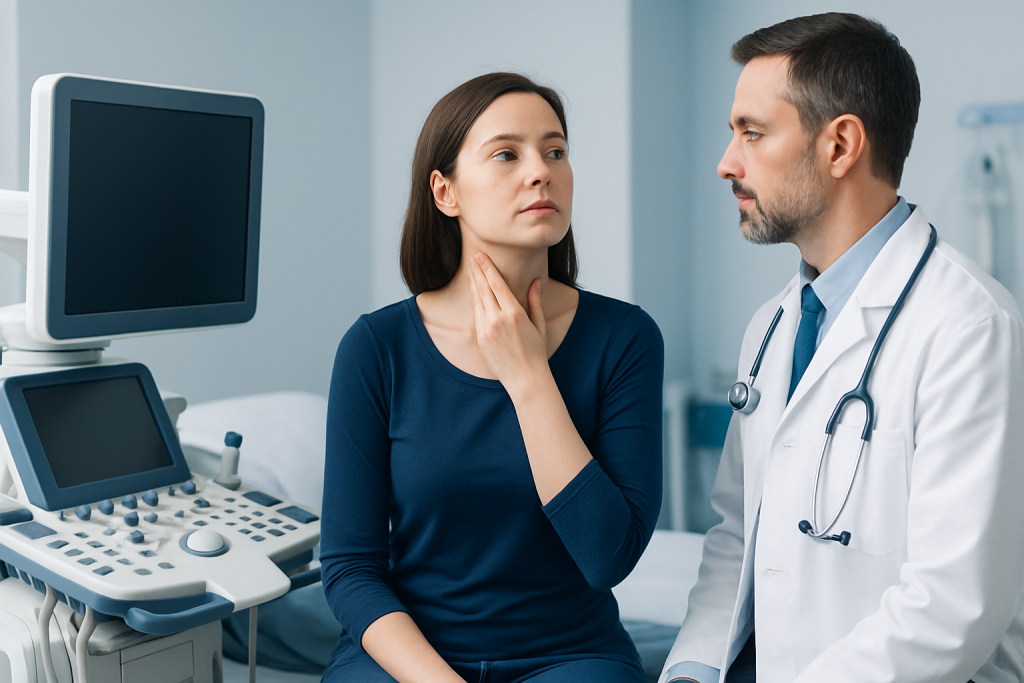
The symptoms associated with a neck mass depend on the cause, size, and location. Some people notice a painless lump under the jaw, beside the windpipe, or along the side of the neck. Others discover swelling only when swallowing, turning the head, or looking in the mirror.
Symptoms that may appear alongside a neck mass include tenderness, redness, warmth, fever, sore throat, recent infection, hoarseness, difficulty swallowing, ear pain, or unexplained weight loss. Many neck masses are benign, but persistent or changing findings deserve medical evaluation so the source can be identified rather than guessed.
From a coding perspective, documentation of associated symptoms can matter. A record that says only “neck mass” may require a nonspecific code, while notes that describe lymphadenopathy, thyroid enlargement, or a cyst can support a more precise classification.
Causes & Risk Factors

Neck masses can arise from many different structures in the head and neck. Common causes include enlarged lymph nodes from infection or inflammation, thyroid nodules, salivary gland swelling, congenital cysts, skin lesions, abscesses, and less commonly benign or malignant tumors. Because the neck contains lymphatic tissue, glands, muscles, nerves, and vessels in a compact space, several conditions can produce a similar-feeling lump.
Risk factors vary with the underlying diagnosis. Recent upper respiratory infection, dental infection, viral illness, autoimmune disease, smoking history, alcohol use, prior radiation exposure, and certain age groups may raise suspicion for particular causes. In children, congenital neck masses are relatively more common; in adults, persistent masses are taken seriously until proven otherwise.
Good coding follows the documented cause, not the assumption. A neck lump after a cold may be coded differently from a thyroid nodule seen on ultrasound or a biopsy-proven malignancy. If the cause has not yet been established, the chart should reflect that uncertainty clearly.
Diagnosis
Evaluation usually begins with history and physical examination. A clinician may ask how long the mass has been present, whether it is painful, whether it changes with eating or swallowing, and whether there are fever, weight loss, night sweats, or voice changes. The examiner may assess size, mobility, firmness, skin changes, and the exact anatomic site.
Depending on the findings, diagnostic testing may include ultrasound, CT, MRI, blood tests, or fine-needle aspiration biopsy. In some cases, an ENT specialist examines the upper aerodigestive tract with a flexible scope to look for a source that cannot be felt from the outside. Pathology results, imaging reports, and operative notes often determine whether a nonspecific symptom code can be replaced by a definite diagnosis.
For coders and clinicians alike, documentation should state whether the mass is a new finding, a recurrent problem, or a previously known lesion under surveillance. Laterality, exact location, and suspected etiology should be recorded whenever possible because those details may change the ICD-10 selection and the clinical interpretation of the chart.
Treatment Options
Treatment is directed by the cause of the neck mass. Enlarged lymph nodes from a self-limited infection may improve with observation and treatment of the underlying infection. Cysts, benign growths, or salivary gland problems may require monitoring, medication, drainage, or surgery. When a malignancy is suspected or confirmed, care may involve a coordinated plan with oncology, surgery, radiation oncology, and pathology.
Because “neck mass” is not one disease, there is no single treatment pathway and no single coding pathway. A documented thyroid nodule, for example, is coded differently from a reactive lymph node or an abscess. If a biopsy has not yet been done, the medical record should avoid prematurely assigning a final diagnosis.
For patients receiving care away from home, treatment planning often includes follow-up timing, review of pathology after discharge, and clear instructions for who will receive the next report. That organization is just as important as the procedure itself, because a neck mass workup may continue after the initial visit has ended.
Prevention & Self-care
Not every neck mass can be prevented, especially congenital or inherited conditions. Still, general health measures can reduce some common triggers of swollen lymph nodes and inflammatory neck findings. Good oral hygiene, prompt treatment of dental or throat infections, smoking cessation, and routine medical care can all support neck health.
For patients who already have a neck lump under evaluation, self-care is mostly about observation and good follow-through. It helps to note whether the mass changes in size, whether pain develops, and whether symptoms such as fever, swallowing difficulty, or voice changes appear. Patients should avoid repeatedly pressing or manipulating the area, which can irritate tissue and make assessment harder.
When traveling for assessment, it is useful to carry prior imaging on disk or electronically, pathology reports, medication lists, and a short timeline of when the mass was first noticed. That record can save time across consultations and reduce the risk of duplicated tests.
When to See a Doctor
A neck mass should be evaluated promptly if it lasts more than a short time, increases in size, feels hard or fixed, or is associated with unexplained fever, weight loss, night sweats, difficulty swallowing, breathing changes, hoarseness, or ear pain. In adults, a new persistent neck lump deserves medical attention even when it is not painful.
Urgent assessment is appropriate if the swelling is rapidly enlarging, interferes with breathing, or is accompanied by significant illness. Children with persistent neck swelling should also be assessed, because the causes and the needed workup can differ from those in adults.
In international care settings, patients may arrive with partial records from another country or may need coordinated follow-up after returning home. Acibadem Health Point’s multidisciplinary specialists and JCI-accredited hospitals diagnose and treat neck masses for international patients, helping align imaging, biopsy, and specialist review when a clearer diagnosis is needed.
ICD-10 Coding Guidance
ICD-10 coding for a neck mass starts with the most specific documented finding. If the clinician documents only a neck lump or mass without a defined cause, a nonspecific symptom or sign code may be appropriate. If the note identifies localized swelling, enlarged lymph nodes, a thyroid nodule, a cyst, or another specific lesion, the code should reflect that more precise diagnosis.
Code selection also depends on whether the mass is left, right, bilateral, midline, or unspecified, and whether it is acute, chronic, recurrent, or under evaluation. Documentation should avoid vague terms when a more exact description is already available in imaging or pathology reports. This is particularly important when multiple specialists are involved and one note may be used to support referrals, procedures, or insurance review.
Common documentation elements that help coding accuracy include:
- Exact anatomic location
- Laterality, when relevant
- Size and consistency
- Duration and progression
- Associated symptoms
- Working diagnosis or confirmed cause
- Test results that change the assessment
Because coding rules vary by setting and by the final documented diagnosis, the chart should be reviewed by a qualified medical coder or clinician familiar with ICD-10 conventions. Patients do not need to memorize the codes themselves, but they can help by ensuring their reports are complete and consistent across visits.
References
Authoritative coding and clinical resources commonly used for this topic include the World Health Organization, the Centers for Disease Control and Prevention, the American Academy of Otolaryngology–Head and Neck Surgery, the American Academy of Family Physicians, and the National Cancer Institute. These organizations help guide diagnosis, referral, and documentation standards.
When a neck mass is being evaluated, the most useful record is the one that tells the full story: where the lump is, what it feels like, how long it has been there, and what the tests show. That information supports safer care and more accurate ICD-10 coding.
Frequently asked questions
Is “neck mass” a diagnosis in ICD-10?
Usually, no. “Neck mass” is often a descriptive finding, so the code depends on the documented cause or the most specific sign recorded in the chart. If the cause is not known yet, a symptom or nonspecific finding code may be used instead.
What is the difference between a neck mass and swollen lymph nodes?
A neck mass is a general term for any lump or swelling in the neck. Swollen lymph nodes are one possible cause, but a neck mass can also come from the thyroid, salivary glands, cysts, infection, or other tissues.
Why does laterality matter in coding?
Laterality can help distinguish whether the mass is on the right, left, or both sides of the neck. When the diagnosis supports it, that detail can improve accuracy and make the record easier for other clinicians to interpret.
Can imaging results change the ICD-10 code?
Yes. A preliminary code may change once ultrasound, CT, biopsy, or pathology identifies the cause more clearly. The final code should match the condition documented in the most definitive report available.
Should a painless neck lump be checked by a doctor?
Yes, especially if it persists or grows. Painless does not always mean harmless, so a clinician should examine the lump and decide whether imaging or referral is needed.
What records are helpful for a patient seeking care in another country?
Prior imaging, biopsy or pathology reports, clinic notes, medication lists, and a short timeline of symptoms are all useful. These documents help specialists compare findings and avoid repeating tests unnecessarily.
References
- World Health Organization
- Centers for Disease Control and Prevention
- American Academy of Otolaryngology–Head and Neck Surgery
- American Academy of Family Physicians
- National Cancer Institute
This article is for general information only and is not a substitute for professional medical advice. Please consult a qualified doctor about your individual situation.