

Maggots And

Key Takeaways
- Maggots in a wound are usually a sign of myiasis, not a normal part of healing.
- The condition can develop when flies lay eggs on open wounds or moist, neglected skin.
- Safe treatment focuses on removing larvae, cleaning the area, and managing any underlying infection or tissue damage.
- People with diabetes, poor circulation, limited mobility, or chronic wounds may have a higher risk.
- Good wound hygiene, fly protection, and early medical attention can help prevent recurrence.
Maggots in or near a wound usually indicate myiasis, a condition caused by fly larvae feeding on damaged tissue. It is treatable, and prompt medical care can help clean the wound, remove larvae safely, and lower the chance of complications.
Overview
Finding maggots in a wound can be upsetting, but the medical issue behind it is usually straightforward: fly larvae have entered damaged skin and are feeding on tissue. This is called myiasis. It is not a sign that the person has done something wrong, and it can happen when a wound is open, moist, poorly protected, or difficult to inspect.
In everyday life, myiasis is more likely to appear in wounds that have not healed well, in areas that are hard to clean, or in situations where flies have easy access. That may include an injury during travel, a chronic ulcer, or a wound in someone who needs help with daily care. The important point is that it can be treated safely when assessed by a clinician.
For international patients, the key decision is often not whether to worry, but how quickly to seek expert wound care. A wound with maggots deserves medical attention because the larvae can deepen tissue injury, hide infection, and delay healing if the area is not cleaned thoroughly.
Symptoms
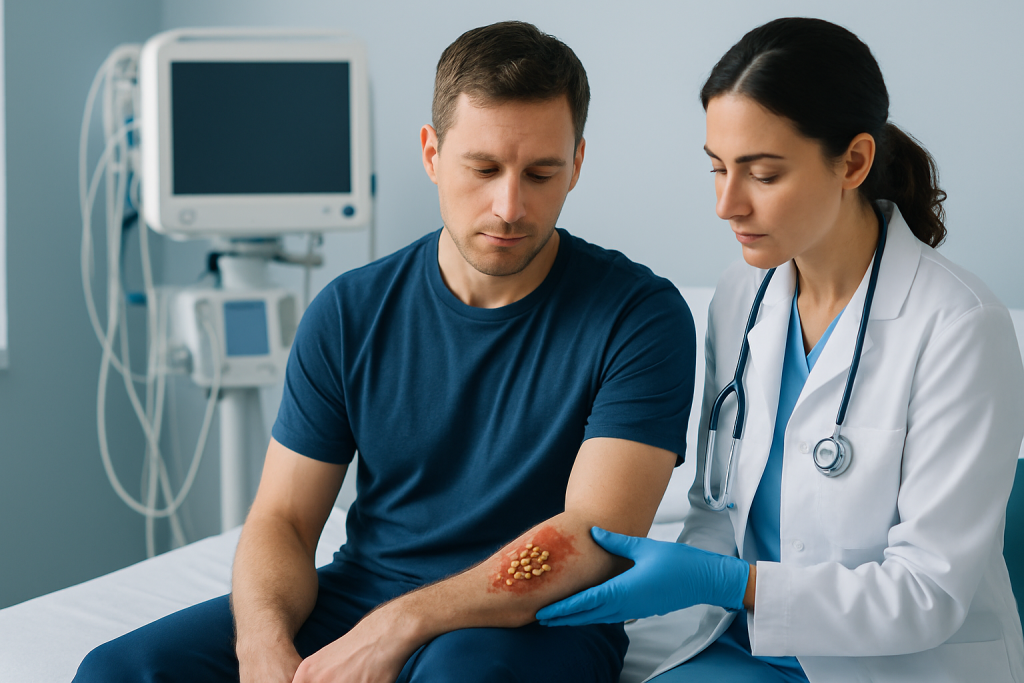
The most obvious sign is the visible presence of small, pale larvae in a wound or in moist, broken skin. Some people notice movement first; others see a cluster of tiny worm-like shapes when changing a dressing or washing the area. The wound may also give off an unusual odor, appear wetter than expected, or have tissue that looks damaged or inflamed.
Symptoms can vary depending on how long the larvae have been present and whether an infection is also involved. A wound may become more painful, red, swollen, or tender. In some cases, the person may feel generally unwell if the skin damage is extensive or if bacteria have entered the wound.
- Visible larvae or eggs in the wound
- Foul-smelling drainage
- Increased pain, redness, or swelling
- Delayed healing or worsening tissue breakdown
- Itching, irritation, or a crawling sensation
Some people do not notice the problem until a dressing is removed. That is one reason chronic or hard-to-see wounds benefit from regular inspection by a healthcare professional or trained caregiver.
Causes & Risk Factors

Maggots appear when certain flies lay eggs on exposed tissue or in areas with moisture, discharge, or dead skin. The eggs hatch into larvae, which then feed on tissue. This can happen in accidental wounds, surgical wounds, pressure sores, diabetic foot ulcers, or skin breakdown related to poor circulation.
Several factors can make myiasis more likely. The common thread is reduced protection of the skin or reduced ability to keep a wound clean and covered. People with limited mobility, reduced sensation, difficulty changing dressings, or prolonged time outdoors in fly-prone environments may be at higher risk. Travel can also matter, especially when a wound is being managed away from home and routine care is interrupted.
- Open or draining wounds
- Chronic ulcers, especially on the feet or legs
- Poor wound hygiene or infrequent dressing changes
- Limited mobility or reduced ability to self-care
- Diabetes, poor circulation, or nerve damage
- Living or traveling in warm climates with more fly exposure
Myiasis does not mean a person has failed to keep themselves clean. Flies are opportunistic, and they can exploit wounds even in people who are trying their best to care for them.
Diagnosis
Diagnosis usually begins with a careful look at the wound. A clinician will assess the size, depth, odor, drainage, surrounding skin, and whether there are larvae present. In many cases, the diagnosis is visible on examination and does not require advanced tests.
The medical team may ask about travel history, how long the wound has been present, what dressings were used, and whether the person has conditions that slow healing. If the wound appears infected or deep, additional evaluation may be needed to check for bacterial infection, dead tissue, or involvement of underlying structures.
When a patient is traveling internationally for care, it helps to bring any previous treatment notes, a list of medications, and photos of the wound if the appearance has changed over time. Clear history can help the clinician decide whether the wound needs simple removal and cleaning or broader treatment.
Treatment Options
Treatment focuses on removing the larvae safely, cleaning the wound thoroughly, and addressing any underlying infection or tissue damage. Depending on the wound, the clinician may use gentle irrigation, careful extraction, or debridement of dead tissue. The area is then dressed to protect it from further fly exposure and to support healing.
If bacteria are also present, the doctor may recommend antibiotics. Not every case needs them, but they are considered when there are signs of infection such as spreading redness, pus, fever, or worsening pain. Pain control and tetanus status may also be reviewed, particularly if the wound was caused by trauma.
In more complex cases, treatment may involve wound specialists, infectious disease experts, plastic surgeons, or vascular teams, especially when the wound is chronic or linked to poor circulation. The goal is not only to remove the larvae, but also to help the skin recover in a stable, durable way.
- Manual removal of larvae by a clinician
- Cleaning and irrigation of the wound
- Debridement of dead tissue if needed
- Dressings that protect the area from flies and contamination
- Antibiotics when infection is present or strongly suspected
- Management of the underlying cause of poor healing
Patients sometimes ask whether home remedies can solve the problem. Because larvae can remain hidden in tissue and because infection may be present, professional assessment is the safest choice.
Prevention & Self-care
Prevention begins with protecting any break in the skin. Even a small wound can attract flies if it is left uncovered, especially in warm environments or when drainage is present. Clean dressings, regular changes, and a dry, secure covering make a meaningful difference.
People who have chronic wounds often benefit from a structured care routine. That may include daily inspection, prompt dressing changes, keeping the surrounding skin clean, and reducing pressure on vulnerable areas. For patients managing wounds while traveling, carrying extra dressings and knowing where to seek care locally can help avoid delays.
- Clean wounds promptly and keep them covered
- Change dressings as instructed by a healthcare professional
- Use fly protection in exposed or high-risk settings
- Check feet and hard-to-see skin areas regularly
- Manage diabetes and circulation problems consistently
- Seek help early if a wound smells worse, drains more, or changes appearance
Self-care should stay within safe limits. If a wound appears to contain maggots, home care should not replace medical treatment. Instead, the priority is to protect the area and arrange evaluation as soon as possible.
When to See a Doctor
Medical care should be sought promptly if larvae are seen in a wound, if a wound suddenly becomes much more painful, or if there is spreading redness, swelling, drainage, or fever. These features may indicate that the area needs more than routine dressing changes.
It is also wise to seek care for wounds that are not healing, especially in people with diabetes, peripheral artery disease, neuropathy, or limited mobility. These conditions can make skin problems harder to notice and slower to resolve. A clinician can assess whether the wound needs debridement, infection treatment, or a specialist referral.
For patients who are abroad or considering treatment away from home, a medical center with coordinated wound care can simplify the process. Acibadem Health Point’s multidisciplinary specialists and JCI-accredited hospitals can diagnose and treat this condition for international patients, while also helping with follow-up planning after travel.
Frequently asked questions
What does it mean if a wound has maggots in it?
It usually means the wound has developed myiasis, which occurs when fly larvae are present in damaged skin or tissue. It is a medical problem that should be assessed promptly, but it is treatable.
Are maggots always dangerous?
They are not always immediately dangerous, but they can worsen tissue injury and may be linked with infection or poor wound healing. The safest approach is to have the wound cleaned and examined by a clinician.
Can maggots be removed at home?
Home removal is not recommended because larvae can be hidden in tissue and the wound may also be infected. A healthcare professional can remove them more completely and check what is causing the wound to heal poorly.
Do maggots mean the wound is dirty?
Not necessarily. Myiasis can happen when flies find an open or draining wound, even when the person has been trying to care for it. It is more about wound exposure than personal cleanliness.
How is wound myiasis treated?
Treatment usually includes careful removal of the larvae, cleaning the wound, and protecting the area with appropriate dressings. If there is infection or dead tissue, additional treatment may be needed.
Who is most at risk for myiasis?
People with chronic wounds, diabetes, poor circulation, reduced mobility, or difficulty changing dressings are more vulnerable. Risk also increases in warm climates or places with more fly exposure.
References
- World Health Organization
- Centers for Disease Control and Prevention
- Mayo Clinic
- NHS
This article is for general information only and is not a substitute for professional medical advice. Please consult a qualified doctor about your individual situation.
More from the Health Library



Related Specialists

Dr. Meryem Necafı
Pediatrics
Dr. Lamiya Aliyeva Javit
Medical Genetics
Assoc. Prof. Dr. Ertuğrul Emre Güntürk
Cardiology
Asst. Prof. Dr. Hamdi Toköz
Cardiovascular Surgery