Hirschsprung’s Disease

Key Takeaways
- Hirschsprung's disease is present at birth and affects the bowel’s ability to move stool forward.
- Symptoms often begin early and may include delayed first stool, constipation, swollen abdomen, or vomiting.
- Diagnosis usually involves a combination of physical examination, imaging, and rectal biopsy.
- Treatment most often requires surgery to remove or bypass the affected bowel segment.
- After treatment, many children do well with follow-up care, bowel routines, and attention to nutrition and hydration.
Hirschsprung's disease is a birth condition in which nerve cells are missing from part of the large intestine, making it difficult for stool to move through normally. Early diagnosis and treatment can relieve symptoms and help a child grow and feed more comfortably.
Overview
Hirschsprung’s disease is a condition a child is born with, where nerve cells needed to coordinate bowel movement are absent from part of the large intestine. Without those nerves, the affected bowel segment cannot relax in the usual way, so stool and gas may not move through efficiently.
The condition ranges from a short segment of bowel involvement to a longer segment. In practical terms, the pattern can shape how early symptoms appear and how much support a child may need before and after treatment. For families, the first clues are often found in the newborn period, when feeding, stooling, and abdominal comfort do not seem to follow the expected pattern.
Because the condition can resemble common constipation at first glance, it is sometimes missed until symptoms become more obvious. That is why persistent constipation in a newborn or infant deserves careful medical attention rather than repeated home measures alone.
Symptoms
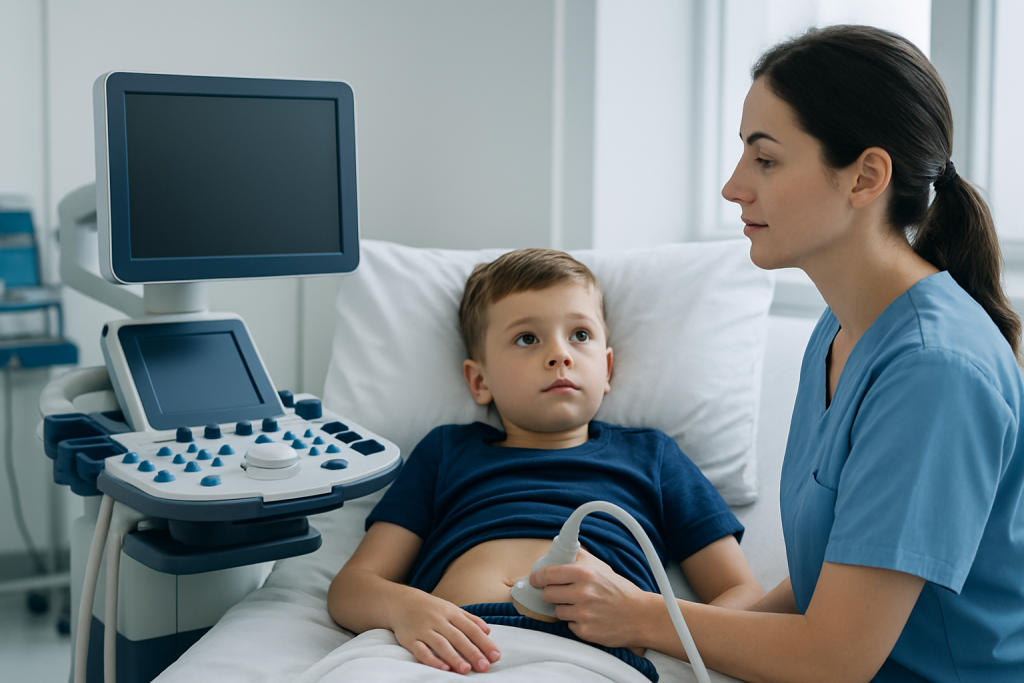
The first signs of Hirschsprung’s disease often appear very early in life. A newborn may not pass meconium, the first dark stool, within the expected first day or two after birth. Some babies have a swollen abdomen, trouble feeding, or vomiting, especially if the bowel is blocked by stool buildup.
As a child gets older, the picture may include ongoing constipation, poor weight gain, abdominal distension, or stool leakage that can be mistaken for diarrhea. In some children, symptoms are subtle at the start and become more noticeable only when usual remedies do not help. That can leave parents feeling uncertain, especially if the child seems to strain a lot but still cannot pass stool comfortably.
- Delayed passage of meconium after birth
- Constipation that begins very early
- Abdominal swelling or firmness
- Vomiting, sometimes with a greenish color
- Poor feeding or slow weight gain
- Explosive stool after a rectal exam or relief of blockage
In more serious cases, a child can develop enterocolitis, a bowel inflammation that needs urgent medical care. Signs may include fever, worsening abdominal swelling, diarrhea, lethargy, or sudden illness. Families should treat these changes seriously, while remembering that early treatment is often very effective once the cause is identified.
Causes & Risk Factors

Hirschsprung’s disease develops when nerve cells do not migrate into all parts of the bowel during early fetal development. The affected section lacks the nerve network that tells the intestines to relax and push stool onward. As a result, stool collects above the narrowed segment and the bowel may become distended.
The exact reason this happens is not always known. Genetics can play a role, and the condition may be more likely in children with certain chromosomal or inherited syndromes. It is also seen more often in boys, although it can affect any child.
Risk factors may include a family history of Hirschsprung’s disease or related genetic conditions. Some children are born with it as an isolated finding, while others have additional health concerns. Even when there is no family history, parents should know that the condition is not caused by parenting choices, feeding style, or something done after birth.
Diagnosis
Diagnosis usually starts with a careful history and physical examination. A clinician will ask about the timing of the first stool, stool frequency, feeding, vomiting, growth, and whether the abdomen becomes enlarged. These details often point toward a bowel motility problem rather than routine constipation.
Tests may be used to look for a narrowed segment, check how the bowel functions, and confirm whether nerve cells are missing. A contrast enema can help show the shape of the colon, while a rectal suction biopsy is commonly used to make the diagnosis by examining bowel tissue under a microscope. In some cases, anorectal manometry may also be helpful, especially in older infants or children.
Families traveling for evaluation may appreciate that these tests are usually planned step by step rather than all at once. A pediatric gastroenterologist and pediatric surgeon often work together so the child is assessed with the least delay and the clearest path toward treatment.
Treatment Options
Surgery is the main treatment for Hirschsprung’s disease. The goal is to remove or bypass the part of the bowel that does not have normal nerve cells and then connect healthy bowel to the anus so stool can pass more normally. The type of operation depends on how much bowel is involved and the child’s overall condition.
Some children first need stabilization before surgery. This may include bowel decompression, fluids, nutrition support, and treatment of infection if enterocolitis is present. In selected cases, a temporary ostomy may be recommended before definitive repair, especially if the bowel is very distended or the child is medically fragile.
After surgery, the bowel often needs time to adapt. Stool patterns may be irregular at first, and follow-up care helps address constipation, loose stools, skin irritation, or feeding concerns. Most children benefit from ongoing guidance on hydration, diet, and bowel habits rather than a one-time surgical visit alone.
Care teams may also discuss the practical side of recovery for families who live abroad: when it is safe to fly, how to arrange follow-up with the home physician, and what warning signs should prompt contact after returning home. That kind of planning can make the treatment journey feel more manageable.
Prevention & Self-care
Hirschsprung’s disease cannot be prevented, because it is present from birth. What can be prevented is delay in diagnosis and the complications that may follow untreated bowel obstruction. Paying attention to early stooling patterns in newborns is one of the most useful forms of vigilance a family can have.
After diagnosis or surgery, day-to-day care often centers on comfort, hydration, and bowel regularity. A clinician may recommend a specific feeding approach depending on the child’s age, recovery stage, and stool pattern. Skin care matters too, since frequent stooling or leakage can irritate the diaper area or buttocks.
- Keep follow-up appointments even if the child seems better.
- Track stool frequency, abdominal swelling, feeding, and vomiting.
- Offer fluids and nutrition as advised by the care team.
- Seek guidance before using laxatives, enemas, or suppositories.
- Learn the warning signs of enterocolitis and bowel obstruction.
For international patients, self-care also includes having a clear written plan before travel home: medications if needed, wound care instructions, emergency contact details, and a schedule for the next review. When families understand the plan in advance, recovery tends to feel less disruptive and more predictable.
When to See a Doctor
A doctor should evaluate a newborn who does not pass meconium in the expected time frame, especially if the baby also has a swollen abdomen, vomiting, or feeding difficulty. In older infants and children, constipation that starts very early, does not improve with usual measures, or comes with poor growth deserves medical assessment.
Immediate medical attention is important if a child with suspected or known Hirschsprung’s disease develops fever, worsening belly swelling, repeated vomiting, lethargy, or diarrhea that seems out of character. These can be signs of enterocolitis or significant obstruction and should not be watched at home without guidance.
Families seeking specialized care may benefit from a center with pediatric surgery, pediatric gastroenterology, imaging, pathology, and postoperative support working in one pathway. Acibadem Health Point’s multidisciplinary specialists and JCI-accredited hospitals diagnose and treat this condition for international patients, with coordinated care before and after surgery.
Living With the Condition After Treatment
Many children do well after definitive surgery, but recovery is often a process rather than a single event. Some need time to learn regular bowel habits again, and some may experience constipation, accidents, or frequent stools while the bowel adapts. Follow-up visits help the care team distinguish expected adjustment from a problem that needs treatment.
Parents are often encouraged to watch for growth, appetite, hydration, stool consistency, and skin health. If a child has ongoing symptoms, the doctor may suggest dietary changes, bowel management strategies, or further testing to check how the repaired bowel is functioning. The aim is not only to relieve blockage, but also to support comfortable feeding, growth, and daily life.
With the right treatment and follow-up, many children return to ordinary routines at home, school, and play. Clear communication with the healthcare team remains important, especially for families balancing recovery with travel, language differences, and follow-up across countries.
Frequently asked questions
What causes Hirschsprung's disease?
It happens when nerve cells fail to develop in part of the large intestine before birth. Without those nerve cells, the bowel cannot move stool forward normally. The exact reason for this developmental problem is not always known, but genetics may contribute in some children.
How is Hirschsprung's disease diagnosed in babies?
Doctors usually begin with a history and exam, then use tests such as a contrast enema and a rectal biopsy to confirm the diagnosis. The biopsy is especially important because it shows whether nerve cells are missing in the bowel wall. The testing plan depends on the child’s age and symptoms.
Is Hirschsprung's disease the same as constipation?
No. Constipation is a symptom that has many possible causes, while Hirschsprung's disease is a structural and developmental condition present from birth. A baby with very early, persistent constipation should be assessed carefully to find the true cause.
Does every child with Hirschsprung's disease need surgery?
In most cases, yes, because surgery addresses the part of the bowel that lacks nerve cells. Some children also need temporary supportive treatment before the definitive operation. The exact procedure depends on how much bowel is affected and how the child is doing overall.
What is recovery like after surgery?
Recovery varies, but many children need time for their bowel habits to settle. Follow-up care may focus on stool pattern, hydration, nutrition, and skin protection. The care team can also help families know which symptoms are normal adjustment and which need review.
Can Hirschsprung's disease come back after treatment?
The missing nerve cells do not return, but symptoms can sometimes persist or reappear if there is constipation, narrowing, or bowel inflammation. Regular follow-up helps identify and manage these issues early. With monitoring, many children improve steadily over time.
References
- Mayo Clinic
- National Institute of Diabetes and Digestive and Kidney Diseases
- American Academy of Pediatrics
- NHS
- World Health Organization
This article is for general information only and is not a substitute for professional medical advice. Please consult a qualified doctor about your individual situation.
More from the Health Library



Related Specialists
Psk. Seda Akcan
Clinical Psychology
Dr. Hamdi Karakulak
Emergency Service
Dr. Oya Uğurlubilek
Inpatient Clinic Physicians Clinical Service
Dr. Atiye Ayral
Physical Medicine & Rehabilitation