Liver Biopsy or FibroScan? How Doctors Choose the Less and More Invasive Path

Key Takeaways
- FibroScan is a non-invasive test that estimates liver stiffness and can help assess fibrosis.
- Liver biopsy provides direct tissue information and is sometimes needed for diagnosis or treatment planning.
- The best test depends on the clinical question, the patient’s overall health, and previous test results.
- Both tests can be part of a broader liver evaluation that includes blood tests and imaging.
- Preparation, recovery time, and follow-up are usually simpler with FibroScan than with biopsy.
Medically reviewed by the Acıbadem clinical team — June 13, 2026
Doctors use liver biopsy and FibroScan for different reasons when evaluating liver health. The choice depends on how much detail is needed, whether inflammation or scarring is suspected, and whether a tissue sample is necessary.
Overview
When a doctor needs to understand what is happening inside the liver, the decision is not always between “better” and “worse” tests. It is usually a question of what information is needed. FibroScan and liver biopsy answer different questions, and in many patients they work best as complementary tools rather than competing ones.
FibroScan is a quick, non-invasive scan that estimates how stiff the liver is. Because stiffness often rises when scarring develops, the test can help assess fibrosis and, in some settings, fat-related liver disease. Liver biopsy, by contrast, takes a small sample of liver tissue so a specialist can examine the cells directly under a microscope. That makes it more invasive, but also more detailed.
For international patients, the choice can shape the entire care plan: whether the evaluation can be done in one outpatient visit, whether travel and recovery time need to be minimized, and whether a more definitive answer is needed before treatment decisions are made. Doctors usually match the test to the clinical goal, not simply to convenience.
What FibroScan Actually Shows
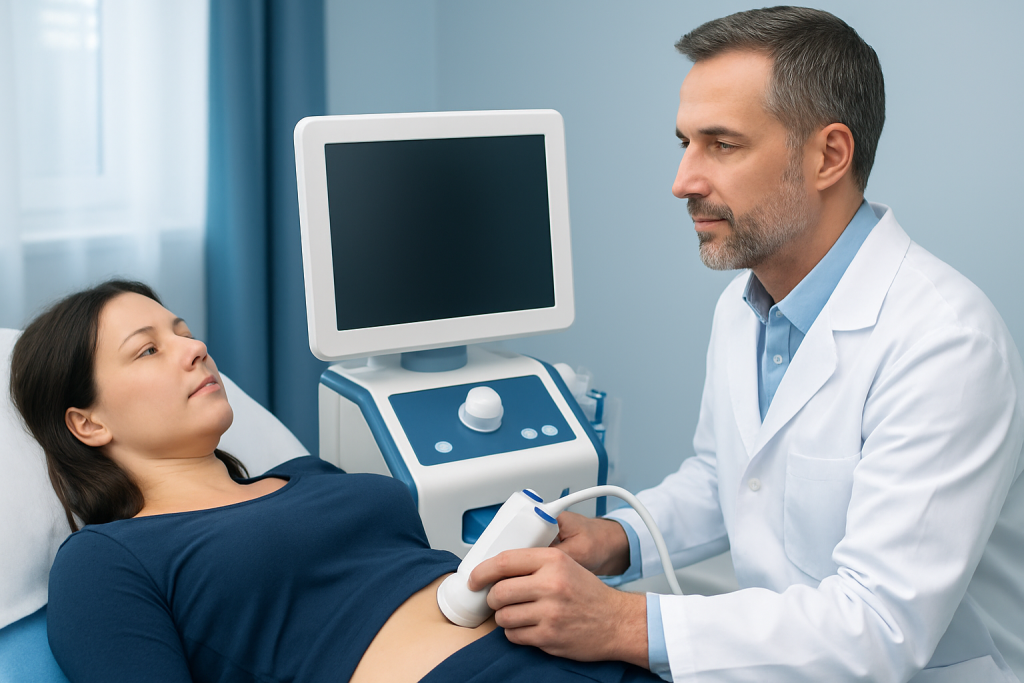
FibroScan, also called transient elastography, sends a painless vibration through the liver and measures how quickly the wave travels. Stiffer tissue tends to transmit the wave differently, which gives the doctor an estimate of liver stiffness. Some systems can also measure a parameter related to fat in the liver, which may be useful in metabolic liver conditions.
In everyday practice, FibroScan is often used to screen for or monitor liver fibrosis. It is helpful in chronic conditions such as viral hepatitis, fatty liver disease, alcohol-related liver injury, and some autoimmune or hereditary liver disorders. Because it does not require a needle, many patients prefer it as an initial step.
FibroScan is most useful when the aim is to estimate the degree of scarring or follow changes over time. It does not show the full microscopic picture of the liver, and results can sometimes be influenced by body habitus, recent meals, inflammation, congestion, or technical factors. That is why doctors interpret it alongside blood tests and imaging rather than in isolation.
What a Liver Biopsy Adds
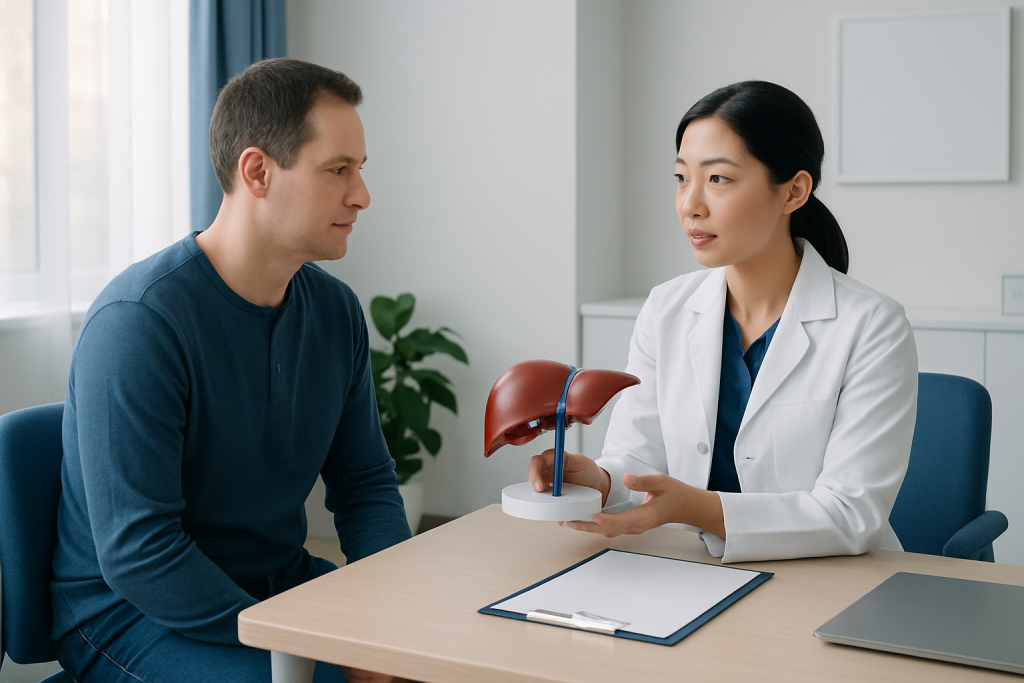
A liver biopsy gives a pathologist actual tissue to examine. This can reveal not only the amount of scarring, but also patterns of inflammation, fat buildup, injury, iron, bile duct changes, or other microscopic findings that may not be obvious on scans. In some cases, that added detail changes the diagnosis or confirms a treatment choice.
Doctors may consider biopsy when non-invasive tests do not give a clear answer, when results do not match the clinical picture, or when a precise diagnosis will influence medication selection or monitoring. It is also useful when several liver conditions could be present at the same time and the team needs a clearer map of what is driving the disease.
Because biopsy involves a needle and tissue removal, it is more invasive than FibroScan and requires more preparation. That said, in experienced hands it is a well-established procedure. The main advantage is depth of information; the tradeoff is a greater burden in terms of discomfort, observation, and small but real procedural risks.
How Doctors Decide Between the Two
The decision usually begins with a practical question: What does the clinician need to know right now? If the goal is to estimate fibrosis, follow known liver disease, or avoid an invasive procedure when the picture is already fairly clear, FibroScan is often a good first choice. If the team needs tissue-level detail or the answer could change treatment, biopsy may be more appropriate.
Several factors influence that judgment. These include the suspected liver condition, prior blood test patterns, imaging findings, body size, whether there are signs of advanced liver disease, and whether the patient has bleeding risks or is taking medications that affect clotting. The quality and consistency of previous results also matter.
Sometimes the answer is sequential rather than either-or. A patient may start with blood work, ultrasound, and FibroScan. If those results leave uncertainty, a biopsy may follow. In other situations, especially when the patient is traveling for care, doctors may prefer the most efficient path that avoids repeat visits while still providing the level of certainty needed for safe treatment planning.
- FibroScan is favored when a quick, non-invasive fibrosis estimate is enough.
- Biopsy is favored when microscopic detail is needed.
- Both may be used when the first test does not fully answer the question.
What to Expect During Each Test
A FibroScan appointment is usually straightforward. The patient lies on an examination couch while a probe is placed over the right side of the chest or upper abdomen. The scan takes only a few minutes, and most people can return to normal activities immediately afterward. No incision or anesthesia is usually needed.
A liver biopsy is a more involved procedure. Depending on the method used, local anesthesia is commonly given, and some patients receive additional medication to help them relax. The doctor uses imaging guidance or another technique to obtain a small tissue sample. Afterward, the patient is usually observed for a period of time to make sure there is no bleeding or other immediate issue.
Recovery also differs. After FibroScan, there is typically no recovery time. After biopsy, the patient may need to avoid strenuous activity for a short period and follow instructions about monitoring for pain, fever, dizziness, or unusual bleeding. The exact plan depends on the biopsy type and the patient’s overall condition.
Risks, Limitations, and How Results Can Be Misread
FibroScan is generally considered very safe, but it does have limits. It estimates stiffness rather than directly measuring scarring, so inflammation, congestion, recent food intake, or technical factors can affect the reading. A result that seems high does not automatically mean advanced liver disease, and a low result does not rule out every liver problem.
Liver biopsy offers more detail, but it is not risk-free. Discomfort at the biopsy site, a small chance of bleeding, and rarely other complications can occur. The sample is also tiny, so the findings reflect one part of the liver and may not capture every change throughout the organ.
Because each test has strengths and blind spots, doctors look at the whole picture. Blood tests, ultrasound or other imaging, the patient’s history, alcohol intake, metabolic risk factors, viral hepatitis status, and medication use all help prevent over-reading or under-reading a single result.
Prevention, Preparation, and Self-care
For either test, the most useful self-care begins before the appointment: bringing a complete medication list, sharing any blood-thinning medicines or supplements, and telling the care team about prior bleeding problems, allergies, or past liver procedures. Patients traveling from another country should also ask how much local observation time is expected and whether any results will be available the same day or at follow-up.
If a FibroScan is planned, the clinic may advise avoiding food for a short period beforehand. If a biopsy is planned, the preparation may be more detailed and can include blood tests to check clotting, arranging transport home, and following instructions about food, fluids, and medication adjustments. These steps are designed to make the procedure as smooth and safe as possible.
Longer-term liver care often includes practical choices rather than dramatic ones: limiting alcohol if advised, managing weight and blood sugar, staying current with hepatitis care, and keeping follow-up appointments even when symptoms are mild. Stable liver disease is often monitored over time, so consistency matters as much as a single test result.
When to See a Doctor
Medical review is appropriate when blood tests repeatedly suggest liver injury, when imaging shows possible scarring or fatty liver, or when a known liver condition needs staging before treatment begins. A doctor may also recommend assessment if there is unexplained fatigue, jaundice, abdominal swelling, itching, dark urine, or a history that raises concern for chronic liver disease.
Urgent evaluation is not usually needed for every abnormal liver test, but it is important to seek prompt care if symptoms worsen quickly, if there is vomiting blood, black stools, marked confusion, severe abdominal pain, or signs of significant bleeding after a procedure. After a biopsy, any concerning new symptom should be reported without delay.
For patients planning treatment abroad, it is reasonable to ask the specialist which test is likely to answer the question most efficiently, whether FibroScan can replace biopsy in their case, and how results will be shared with their home doctor. At Acibadem Health Point, multidisciplinary specialists and JCI-accredited hospitals diagnose and treat liver conditions for international patients with this kind of coordinated approach.
A Practical Way to Think About the Choice
One useful way to compare the tests is to think of FibroScan as a fast map and biopsy as a close-up inspection. The map is often enough to guide the journey, especially when the clinical picture is already fairly clear. The close-up becomes important when the team needs to see exactly what is happening at tissue level.
That is why the “less invasive” option is not automatically the right one, and the “more invasive” option is not automatically excessive. Doctors choose the tool that best fits the question, the risk profile, and the patient’s circumstances. In many liver conditions, a thoughtful sequence of tests gives the most accurate answer with the least burden.
Patients who understand this distinction are often better prepared for discussion with their doctor. They can ask not only “Which test is smaller?” but also “Which test will help make the safest decision?”
Frequently asked questions
Is FibroScan a replacement for liver biopsy?
Not always. FibroScan is very useful for estimating liver stiffness and monitoring some liver conditions, but it does not provide the microscopic detail that a biopsy can. Doctors may use it first and reserve biopsy for situations where more certainty is needed.
Which test is more painful?
FibroScan is usually painless or only mildly uncomfortable because it does not use a needle. Liver biopsy can cause more discomfort because it is an invasive procedure, although local anesthesia and careful technique help reduce pain.
Can FibroScan show fatty liver?
It can provide information that may help assess fat in the liver on certain devices, but it is not the same as looking at tissue under a microscope. Doctors often combine it with blood tests and imaging when fatty liver disease is suspected.
Why would a doctor still recommend biopsy if FibroScan exists?
A biopsy may be needed when the diagnosis is unclear, when several liver problems may be present, or when treatment decisions depend on tissue detail. It can also help when non-invasive results do not match the rest of the clinical picture.
Do I need special preparation for FibroScan?
Preparation is usually simple, and some clinics may ask the patient to avoid eating for a short time before the test. The care team will give specific instructions if anything is needed based on the local protocol.
How long does recovery take after a liver biopsy?
Recovery is usually short, but patients are commonly monitored for a period after the procedure and may need to limit strenuous activity briefly. The exact advice depends on the type of biopsy and the patient’s overall health.
References
- World Health Organization
- American Association for the Study of Liver Diseases
- European Association for the Study of the Liver
- National Institute of Diabetes and Digestive and Kidney Diseases
This article is for general information only and is not a substitute for professional medical advice. Please consult a qualified doctor about your individual situation.