Laceration: Symptoms, Causes and Treatment

Key Takeaways
- Lacerations can range from small superficial cuts to deeper wounds involving muscle, tendons, nerves, or blood vessels.
- Prompt cleaning and appropriate closure help reduce infection risk and improve healing.
- Some lacerations need stitches, while others can close safely with adhesive strips or skin glue.
- Tetanus status and wound contamination are important parts of evaluation.
- Medical review is especially important for deep wounds, heavy bleeding, bite injuries, and wounds that do not close easily.
Medically reviewed by the Acıbadem clinical team — August 19, 2026
A laceration is a tear or cut in the skin or deeper tissue that often needs careful cleaning and sometimes closure with stitches, adhesive strips, or glue. Most heal well with timely treatment, but deeper, dirty, or high-risk wounds should be assessed by a clinician.
Overview
A laceration is a break in the skin caused by a sharp object, impact, or tearing force. Unlike a simple scratch, a laceration often has irregular edges and may extend below the surface, which is why the wound can look small on top but be deeper than it first appears.
In everyday life, lacerations may happen during cooking, sports, falls, work injuries, or travel-related accidents. For international patients, deciding what to do next can feel especially practical: should the wound be cleaned at home, checked locally, or assessed during a planned visit to a hospital where suturing, imaging, and follow-up care are available in one place?
Most lacerations heal well when they are cleaned properly and closed at the right time. The main goals of care are to stop bleeding, prevent infection, bring the wound edges together when needed, and protect the healing tissue so the scar is as small and stable as possible.
Symptoms
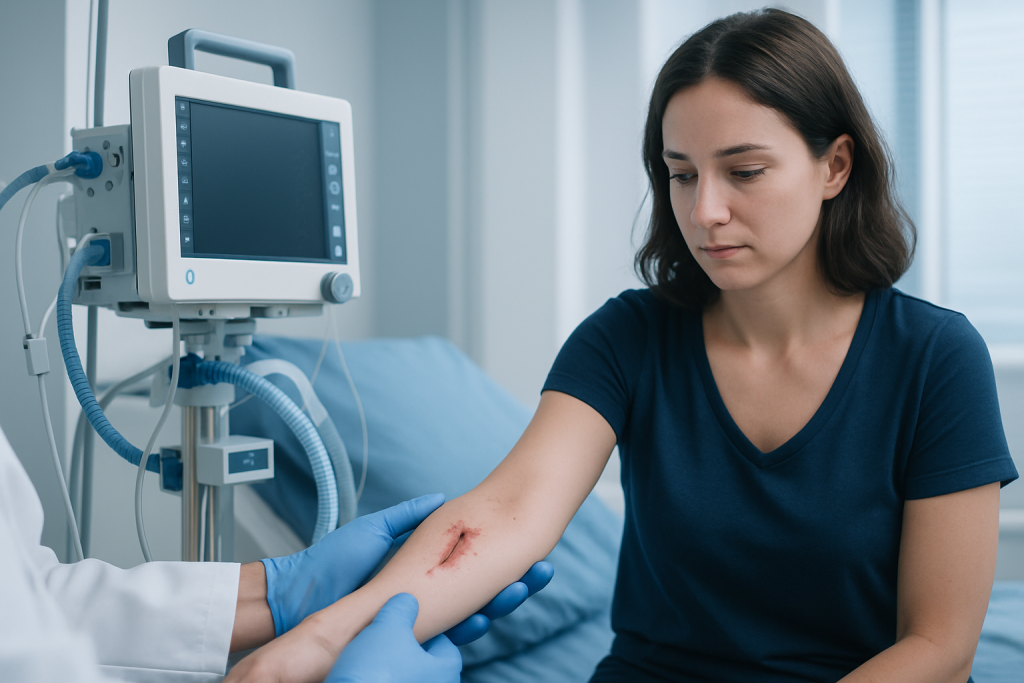
The appearance of a laceration depends on how it happened and how deep it is. Some are narrow and linear, while others are ragged, gaping, or bruised around the edges. Bleeding may be light or heavy, and some wounds expose fat, muscle, or other deeper structures.
Common signs include pain, tenderness, swelling, and visible separation of the skin. A person may also notice numbness, difficulty moving the area, or ongoing bleeding that does not stop after firm pressure.
- Irregular or torn skin edges
- Bleeding that may be brisk at first
- Pain or stinging at the wound site
- Swelling, bruising, or redness
- Loss of sensation or reduced movement near the injury
Symptoms such as numbness, weakness, or trouble using the injured part can suggest deeper tissue involvement and should be evaluated promptly.
Causes & Risk Factors

Lacerations are usually caused by sharp objects such as knives, broken glass, tools, metal edges, or machinery. They can also occur when the skin is stretched or struck forcefully enough to split, such as in a fall, collision, or crushing injury.
Certain situations make lacerations more likely or more complicated. Outdoor injuries may be contaminated with soil or debris, while hand injuries can threaten tendons, nerves, or joints because of the dense structures beneath the skin. Facial wounds and wounds near the eyes deserve careful assessment because function and appearance both matter.
Risk factors for slower healing or complications include diabetes, poor circulation, smoking, use of blood-thinning medicines, immune suppression, and delayed treatment. Bites from animals or humans also require special attention because they carry a higher infection risk.
Diagnosis
Clinicians usually begin by asking how the injury happened, when it occurred, and whether the person has any numbness, weakness, or difficulty moving the area. They then inspect the wound for depth, contamination, tissue loss, and signs that the injury may involve tendons, nerves, joints, or foreign material.
Not every laceration needs testing, but some injuries require imaging if a retained glass fragment, bone injury, or deeper damage is suspected. The decision to use local anesthesia, wound exploration, or imaging depends on the location and the nature of the injury.
Because travel plans and timing matter for many patients, especially those coming from abroad, clinicians often try to balance timely closure with safe evaluation. A wound that is more than just a surface cut may benefit from prompt specialist review rather than waiting for it to improve on its own.
Treatment Options
Treatment starts with controlling bleeding and cleaning the wound thoroughly with appropriate irrigation. If the edges are close enough and the wound is fresh and clean, a clinician may close it with stitches, adhesive strips, skin glue, or occasionally a combination of methods.
Deeper lacerations may need layered repair to bring together tissue beneath the skin and reduce tension on the surface closure. If the wound is contaminated, delayed, or infected, closure may be postponed so the tissue can be safely managed first.
Additional care can include tetanus vaccination review, antibiotics for selected high-risk wounds, and Sciatica Pain Relief: Treatments and Self-Care" class="ahp-ilk">pain relief measures. If there is involvement of a tendon, nerve, vessel, or joint, treatment may require a specialist such as a plastic surgeon, orthopedic surgeon, or hand surgeon.
After closure, the wound is usually protected with a dressing and given clear instructions on cleaning, activity limits, and signs that should prompt reassessment. For some patients, especially international travelers, arranging follow-up before departure helps ensure stitches are removed at the right time and healing is monitored properly.
Prevention & Self-care
Many lacerations can be prevented with practical habits at home, at work, and during sports or travel. Safe handling of knives and tools, good lighting, protective equipment, and keeping walkways clear all reduce the chance of accidental cuts and falls.
For a new minor wound, gentle first aid is usually the right starting point. Clean the area with clean running water, apply direct pressure to stop bleeding, and cover it with a sterile dressing once the bleeding slows. The goal is to keep the wound clean and protected without repeatedly opening it to check on it.
- Wash hands before touching the wound
- Use steady pressure to control bleeding
- Keep the area clean and dry as instructed
- Avoid picking at scabs or removing adhesive strips early
- Watch for increasing redness, swelling, pus, or fever
Scar care should begin only after the wound has closed and a clinician says it is safe. Sun protection can be helpful for healing skin, and follow-up visits are important if the wound crosses a joint, is on the face, or was repaired with stitches that need removal.
When to See a Doctor
Medical evaluation is advisable when bleeding is difficult to stop, the wound is deep or gaping, or the edges do not come together easily. A clinician should also assess lacerations on the face, hands, feet, genitals, over joints, or near the eyes because these areas can affect function and may need precise repair.
Urgent care is especially important if there is numbness, weakness, limited movement, exposed fat or muscle, debris that cannot be rinsed away, or a suspected foreign body such as glass. Bite wounds, dirty wounds, and injuries in people who have not had a recent tetanus booster also deserve prompt attention.
After treatment, new or worsening redness, warmth, swelling, drainage, fever, or increasing pain can signal infection or another healing problem. If care is being arranged from another country, it is sensible to confirm where follow-up, stitch removal, and any specialist review will take place before travel ends. Acibadem Health Point’s multidisciplinary specialists and JCI-accredited hospitals diagnose and treat lacerations for international patients with coordinated care and follow-up planning.
Healing and Recovery
Healing time varies with the wound’s depth, location, and whether deeper tissues were involved. Areas that move often, such as the hands, knees, or elbows, may take longer because the skin is under more tension during daily activity.
During recovery, the wound should be protected from repeated friction, soaking, or strain unless the treating clinician gives different instructions. Stitches, when used, are removed at a time that depends on the body site and the pace of healing, which is one reason follow-up is part of good care.
Some scars become flatter and less noticeable over time, while others remain raised or darker for longer. If a scar becomes tight, painful, or cosmetically concerning, a clinician can discuss options for scar management once the skin has fully healed.
Possible Complications
Most lacerations heal without major problems, but complications can occur when the wound is deep, contaminated, or not treated promptly. Infection is one of the most common concerns, especially if the injury involved dirt, saliva, or a bite.
Other possible complications include persistent bleeding, wound reopening, delayed healing, numbness, reduced motion, and more noticeable scarring. If a tendon, nerve, vessel, or joint was affected, the impact can be functional as well as cosmetic.
Early assessment and appropriate closure reduce these risks. When a wound is managed carefully from the start, the likelihood of a smooth recovery is generally much better.
Frequently asked questions
What is the difference between a laceration and a cut?
A laceration is a type of cut, but the term usually refers to a wound with torn or irregular edges. It may be deeper or more complex than a small clean slice. Clinicians use the term to describe wounds that may need careful cleaning or closure.
Do all lacerations need stitches?
No. Small, shallow wounds that are not gaping may heal well with adhesive strips, skin glue, or dressings. Deeper or wider wounds often need stitches so the edges can heal together properly.
How can someone tell if a laceration is infected?
Signs of infection can include increasing redness, warmth, swelling, pus, worsening pain, or fever. Mild redness right after an injury can be part of normal healing, but changes that get worse over time should be checked by a clinician.
Should a laceration be cleaned with hydrogen peroxide or alcohol?
Those products can irritate tissue and are generally not the first choice for routine wound cleaning. Clean running water and gentle cleansing are usually preferred for minor wounds, unless a clinician gives different instructions.
When should a person seek urgent care for a laceration?
Urgent care is important if bleeding does not stop with pressure, the wound is deep or gaping, or there is numbness, weakness, or trouble moving the area. Injuries to the face, hands, joints, or eyes also deserve prompt evaluation.
Can a person travel after getting stitches for a laceration?
Often yes, but it depends on the wound and the timing of follow-up. It is best to confirm when stitches need removal and where care will continue, especially if the person is returning to another country soon.
References
- World Health Organization
- Centers for Disease Control and Prevention
- American College of Emergency Physicians
- Mayo Clinic
- National Health Service
This article is for general information only and is not a substitute for professional medical advice. Please consult a qualified doctor about your individual situation.
Explore treatments in Turkey — costs, top hospitals & a free quote
JCI-accredited · board-certified surgeons · reply within 24h
Add us as a Preferred Source to see more of our trusted health content across Google Search, AI Overviews and Discover.