Incline Dumbbell Press

Key Takeaways
- The incline dumbbell press emphasizes the upper chest more than a flat press, while also working the shoulders and triceps.
- Good bench angle, stable shoulder position, and controlled movement matter more than heavy weight.
- Common problems include shoulder strain, overly wide elbow flare, and arching the lower back too much.
- People with shoulder pain, recent upper-body injuries, or neck symptoms should get personalized advice before pressing.
- Progress should be gradual, especially for those returning after injury, traveling, or training without regular supervision.
The incline dumbbell press is a common strength-training exercise that targets the chest, shoulders, and triceps while encouraging a controlled range of motion. With the right technique and sensible progression, it can be a useful part of training for fitness, sport, or rehabilitation goals.
Overview
The incline dumbbell press is a pressing exercise performed on a bench set at an upward angle. The slight incline changes how the upper body works, shifting more emphasis toward the upper chest and front of the shoulders than a flat dumbbell press.
For many people, that makes it a practical exercise for building upper-body strength and improving balance between the left and right sides. Because each arm works independently, the movement can also expose strength differences that a barbell press may hide.
In a rehabilitation or return-to-training setting, the incline dumbbell press is often valued for another reason: it can be adjusted easily. Bench angle, grip position, load, and range of motion can all be adapted to a person’s comfort, movement quality, and medical history.
Symptoms and What the Exercise Should Feel Like
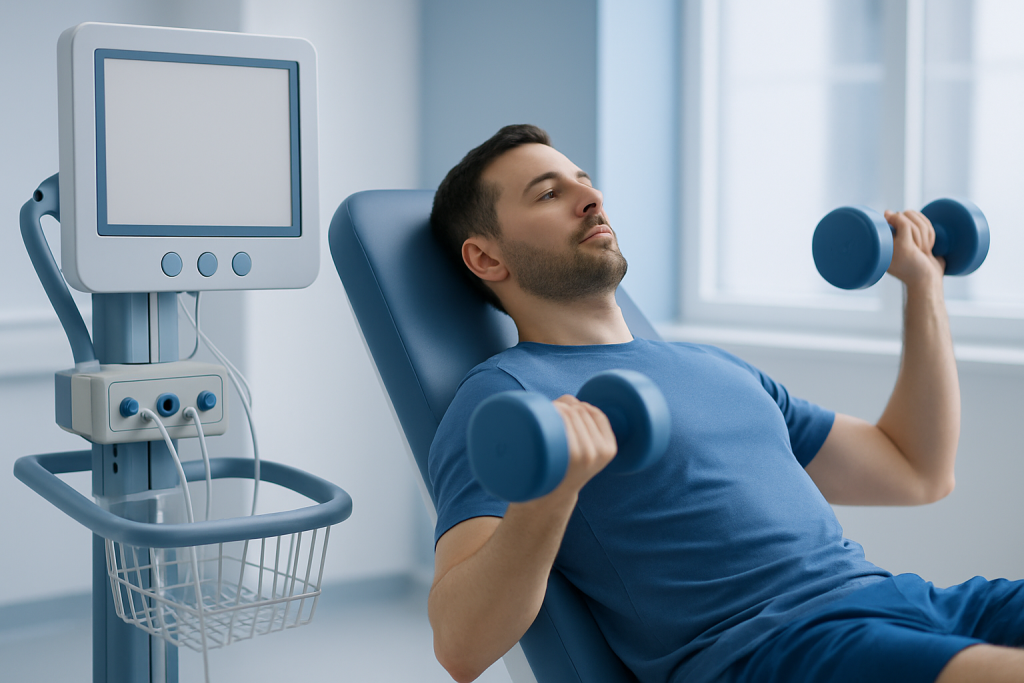
The exercise itself should feel like effort in the chest, shoulders, and triceps, not sharp pain. A steady muscular burn or fatigue during the final repetitions is common, especially if the weight is challenging but still manageable.
Some people notice mild shoulder or wrist discomfort when technique is off. That may happen if the elbows drift too far outward, the shoulders roll forward, or the dumbbells are lowered beyond a comfortable range. These are signals to reduce the load, shorten the movement, or review form.
Signs that the exercise is not being tolerated well include pinching in the front of the shoulder, neck tension, numbness, tingling, or pain that lingers after the workout. Those symptoms deserve attention rather than being pushed through.
Causes and Risk Factors for Pain or Poor Tolerance

Pain during an incline dumbbell press is often related to mechanics rather than weakness alone. A bench angle that is too steep can make the movement feel more like a shoulder press, which may overload the front of the shoulder for some people.
Other risk factors include limited shoulder mobility, tight chest muscles, prior rotator cuff irritation, unstable scapular control, and using weights that are too heavy to lower under control. Training fatigue and rushed repetitions also increase the chance of form breakdown.
Outside the gym, people returning from shoulder strain, collarbone injury, neck problems, or upper-back stiffness may need extra caution. In those cases, exercise selection should be based on individual tolerance, not on what works well for someone else in the room.
How It Is Diagnosed or Assessed
The incline dumbbell press is not diagnosed in the medical sense, but its suitability can be assessed by a coach, physiotherapist, sports medicine clinician, or orthopedist. They may watch how the person sets up, lowers the weights, and controls the top position.
Assessment usually focuses on shoulder range of motion, pain location, scapular movement, posture, and the ability to keep the wrists and elbows aligned. If symptoms suggest an injury, the clinician may test nearby structures such as the rotator cuff, biceps tendon, or chest wall.
When someone is planning to train while traveling or after receiving care in another country, this kind of assessment can be especially helpful. A clear movement screen and a written return-to-exercise plan can make it easier to continue safely with another provider at home.
Treatment and Exercise Options
When the incline dumbbell press is being used for fitness, treatment is usually not needed; however, technique correction may be. Starting with a lighter pair of dumbbells, a lower bench angle, and a shorter range of motion often improves comfort without removing the exercise completely.
For people with shoulder irritation, alternatives may include a neutral-grip press, machine chest press, push-up variations, or floor press movements. These options can reduce stress on the shoulder while still training the chest and triceps.
If pain is part of an injury, a clinician may recommend temporary rest from pressing, mobility work, and a graded strengthening plan. The goal is not simply to stop exercise, but to rebuild tolerance in a way that matches the person’s current stage of recovery.
In some rehabilitation plans, upper-body training is combined with scapular stabilization, rotator cuff strengthening, and posture-related work. That broader approach can be helpful when the press itself is only one piece of a larger movement pattern problem.
Prevention and Self-care
Prevention starts before the first repetition. A bench angle of about 30 to 45 degrees is often better tolerated than a very steep incline, and keeping the shoulder blades gently set against the bench can help create a more stable pressing base.
Using controlled tempo matters. Lowering the dumbbells slowly, stopping when the upper arms are just below or near chest level, and pressing without slamming the weights together helps limit strain. Breathing steadily and avoiding extreme lower-back arching also support safer mechanics.
Other useful habits include warming up the shoulders and upper back, increasing weight gradually over weeks rather than sessions, and balancing pressing work with rowing or pulling exercises. For people training after an injury or while navigating care in another country, written instructions and video review can be useful for maintaining consistency across gyms and providers.
- Choose a bench angle that allows control, not just more load.
- Keep the wrists stacked over the elbows during the press.
- Stop if pain becomes sharp, catching, or unstable.
- Rest adequately between heavier sessions.
When to See a Doctor
Medical advice is appropriate if shoulder, chest, or neck pain appears during pressing and does not settle with rest or form changes. It is also wise to seek evaluation if the discomfort returns every time the exercise is tried, even at lighter weights.
Prompt assessment is especially important after a fall, direct impact, sudden loss of strength, visible swelling, or a popping sensation followed by weakness. Numbness, tingling, pain radiating down the arm, or trouble lifting the arm overhead also deserve medical review.
People with known shoulder conditions, recent surgery, or unexplained upper-body pain should not guess their way through training. A qualified doctor or physiotherapist can help identify the source of the problem and decide whether the incline dumbbell press should be modified, paused, or replaced.
For international patients, Acibadem Health Point’s multidisciplinary specialists and JCI-accredited hospitals can help diagnose and treat exercise-related shoulder and chest concerns with coordinated care.
Frequently asked questions
What muscles does the incline dumbbell press work?
The incline dumbbell press primarily works the upper chest, with meaningful involvement from the front shoulders and triceps. The exact emphasis depends on bench angle, grip, and how controlled the movement is. A lower incline usually shifts more work to the chest than a steeper one.
Is the incline dumbbell press better than the flat bench press?
Neither exercise is universally better. The incline version tends to place more emphasis on the upper chest and shoulders, while the flat press often allows heavier loading and a different chest angle. Many training plans use both, depending on the person’s goals and shoulder comfort.
Should the elbows flare out during the press?
A small amount of elbow flare is normal, but very wide elbows can irritate the shoulders. Many people do better when the elbows stay slightly tucked rather than pointed straight out to the sides. The best position is the one that feels strong, stable, and pain-free.
What bench angle is usually best?
A moderate incline is often easier on the shoulders than a steep one. Very high angles can turn the exercise into a shoulder-dominant press, which may not suit everyone. The ideal angle depends on comfort, mobility, and training purpose.
Can someone do this exercise with shoulder pain?
Sometimes, but only if a clinician or experienced coach confirms that it is appropriate. If the movement causes pinching, sharp pain, or lingering symptoms, it should be modified or avoided until the cause is understood. Safer alternatives may be available during recovery.
How can someone make the exercise safer while traveling or training away from home?
Using lighter weights, a controlled tempo, and a simple written plan can help keep training consistent in unfamiliar gyms. It is also useful to know the signs that mean the exercise should be stopped. If there has been a recent injury, a local medical review before resuming pressing is a sensible step.
References
- American College of Sports Medicine
- National Academy of Sports Medicine
- Mayo Clinic
- Cleveland Clinic
- American Academy of Orthopaedic Surgeons
This article is for general information only and is not a substitute for professional medical advice. Please consult a qualified doctor about your individual situation.