

How To Get Rid Of Double Chin

Key Takeaways
- A double chin can be caused by fat, loose skin, muscle laxity, or a combination of factors.
- Weight management may help some people, but it does not correct every type of under-chin fullness.
- Non-surgical options can reduce small pockets of fat, while surgery may be more effective for significant fullness or loose skin.
- A careful evaluation helps match treatment to the person’s facial anatomy and goals.
- Recovery, aftercare, and follow-up matter as much as the procedure itself, especially for international patients.
A double chin is a common concern that can appear with weight changes, genetics, aging, or changes in skin and muscle tone. The right approach depends on what is causing the fullness, and treatment may range from simple lifestyle measures to in-office procedures or surgery.
Overview
A double chin, also called submental fullness, is the soft or rounded area that appears beneath the lower jaw. For some people, it is mainly a small fat deposit. For others, it reflects skin laxity, a naturally less defined jawline, or the way the chin, neck, and jaw fit together.
Because the cause can differ so much from one person to another, there is no single answer to how to get rid of a double chin. Some people improve with healthy weight management and posture awareness. Others benefit more from targeted medical treatments that reduce fat, tighten skin, or reshape the neck and jawline.
For patients considering care from another country, the first practical step is not choosing a procedure at random. It is understanding what is actually creating the fullness, what degree of change is realistic, and how much downtime can fit into travel plans and recovery. That discussion is usually best handled during an in-person evaluation with a qualified specialist.
Symptoms
The most obvious sign is a rounded or fuller appearance below the chin, especially when viewed from the side or in photos. Some people notice that the jawline looks less distinct, even if their weight has not changed much.
A double chin may be more noticeable in certain positions, such as when looking down, speaking on video calls, or wearing fitted necklines. In many cases it is purely cosmetic, but it can still affect how a person feels about their profile and facial balance.
It is also helpful to notice what else is happening in the area. Loose skin, soft tissue under the chin, a smaller lower jaw, and neck muscle banding can all contribute to the appearance. These clues help clinicians decide whether fat reduction alone is enough or whether skin tightening or surgery would offer a better result.
Causes & Risk Factors

Several different factors can lead to a double chin. Extra body fat is one common reason, but it is far from the only one. Genetics can play a major role, and some people naturally store fat under the chin more easily than others, even at a healthy weight.
Age-related changes are also important. As skin loses elasticity and the supporting structures of the face soften, the area under the chin may appear fuller or less defined. Posture, particularly a habit of projecting the head forward, can make the neck look heavier in photos and in daily life.
- Genetic tendency to store fat under the chin
- Weight gain or weight fluctuation
- Reduced skin elasticity with age
- Loose neck skin after weight loss
- Weak chin projection or lower jaw structure
- Muscle laxity in the neck
Because these causes can overlap, two people with the same visible concern may need very different solutions. One may respond well to body-weight changes, while another may need a procedure that addresses both fat and skin. That is why a personalized plan is more reliable than an internet shortcut.
Diagnosis
Diagnosing the cause of a double chin usually starts with a focused medical history and a physical examination. A specialist will look at the amount and location of fat, the quality of the skin, chin shape, and the relationship between the chin and neck.
In many cases, no scans are needed. The diagnosis is made clinically by observing the area from different angles and discussing the patient’s goals. If there is a concern about another condition, or if surgery is being considered, additional evaluation may be recommended to guide planning.
For international patients, this assessment is especially important because travel time can limit how much can be done in a single visit. A clear diagnosis helps the team decide whether the person is a good candidate for a non-surgical approach, whether surgery is more appropriate, and how much recovery time should be expected before returning home.
Treatment Options
Treatment depends on the main cause of the fullness and the amount of change desired. For mild fullness caused mainly by weight-related fat, general lifestyle measures may help. These steps are supportive, but they do not reshape the neck in the same way as a medical procedure.
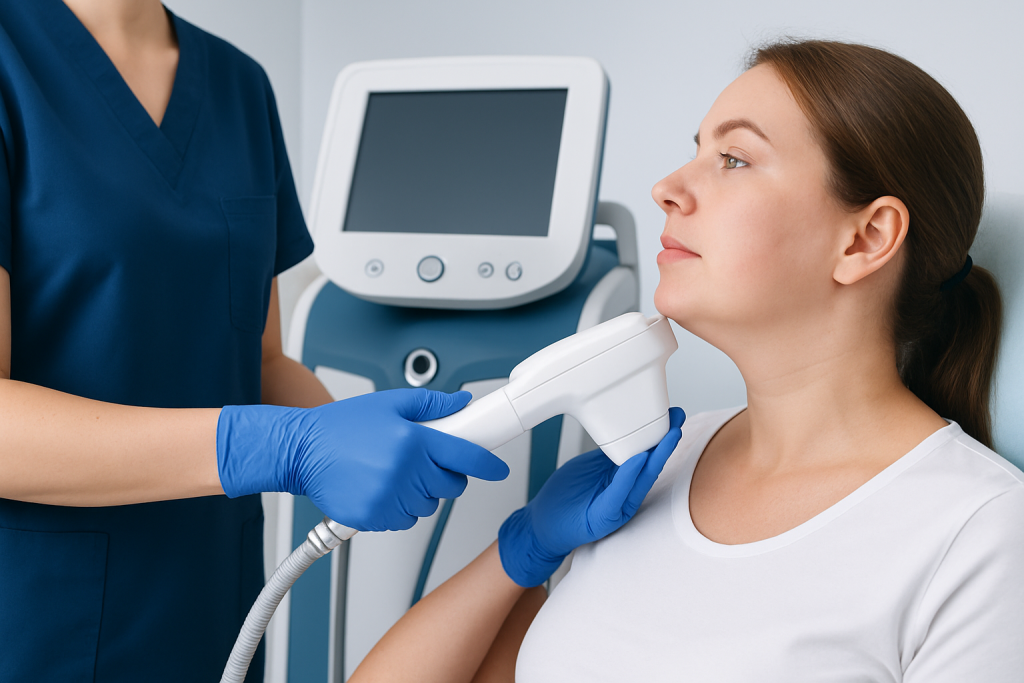
Non-surgical options are often considered when the goal is subtle contour improvement with minimal downtime. These may include injectable treatments that break down fat in selected patients, energy-based devices that may help tighten skin, or other office-based approaches. The best option depends on skin quality, the amount of fat present, and the person’s tolerance for gradual change.
Surgical treatment is often the most direct option for more prominent fullness or when loose skin is part of the concern. Chin liposuction removes excess fat through small incisions, and it can sharpen the under-chin contour in appropriately selected patients. In some cases, a neck lift or combined facial procedure may be recommended when skin laxity or deeper neck structures are also contributing.
Some patients benefit from chin augmentation or jawline enhancement if a weak chin is making the neck area look fuller by comparison. This is one reason treatment planning should focus on overall facial balance, not just the area under the chin.
Recovery time varies by procedure. Non-surgical treatments often involve temporary swelling, tenderness, or firmness. Surgical procedures usually need more downtime, compression or supportive garments in some cases, and follow-up visits to monitor healing. A good plan is one that fits both the anatomy and the patient’s schedule.
Prevention & Self-care
Not every double chin can be prevented, especially when genetics or facial structure are the main factors. Still, healthy habits can help limit weight-related fullness and support better skin and muscle tone over time.
Maintaining a stable weight is one of the most practical steps. Regular physical activity and balanced eating may reduce the chance that extra fat accumulates under the chin. Good hydration, sleep, and sun protection also support overall skin health, although they will not erase existing fullness.
- Keep weight changes gradual and sustainable
- Maintain upright posture when sitting and using screens
- Use sun protection to help preserve skin quality
- Avoid smoking, which can accelerate skin aging
- Choose treatment after a proper evaluation rather than self-treating with unproven exercises or devices
Facial exercises are often discussed online, but evidence that they meaningfully remove a double chin is limited. They may improve awareness of posture or muscle use, but they should not replace medical assessment when the concern is persistent or emotionally distressing.
When To See a Doctor
A medical consultation is reasonable when a double chin is persistent, becoming more noticeable, or affecting confidence. It is also worth seeking advice if the area changed quickly, feels firm or painful, or appeared after another health issue, because not every neck fullness is simply cosmetic.
Seeing a qualified doctor is especially helpful if the person is trying to decide between lifestyle changes, injectables, skin-tightening procedures, or surgery. A specialist can explain which options are realistic, how long results may take to appear, and what recovery would look like if treatment is planned during a trip.
Acibadem Health Point supports international patients with multidisciplinary specialists and JCI-accredited hospitals that diagnose and treat double chin concerns using individualized plans. The right setting matters when a patient wants a safe evaluation, coordinated treatment, and clear follow-up after returning home.
Living With a Double Chin: Setting Expectations
It can be tempting to search for a quick fix, especially when photos or video calls make the under-chin area feel more visible than it does in everyday life. In practice, the most satisfying results usually come from understanding the cause first, then choosing the least and most appropriate intervention.
Not every patient needs surgery, and not every patient is a candidate for non-surgical contouring. The best outcome is often one that looks natural in motion, matches the rest of the face, and fits the person’s recovery window and long-term goals.
For people traveling for care, planning matters. Questions about follow-up timing, swelling, garment use, activity limits, and how to coordinate care after returning home should be addressed before any procedure is scheduled.
Frequently asked questions
Can a double chin go away with weight loss alone?
Sometimes it can, especially when the fullness is mainly due to extra fat. However, if genetics, skin laxity, or jaw structure are important factors, weight loss may not fully change the appearance. A specialist can help determine whether weight management is likely to be enough.
What is the most effective way to get rid of a double chin?
The most effective option depends on the cause. Liposuction may be useful when excess fat is the main issue, while a neck lift or combined procedure may be better when loose skin is significant. There is no universal treatment that works best for everyone.
Are non-surgical treatments worth considering?
They can be a good choice for selected patients with mild to moderate fullness who want limited downtime. Results are usually more gradual and may be less dramatic than surgery. A clinician can help match the method to the amount of fat and the condition of the skin.
Do chin exercises really remove a double chin?
Exercises may improve posture awareness and neck muscle engagement, but they have limited evidence as a way to remove under-chin fat. They should be viewed as a supportive habit rather than a reliable treatment. If the concern is persistent, medical evaluation is more useful.
How long is recovery after double chin treatment?
Recovery depends on the procedure. Non-surgical treatments may involve a short period of swelling or tenderness, while surgical options usually require more downtime and follow-up. A doctor can outline what to expect before treatment is planned.
Is a double chin always related to being overweight?
No. Many people with a healthy weight have a double chin because of genetics, aging, skin laxity, or chin shape. That is why treatment should be based on anatomy rather than assumptions about body weight.
References
- American Society of Plastic Surgeons
- British Association of Aesthetic Plastic Surgeons
- Mayo Clinic
- Cleveland Clinic
This article is for general information only and is not a substitute for professional medical advice. Please consult a qualified doctor about your individual situation.
More from the Health Library

Plastic Surgery Recovery From Home: What Follow-Up Looks Like After You Leave Turkey

What a Plastic Surgery Quote Usually Includes—and What Can Add to the Final Cost

How Long Should You Stay in Turkey After Cosmetic Surgery? A Procedure-by-Procedure Timeline
Related Specialists

Dr. Serkan Tokgönül
Aesthetic Plastic & Reconstructive Surgery
Dr. Ömercan Yağız Öksüz
Aesthetic Plastic & Reconstructive Surgery
Prof. Dr. Mehmet Veli Karaaltın
Aesthetic Plastic & Reconstructive Surgery
Dr. Nezail Demirciler
Plastic, Reconstructive and Aesthetic Surgery