How Long Does It Take For A Tattoo To Heal

Key Takeaways
- Most tattoos look better within 2 to 4 weeks, but deeper skin healing can continue for several months.
- Early redness, mild swelling, and light peeling are common parts of the healing process.
- Good aftercare focuses on gentle cleansing, moisturizing, and protecting the area from sun, soaking, and friction.
- Delayed healing can happen after poor aftercare, skin irritation, infection, or certain health conditions.
- A doctor should be contacted if redness spreads, pain worsens, pus appears, or fever develops.
Tattoo healing usually happens in stages, with the surface skin improving first and deeper layers taking longer to settle. Knowing what is normal can help a person care for the tattoo calmly and spot when medical advice is needed.
Overview
A new tattoo begins as a controlled skin injury, so the body treats it like a wound from the moment the needle stops. The outer layer usually starts to close within days, but the full process is more gradual than many people expect. For most people, the tattoo looks noticeably calmer within 2 to 4 weeks, while the deeper skin layers continue repairing underneath for longer.
The exact healing time depends on the size of the tattoo, where it is placed, how much color or shading was used, and how the skin responds. A small line design on the forearm may settle faster than a large, heavily shaded tattoo on the ankle or ribcage. People planning tattoo work while traveling, returning home soon after the session, or arranging follow-up care abroad may find it especially helpful to understand these stages in advance.
Healing is not only about appearance. A tattoo that is healing well should gradually become less tender, less shiny, and less flaky, with the skin returning to a more stable feel. If the area seems to worsen rather than improve after the first several days, it deserves closer attention.
What a Normal Tattoo Healing Timeline Looks Like
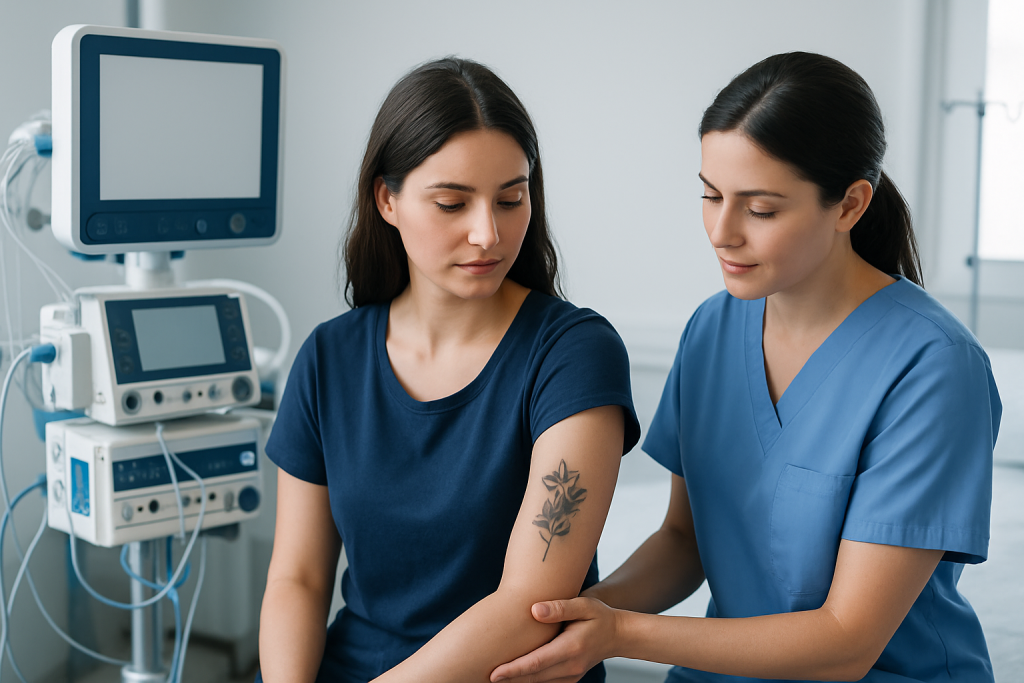
Healing tends to move through several familiar phases. In the first 24 to 72 hours, the tattooed skin is often red, warm, slightly swollen, and sensitive to touch. Some clear fluid or tiny amounts of ink may appear on the surface, which is usually part of the early healing response.
During the first week, the skin often begins to dry and form a thin protective layer. Many people notice peeling or flaking that resembles a mild sunburn. It is important not to pick at this stage, even if the skin looks patchy or feels itchy.
By weeks 2 to 4, the outer skin usually looks much more settled. The tattoo may still appear slightly dull or cloudy before the skin fully smooths out. Underneath that surface, however, the body is still restoring the area, which is why complete healing can take longer than the visible peeling phase.
- Days 1-3: redness, swelling, tenderness, and weeping may be normal
- Days 4-10: dryness, tightness, and peeling often begin
- Weeks 2-4: surface skin usually closes and settles
- Months 1-3 and beyond: deeper skin continues to strengthen and stabilize
Common Signs and Symptoms During Healing

Normal tattoo healing has a pattern that is usually easy to recognize once a person knows what to expect. The skin may itch as it repairs, feel tight after washing, or shed small flakes of pigment-tinged skin. A fresh tattoo can also look slightly uneven in color while the top layer is still renewing itself.
These changes are not usually a reason for concern if they gradually improve. Mild discomfort should fade over time rather than intensify. The skin should not become progressively more swollen or increasingly painful after the first few days.
It is also common for a healed tattoo to look a little different once the surface layer has settled. The colors may appear softer, and fine lines can seem less crisp until the skin is fully recovered. This is one reason tattoo artists often recommend waiting until the healing period is over before judging the final result.
What Can Slow Healing Down
Some tattoos heal more slowly because of where they are placed or how much stress the skin experiences afterward. Areas with frequent movement, rubbing, or swelling can take longer to settle. Feet, hands, ankles, elbows, ribs, and other high-friction spots are often more demanding than flatter areas of the body.
Aftercare also plays a major role. Overwashing, using harsh soaps, applying too much ointment, or keeping the area damp for long periods can irritate the skin. On the other hand, not cleaning the tattoo gently enough may increase the chance of bacteria building up on the surface.
General health matters as well. People with diabetes, immune system conditions, poor circulation, skin disorders such as eczema, or a history of slow wound healing may recover more slowly and should be especially careful with aftercare instructions. Smoking and excessive sun exposure can also make healing less efficient.
Other factors that may affect tattoo healing include:
- Large size or dense shading
- Repeated trauma from clothing or sports
- Allergic skin reactions to ink or products
- Scratching, picking, or premature peeling
- Swimming, hot tubs, or long baths before the skin has closed
How Tattoo Healing Is Checked
Most tattoos do not need formal medical testing, but a clinical assessment may be helpful if the skin seems to be healing unusually slowly or has signs of infection or allergy. A doctor typically begins by asking when the tattoo was done, how the area has changed over time, and what aftercare products have been used.
The skin is then examined for redness, warmth, tenderness, drainage, spreading rash, or swelling. If a reaction or infection is suspected, the clinician may ask about new soaps, balms, wraps, or topical products that could be irritating the skin. In some cases, a doctor may recommend stopping certain products and switching to simpler care.
If symptoms suggest a more significant problem, additional evaluation may be needed. This is especially important for people with fever, rapidly worsening pain, or skin changes that extend beyond the tattoo itself.
Treatment and Aftercare Options
For uncomplicated healing, the main treatment is careful home aftercare. The tattoo should be washed gently with clean hands and mild, fragrance-free soap, then patted dry rather than rubbed. A thin layer of the recommended moisturizer or aftercare ointment can help prevent cracking, but the skin should not be kept greasy or covered in excess product.
Protecting the tattoo from friction and irritation is equally important. Loose clothing is usually more comfortable than tight fabric over a new tattoo. Until the skin is fully closed, soaking in pools, lakes, hot tubs, or long baths is usually avoided because moisture can disturb healing and raise infection risk.
Sun protection matters once the skin has closed, because fresh tattoos are more sensitive to ultraviolet light. Direct sun can irritate healing skin and may affect the appearance of the tattoo. Once a clinician or tattoo professional advises that it is safe, a broad-spectrum sunscreen can help protect the area.
If a complication is present, treatment depends on the cause. A suspected infection may require medical treatment, while an allergic reaction may need a different approach. The most important step is not to guess if the symptoms are clearly getting worse.
Prevention and Self-care During Recovery
Good tattoo healing starts with simple, consistent care. The skin should be kept clean, dry, and protected from repeated rubbing. Following the artist’s aftercare plan is helpful, but any advice should be adjusted if a doctor gives different instructions for a medical reason.
People recovering while traveling should plan ahead so they can continue aftercare without interruption. It helps to pack gentle soap, a fragrance-free moisturizer recommended for healing skin, and loose clothing that will not press on the tattoo during long flights or hotel stays. If a follow-up appointment is scheduled in another country, keeping the clinic’s instructions in writing can make the process easier.
Helpful self-care habits include:
- Wash hands before touching the tattoo
- Clean the area gently and do not scrub
- Apply only a thin layer of aftercare product
- Avoid picking, scratching, or peeling skin
- Stay out of direct sun and avoid soaking
- Wear breathable clothing that reduces friction
Sleep, hydration, and general skin health also support recovery. A calm approach usually works better than frequent checking, rubbing, or changing products every day.
When to See a Doctor
Medical advice is sensible if the tattoo does not seem to be moving through the usual healing stages. Redness that spreads, pain that gets worse, increasing warmth, thick yellow or green drainage, or a bad smell are all reasons to seek assessment. Fever, chills, or feeling unwell should also be taken seriously.
It is also wise to speak with a doctor if there is a rash beyond the tattoo, severe itching, blisters, or signs of an allergic reaction. People with diabetes, immune suppression, poor circulation, or a history of skin infection should have a lower threshold for checking in early, because their skin may need closer monitoring.
For international patients who need coordinated advice after a tattoo-related skin concern, Acibadem Health Point notes that its multidisciplinary specialists and JCI-accredited hospitals diagnose and treat a wide range of dermatology conditions for international patients. A timely review can help confirm whether the healing process is on track or whether extra care is needed.
If the skin is still painful or changing several weeks after the tattoo, a doctor can help determine whether this is normal slow healing or something that needs treatment. Prompt attention is usually the best way to protect both the skin and the final appearance of the tattoo.
Frequently asked questions
How long does a tattoo usually take to heal on the surface?
Most tattoos look as though they are healing on the surface within about 2 to 4 weeks. The skin may still be repairing underneath after that, even if peeling and redness have improved. The exact timing depends on the size, location, and how well aftercare is followed.
Is peeling a normal part of tattoo healing?
Yes, peeling is common and usually expected during the first 1 to 2 weeks. It often looks like dry flakes or thin skin shedding. Picking at peeling skin can slow healing and may affect the final look of the tattoo.
How can someone tell if a tattoo is infected?
Possible warning signs include redness that spreads, worsening pain, increasing warmth, swelling that does not improve, thick pus, or a foul smell. Fever or feeling generally unwell can also point to a problem. If these signs appear, medical advice should be sought promptly.
Can a tattoo heal faster with more ointment?
Not necessarily. Using too much ointment can keep the skin overly moist and may irritate it. A thin layer of the recommended product is usually enough, along with gentle cleaning and protection from friction.
Why does a tattoo itch while healing?
Itching is common as the skin repairs and the outer layer renews itself. It usually improves over time. Scratching should be avoided because it can damage the healing skin and increase irritation.
When can a person go swimming after getting a tattoo?
Swimming, hot tubs, and soaking baths are generally avoided until the skin is fully closed and a clinician or tattoo professional confirms it is safe. Water exposure too early can interfere with healing and raise the risk of infection.
References
- American Academy of Dermatology
- Mayo Clinic
- NHS
- Cleveland Clinic
- World Health Organization
This article is for general information only and is not a substitute for professional medical advice. Please consult a qualified doctor about your individual situation.