How Long Does Alcohol Stay In Urine

Key Takeaways
- Standard urine tests do not usually detect alcohol for long after drinking.
- Specialized tests such as EtG can detect alcohol exposure for a longer period.
- Detection time depends on the amount consumed, hydration, liver function, and the type of test.
- A positive result does not always prove current intoxication.
- Anyone facing testing for medical, legal, work, or travel reasons should ask what type of test is being used.
Alcohol can usually be detected in urine for a limited time after drinking, but the exact window depends on the test used, how much was consumed, and individual metabolism. Understanding the difference between routine urine tests and specialized alcohol biomarkers can help people interpret results more accurately.
Overview
Alcohol leaves the bloodstream relatively quickly, but urine testing can sometimes show evidence of drinking for longer than people expect. The key detail is that not every urine test looks for the same thing. Some tests detect ethanol itself, while others measure metabolites, such as ethyl glucuronide (EtG) or ethyl sulfate (EtS), which remain in the body after the alcohol has been processed.
For someone preparing for a medical appointment, employment screening, or another formal assessment, this difference matters. A routine urinalysis may not answer the same question as a specialized alcohol test, and the timing of the sample can change the result substantially. For patients traveling for care, it can be helpful to clarify the purpose of testing before the sample is taken, especially if they are reviewing results with a doctor in another country.
In general, alcohol is not detectable in urine for a long period in its original form, but biomarkers can extend the detection window. That is why clinicians interpret results alongside the person’s history, symptoms, and the type of assay used rather than relying on a single number alone.
Symptoms and What a Positive Test Can Mean
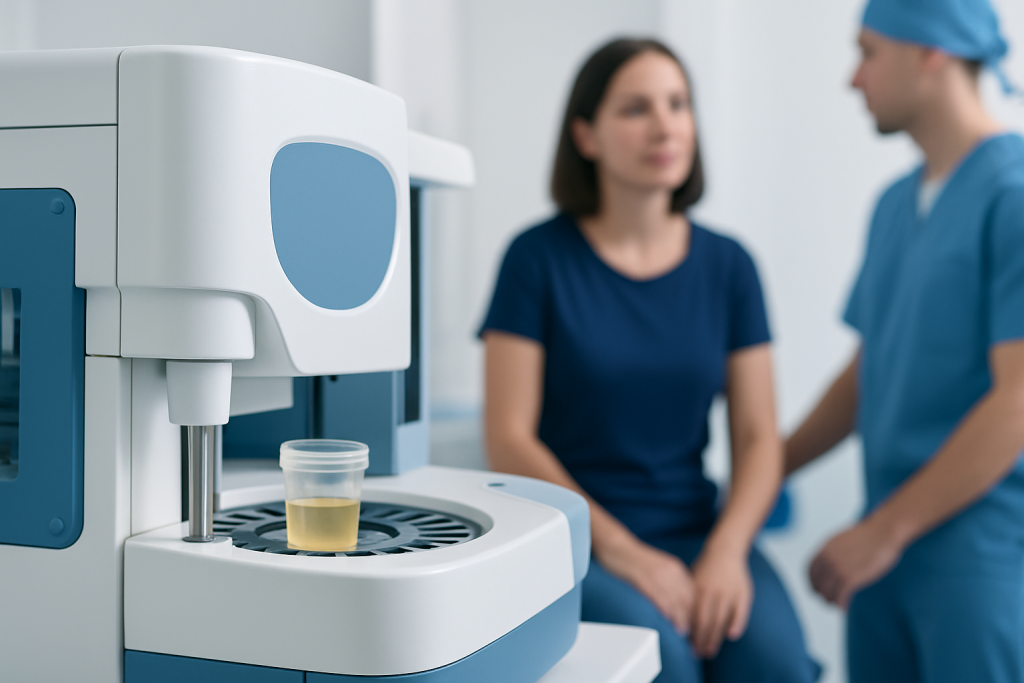
A urine alcohol result is not the same as a clinical assessment of intoxication. A person may feel sober by the time a test is collected and still have detectable alcohol markers in urine, particularly if the test is designed to identify recent exposure rather than current impairment.
When ethanol itself is measured, a positive result generally reflects very recent alcohol use because the body clears ethanol fairly quickly. By contrast, EtG or EtS tests can remain positive after the drink is no longer producing obvious effects. This is why patients sometimes feel confused when the test result seems out of step with how they feel.
Possible reasons for a positive result include:
- Recent drinking, even if the amount was modest
- Use of a test that detects metabolites rather than alcohol itself
- Exposure to alcohol-containing products in some testing contexts, depending on the assay and threshold
- Variations in metabolism, kidney function, and hydration status
Because interpretation can be nuanced, a positive urine alcohol marker should be reviewed in context rather than viewed as a stand-alone judgment.
Causes and Risk Factors

The main reason alcohol appears in urine is straightforward: the person consumed alcohol and the body broke it down. The liver metabolizes most alcohol into acetaldehyde and then into acetate, and a small portion can be converted into measurable urinary markers. The amount present in urine depends on how much was consumed and how quickly the body processed it.
Certain factors can shorten or lengthen the window of detection. Larger amounts of alcohol tend to produce longer-lasting markers, while frequent drinking may also lead to more persistent findings. Hydration does not remove alcohol from the body faster, but it can influence how concentrated urine appears, which may affect some test readings.
Other factors that may matter include:
- Liver health and overall metabolic rate
- Kidney function and urine output
- Body size and composition
- Use of medications or products that may complicate interpretation
- The sensitivity and cutoff value of the laboratory test
When someone is being evaluated in a different health system or while traveling, it is especially important to know whether the facility uses a basic screening test or a more specific biomarker panel.
Diagnosis and Testing Methods
There is no single “alcohol in urine” test. The laboratory method determines what can be detected and for how long. A standard urine alcohol screen may look for ethanol itself, which usually has a shorter window of detection. More specialized testing may look for EtG or EtS, which can indicate alcohol exposure after ethanol is no longer present.
Clinicians may order a urine test for several reasons: monitoring recovery, checking adherence to a treatment plan, evaluating suspected recent alcohol use, or meeting administrative requirements. The test result is usually interpreted together with the person’s medical history and, when relevant, blood tests or other assessments.
Patients should feel comfortable asking simple questions before providing a sample, such as what substance is being measured, how long the sample is likely to remain useful, and whether any products should be avoided before testing. Clear communication can prevent unnecessary worry and helps the care team interpret the result appropriately.
Treatment Options
There is no treatment needed to “remove” alcohol from urine once the body has already metabolized it. The body clears alcohol at its own pace, and time is the main factor. If a person is concerned about a positive result, the more useful step is often to understand what type of test was used and whether the finding reflects recent drinking or only prior exposure.
If testing has revealed a pattern of alcohol use that is causing health, family, or work concerns, treatment may focus on the broader issue rather than the urine result itself. That can include counseling, behavioral therapy, medication-based treatment when appropriate, and support for cutting down or stopping alcohol use. A doctor can help match the approach to the person’s goals and medical background.
For international patients, treatment planning may involve coordination between local clinicians and a receiving team abroad. In that setting, bringing previous test reports, medication lists, and a brief alcohol history can make the consultation more efficient and reduce repetition.
Prevention and Self-care
If a person is trying to avoid an unexpected urine alcohol result, the most direct strategy is to understand the timing and purpose of the test. Knowing whether the laboratory is measuring ethanol, EtG, or another marker gives a more realistic sense of the detection window than guessing from symptoms alone.
Practical self-care steps include honest communication with the care team, careful review of any alcohol-free requirements, and awareness that some mouthwashes, hand sanitizers, or other products may matter in certain specialized tests. The significance of incidental exposure depends on the assay and the threshold used, so it is best not to assume the same rule applies everywhere.
General habits that support healthy alcohol use patterns include:
- Keeping track of drinking episodes when medical testing is planned
- Allowing enough time between alcohol use and scheduled testing when possible
- Seeking support early if cutting back feels difficult
- Following any pre-test instructions from the clinic or laboratory exactly
These steps are especially helpful for people coordinating care across borders, where test methods and reporting formats may differ.
When to See a Doctor
A doctor should be consulted if alcohol use is becoming hard to control, if there are concerns about withdrawal, or if repeated testing is creating confusion or stress. Medical guidance is also important when a person has liver disease, kidney disease, takes multiple medications, or is preparing for surgery or another procedure.
It is wise to ask for medical advice when a test result seems inconsistent with the person’s recent drinking history, since different urine assays can lead to different interpretations. A clinician can explain whether the result suggests recent drinking, prior exposure, or a need for repeat testing.
Anyone traveling for diagnosis or treatment may benefit from a pre-arranged consultation that reviews test expectations in advance. At Acibadem Health Point, multidisciplinary specialists and JCI-accredited hospitals diagnose and treat alcohol-related health concerns for international patients, with careful attention to the details that can affect testing and follow-up.
A Closer Look at the Timing Question
People often ask for one exact answer to how long alcohol stays in urine, but the medical reality is more layered. The result depends on what the laboratory is looking for, the amount of alcohol consumed, and the person’s own metabolism. A simple drinking episode and a specialized biomarker test do not have the same time frame.
That is why doctors tend to avoid giving a single universal number without context. Instead, they interpret the test according to the reason it was ordered, the patient’s history, and whether the result is meant to reflect recent exposure, longer detection, or a treatment-monitoring plan.
For patients and families, the most useful approach is usually to ask what the test can and cannot tell them. That small question often removes much of the uncertainty around urine alcohol testing and makes the next step clearer.
Frequently asked questions
How long does alcohol stay in urine after drinking?
It depends on the test. Ethanol itself is usually detectable for a shorter time, while biomarkers such as EtG can remain detectable longer after drinking has stopped.
Can a urine test detect one drink?
Sometimes it can, especially if the test is sensitive or looks for metabolites rather than alcohol itself. The chance of detection also depends on the timing of the sample and individual metabolism.
Does drinking water remove alcohol from urine faster?
No. Hydration may change urine concentration, but it does not speed up how quickly the body metabolizes alcohol.
Can mouthwash or hand sanitizer affect a urine alcohol test?
In some specialized testing situations, incidental exposure may be discussed as a possible factor. The importance of this depends on the exact assay and cutoff used, so it is best to ask the laboratory or doctor.
Is a positive urine alcohol test the same as being intoxicated?
Not necessarily. A positive result may reflect recent exposure or prior drinking, but it does not automatically mean the person is currently impaired.
What should a patient do before an alcohol-related urine test?
The patient should ask what substance is being measured, whether any products should be avoided, and whether there are special preparation instructions. Clear guidance before the test makes the result easier to interpret.
References
- National Institute on Alcohol Abuse and Alcoholism
- Centers for Disease Control and Prevention
- Mayo Clinic
- World Health Organization
- Clinical and Laboratory Standards Institute
This article is for general information only and is not a substitute for professional medical advice. Please consult a qualified doctor about your individual situation.