Happy Baby Pose
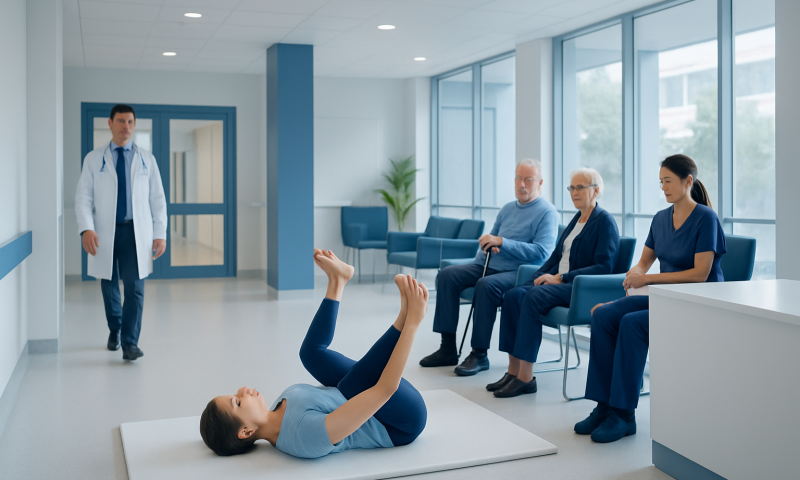
Key Takeaways
- Happy Baby Pose is a gentle stretch that targets the hips, groin, inner thighs, and lower back.
- It may feel especially helpful for people who sit for long hours or want a calming floor-based stretch.
- The pose should be done slowly, without forcing the knees or pulling on the legs.
- People with hip, knee, spine, or pregnancy-related concerns should ask a clinician or physiotherapist for guidance.
- Comfortable breathing and short holds are often more useful than trying to deepen the pose quickly.
Happy Baby Pose is a simple yoga posture that gently opens the hips, lengthens the lower back, and can help the body settle after long periods of sitting or stress. When practiced with care, it can be a useful part of a home routine, rehabilitation plan, or travel-friendly mobility session.
Overview
Happy Baby Pose is a familiar yoga stretch that brings the knees toward the torso while the feet are held from the outside or the backs of the thighs. For many people, it feels playful and restful at the same time: the hips soften, the spine lengthens, and the breathing often becomes slower without much effort.
Although it is commonly seen in yoga classes, the pose is also useful as a general mobility exercise. People who spend long hours seated, travel frequently, or are rebuilding flexibility after a period of inactivity may find it a comfortable way to move the lower body without impact.
In a medical or rehabilitation setting, the value of Happy Baby Pose is less about appearance and more about controlled movement. When it is done gently, it can support range of motion in the hips and ease muscular tightness around the pelvis and lower back.
What the pose may help with
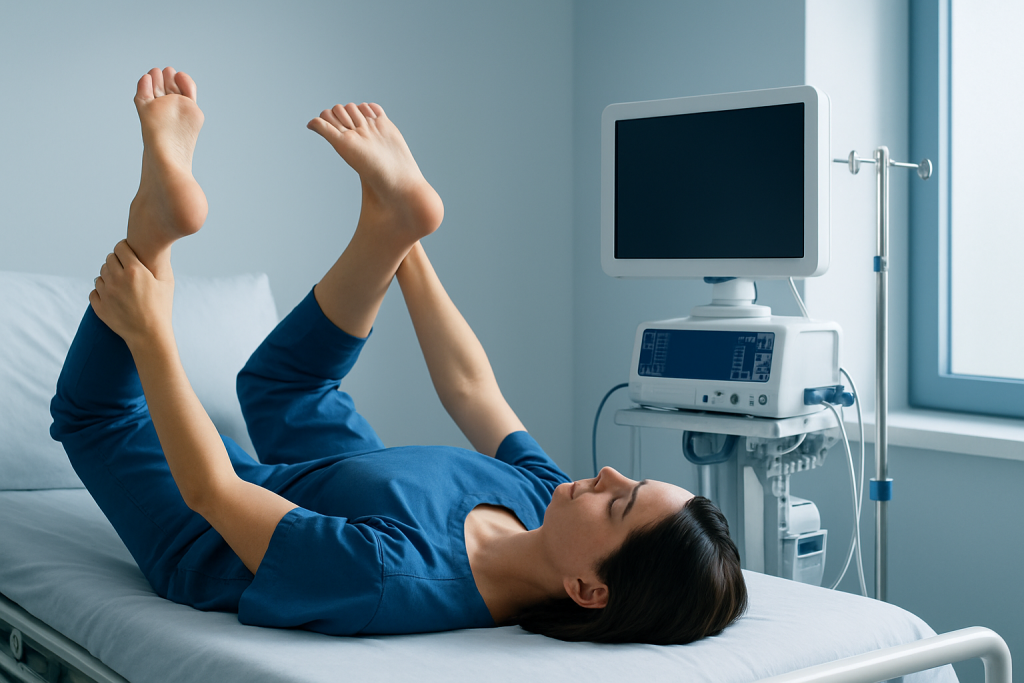
Happy Baby Pose is mainly a stretching posture, not a treatment for a specific disease. Even so, it can be helpful for common discomforts related to stiffness and prolonged sitting. The position may stretch the adductors, glutes, and the soft tissues around the hips, which can make the lower body feel less compressed.
Some people use it to complement a broader wellness routine because it can create a sense of release in the back and hips. Others enjoy it as a gentle reset after walking, long flights, or desk work, especially when their body needs movement but not a demanding workout.
The pose may also encourage mindful breathing. That combination of stretching and slower breathing can be calming, which is one reason it often appears in evening routines, recovery sessions, or relaxation practices.
How to do Happy Baby Pose
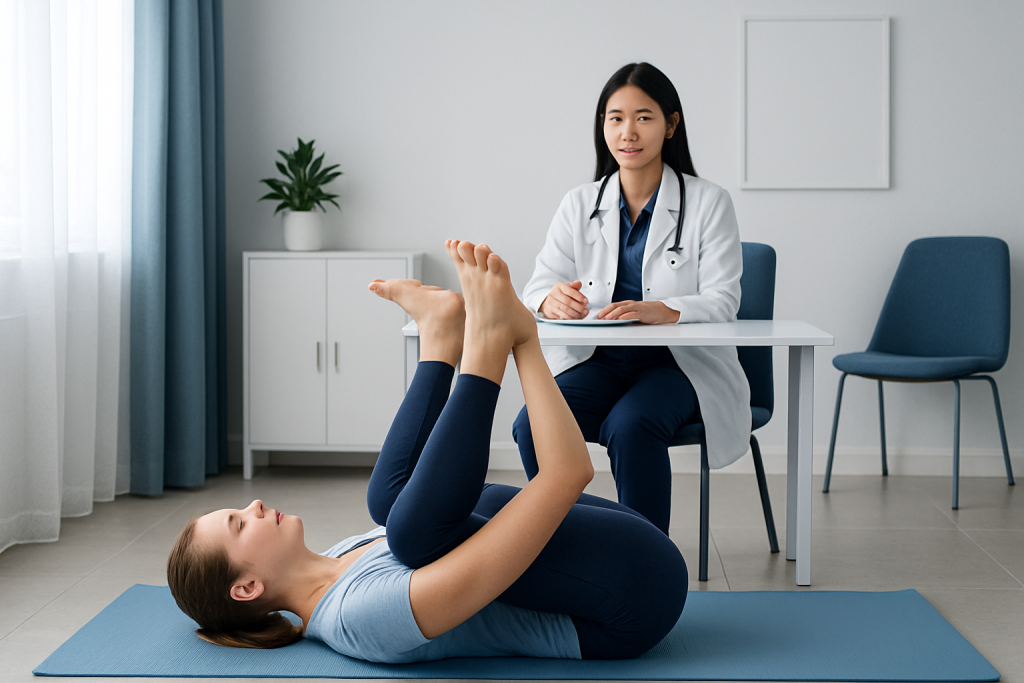
The pose is easiest on a mat or another comfortable surface. A person usually begins by lying on the back, then bending the knees toward the chest. The feet are brought upward, with the knees open slightly wider than the torso, and the hands reach for the outer edges of the feet or around the lower legs.
The goal is to keep the neck relaxed, the shoulders soft, and the breath steady. There is no need to press the knees forcefully toward the floor or to straighten the legs completely. A mild stretch is enough; the body should feel supported, not strained.
Useful reminders include:
- Keep the lower back comfortable against the floor or mat.
- Hold the position with easy, even breathing.
- Stop if the stretch becomes sharp, pinching, or unstable.
- Use props such as a folded blanket or cushion if needed.
Symptoms and sensations people may notice
People often describe a pleasant stretch across the inner thighs, outer hips, and lower back. The pose may also create a feeling of opening through the pelvis, which can be especially noticeable if the body has been tight from sitting or repetitive activity.
Some sensations are expected and normal, such as steady tension that gradually eases, or a mild pulling feeling in the thighs. What should not happen is pain that feels sharp, electric, pinching, or unstable in the hips, knees, or spine.
Because every body is different, the same position may feel calming for one person and awkward for another. That is why the best version of Happy Baby Pose is the one that stays within a comfortable range and matches the person’s flexibility on that day.
Causes & risk factors: when the pose may need modification
Happy Baby Pose is usually safe for healthy adults, but some situations call for caution. A history of hip impingement, knee injury, lumbar disc problems, sacroiliac discomfort, or recent surgery may change how the pose should be approached. Pregnancy may also require special guidance because the abdomen, pelvis, and ligaments are under different mechanical stresses.
People with very tight hips or limited hamstring flexibility may find it hard to keep the knees comfortable in the air. For them, the hands may need to hold behind the thighs instead of the feet, or the knees may need to stay less open. In rehabilitation, small adjustments often matter more than forcing a deeper stretch.
Risk is usually related less to the pose itself and more to how aggressively it is done. Bouncing, pulling hard on the feet, holding the breath, or trying to “win” the stretch can turn a calming posture into one that irritates joints or muscles.
Diagnosis and professional assessment
Happy Baby Pose does not require a medical diagnosis, but people who have pain while doing it may benefit from a clinician’s assessment. A doctor, physiotherapist, or sports medicine specialist may ask where the discomfort is located, when it began, and whether it appears with other movements such as sitting, squatting, or walking.
The goal of assessment is to understand whether the issue is mainly muscular tightness, joint restriction, nerve irritation, or another condition altogether. In many cases, the answer comes from a careful physical examination and movement screening rather than from tests alone.
For international patients, this kind of evaluation can be especially helpful when planning care around travel. A clear assessment before departure, along with follow-up instructions that can be carried home, makes it easier to continue stretching or rehabilitation safely after the visit.
Treatment options and useful alternatives
When Happy Baby Pose is part of a rehabilitation or wellness plan, treatment usually focuses on the larger pattern behind the stiffness. A physiotherapist may recommend other hip-opening stretches, pelvic mobility drills, or core-control exercises so that the body gains both flexibility and stability.
If the pose feels too intense, a gentler version can be used. Holding behind the thighs, keeping one leg at a time, or using a wall for support may allow the hips to relax without strain. Some people do better with a short sequence rather than a long hold, especially when returning to movement after a break.
Depending on the reason for discomfort, a clinician may also suggest heat, activity modification, or a temporary pause from deep hip stretches. The best plan is usually individualized, especially if there is a history of injury or ongoing back or hip pain.
Prevention & self-care
Prevention is often about consistency rather than intensity. Gentle movement breaks during the day, easy walking, and basic hip mobility work can reduce the feeling of stiffness that makes floor stretches uncomfortable in the first place. For many people, a few minutes of regular movement do more than a single deep stretch done once in a while.
Self-care during the pose is simple but important. The person should breathe normally, keep the shoulders relaxed, and come out of the position slowly. If the stretch feels too strong, reducing the angle of the knees or changing how the feet are held may make the posture more useful.
Practical habits can also help during travel or remote recovery:
- Stand up and move at regular intervals on long flights or car rides.
- Use supportive seating to reduce prolonged hip compression.
- Pair stretching with hydration and light walking.
- Follow a clinician’s advice if the pose is part of post-treatment rehabilitation.
When to see a doctor
A clinician should evaluate pain that is sharp, worsening, one-sided, or associated with numbness, weakness, swelling, or joint locking. Medical review is also sensible if the pose repeatedly triggers back pain, groin pain, or pain that lingers after the stretch ends.
People recovering from surgery, living with arthritis, or managing a known spine or hip condition should ask for personalized guidance before practicing regularly. This is especially important when the exercise is meant to support recovery while traveling or between appointments.
Acibadem Health Point’s multidisciplinary specialists and JCI-accredited hospitals diagnose and treat musculoskeletal conditions for international patients, offering coordinated care when a stretch like Happy Baby Pose is being used as part of a broader recovery plan.
Frequently asked questions
Is Happy Baby Pose suitable for beginners?
Yes, it can be suitable for beginners because it is usually done on the floor and can be modified easily. The key is to keep the stretch mild and avoid pulling the legs forcefully. If a beginner feels discomfort in the knees, hips, or lower back, a gentler variation is a better choice.
Should the knees go all the way down in Happy Baby Pose?
No, the knees do not need to touch the floor. The aim is a comfortable stretch, not maximum depth. Keeping the knees higher can be safer and still effective, especially for people with tight hips or limited flexibility.
Can Happy Baby Pose help lower back tightness?
It may help some people feel less tight in the lower back because it gently opens the hips and allows the spine to rest. However, if back pain increases during the pose, it should be stopped. Persistent back symptoms deserve professional assessment.
Is it normal to feel a stretch in the groin and inner thighs?
Yes, that is one of the most common sensations in this pose. A steady, mild pull in the groin or inner thighs is expected. Sharp pain, pinching, or numbness is not normal and should be taken seriously.
Can Happy Baby Pose be done during pregnancy?
It may be possible for some pregnant people, but it should not be assumed to be automatically safe. Pregnancy changes joint laxity and body mechanics, so a clinician or prenatal yoga professional should confirm whether it is appropriate. Comfort and stability matter more than depth.
How long should someone hold the pose?
There is no single correct duration. Short, comfortable holds are often enough, especially for people who are new to the pose or using it for recovery. It is usually better to stop before the stretch turns into strain.
References
- Yoga Alliance
- American Academy of Orthopaedic Surgeons
- National Health Service
- Mayo Clinic
- Arthritis Foundation
This article is for general information only and is not a substitute for professional medical advice. Please consult a qualified doctor about your individual situation.