Facelift Planning Beyond Age: What Skin, Fat, and Neck Changes Actually Decide the Procedure

Key Takeaways
- Age alone does not determine facelift candidacy; tissue quality and facial anatomy matter more.
- Skin laxity, volume loss, and neck banding each influence the surgical plan in different ways.
- A facelift can tighten deeper support layers, but it may be combined with fat transfer, eyelid surgery, or a neck lift when needed.
- A good consultation focuses on goals, medical history, skin condition, and realistic recovery planning.
- Long-term results are supported by sun protection, healthy habits, and regular follow-up with the surgical team.
Medically reviewed by the Acıbadem clinical team — July 13, 2026
Facelift decisions are guided less by age and more by the way skin, fat, and neck structures have changed over time. A careful facial assessment helps determine whether a facelift, neck lift, or a more limited approach is the most appropriate choice.
Overview
A facelift is often spoken about as though it were an age-based decision, but in practice the face does not follow a calendar. Some people notice sagging in their forties, while others keep a firmer jawline much longer. What matters most is not the number of birthdays reached, but how the skin, underlying fat, and neck structures have changed.
Modern facial rejuvenation is less about making someone look “tight” and more about matching the procedure to the pattern of aging. A person with mainly loose skin may need a different plan from someone whose cheeks have lost volume or whose neck bands have become more visible. That is why a thoughtful consultation starts with anatomy, not age.
For international patients, this kind of planning is especially important because travel, time away from work, and recovery logistics need to be aligned with the chosen procedure. A well-designed treatment plan should be clear enough that the patient understands what the surgery can improve, what it cannot fully change, and how healing will fit into life after returning home.
What Facial Aging Really Changes

Facial aging usually develops in layers. The skin may become thinner and less elastic, the fat pads in the midface may shift or shrink, and the deeper support system that holds the face in position can loosen. As these changes progress, the cheeks may flatten, the lower face may widen, and the jawline may lose definition.
The neck often tells a separate story. Some people mainly develop skin looseness under the chin, while others notice muscle banding, fullness from fat, or a blend of both. Because the face and neck age at different rates, a person may need attention to one area more than the other.
These changes are also influenced by genetics, weight changes, sun exposure, smoking history, and skin quality. Two people of the same age can therefore have very different surgical needs. In facial plastic surgery, the pattern of aging is usually more informative than age itself.
Symptoms and Visible Signs That Shape Planning
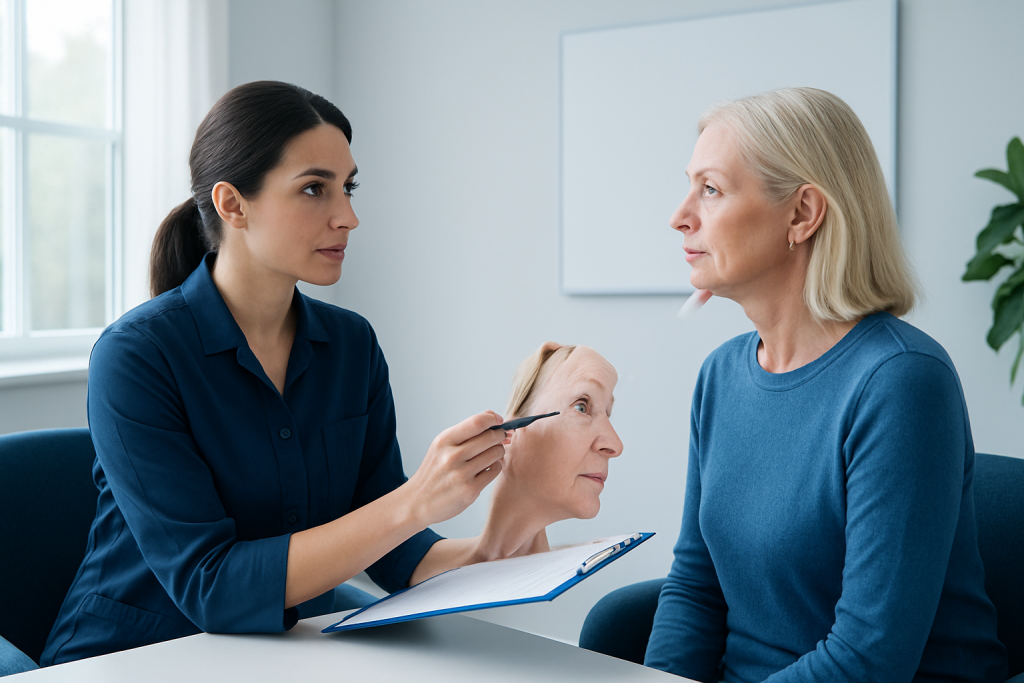
The first clues often appear in everyday moments, such as seeing the lower face in a video call or noticing that makeup sits differently along the jawline. Some patients describe jowls, a softened neckline, or a tired look that does not match how energetic they feel. Others are bothered by sagging around the mouth or by loose skin beneath the chin.
These visible signs help the surgeon understand which structures are contributing most to the change. If the skin is the main issue, tightening may be enough in limited cases. If the deeper support tissues have descended, a procedure that repositions those layers is usually more effective and may appear more natural over time.
Useful signs to discuss during consultation include:
- Loss of jawline definition
- Jowling along the lower cheeks
- Loose or crepey neck skin
- Visible neck bands
- Flattened cheeks or volume loss
- Uneven aging from one side of the face to the other
Patients also benefit from describing what bothers them most, because that helps the surgeon prioritize the plan. A facelift is not one single design; it is a tailored response to a particular facial pattern.
Causes & Risk Factors
Facial aging is a normal biological process, but certain factors can make it appear sooner or more prominently. Sun exposure is one of the most common contributors because it affects collagen and skin elasticity over time. Smoking can also accelerate visible aging by reducing blood flow and affecting skin quality.
Weight fluctuations may change the amount and position of facial fat, especially in the cheeks and neck. Genetics strongly influence when laxity appears and whether the neck or lower face becomes the main concern. Hormonal changes and natural tissue thinning with age can add to the picture as well.
Some factors do not necessarily prevent surgery, but they may affect planning or healing. These include:
- Poor skin quality or severe sun damage
- Active smoking or recent nicotine use
- Uncontrolled medical conditions
- Bleeding disorders or medicines that affect clotting
- History of prior facial surgery
- Major weight changes planned in the near future
A careful preoperative review helps the surgeon decide whether the concern is mainly skin, fat, muscle support, or neck anatomy, and whether additional treatments should be considered.
Diagnosis and Facelift Evaluation
There is no single test that determines facelift candidacy. Instead, diagnosis is based on a detailed facial examination, medical history, and a discussion of goals. The surgeon assesses skin elasticity, fat distribution, facial symmetry, neck contour, bone support, and the quality of the deeper tissues that help hold the face in place.
Photographs are often taken from several angles to document the starting point and to guide planning. These images are not just for comparison after surgery; they help the team study how the face moves, where volume is missing, and which areas are contributing most to the aged appearance. In some cases, the surgeon may also evaluate dental or jaw structure if it affects the balance of the lower face.
For international patients, the consultation should also cover practical matters such as how long they need to remain locally after surgery, whether a companion is recommended, and what follow-up can be managed remotely after returning home. Good planning reduces stress and makes the entire pathway easier to understand.
Treatment Options: Matching the Procedure to the Anatomy
Not every patient needs the same type of facelift. Some benefit from a limited lift focused on the lower face, while others need a more comprehensive approach that includes the neck. The best choice depends on where aging is most evident and how much structural support has been lost.
A traditional facelift usually addresses sagging in the lower face and jawline by repositioning deeper layers rather than simply pulling the skin. This approach can create a more natural result because it works with the underlying support system. A neck lift may be added when loose skin, fat, or muscle banding in the neck is a major concern.
In some cases, surgeons combine facelift surgery with other procedures to match the full pattern of aging:
- Neck lift: for loose skin, muscle banding, or fullness under the chin
- Fat transfer: for hollow cheeks or facial volume loss
- Eyelid surgery: when the upper or lower eyelids also show tiredness
- Skin treatments: for fine lines or texture changes that surgery does not fully address
The key idea is proportionality. A patient with good skin tone and mild laxity may not need the same operation as someone with heavier neck changes or deeper tissue descent. A tailored plan usually looks more balanced than a one-size-fits-all procedure.
Recovery, Results, and Long-Term Care
Recovery after a facelift varies according to the extent of surgery and whether the neck or other areas were included. Swelling and bruising are common early on and gradually settle. Patients are usually advised to keep the head elevated, avoid strain, and follow wound care instructions closely to support healing.
It helps to think of recovery in stages. The first stage is rest and protection, when the face may feel tight or look uneven because of swelling. The next stage is gradual settling, when the refined shape becomes easier to see. Final results can continue to improve for weeks or months as tissues soften and swelling fades.
Long-term care matters as much as the operation itself. Sun protection, stable weight, not smoking, and good skin care all help preserve the result. Patients traveling from abroad should also arrange a clear follow-up plan with their surgical team so healing can be monitored after they return home.
When to See a Doctor
A consultation is appropriate when facial or neck changes are causing concern, even if the patient is unsure whether surgery is needed. A facial plastic surgeon can explain whether the issue is better addressed with surgery, non-surgical treatment, or a combination of both. This conversation is especially useful when a person wants improvement but also wants to keep a natural expression.
Medical review is also important before any elective procedure. The surgeon should know about current medicines, prior cosmetic procedures, skin conditions, and any history of poor wound healing or bleeding issues. If there is a neck lump, sudden swelling, facial weakness, or pain rather than gradual aging, medical evaluation should not be delayed.
For international patients considering treatment abroad, Acibadem Health Point offers multidisciplinary specialists and JCI-accredited hospitals that diagnose and treat facelift-related concerns for international patients. A coordinated team can help with assessment, surgery planning, and follow-up in a way that supports safe travel and recovery.
Prevention & Self-care
Although natural aging cannot be stopped, everyday habits can slow the visible effects and help maintain surgical results if a facelift is eventually chosen. Skin protection is one of the most effective measures, because ultraviolet exposure is a major driver of laxity and uneven texture. A balanced lifestyle also supports overall tissue health.
Practical self-care measures include:
- Using broad-spectrum sunscreen regularly
- Avoiding smoking and nicotine products
- Keeping weight changes moderate when possible
- Following a simple, consistent skin-care routine
- Managing chronic health conditions with a doctor
- Getting enough rest and hydration during recovery
Patients considering surgery should approach the decision with patience. A good result depends on the right timing, the right procedure, and a realistic understanding of what can be improved. That is why a careful preoperative discussion is often the most valuable step of all.
Frequently asked questions
Is age the main factor in deciding on a facelift?
No. Surgeons usually focus more on skin laxity, fat position, neck changes, and the underlying support structures than on age alone. Two people of the same age can need very different approaches.
How do doctors decide between a facelift and a neck lift?
The decision depends on where the main signs of aging are located. If the lower face and jawline are the chief concern, a facelift may be enough, while a neck lift is considered when the neck shows more loose skin, banding, or fullness.
Can a facelift fix lost facial volume?
A facelift mainly repositions and supports sagging tissues. If hollowing or volume loss is a major issue, the surgeon may suggest fat transfer or another volume-restoring treatment as part of the plan.
What should an international patient ask during consultation?
It helps to ask how long recovery usually takes, how follow-up will work after returning home, whether another procedure should be combined with the facelift, and what results are realistic for the face and neck pattern being treated.
Will a facelift stop the face from aging again?
No procedure can stop aging, but a well-planned facelift can reset the visible changes for a period of time and create a fresher contour. Healthy habits and sun protection can help maintain the result.
When is it a good idea to get a medical evaluation instead of waiting?
A medical evaluation is wise if the changes are sudden, painful, or associated with swelling, weakness, or a new lump. Gradual aging can be discussed in a routine aesthetic consultation, but unexpected symptoms should be checked promptly.
References
- American Society of Plastic Surgeons
- American Board of Facial Plastic and Reconstructive Surgery
- Mayo Clinic
- National Health Service
- International Society of Aesthetic Plastic Surgery
This article is for general information only and is not a substitute for professional medical advice. Please consult a qualified doctor about your individual situation.