Ulnar Claw

Key Takeaways
- Ulnar claw usually reflects a problem with the ulnar nerve, often affecting the ring and little fingers.
- The condition can develop after nerve compression, injury, or certain medical problems that affect nerves.
- Early diagnosis matters because treatment may help improve function and prevent stiffness or worsening weakness.
- Care may include splinting, physical or occupational therapy, medication, or surgery depending on the cause.
- Hand exercises and avoiding pressure on the elbow or wrist may support recovery in some cases.
Medically reviewed by the Acıbadem clinical team — July 13, 2026
Ulnar claw is a hand posture that can appear when the ulnar nerve is injured or compressed, affecting finger movement and hand function. Understanding the symptoms, causes, and treatment options can help patients seek care early and protect long-term hand strength.
Overview
Ulnar claw is a visible hand posture that can develop when the ulnar nerve is not working properly. The ring and little fingers may bend at the joints in a way that looks “clawed,” while the hand may also feel weak, less coordinated, or less able to grip and pinch.
This is not a disease by itself. It is a sign that something is affecting the ulnar nerve, which supplies sensation and movement to part of the hand. Because the nerve can be irritated, compressed, or injured at different points along its path, the reason for ulnar claw can vary from a short-term pressure problem to a more complex nerve injury.
For patients traveling for care, the condition can be especially frustrating because it may interfere with work, writing, cooking, or everyday tasks soon after onset. A careful assessment helps determine whether the issue is temporary and reversible or whether it needs a more focused treatment plan.
Symptoms
The most recognizable sign is the shape of the hand. The ring and little fingers may curl toward the palm, especially when the person tries to straighten the hand. In some cases, the thumb and index finger remain relatively normal, which makes the contrast more noticeable.
Other symptoms often go along with the clawing. These may include numbness or tingling in the little finger and part of the ring finger, hand weakness, reduced grip strength, and difficulty spreading the fingers apart. Some people notice trouble holding small objects, turning keys, or keeping a firm grasp on a cup or tool.
If the ulnar nerve problem is more advanced, the hand muscles may begin to waste over time. Sensation changes can also make it harder to notice minor injuries, which is one reason hand protection and timely medical review are important.
Causes & Risk Factors

Ulnar claw usually appears because the ulnar nerve has been compressed or damaged. One common site is the elbow, where prolonged pressure, repeated bending, or a direct injury can irritate the nerve. Another possible site is the wrist, where trauma, swelling, or structural changes may affect nerve function.
There are several possible causes:
- Compression at the elbow, often called cubital tunnel syndrome
- Compression at the wrist, sometimes related to trauma or local swelling
- Fractures, dislocations, or cuts that injure the nerve
- Long-standing medical conditions that affect nerves, such as diabetes
- In rare situations, masses or cysts pressing on the nerve
Risk may be higher in people who lean on their elbows for long periods, keep the elbow bent for extended times, or do repetitive hand and arm work. Athletes, musicians, assembly-line workers, and patients recovering from arm injury may also be more vulnerable, depending on the exact cause.
Diagnosis
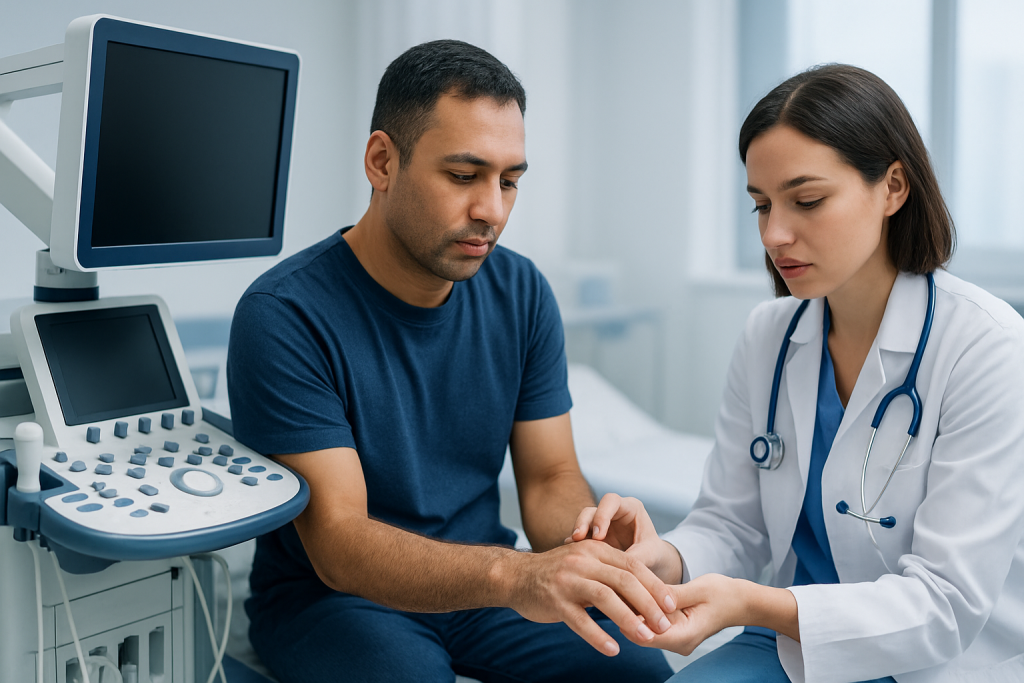
Diagnosis begins with a medical history and a physical examination of the hand, wrist, elbow, and arm. The doctor will look for clawing, muscle wasting, sensory changes, and weakness in movements controlled by the ulnar nerve. Simple bedside tests may help show how well the nerve is functioning.
Further testing is often used to confirm where the nerve is being affected and how severe the problem is. Nerve conduction studies and electromyography can evaluate electrical activity in the nerves and muscles. Imaging such as ultrasound, X-ray, or MRI may be ordered if a fracture, mass, or other structural problem is suspected.
For patients arranging evaluation from abroad, these tests are often coordinated in a staged way so the care team can identify whether treatment should be conservative or surgical. A clear diagnosis is especially useful because hand posture alone does not reveal the exact location or cause of the nerve problem.
Treatment Options
Treatment depends on the underlying cause, the length of symptoms, and how much function has been lost. If the nerve is compressed, reducing pressure and protecting the nerve may be the first step. If the issue is caused by an injury or a more significant structural problem, treatment may need to be more direct.
Common treatment approaches include:
- Activity changes to avoid pressure on the elbow or wrist
- Splinting or bracing to support hand position and reduce contracture
- Occupational therapy or hand therapy to maintain movement and function
- Anti-inflammatory or pain-relieving measures when appropriate
- Surgery in selected cases to relieve nerve compression or repair injury
If clawing is already established, therapy may focus on preserving flexibility and function while the nerve recovers or while the patient prepares for a procedure. Recovery can take time, and improvement often depends on how long the nerve has been affected before treatment starts.
Prevention & Self-care
Not every case can be prevented, but many nerve irritation problems improve when pressure on the ulnar nerve is reduced. Avoiding prolonged leaning on the elbows, limiting repeated deep elbow bending, and using ergonomic supports during desk work can be helpful. At night, some people benefit from keeping the elbow from staying tightly bent for long periods.
Gentle hand and finger movement, as advised by a clinician, can help maintain flexibility. It is usually better to follow a therapist’s guidance rather than forcing exercises, especially if pain or numbness is present. Hand protection matters as well, because reduced sensation can make it harder to notice hot surfaces, cuts, or pressure sores.
For international patients, self-care also includes planning follow-up before travel home. If surgery, splinting, or therapy is recommended, it is useful to understand what the first weeks of recovery will require and how the care team will monitor progress after discharge.
When to See a Doctor
Medical evaluation is advisable if clawing appears suddenly, if numbness or weakness is getting worse, or if the hand is becoming less functional in daily life. New symptoms after an injury, fall, fracture, or cut should be checked promptly because early care may improve the chance of nerve recovery.
A doctor should also be consulted if the ring and little fingers are increasingly bent, if objects are being dropped often, or if there is visible muscle wasting in the hand. Even when pain is mild, weakness and numbness can signal an important nerve problem that should not be ignored.
Patients who need coordinated assessment from another country may find it helpful to choose a center that can connect diagnosis, imaging, therapy, and surgical review in one pathway. Acibadem Health Point’s multidisciplinary specialists and JCI-accredited hospitals diagnose and treat ulnar claw for international patients in a structured, patient-focused way.
Frequently asked questions
Is ulnar claw the same as claw hand?
Ulnar claw is a type of claw hand pattern that is linked specifically to the ulnar nerve. It most often affects the ring and little fingers. The exact appearance can vary depending on where and how the nerve is injured.
Can ulnar claw improve on its own?
Sometimes a mild nerve compression may improve if the pressure is relieved early. However, clawing that persists or worsens should be medically evaluated, because ongoing nerve damage can lead to lasting weakness or stiffness. The outlook depends on the cause and how long the nerve has been affected.
What causes numbness in the ring and little fingers?
Those fingers are partly supplied by the ulnar nerve, so numbness or tingling there often suggests ulnar nerve irritation or compression. The problem may be at the elbow, wrist, or another point along the nerve. A clinician can help determine the location and severity.
Do hand splints help with ulnar claw?
Splints can help support hand position, reduce strain, and limit contracture in some patients. They are often used alongside therapy rather than as the only treatment. A hand specialist or therapist can recommend the most suitable type of splint.
When is surgery considered?
Surgery may be considered when the nerve is significantly compressed, damaged by injury, or not improving with conservative care. The goal is to relieve pressure, repair the nerve, or improve function when possible. A surgeon will base the decision on examination and test results.
Can repetitive work contribute to ulnar nerve problems?
Yes, repeated pressure on the elbow or repeated bending of the arm can contribute to nerve irritation in some people. Ergonomic changes, breaks, and better positioning may help reduce strain. If symptoms continue, medical evaluation is important.
References
- Mayo Clinic
- Cleveland Clinic
- National Institute of Neurological Disorders and Stroke
- American Academy of Orthopaedic Surgeons
- Merck Manual Professional Edition
This article is for general information only and is not a substitute for professional medical advice. Please consult a qualified doctor about your individual situation.