Do Men Have Hips? Anatomy and Common Concerns

Key Takeaways
- Men do have hips, and the hip joints work in the same basic way for all adults.
- Male pelvic anatomy is often narrower and less flared than female pelvic anatomy, but there is wide natural variation.
- Hip pain in men can come from joints, muscles, tendons, nerves, the lower back, or referred pain from nearby areas.
- Persistent pain, stiffness, walking changes, or a hip injury should be assessed by a qualified clinician.
- Early evaluation can help identify the cause and guide treatment, from exercise-based care to imaging or specialist referral.
Yes, men have hips. The male pelvis and hip joints serve the same essential functions as in women, but their shape, width, and movement patterns can differ, which may affect posture, injury risk, and certain symptoms. This article explains the anatomy in simple terms and outlines common concerns, evaluation, and practical self-care.
Overview
The question “Do men have hips?” usually comes up when someone notices differences in body shape, movement, or the way clothing fits. The short answer is yes: men have hips, pelvises, and hip joints just like women do. The anatomy is shared, but the proportions can vary from person to person.
The hip is a ball-and-socket joint where the top of the thigh bone fits into the pelvis. This joint helps the body walk, sit, climb stairs, bend, and rotate. In everyday life, most people do not think about their hips until pain, stiffness, or reduced movement makes the area more noticeable.
For international patients deciding whether to seek care abroad, hip concerns are often practical rather than dramatic. A long flight, a change in activity level, or persistent discomfort during daily movement can be enough reason to arrange an assessment, especially when symptoms interfere with work, travel, or sleep.
Symptoms and What People Commonly Notice
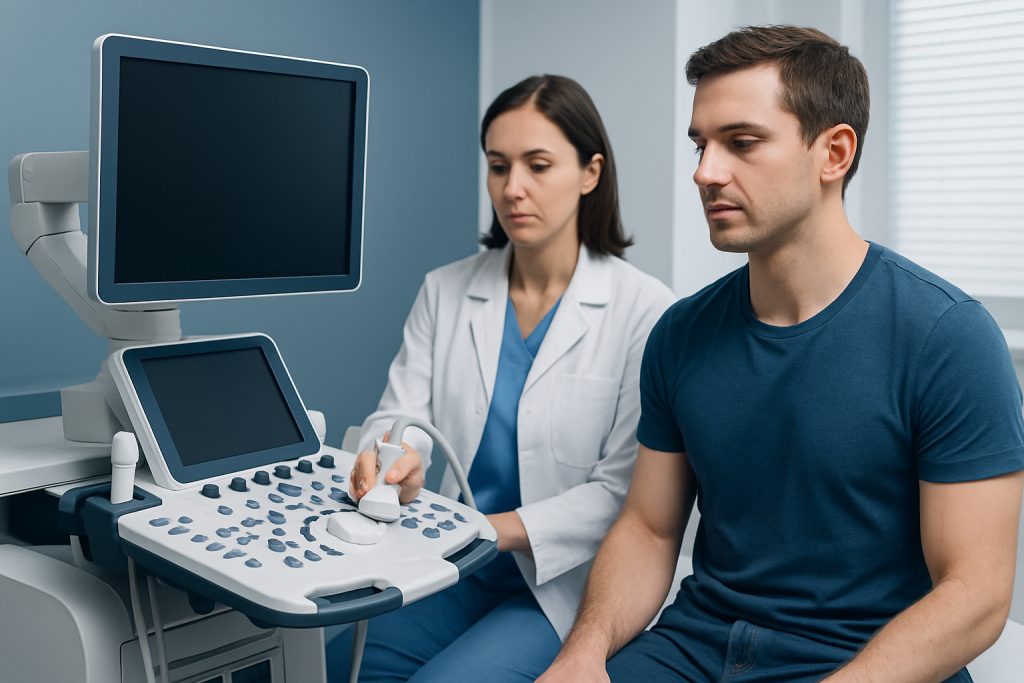
Hip concerns do not always feel like pain directly over the joint. Some people describe groin pain, a deep ache in the buttock, stiffness after sitting, or discomfort that seems to travel down the thigh. Others notice clicking, catching, weakness, or difficulty putting weight on one leg.
Because the hip sits close to the lower back, pelvis, and upper thigh, symptoms can be misleading. A person may assume the problem is in the hip when it is actually coming from the spine, or vice versa. That is one reason a careful clinical history and physical examination are so important.
- Pain in the groin, outer hip, buttock, or upper thigh
- Reduced range of motion, especially when bending or rotating the hip
- Limping or changes in walking pattern
- Stiffness after rest or first thing in the morning
- Clicking, locking, or a feeling of instability
Symptoms that arrive suddenly after an injury, or that become steadily worse over time, deserve medical attention. Even when pain seems mild, persistent symptoms can affect mobility and recovery if ignored too long.
Causes & Risk Factors
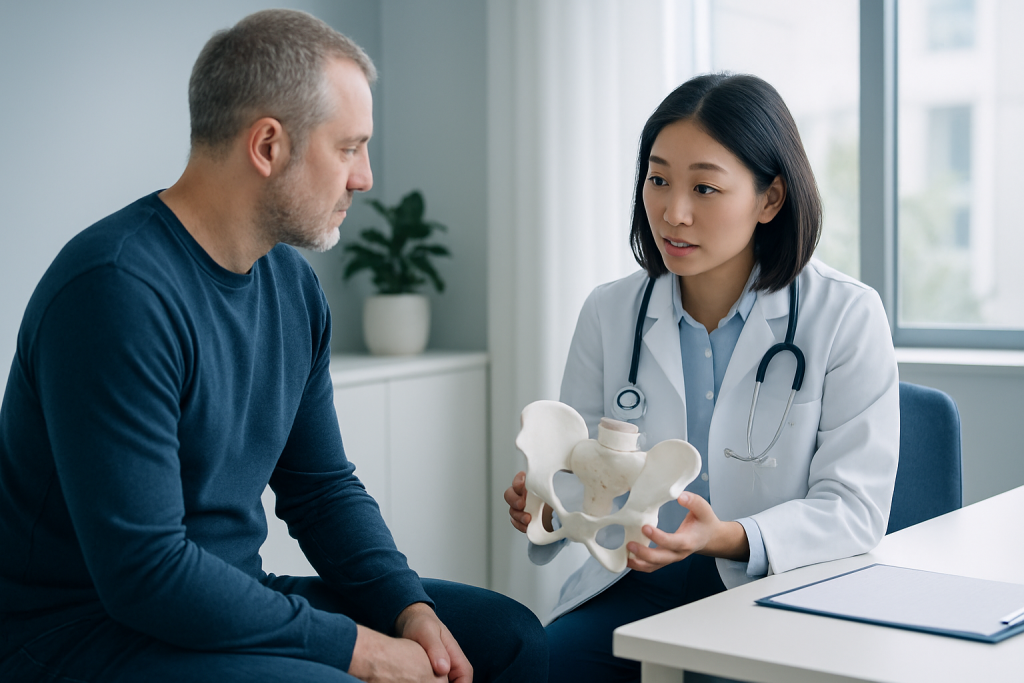
Hip discomfort in men has many possible causes. Some are related to the joint itself, such as osteoarthritis, femoroacetabular impingement, or labral irritation. Others involve soft tissues like muscles, tendons, and bursae, which can become strained, inflamed, or overused.
Sports and physical work can increase the chance of certain hip problems, especially when movement is repetitive or forceful. Running, cycling, football, heavy lifting, and sudden twisting can all place stress on the hip and surrounding structures. Age, body weight, previous injury, and natural anatomy can also influence risk.
Important contributors to hip symptoms include:
- Muscle strain or tendon irritation
- Osteoarthritis or age-related joint wear
- Hip impingement or labral injury
- Referred pain from the lower back
- Inflammatory conditions or less common bone disorders
It is also helpful to remember that male and female pelvises are not identical in shape. On average, the male pelvis tends to be narrower and less broad at the top, but the range of normal is wide. Anatomy matters, but it does not determine symptoms on its own.
Diagnosis
A hip evaluation usually begins with a conversation about when symptoms started, what makes them better or worse, and whether there was a clear injury. The clinician may ask about sports, work demands, past back pain, and any changes in walking, sitting, or sleeping habits. These details help narrow the list of likely causes.
The physical examination may include checking posture, walking pattern, hip range of motion, muscle strength, and areas of tenderness. Some movements can reproduce pain in a way that reveals whether the source is the joint, muscle, tendon, or spine. This step often provides valuable clues before any scan is ordered.
Depending on the findings, the clinician may recommend an X-ray, ultrasound, MRI, or other imaging test. Blood tests are sometimes useful if inflammation, infection, or another systemic condition is suspected. For patients traveling internationally, it is often helpful to bring prior imaging reports, medication lists, and any previous specialist notes so care can be continued smoothly.
Treatment Options
Treatment depends on the cause of the symptoms. Many hip problems respond to a combination of activity adjustment, guided exercise, pain relief strategies, and time. When the issue is mechanical or related to muscle imbalance, physiotherapy is often a key part of recovery.
Conservative care may include improving movement mechanics, strengthening the glutes and core, reducing aggravating activities for a period, and returning gradually to exercise. If inflammation is present, a clinician may suggest short-term symptom control measures and a plan to protect the joint while healing progresses.
In some cases, further treatment is needed. Injections, specialist rehabilitation, or surgery may be considered when there is significant structural damage, advanced arthritis, or a persistent problem that does not improve with non-surgical care. The right choice depends on the diagnosis, the person’s goals, and overall health.
For patients who seek treatment outside their home country, a clear plan for follow-up matters as much as the procedure itself. Recovery can involve rehabilitation, repeat assessment, and practical instructions for returning to work or travel safely.
Prevention & Self-care
Not every hip problem can be prevented, but many can be made less likely or less severe with sensible habits. Regular movement, balanced strength, and avoiding sudden spikes in training load can reduce stress on the hip joint and nearby tissues.
People who sit for long periods may benefit from standing breaks, gentle hip mobility work, and attention to posture. Those who exercise should warm up properly and build intensity gradually. Footwear, surface choice, and recovery time also matter, especially for runners and active adults.
- Keep hip and core muscles strong with guided exercise
- Increase physical activity gradually, not in large jumps
- Use good lifting technique and avoid twisting under load
- Stretch or mobilize carefully if stiffness is an issue
- Seek early advice if pain changes the way you walk
Self-care should be comfortable and realistic. If a home strategy increases pain, causes limping, or does not help after a reasonable period, a medical review is more appropriate than pushing through.
When to See a Doctor
A medical assessment is wise when hip pain lasts more than a short time, recurs frequently, or affects daily movement. It is especially important if the pain is causing difficulty walking, climbing stairs, dressing, or sleeping. A clinician can help determine whether the hip itself is the source or whether another area is involved.
Prompt review is also recommended after a fall, sports injury, or any event that leaves the leg unable to bear weight. Fever, marked swelling, redness, numbness, or unexplained weight loss should never be ignored, even though they are not common causes of hip discomfort.
If symptoms are becoming a barrier to travel, work, or rehabilitation, a structured consultation can be worthwhile. Acibadem Health Point offers access to multidisciplinary specialists and JCI-accredited hospitals that diagnose and treat hip conditions for international patients, with attention to coordinated care before and after treatment.
Understanding Hip Anatomy in Plain Language
The hip joint is built for stability and movement at the same time. The round head of the femur sits in the socket of the pelvis, with cartilage and a strong joint capsule helping the joint move smoothly. Surrounding muscles and tendons add power for walking, standing, and shifting direction.
Men and women share this basic design. Differences in pelvic width and angle can affect biomechanics, but they do not mean one sex “has hips” and the other does not. Everyone has hips; the more useful question is whether the hips are moving comfortably and functioning as expected.
When patients understand the anatomy, symptoms often feel less mysterious. A groin ache during rotation, for example, may point more toward the joint itself, while pain with sprinting or stair climbing may suggest a tendon or muscle problem. That distinction is one of the reasons clinical evaluation can be so valuable.
Frequently asked questions
Do men and women have different hips?
Yes, on average the pelvic shape differs between men and women, but both sexes have hips and hip joints. Male pelvises are often narrower, while female pelvises are generally wider, though there is a wide range of normal variation. These differences can affect movement patterns, but they do not change the basic function of the hip joint.
Why does hip pain sometimes feel like groin pain?
The hip joint sits deep in the body, close to the groin, so pain from the joint often shows up there. Pain from the muscles, tendons, or lower back can also be felt in nearby areas. A clinician uses the pattern of symptoms and physical examination to help find the source.
Can hip pain in men come from the lower back?
Yes. Nerves and movement patterns connect the lower back, pelvis, and hip, so back problems can cause pain that seems to be coming from the hip. This is why evaluation should look beyond the painful spot alone.
What is the first thing to do for mild hip discomfort?
A short period of rest from aggravating activities, gentle movement, and attention to posture may help if the pain is mild. If symptoms continue, get worse, or begin to affect walking, it is better to have them assessed rather than waiting too long.
When is imaging needed for hip symptoms?
Imaging is usually considered when the history and examination suggest a structural problem, an injury, or symptoms that do not improve as expected. The right test depends on the suspected cause; X-rays, ultrasound, or MRI may each be useful in different situations.
Can men maintain healthy hips as they age?
Yes. Regular activity, strengthening, and early treatment of pain or stiffness can support hip health over time. If a person notices persistent changes in movement or comfort, a medical review can help protect long-term function.
References
- National Institute of Arthritis and Musculoskeletal and Skin Diseases
- Mayo Clinic
- Cleveland Clinic
- American Academy of Orthopaedic Surgeons
- NHS
This article is for general information only and is not a substitute for professional medical advice. Please consult a qualified doctor about your individual situation.
More from the Health Library



Related Specialists

Dr. Mehmet Meriç
Gastroenterology
Prof. Dr. Özgür Çetik
Orthopedic Surgery & Traumatology
Dr. Abdullah Derin
Internal Medicine
Prof. Dr. Enis Rauf Coşkuner
Urology