

Dermal Piercing: Procedure, Risks and Care

Key Takeaways
- A dermal piercing uses an anchor placed beneath the skin, so it behaves differently from a standard earlobe or cartilage piercing.
- Healing can take time and the area may remain vulnerable to irritation, trauma, or infection during daily activities.
- Signs such as increasing redness, swelling, pain, discharge, or fever should be assessed by a qualified clinician.
- Aftercare focuses on gentle cleaning, avoiding twisting or picking, and protecting the site from friction.
- Some dermal piercings can be removed, but the process should be done by a trained professional to reduce scarring and skin injury.
Medically reviewed by the Acıbadem clinical team — August 19, 2026
Dermal piercing is a type of body modification in which a small anchor sits under the skin and supports a decorative top on the surface. Because it creates a long-term opening in the skin, good hygiene, careful placement, and early attention to complications all matter.
Overview
Dermal piercing, sometimes called a microdermal or single-point piercing, is a style of body modification in which a small base is positioned beneath the skin and a decorative top remains visible on the surface. Unlike a traditional piercing that creates a tunnel through the body part, a dermal piercing is anchored in one layer of skin and therefore needs a slightly different approach to healing and long-term care.
People often choose dermal piercings for their aesthetic look and placement flexibility. They can be placed in several areas of the body, although not every site is suitable. The skin’s thickness, movement, friction, and exposure to clothing or accessories all influence whether the piercing is likely to heal well.
For anyone considering this type of procedure—especially international patients planning treatment or aftercare around travel—it helps to understand that a dermal piercing is not simply a cosmetic choice. It is a minor skin procedure that involves tissue injury, a healing phase, and the possibility of follow-up care if the body reacts unexpectedly.
What a dermal piercing involves
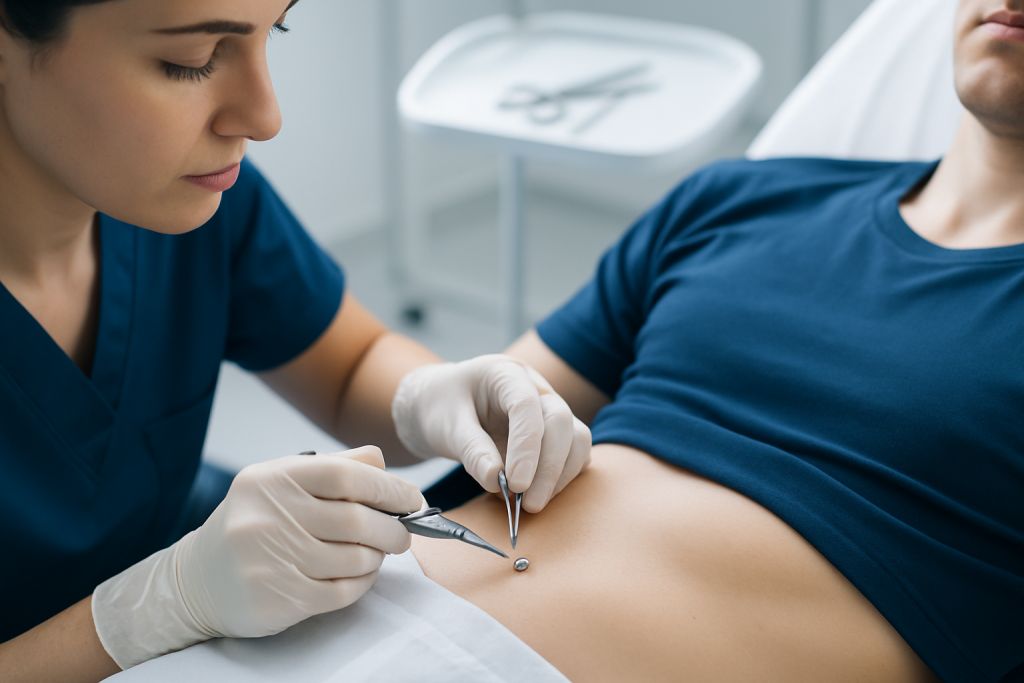
The procedure usually begins with cleaning and marking the site. A trained professional then creates a small pocket in the skin and places the anchor or base under the surface. The visible jewelry top is attached afterward. Because the anchor sits beneath the skin, it must be placed with precision to reduce the chance of rejection, migration, or irritation.
Some people assume dermal piercing is similar to inserting a standard stud, but the anatomy is different. The skin must hold the base securely while continuing to move, stretch, and recover. That is why placement by an experienced practitioner matters more than the decorative style alone.
Recovery can be straightforward, but it is not instant. The skin may remain sensitive for weeks, and complete settling may take longer. During that time, daily habits such as sleeping position, sports, bathing, and clothing choices can influence healing.
Symptoms and common healing changes

Normal healing often includes mild tenderness, temporary redness, slight swelling, and small amounts of clear or pale fluid. These changes may be more noticeable in the first days after placement and then gradually improve. A dermal piercing can also feel irritated after accidental bumps or repeated rubbing.
It is important to distinguish ordinary healing from signs that suggest a problem. Ongoing or worsening pain, heat around the area, thick yellow or green discharge, a strong odor, or skin that becomes increasingly red and swollen may indicate infection or another complication. If the jewelry appears to be sinking, tilting, or moving closer to the skin surface, migration or rejection may be occurring.
- Expected early changes: mild soreness, redness, and small crusts
- Concerning changes: worsening pain, spreading redness, pus-like drainage, or fever
- Mechanical problems: snagging, loosening, migration, or skin thinning over the anchor
People who travel soon after the procedure should be especially attentive to these signals, because humidity, long flights, pool exposure, and limited access to their original piercer can make small issues harder to manage promptly.
Causes and risk factors for complications
Complications are often related to the way the piercing interacts with skin and daily life rather than to one single cause. Infection can occur when bacteria enter the site through contaminated hands, water, makeup, clothing, or poorly cleaned tools. Irritation may develop from friction, pressure, or repeated touching.
Certain body locations are more exposed to movement and trauma, which can increase the likelihood of healing problems. Areas where clothing rubs, belts sit, or straps pass over the skin are more likely to be annoyed by constant contact. Swimming in lakes, pools, or hot tubs too soon after placement can also increase risk.
Risk is higher when the procedure is performed in a non-sterile environment or by someone without proper training. Skin conditions, a history of keloids, diabetes, immune suppression, and smoking may also affect healing. For patients arranging care while abroad, it is sensible to choose a clinic that can explain both the procedure and the follow-up plan clearly before any skin modification is done.
Diagnosis and evaluation
If a dermal piercing becomes painful or looks infected, a clinician will usually examine the area and ask about when the piercing was placed, how it has been cleaned, and whether there has been any trauma. The appearance of the skin, the type of drainage, and the pattern of swelling help guide the assessment.
In many cases, no special test is needed. When infection seems more extensive, when symptoms are severe, or when the person has fever or significant swelling, additional evaluation may be recommended. The clinician may also check whether the jewelry is embedded, whether the anchor has started to reject, or whether there is a separate skin problem such as an abscess or contact dermatitis.
If the person is being seen far from the original piercing provider, bringing details about the jewelry type, procedure date, and any products used for aftercare can make the evaluation easier. Photos of how the area has changed over time can also help the doctor understand the course of symptoms.
Treatment options
Treatment depends on the problem. Mild irritation may improve with reduced friction, gentle cleaning, and careful observation. If a clinician believes infection is present, they may recommend appropriate medical treatment based on the severity and appearance of the site. It is important not to start random creams, antiseptics, or home remedies that can further irritate the skin.
When the jewelry is migrating, embedding, or repeatedly traumatized, removal may be the safest option. Dermal anchor removal should be performed by a trained professional whenever possible, because trying to remove it at home can tear the skin, leave retained material, and increase scarring.
In some cases, the decorative top can be replaced if it is loose or damaged, but only after the area is assessed and any infection or skin breakdown is addressed. If the skin has already begun to close over the anchor or if a significant reaction has developed, the procedure plan may change. A clinician can explain whether preservation or removal is the better choice for that specific site.
Prevention and self-care
The most effective prevention starts before the piercing is even done. A reputable provider should use sterile equipment, clean technique, and clear instructions. The person considering a dermal piercing should ask where it will be placed, how long healing usually takes, what signs should trigger a review, and how removal would be handled if needed later.
After placement, the safest self-care is usually simple and consistent. Gentle cleansing, hand hygiene before touching the area, and avoiding twisting or playing with the jewelry are commonly advised. Clothing that rubs, heavy backpacks, sports gear, and sleeping directly on the site can all slow healing or cause repeated irritation.
- Do not pick at crusts or move the jewelry to “check” healing.
- Avoid makeup, lotions, or hair products near the site unless a clinician says they are safe.
- Keep the area dry and protected from unnecessary pressure.
- Seek guidance before returning to swimming, contact sports, or spa treatments.
For patients who will be traveling after the procedure, planning matters. It is wise to have a clear aftercare routine, enough time for early healing, and a way to contact a clinician if the site changes unexpectedly while away from home.
When to see a doctor
A medical review is appropriate if the piercing becomes more painful instead of less painful, if redness is spreading, if there is pus-like drainage, or if fever develops. Sudden swelling, skin that looks dark or very tense, or rapidly worsening tenderness should also be assessed promptly.
People should not wait for a piercing to “settle” if the anchor appears to be moving out of the skin, if the jewelry is embedded, or if there is concern about a retained piece under the skin. These situations can lead to scarring or a more difficult removal if ignored.
If the person has diabetes, a weakened immune system, a history of poor wound healing, or significant anxiety about the appearance of the site, earlier evaluation is sensible. Acibadem Health Point’s multidisciplinary specialists and JCI-accredited hospitals can diagnose and treat skin-related piercing complications for international patients who need coordinated care and follow-up.
Frequently asked questions
How is a dermal piercing different from a regular piercing?
A dermal piercing uses an anchor under the skin, while a regular piercing passes through a body part and has entry and exit points. Because of this, dermal piercings can be more prone to migration, friction-related irritation, and removal challenges.
How long does a dermal piercing take to heal?
Healing time varies by body area, skin type, and how well the site is protected from friction. Early tenderness often improves gradually, but the piercing may remain sensitive longer, and it should be watched carefully until it has settled.
Can a dermal piercing get infected?
Yes. Any opening in the skin can become infected if bacteria enter the area. Worsening redness, heat, swelling, pain, and thick discharge are reasons to seek medical review.
Should a dermal piercing be removed at home?
No, removal should generally be done by a trained professional. Home removal can tear the skin, leave material behind, and increase scarring or infection risk.
What should someone avoid after getting a dermal piercing?
It is usually best to avoid touching, twisting, or picking at the jewelry and to reduce pressure or friction on the site. Swimming too early, tight clothing, and cosmetics or products near the area can also interfere with healing.
Can a dermal piercing be placed anywhere on the body?
No, placement depends on skin thickness, movement, and how much friction the area gets in daily life. A qualified professional should assess whether the location is suitable before the procedure is done.
References
This article is for general information only and is not a substitute for professional medical advice. Please consult a qualified doctor about your individual situation.
Explore treatments in Turkey — costs, top hospitals & a free quote
JCI-accredited · board-certified surgeons · reply within 24h
Add us as a Preferred Source to see more of our trusted health content across Google Search, AI Overviews and Discover.
More from the Health Library



Related Specialists

Dr. İlker Altundağ
Aesthetic Plastic & Reconstructive Surgery
Dr. Serkan Tokgönül
Aesthetic Plastic & Reconstructive Surgery
Dr. Ömercan Yağız Öksüz
Aesthetic Plastic & Reconstructive Surgery
Prof. Dr. Mehmet Veli Karaaltın
Aesthetic Plastic & Reconstructive Surgery